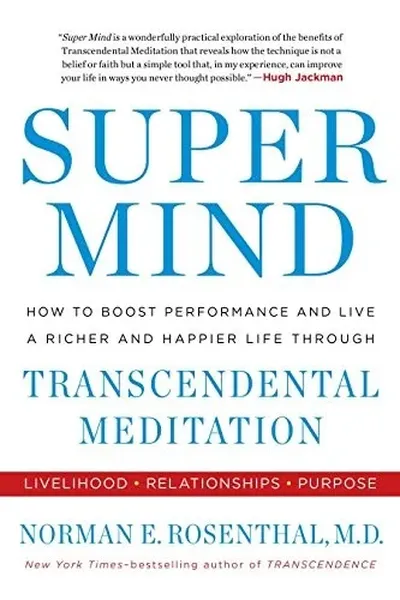
Transcendental meditation

 83
83

Transcendental meditation
Jack Forem’s "Transcendental Meditation" is a remarkably clear exposition of a practice that, by its very nature, resists easy explanation. Forem avoids the New Age platitudes that often plague popular meditation literature, instead offering a direct account of the TM technique and its purported benefits. He anchors the discussion in the practicalities of the method, detailing the process and the expected outcomes with a grounded perspective. A particular strength lies in its historical framing, situating TM within the late 20th-century Western embrace of Eastern thought without succumbing to hagiography. However, the book occasionally feels constrained by its focus on the specific TM organization and its proprietary approach, which can limit broader comparative understanding. The explanation of the mantra's role, while central, remains somewhat opaque to the uninitiated, a necessary byproduct of the method's initiation structure. Ultimately, Forem provides a solid, if somewhat narrowly focused, introduction to TM for the genuinely curious.
📝 Description
83
Jack Forem's 1984 book explains Transcendental Meditation's origins, theory, and practice.
Published in 1984, Jack Forem's "Transcendental Meditation" details this specific mantra-based technique. The book goes beyond surface-level explanations to cover TM's history, its theoretical underpinnings, and how to practice it. Forem outlines the systematic approach to using a personal mantra, a key component of TM, and discusses its benefits for mental clarity and stress reduction.
This work is for individuals interested in personal development through meditation, particularly those drawn to Eastern contemplative practices but preferring a secular, empirically supported method. It offers practical advice for readers aiming to improve focus, reduce anxiety, or boost their general well-being. It also serves those who have encountered TM and want to grasp its core ideas before seeking formal instruction.
The book appeared during a period of growing Western interest in Eastern spirituality. Unlike many older traditions, TM presented itself as a distinct, easily learned, and scientifically validated practice. This era saw Maharishi Mahesh Yogi popularize TM worldwide, spurring both public adoption and academic research. Forem's writing places TM within this cultural movement, differentiating it from more religiously or philosophically rooted practices.
Emerging in the 1980s, Transcendental Meditation offered a secularized, scientifically framed path to altered states of consciousness. While many spiritual traditions involved contemplation, TM distinguished itself with a systematic, mantra-driven approach claimed to facilitate effortless access to deeper mental states. Forem's work situates this practice within a broader cultural moment where Westerners actively sought accessible methods for inner development, often divorced from traditional religious dogma. TM's emphasis on a unique mantra, assigned through a specific ritual, and its claims of empirical validation placed it as a distinct current within the larger flow of modern spiritual seeking.
💡 Why Read This Book?
• Learn the foundational principles of Transcendental Meditation as described by Jack Forem, understanding its unique mantra-based, effortless approach, distinct from concentration techniques. • Grasp the historical trajectory of TM's introduction to the West, contextualized by the 1960s and 70s spiritual exploration, and its specific positioning by Maharishi Mahesh Yogi. • Understand the core concept of 'transcendence' within the TM framework, and how achieving quieter mental states is presented as a path to stress reduction and enhanced awareness.
⭐ Reader Reviews
Honest opinions from readers who have explored this book.
❓ Frequently Asked Questions
What is the core difference between Transcendental Meditation and other meditation styles?
Transcendental Meditation, as outlined by Forem, emphasizes an effortless, natural settling of the mind using a specific mantra, differentiating it from concentration-based or mindfulness techniques that require active focus.
When was Transcendental Meditation first introduced to the West?
The popularization of Transcendental Meditation in the West largely began in the 1960s and 1970s, with Jack Forem's book first published in 1984, reflecting this period of growing interest.
What is a mantra in the context of Transcendental Meditation?
In TM, a mantra is a specific sound or word given to an individual during a personal initiation ceremony. It serves as a vehicle to help the mind settle to quieter levels of awareness without conscious effort.
Does Jack Forem's book explain how to get a TM mantra?
The book details the *process* and *importance* of receiving a mantra through initiation, but it does not provide the mantra itself, as this is a core element of the structured TM course.
What are the claimed benefits of practicing Transcendental Meditation?
Practitioners, as discussed in Forem's work, report benefits such as reduced stress and anxiety, improved focus and clarity, enhanced creativity, and a greater sense of inner peace and well-being.
Is Transcendental Meditation a religious practice?
While originating from ancient Vedic traditions, TM is presented in Forem's book as a secular technique focused on mental development and well-being, accessible to people of all backgrounds and beliefs.
🔮 Key Themes & Symbolism
Effortless Technique
The book meticulously explains the core tenet of Transcendental Meditation: its effortless nature. Unlike other meditation practices that require focused attention or concentration, TM utilizes a specific mantra to allow the mind to naturally settle inward. Forem emphasizes that this is not about controlling the mind, but about providing it with a tool that facilitates its inherent tendency towards quieter states. This approach is presented as key to unlocking deeper levels of rest and awareness, making the practice accessible to a wide range of individuals regardless of their prior experience with meditation.
Mantra and Initiation
A central theme is the role of the mantra and the process of initiation in TM. Forem clarifies that mantras are not mere words or sounds but specific vibrational frequencies assigned to individuals by a trained teacher during a ceremony. This personalized assignment is crucial, as it is believed to be tailored to the individual's unique nervous system, enhancing the effectiveness of the technique. The book underscores that the mantra is not to be shared or analyzed, but simply used as a vehicle for transcending thought.
Science and Well-being
Forem's work frequently touches upon the scientific research supporting TM, particularly in the context of its introduction to the West. The book references studies investigating the physiological and psychological effects of the practice, such as reduced stress hormones, improved cardiovascular health, and enhanced cognitive function. This emphasis on scientific validation was instrumental in TM's acceptance by a broader, often skeptical, audience in the late 20th century, positioning it as a practical tool for modern life rather than solely a spiritual pursuit.
Transcendence as Goal
The very name 'Transcendental Meditation' highlights its primary objective: to facilitate the experience of transcendence. Forem defines this as a state of 'restful alertness' or pure consciousness, achieved when the mind settles beyond active thought processes. This state is not sleep or deep concentration but a unique fourth state of consciousness. The book suggests that regular access to this state through TM practice leads to greater clarity, creativity, and resilience in daily life, acting as a form of mental hygiene.
💬 Memorable Quotes
Direct passages from the work, attributed to the author.
“The mind naturally seeks quiet.”
— This concise statement captures the philosophy behind TM. It suggests that the practice doesn't force stillness but rather provides a gentle pathway for the mind to return to its natural state of calm, requiring no struggle or willpower.
“A mantra is a sound, not a word.”
— This highlights a key distinction in TM. The mantra's power is understood to lie in its specific vibrational quality rather than its semantic meaning, suggesting a more subtle, energetic influence on the practitioner's consciousness.
“Effortlessness is the key.”
— This phrase underscores the unique methodology of TM. It contrasts with many other contemplative practices that involve active concentration or mental effort, positioning TM as a simpler, more natural approach to deep relaxation and self-awareness.
“The practice aims for 'restful alertness'.”
— This describes the distinctive state achieved through TM, a balance between deep rest and mental clarity. It implies a state where the body is deeply relaxed, but the mind remains alert and aware, distinct from sleep or intense focus.
“Science validates the effects of TM.”
— This points to the book's engagement with research. It suggests that the benefits attributed to TM are not merely anecdotal but are supported by empirical studies, lending credibility to the practice.
🌙 Esoteric Significance
Tradition
Transcendental Meditation, as presented by Forem, draws heavily from the ancient Vedic tradition of India, specifically the Upanishadic concept of transcendence. While Maharishi Mahesh Yogi presented it as a secular technique, its roots lie in a lineage of yogic and Vedantic teachings focused on accessing subtler states of consciousness. It departs from many esoteric traditions by emphasizing a non-dogmatic, universally applicable method devoid of overt religious ritual or complex philosophical doctrines, focusing instead on the direct experiential realization of inner stillness.
Symbolism
The primary 'symbol' in TM is the mantra itself, which is considered a sound vibration rather than a visual or conceptual symbol. Its power is understood to be in its unique frequency, designed to resonate with the individual's consciousness. Beyond the mantra, the concept of 'transcendence' acts as a guiding motif – the movement inward towards pure consciousness, often symbolized by a point of light or stillness within the mind's eye, representing the unmanifest source of thought and awareness.
Modern Relevance
Contemporary thinkers and practitioners in fields ranging from psychology and neuroscience to corporate wellness and peak performance continue to engage with the principles of Transcendental Meditation. Schools of thought emphasizing secular mindfulness, stress reduction techniques, and cognitive enhancement often echo TM's core ideas of effortless awareness and mental quietude. Modern research continues to explore its neurological underpinnings and therapeutic applications, solidifying its place as a significant, albeit specific, contribution to the global range of contemplative practices.
👥 Who Should Read This Book
• Individuals seeking a structured, scientifically-supported meditation technique: Readers interested in a practical, secular method for stress reduction and mental clarity, backed by research, will find Forem's explanation valuable. • Those curious about the history of meditation in the West: Students of comparative spirituality and cultural history will gain insight into how Eastern practices were adapted and popularized in the late 20th century. • Beginners to meditation looking for an accessible entry point: Anyone new to meditation who feels intimidated by more complex practices may appreciate TM's emphasis on simplicity and effortlessness as detailed in this book.
📜 Historical Context
Jack Forem's "Transcendental Meditation," first published in 1984, arrived during a significant wave of Western interest in Eastern contemplative practices. Following the global popularization efforts of Maharishi Mahesh Yogi from the 1960s onwards, TM emerged as a distinct, secularized approach to meditation. This period saw a broader cultural shift, with many seeking alternatives to traditional Western religious and psychological frameworks. While figures like Alan Watts explored Zen Buddhism and others explored various yogic traditions, TM offered a structured, trademarked technique with a growing body of scientific research attached. Its reception was mixed; embraced by many seeking stress reduction and personal growth, it also faced skepticism from some quarters regarding its organizational structure and claims. The work's significance lies in its role as an accessible introduction during a time when interest in mindfulness and meditation was rapidly expanding beyond niche spiritual communities.
📔 Journal Prompts
The concept of 'effortlessness' in TM: How does this contrast with other daily activities?
Reflecting on the assigned mantra: What qualities does a simple, repeated sound possess?
The state of 'restful alertness': Describe a moment in your life when you experienced something similar.
The historical context of TM's Western introduction: How did the cultural climate of the 1960s/70s influence its reception?
Personal experience with 'transcendence': Explore your own moments of profound inner quiet or stillness.
🗂️ Glossary
Mantra
In Transcendental Meditation, a specific sound or word assigned to an individual during initiation, used as a vehicle to help the mind settle to quieter levels of thought.
Transcendence
The core concept in TM, referring to the process of moving beyond active thought to experience a state of 'restful alertness' or pure consciousness.
Initiation
A ceremony conducted by a certified TM teacher where an individual receives their personal mantra and instruction on how to practice Transcendental Meditation.
Vedic Tradition
An ancient body of knowledge originating in India, from which Transcendental Meditation draws its philosophical and conceptual roots, particularly concerning consciousness.
Restful Alertness
The unique state of consciousness achieved during TM practice, characterized by deep physical rest combined with a clear, alert mind.
Effortlessness
A key principle of TM, emphasizing that the technique involves no concentration or forceful control of the mind, but rather a natural settling process.
Maharishi Mahesh Yogi
The spiritual guru who introduced and popularized Transcendental Meditation globally, beginning in the mid-20th century.
🔮 Readers Also Liked
Browse all →









More by Jack Forem
All books →




More Free Spiritual Development Books
View all →