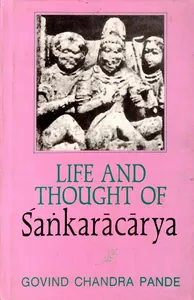
The Thousand Teachings (upadeṡa Sāhasrī) of Ṡrī Ṡam̤̊karācārya
 76
76

The Thousand Teachings (upadeṡa Sāhasrī) of Ṡrī Ṡam̤̊karācārya
The Alston translation of Śaṅkarācārya's Upadeśa Sāhasrī offers a starkly direct presentation of Advaita Vedānta's core tenets. Its strength lies in its unwavering focus on the philosophical architecture, stripping away devotional embellishments to reveal the logical scaffolding of non-duality. The section contrasting the renunciate's path with the householder's, particularly its emphasis on the internal realization over external ritual, remains remarkably potent. However, the text can feel arid to readers unaccustomed to its dialectical, almost polemical, style. The sheer density of argument, while intellectually rigorous, offers little in the way of accessible analogy or narrative to ease the uninitiated. The clarity of the translation is commendable, but the philosophical subject matter itself demands significant prior engagement or dedicated study.
This is a vital text for understanding the intellectual heart of Advaita Vedānta.
📝 Description
76
Śaṅkarācārya wrote The Thousand Teachings around the 8th century CE.
The Thousand Teachings (Upadeśa Sāhasrī) is a philosophical work attributed to Śaṅkarācārya, an 8th-century Indian thinker. It is not a narrative but a structured argument about non-dualistic philosophy. The text contrasts ultimate reality, Brahman, with the perceived world, Māyā. It details how liberation, Moksha, comes through direct recognition of the self's identity with Brahman.
This book is for serious students of Indian philosophy, especially those studying Advaita Vedānta. Readers seeking deep metaphysical concepts and the philosophical basis for spiritual freedom will find it valuable. Scholars of religion and philosophy can use its systematic reasoning to understand a major Hindu school of thought.
Emerging in 8th-century India, The Thousand Teachings synthesized existing Vedāntic ideas. Śaṅkarācārya engaged with and countered other philosophical systems, including Buddhism and Pūrva Mīmāṃsā. His effort established Advaita Vedānta as a dominant philosophical current within Hinduism. This text is central to that legacy and its systematic exposition of non-duality.
💡 Why Read This Book?
• Gain a rigorous understanding of Advaita Vedānta's foundational arguments, as presented by Śaṅkarācārya himself, moving beyond generalized spiritual concepts to specific philosophical distinctions. • Grasp the concept of Māyā not as mere illusion but as the principle of phenomenal appearance that veils the non-dual reality of Brahman, as detailed in the text's dialectical structure. • Comprehend the path to Moksha through Viveka (discrimination) as outlined in the "Discourses" of the Upadeśa Sāhasrī, focusing on intellectual discernment as a means to spiritual realization.
⭐ Reader Reviews
Honest opinions from readers who have explored this book.
❓ Frequently Asked Questions
What is the primary philosophical school associated with The Thousand Teachings?
The primary philosophical school is Advaita Vedānta, a non-dualistic tradition within Hindu philosophy. This school emphasizes the ultimate oneness of reality (Brahman) and the individual self (Atman).
Who is the main author attributed to this work?
The main author is widely attributed to Śaṅkarācārya, a pivotal philosopher who lived in India around the 8th century CE and is credited with systematizing Advaita Vedānta.
What is the historical period of Śaṅkarācārya?
Śaṅkarācārya is traditionally placed in the 8th century CE, a period of intense philosophical debate and synthesis in India.
What does 'Upadeśa Sāhasrī' mean?
'Upadeśa Sāhasrī' translates to 'A Thousand Teachings'. This title suggests a comprehensive collection of instructions or discourses on spiritual knowledge.
Is this book suitable for beginners in philosophy?
While foundational, the text's dense dialectical style requires significant intellectual engagement. Beginners might benefit from introductory texts on Advaita Vedānta before tackling this work directly.
What is the central goal of the teachings in this book?
The central goal is Moksha, or liberation, achieved through the direct realization of the identity between the individual self (Atman) and the ultimate reality (Brahman), dispelling ignorance (Avidyā).
🔮 Key Themes & Symbolism
Brahman and Atman
This theme explores the core Advaita Vedānta assertion of the identity between Brahman, the ultimate, undifferentiated reality, and Atman, the individual self. The text systematically argues that the apparent multiplicity of the world and individual souls is due to ignorance (Avidyā). Through discriminative knowledge (Viveka), one realizes that the true nature of the self is non-dual and identical with Brahman, leading to liberation from the cycle of birth and death.
Māyā and Avidyā
Māyā, often translated as illusion, functions as the creative power that projects the phenomenal world and conceals the true nature of reality. Avidyā, or ignorance, is the individual's entanglement within this projected reality, leading to a false identification with the limited ego and the transient world. The Upadeśa Sāhasrī details how understanding Māyā's workings is crucial for dispelling Avidyā.
The Path of Renunciation
The text emphasizes the path of renunciation (Sannyāsa) as a direct means to realizing non-duality. It contrasts the householder's life with that of the renunciate, arguing that the latter's detachment from worldly concerns and dedicated pursuit of knowledge are most conducive to Moksha. This involves transcending the limitations of the ego and the senses through disciplined inquiry and contemplation.
Jnana Yoga
Central to the teachings is Jnana Yoga, the yoga of knowledge. This involves not mere intellectual assent but direct, intuitive apprehension of truth through study, reflection, and meditation. The Upadeśa Sāhasrī provides the philosophical framework and argumentative structure necessary for this path, guiding the aspirant to discriminate between the real (Brahman) and the unreal (the phenomenal world).
💬 Memorable Quotes
Direct passages from the work, attributed to the author.
“The world is perceived as duality because of ignorance.”
— This expresses the Advaita Vedānta view that the perceived separation between self and universe, subject and object, is not inherent but a construct of fundamental ignorance (Avidyā).
“Liberation is the cessation of ignorance.”
— This highlights the goal of the spiritual path within Advaita: not the attainment of something new, but the removal of the obstruction of ignorance that obscures one's already-realized true nature.
“Discrimination between the Real and the Unreal is the highest practice.”
— This points to Viveka, the process of discerning what is eternal and unchanging (Brahman) from what is transient and illusory (the phenomenal world), as the primary method for spiritual realization.
“One who knows Brahman is Brahman.”
— This statement expresses the non-dual identity at the heart of Advaita: the ultimate knowledge of Brahman is not an external acquisition but the recognition of one's own essential being.
“The renunciate's path is for direct realization.”
— This emphasizes that the life of renunciation is specifically structured to facilitate the immediate and unmediated experience of non-dual truth, free from worldly distractions.
🌙 Esoteric Significance
Tradition
The Upadeśa Sāhasrī is a central to the Vedānta tradition within the broader Hindu philosophical landscape. While not typically categorized under Western esotericisms like Hermeticism or Kabbalah, its emphasis on direct realization of ultimate reality (Brahman) through knowledge (Jnana) aligns with mystical and contemplative paths across various traditions. It represents a highly intellectual and systematic approach to liberation, focusing on metaphysical insight as the primary vehicle for spiritual transformation.
Symbolism
While the Upadeśa Sāhasrī is primarily a philosophical and dialectical text, its symbolism is embedded in its core concepts. 'Brahman' itself functions as a symbol for the unmanifest, absolute ground of all being, beyond all conceptualization. 'Māyā' symbolizes the veil of cosmic illusion or creative power that makes the One appear as many. The 'self' (Atman) symbolizes the true, eternal essence hidden within the transient individual, whose recognition leads to liberation.
Modern Relevance
Contemporary Advaita Vedānta teachers and practitioners continue to draw directly from Śaṅkarācārya's works, including the Upadeśa Sāhasrī, for philosophical grounding. Modern thinkers exploring consciousness, non-duality, and the nature of reality often reference Advaita principles. Its rigorous intellectual framework remains influential for those seeking a philosophical basis for contemplative practices and exploring the relationship between mind, reality, and spiritual awakening.
👥 Who Should Read This Book
• Students of Indian Philosophy: Those seeking a deep, systematic understanding of Advaita Vedānta, particularly the philosophical arguments presented by its most influential proponent, Śaṅkarācārya. • Comparative Religion Scholars: Individuals interested in exploring the nuances of Hindu metaphysical thought and its historical engagement with other philosophical traditions like Buddhism. • Contemplative Practitioners: Readers who engage in meditative and introspective practices and wish to explore the philosophical underpinnings of non-dual realization and the nature of consciousness.
📜 Historical Context
Śaṅkarācārya's work in the 8th century CE emerged during a vibrant period of Indian intellectual history, marked by vigorous philosophical discourse and the flourishing of various schools of thought, including Buddhism and the Mīmāṃsā traditions. The Upadeśa Sāhasrī, or "A Thousand Teachings," is a key text that systematically articulated and defended the Advaita Vedānta perspective. Śaṅkara's dialectical method often engaged directly with opposing views, particularly those of Buddhist schools like the Madhyamaka and Yogācāra, presenting arguments for the reality of Brahman and the illusory nature of the perceived world. His synthesis provided a potent counterpoint to prevailing nihilistic or dualistic philosophies, re-establishing the authority of the Upanishads and laying the groundwork for subsequent Vedāntic commentaries. The impact of his systematic approach was profound, shaping the trajectory of Hindu philosophy for centuries.
📔 Journal Prompts
The nature of Avidyā as described in the text.
Discrimination (Viveka) between the Real and the Unreal.
The concept of Māyā and its implications for perception.
The role of the renunciate's path in achieving Moksha.
The ultimate identity of Brahman and Atman.
🗂️ Glossary
Advaita Vedānta
A school of Hindu philosophy emphasizing non-duality, asserting that Brahman (ultimate reality) and Atman (individual self) are one and the same.
Brahman
The ultimate, unchanging, absolute reality that is the source and substratum of all existence in Hindu philosophy.
Atman
The individual self or soul, which in Advaita Vedānta is ultimately identical with Brahman.
Māyā
Cosmic illusion or the power that conceals the true nature of reality, causing the appearance of multiplicity and duality in the world.
Avidyā
Ignorance; the fundamental ignorance that obscures the true nature of reality and leads to suffering and the cycle of rebirth.
Moksha
Liberation or release from the cycle of birth, death, and rebirth (samsara), achieved through spiritual knowledge and realization.
Viveka
Discrimination; the faculty of discerning the difference between the Real (Brahman) and the unreal (the phenomenal world).