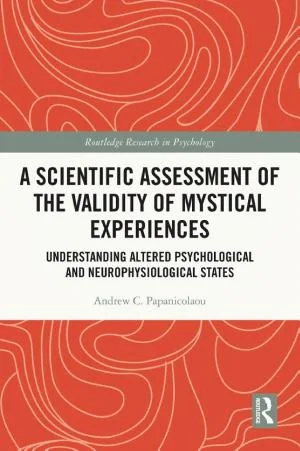
A Scientific Assessment of the Validity of Mystical Experiences
 76
76

A Scientific Assessment of the Validity of Mystical Experiences
Andrew Papanicolaou's "A Scientific Assessment of the Validity of Mystical Experiences" offers a much-needed empirical lens to a field often dominated by anecdotal evidence and faith-based interpretations. The strength of this work lies in its disciplined application of scientific reasoning to phenomena that frequently elude conventional measurement. Papanicolaou systematically dissects claims of objective mystical insight, using inductive inference to map potential correlations between altered states of consciousness and neurochemical activity. A particular strength is the direct challenge to traditional theological interpretations, demanding empirical grounding. However, the book’s very rigor can also be seen as a limitation; the scientific method, while powerful, may struggle to fully encompass the subjective qualitative nature of peak experiences. The detailed analysis of neurochemistry and altered states, while informative, sometimes feels detached from the lived reality of the mystic. Nevertheless, Papanicolaou provides a crucial framework for discerning the ontological status of these profound states. It is a vital contribution for those seeking an evidence-based understanding of the mystical.
📝 Description
76
Andrew Papanicolaou's 2021 book scientifically assesses the validity of mystical experiences.
This scholarly work applies natural science methods to investigate the ontological status of mystical experiences. Andrew Papanicolaou moves beyond traditional philosophical, cultural, and theological discussions, which have often dominated this subject. His analysis uses inductive inference to examine reports from both secular and religious individuals describing altered states of consciousness. The book's main goal is to distinguish between genuine perceptions of an objective reality and subjective delusions or neurological events.
The intended audience includes those with a serious interest in consciousness studies, philosophy of mind, and the empirical study of subjective states. Academics, researchers, and students in psychology, neuroscience, religious studies, and philosophy will find it relevant. It also speaks to individuals curious about the scientific basis of spiritual or transcendent experiences, and those seeking a critical, evidence-based perspective on claims of objective mystical insight.
Published in 2021, this book emerges from a renewed interest in consciousness research, particularly influenced by neuroscience and computational models of the mind. It engages with a lineage of thought that includes explorations of altered states by figures like Stanislav Grof and naturalistic explanations of consciousness by cognitive scientists. Papanicolaou's contribution is his direct engagement with the ontological validity of mystical reports, setting it apart from studies that focus primarily on phenomenology or psychological effects.
💡 Why Read This Book?
• Gain a structured methodology for evaluating claims of mystical experiences, moving beyond subjective interpretation by understanding the inductive inference techniques discussed, referencing Papanicolaou's 2021 publication. • Explore the neurochemical underpinnings of altered states of consciousness, learning how specific neurochemical shifts are analyzed as potential explanations for reported mystical phenomena in the book. • Develop a critical framework for distinguishing between subjective delusions and potential objective insights, informed by the scientific assessment presented in the work.
⭐ Reader Reviews
Honest opinions from readers who have explored this book.
❓ Frequently Asked Questions
What scientific disciplines does Andrew Papanicolaou draw upon in his assessment of mystical experiences?
The book primarily integrates principles from natural sciences, with a strong emphasis on neurochemistry and cognitive psychology. It applies methodologies from these fields to analyze altered states of consciousness and subjective reports of mystical phenomena.
How does this book differ from traditional philosophical or theological approaches to mysticism?
Unlike traditional approaches that rely on dogma, faith, or philosophical reasoning, Papanicolaou's work uses inductive inference and empirical data from the natural sciences to question the ontological validity of mystical experiences, seeking objective verification.
What is the book's stance on the reality of objective mystical experiences?
The book does not outright deny the possibility of objective mystical experiences but critically examines the evidence, proposing that many such reports may stem from subjective delusions or specific neurochemical states rather than direct perception of an external reality.
Who is the intended audience for 'A Scientific Assessment of the Validity of Mystical Experiences'?
The book is aimed at academics, researchers, and students in fields like psychology, neuroscience, philosophy of mind, and religious studies, as well as intellectually curious individuals seeking a scientific perspective on consciousness and spirituality.
What does the book suggest regarding the link between altered states of consciousness and neurochemistry?
The work highlights potential correlations between specific neurochemical changes in the brain and the emergence of altered states of consciousness often associated with mystical experiences, suggesting these states may have a biological basis.
When was 'A Scientific Assessment of the Validity of Mystical Experiences' first published?
The book was first published on April 14, 2021, positioning it within contemporary discussions on consciousness and empirical investigation.
🔮 Key Themes & Symbolism
Empirical Scrutiny of Mysticism
This theme centers on the book's core endeavor: applying the principles and methodologies of natural science to investigate the ontological status of reported mystical experiences. Papanicolaou employs inductive inference to analyze claims made by individuals across secular and religious traditions. The focus is on dissecting these experiences not through faith or tradition, but through observable phenomena and potential neurochemical correlates. The work challenges readers to consider how empirical evidence might validate or invalidate claims of direct access to objective reality, moving the discourse beyond purely subjective interpretation.
Neurochemistry and Altered States
A significant aspect of the book involves exploring the intricate relationship between neurochemistry and altered states of consciousness. Papanicolaou investigates how specific chemical processes within the brain might induce or influence experiences that are commonly labeled as mystical. This includes examining states like deep meditation, trance, or those induced by certain substances, and correlating them with known neurobiological mechanisms. The aim is to understand if these profound subjective shifts can be explained, at least in part, by quantifiable biological factors.
Subjective Delusion vs. Objective Reality
The central ontological question addressed is the degree to which mystical experiences represent genuine perceptions of an objective reality versus being manifestations of subjective delusion or internal psychological processes. The book systematically contrasts these possibilities, using scientific reasoning to evaluate the plausibility of each. It prompts a critical examination of how the human mind, particularly under altered states, might construct realities that are internally coherent but not necessarily reflective of external, verifiable truths.
Critique of Traditional Interpretations
Papanicolaou actively moves beyond established philosophical, cultural, and theological interpretations of mystical phenomena. This theme highlights the book's departure from centuries of discourse that often accepted mystical claims at face value or explained them through pre-existing metaphysical frameworks. By adopting a naturalistic and scientific stance, the author seeks to provide a novel perspective that is less beholden to tradition and more aligned with contemporary scientific understanding of consciousness and the brain.
💬 Memorable Quotes
Direct passages from the work, attributed to the author.
“Distinguishing between reports of objective reality and subjective delusion is paramount in assessing mystical experiences.”
— This interpretation highlights the fundamental challenge the book addresses – the difficulty in verifying the source of mystical experiences, posing the critical question of whether they reflect external truth or internal fabrication.
“A scientific approach moves beyond traditional theological interpretations.”
— This interpretation underscores the book's departure from conventional religious or philosophical explanations of mysticism, advocating for an evidence-based perspective grounded in natural science.
“The ontological question demands empirical investigation.”
— This interpretation captures the book's central thesis: that the fundamental question of whether mystical experiences are 'real' in an objective sense requires scientific inquiry rather than solely relying on faith or abstract reasoning.
💡 Key Ideas
Editorial paraphrase of the work's core concepts — not direct quotes.
The inductive inference applied to mystical claims necessitates a rigorous comparison with known neurochemical profiles.
This paraphrased concept emphasizes the book's methodological core: using observable data and logical reasoning (inductive inference) to assess mystical reports, directly linking them to quantifiable brain chemistry.
Altered states of consciousness may correlate with specific neurochemical activations.
This paraphrased statement points to the book's exploration of the biological basis of mystical experiences, suggesting that changes in brain chemistry could be a significant factor in generating these profound subjective states.
🌙 Esoteric Significance
Tradition
While not strictly adhering to a single esoteric lineage, this work engages with the perennial philosophical questions about consciousness and reality that underpin many esoteric traditions, including Hermeticism, Gnosticism, and Theosophy. It departs from these traditions by prioritizing empirical scientific validation over revelation, intuition, or scriptural authority. Its significance lies in attempting to bridge the empirical gap that often separates esoteric claims from mainstream scientific understanding, offering a critical dialogue rather than an endorsement of esoteric doctrines.
Symbolism
The book doesn't focus on traditional esoteric symbols but rather on the symbolic implications of neurochemical processes and altered states of consciousness. Concepts like 'objective reality' and 'subjective delusion' function as symbolic poles in its analysis. The 'altered state' itself can be seen as a symbolic gateway, representing a departure from ordinary consciousness, whose 'meaning' is then critically examined through a scientific lens, rather than through established symbolic interpretations found in Kabbalah or Alchemy.
Modern Relevance
Contemporary thinkers in consciousness studies and the philosophy of mind, particularly those exploring naturalistic explanations for subjective experience, find Papanicolaou's work relevant. It informs discussions on the limits of scientific inquiry regarding subjective states and contributes to the ongoing dialogue about the potential biological bases for experiences often considered spiritual or transcendent. Researchers in fields like psychedelic-assisted therapy may also draw upon its framework for understanding altered states.
👥 Who Should Read This Book
• Researchers in neuroscience and psychology: To gain a critical framework for analyzing subjective reports of consciousness and understanding the potential neurochemical correlates of profound experiences. • Students of philosophy of mind and religion: To engage with a contemporary, empirical challenge to traditional metaphysical and theological interpretations of mystical phenomena. • Skeptics and critical thinkers interested in spirituality: To acquire evidence-based arguments and methodologies for evaluating extraordinary claims about consciousness and reality.
📜 Historical Context
Published in 2021, Andrew Papanicolaou's work emerges during a period of intense scientific inquiry into consciousness, fueled by advancements in neuroscience and cognitive psychology. This era saw figures like Anil Seth exploring the predictive brain and Fiona Macpherson examining the nature of consciousness and perception. Papanicolaou's book distinguishes itself by directly confronting the ontological validity of mystical experiences, a topic often relegated to philosophy of religion or parapsychology. While scholars like William James explored the varieties of religious experience in the early 20th century, Papanicolaou grounds his analysis in modern neurochemical understanding and inductive inference. The work implicitly engages with the ongoing debate between physicalist and dualist explanations of consciousness, offering a naturalist perspective that seeks empirical grounding for profound subjective states, moving beyond purely phenomenological or theological frameworks.
📔 Journal Prompts
The neurochemical correlates of altered states: Identify one specific neurochemical process mentioned and reflect on its potential role in generating mystical experiences.
Inductive inference in assessing mystical claims: How might inductive reasoning be applied to a personal experience of useful insights?
Subjective delusion versus objective reality: Consider a time you questioned the reality of your perception; how did you resolve the discrepancy?
The challenge of ontological validation: Reflect on the limitations of scientific methodology when attempting to verify subjective experiences.
Moving beyond traditional interpretations: Contrast a scientific explanation for a phenomenon with a traditional or spiritual one you are familiar with.
🗂️ Glossary
Ontological Question
The fundamental philosophical inquiry concerning the nature of being and existence. In this context, it asks whether mystical experiences correspond to an actual, objective reality or are merely subjective mental phenomena.
Inductive Inference
A method of reasoning where a conclusion is reached based on observations of specific instances. It moves from particular observations to broader generalizations, often used in scientific hypothesis formation and testing.
Altered States of Consciousness (ASC)
Any mental state significantly different from a normal waking state. This can include changes in perception, sense of self, thought processes, and emotions, often associated with meditation, dreams, or psychoactive substances.
Neurochemistry
The study of chemical compounds, particularly neurotransmitters, that influence the function of the nervous system. It explores how these chemicals affect mood, cognition, and behavior.
Subjective Delusion
A false belief that is firmly held despite evidence to the contrary, originating and existing solely within an individual's mind. In this context, it refers to experiences perceived as real by the individual but lacking objective validation.
Secular Mystics
Individuals who report profound, transcendent, or ineffable experiences typically associated with mysticism, but outside of a traditional religious framework. Their experiences may focus on nature, consciousness, or universal interconnectedness.
Objective Reality
The state of things as they actually exist, independent of individual perception, belief, or interpretation. It refers to a reality that is verifiable and consistent for all observers.
This book appears in 1 collection
🔮 Readers Also Liked
Browse all →








From the “Altered States of Consciousness” Collection
View all →




![EBOOK COLLECTION ( PART 8) [ CSI][h 33t]](/img/thumb/ebook-collection-part-8-csi-h-33t.webp)



More Free Occult Philosophy Books
View all →