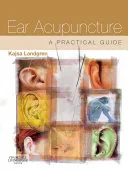
E-Book - Ear Acupuncture
 76
76

E-Book - Ear Acupuncture
Kajsa Landgren's Ear Acupuncture offers a refreshingly straightforward guide to a complex subject. The author's commitment to clarity, evident in the precise two-color illustrations, is a significant strength, making the intricate ear maps far more digestible than in many texts. The integration of Chinese and Western perspectives is also commendable, providing a more holistic view than studies focusing on a single tradition. A point of critique, however, lies in the brevity of the discussion on addiction treatment; while mentioned, it feels somewhat underdeveloped, perhaps owing to the book's overall practical, introductory scope. The section detailing Western theoretical models, while present, could benefit from more in-depth exploration of the neurophysiological underpinnings. Despite these minor limitations, Ear Acupuncture serves as a valuable, accessible primer for anyone interested in auricular therapy.
📝 Description
76
Kajsa Landgren's 2008 handbook explains Chinese and Western ear acupuncture with clear illustrations.
Published in 2008, Ear Acupuncture by Kajsa Landgren serves as a practical guide to auricular therapy, integrating both traditional Chinese medicine and Western approaches. The book uses clear language and two-color illustrations to explain anatomical points and treatment methods. It aims to make complex theories about the ear's therapeutic potential accessible to a wider audience. The text is useful for students beginning their study of ear acupuncture, as well as for experienced practitioners looking to broaden their knowledge or incorporate different viewpoints. It is especially relevant for those interested in how traditional Chinese medicine principles intersect with modern Western applications of auricular points. Readers curious about non-drug pain relief and addiction treatment will also find this book informative.
This work is situated within the long history of microsystem theories, where the body is understood as containing maps of the whole organism. Traditional Chinese medicine has long understood the ear's diagnostic and therapeutic properties. Western scientific investigation into auricular therapy, notably influenced by figures like Paul Nogier in the 1950s, expanded this understanding. Landgren's book bridges these historical streams, offering an integrated perspective that reflects the developing view of ear acupuncture as a distinct healing modality, drawing on both ancient philosophies and contemporary research.
💡 Why Read This Book?
• Learn the foundational principles of both Chinese and Western ear acupuncture, understanding how ancient theories and modern research converge on the ear's therapeutic map, as detailed in Landgren's comprehensive overview. • Discover specific auricular points and their applications, gaining practical knowledge for potential self-treatment or professional practice, as illustrated through the book's two-color diagrams. • Grasp the historical development of ear acupuncture, appreciating its journey from traditional Chinese medicine to its integration into Western therapeutic practices, as outlined in the historical context sections.
⭐ Reader Reviews
Honest opinions from readers who have explored this book.
❓ Frequently Asked Questions
When was Ear Acupuncture by Kajsa Landgren first published?
Ear Acupuncture by Kajsa Landgren was first published on May 23, 2008, making it a relatively contemporary guide to the practice.
What are the main approaches to ear acupuncture covered in the book?
The book covers both traditional Chinese ear acupuncture principles and Western interpretations and applications, offering an integrated perspective.
Who is the intended audience for this ear acupuncture guide?
The book is designed for both students new to ear acupuncture and practitioners seeking to enhance their knowledge and skills.
Does the book explain the theoretical basis of ear acupuncture?
Yes, it explains theoretical concepts from both Chinese and Western medicine regarding how ear acupuncture works.
What specific applications of ear acupuncture are discussed?
The book discusses general applications and includes specific chapters on using ear acupuncture for addiction treatment and Western theoretical models.
Are there visual aids in the book?
Yes, Ear Acupuncture features two-color illustrations throughout to help clarify the text and demonstrate anatomical points and techniques.
🔮 Key Themes & Symbolism
Auricular Microsystem Theory
The book centers on the concept of the ear as a microsystem reflecting the entire human body. It details how specific points on the auricle correspond to different organs, limbs, and physiological functions. This principle, central to both Chinese medicine and Western auricular therapy, is explored through anatomical charts and therapeutic indications, providing a framework for understanding diagnosis and treatment via ear stimulation.
Integration of Chinese and Western Medicine
A significant theme is the synthesis of traditional Chinese energetic concepts (like Qi and meridians) with Western anatomical and neurophysiological perspectives. Landgren bridges these approaches, demonstrating how both traditions identify key points and achieve therapeutic effects, though often with different theoretical explanations. This comparative approach offers a richer understanding of auricular therapy's potential.
Practical Application and Technique
The work emphasizes a hands-on approach, detailing the practical methods for applying ear acupuncture. This includes guidance on point location, stimulation techniques (needling, pressure, electro-stimulation), and treatment protocols for various conditions. The inclusion of clear, two-color illustrations is crucial for conveying these practical aspects effectively to students and practitioners.
Therapeutic Use in Addiction and Pain
Specific chapters address the application of ear acupuncture in treating challenging conditions such as addiction and pain. The book explores how auricular point stimulation can help manage withdrawal symptoms, reduce cravings, and alleviate pain, drawing on both empirical evidence and theoretical frameworks from both Eastern and Western medicine.
💬 Memorable Quotes
Direct passages from the work, attributed to the author.
“The ear is a microcosm of the entire body.”
— This statement captures the core principle of auricular therapy, suggesting that the ear's surface contains points that directly correspond to all parts of the body, allowing for diagnosis and treatment through localized stimulation.
“Clear illustrations are essential for accurate point location.”
— This highlights the practical necessity of visual aids in learning ear acupuncture. Precise identification of points on the ear's complex topography is critical for effective treatment, underscoring the value of the book's detailed diagrams.
“Integrating Chinese and Western perspectives offers a more complete understanding.”
— This reflects the book's approach to synthesizing different medical traditions. By combining the energetic models of Chinese medicine with the anatomical and physiological insights of Western science, a more comprehensive view of auricular therapy emerges.
“Ear acupuncture can be a valuable tool for addiction management.”
— This points to a specific, significant application of the therapy discussed in the text. It suggests that stimulating certain ear points can aid in overcoming dependencies and managing withdrawal symptoms effectively.
“The text balances theory with practical application for students and practitioners.”
— This describes the book's pedagogical intent. It aims to provide both the underlying knowledge and the actionable techniques required to perform ear acupuncture competently.
🌙 Esoteric Significance
Tradition
While Ear Acupuncture primarily functions as a practical medical text, it touches upon esoteric principles by engaging with the concept of the body as a microcosm and the energetic pathways described in Traditional Chinese Medicine. This aligns with broader Hermetic and Neoplatonic ideas of correspondence and unity within the cosmos and the human form. The focus on subtle energies (Qi) and their manipulation through specific points draws from Daoist traditions, presenting them within a framework accessible to Western scientific inquiry.
Symbolism
The ear itself serves as a potent symbol in this context, representing the entire human organism in miniature. Its intricate folds and curves are not merely anatomical features but symbolic maps. The specific points, like the 'Shen Men' (Spirit Gate), carry inherent symbolic weight, pointing towards the mind-body connection and the potential for accessing deeper states of consciousness or profound healing through precise intervention.
Modern Relevance
Contemporary thinkers and practitioners in integrative medicine, pain management, and addiction recovery continue to draw upon the principles outlined in works like Landgren's. The growing interest in non-pharmacological interventions and mind-body therapies ensures the continued relevance of auricular acupuncture. Schools and clinics teaching holistic health modalities often incorporate this book's approach, reflecting a modern synthesis of ancient wisdom and scientific exploration in health and wellness.
👥 Who Should Read This Book
• Students of Traditional Chinese Medicine or Acupuncture seeking a focused text on auricular therapy, offering clear explanations and integrated Chinese-Western viewpoints. • Healthcare professionals interested in expanding their toolkit with non-pharmacological methods for pain management and addiction treatment, benefiting from practical techniques and case applications. • Individuals curious about holistic health and body-mind connections, looking for an accessible introduction to how the ear can be used therapeutically based on established principles.
📜 Historical Context
Published in 2008, Kajsa Landgren's Ear Acupuncture arrived at a time when complementary and alternative medicine (CAM) was increasingly seeking integration and validation within mainstream healthcare systems. The late 20th and early 21st centuries saw a surge in research into modalities like acupuncture, driven partly by figures like the French physician Paul Nogier, who extensively mapped the ear's somatotopic representation in the 1950s and 60s. Landgren's work builds upon this foundation, bridging the gap between Nogier's auriculotherapy and traditional Chinese medicine’s long-established ear diagnostics and treatments. While acupuncture in general was gaining traction, specific research and acceptance of auricular therapy as a distinct field continued to evolve. The book’s approach reflects a growing academic interest in empirically testing and explaining traditional practices, moving beyond purely energetic explanations to incorporate neurobiological mechanisms, a trend seen across CAM studies of the era.
📔 Journal Prompts
The ear's representation of the body: Map one external body part onto the corresponding auricular point.
Integration of medical systems: Compare a Chinese explanation for an auricular point's effect with a Western one.
Practical application: Detail the steps for stimulating a chosen auricular point for a specific condition.
Addiction treatment: Reflect on the potential role of auricular therapy in managing cravings.
Western theoretical models: Consider how neurophysiology might explain auricular point efficacy.
🗂️ Glossary
Auricle
The external part of the ear, the visible structure composed of cartilage and skin, which is the focus of auricular acupuncture.
Microsystem
A concept where a small area of the body (like the ear, hand, or foot) is believed to represent or correspond to the entire body.
Qi (Chi)
In Traditional Chinese Medicine, Qi is the vital life force or energy that flows through the body, influencing health and well-being.
Shen Men
A specific, important point on the ear, often translated as 'Spirit Gate,' known for its calming and analgesic effects, frequently used in addiction treatment.
Somatotopic Representation
The principle that specific areas of the body (like organs or limbs) are mapped onto corresponding points on another surface, such as the auricle.
Auriculotherapy
A form of alternative medicine based on the idea that the ear is a gateway to controlling the functions of the brain and body. It involves stimulating specific points on the ear.
Meridians
In Traditional Chinese Medicine, these are pathways through which Qi flows, connecting different organs and parts of the body.