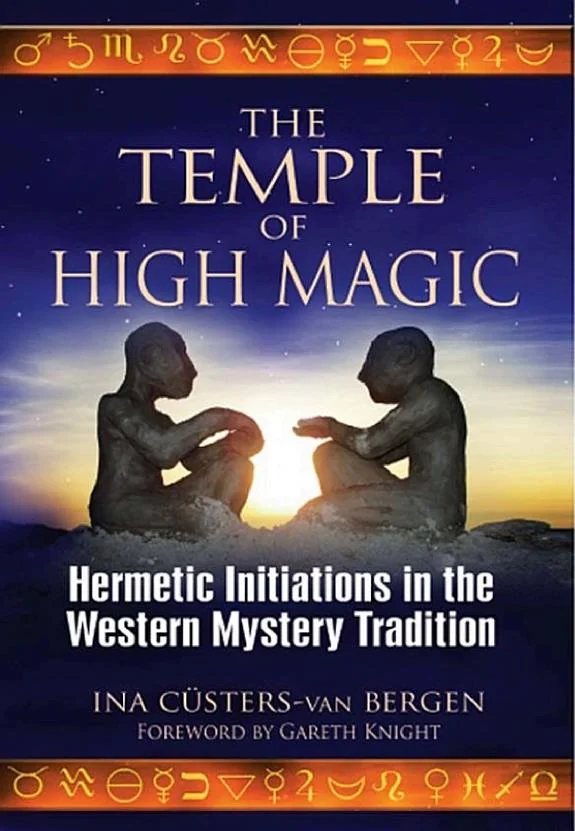
The Temple of High Magic
 82
82

The Temple of High Magic
Ina Cüsters-van Bergen’s *The Temple of High Magic* offers a refreshingly direct approach to esoteric disciplines, bypassing much of the modern occultist's jargon. The author’s explanation of the "temple" as an inner construct, built through sustained meditative practice, is particularly lucid. This concept, which she likens to the "Yoga of the West," provides a solid anchor for solitary practitioners. However, the book’s strength in detailing solo work sometimes overshadows its practical guidance for group ritual, leaving the dynamics of collective practice feeling somewhat less developed. A notable passage is the detailed breakdown of establishing an inner sanctum, a process Cüsters-van Bergen outlines with impressive clarity. Ultimately, the work serves as a valuable manual for those committed to rigorous inner development.
📝 Description
82
Ina Cüsters-van Bergen's The Temple of High Magic details a practical framework for advanced esoteric disciplines.
This book lays out a structured approach to advanced esoteric practices, connecting them to pre-Christian mystery school traditions. It examines the methods for both group rituals and individual meditation, giving concrete advice for those who practice magic. The text is written for people wanting to grasp and use the core ideas of Western esoteric traditions. It is especially useful for those interested in pathworking and advanced meditation techniques, often referred to as the "Yoga of the West."
The author defines the "temple of high magic" not as a physical place, but as an inner sanctuary created through consistent meditation. This internal space is where magical work happens, built by focused attention and visualization, which are basic principles in many Western magical systems. The book emphasizes a lineage of inner spiritual growth that existed before and outside of later organized religions, focusing on personal cultivation.
The teachings in The Temple of High Magic are rooted in the traditions of pre-Christian mystery schools. These ancient systems relied on oral transmission and initiation, forming the basis for much of Western esoteric thought. The book highlights a lineage focused on inner spiritual development, distinct from later established religious structures, and prioritizes self-cultivation as a means of magical attainment.
💡 Why Read This Book?
• You will learn to construct an inner "temple of high magic" as described in the book, a concept central to pre-Christian mystery schools, enabling personalized meditative practice. • You will gain practical techniques for pathworking, a method of spiritual exploration that Ina Cüsters-van Bergen presents as the "Yoga of the West," offering a distinct alternative to Eastern yogic traditions. • You will understand the historical lineage of Western esoteric disciplines, recognizing how these practices formed the core of ancient mystery schools predating Christianity, providing crucial context.
⭐ Reader Reviews
Honest opinions from readers who have explored this book.
❓ Frequently Asked Questions
What is meant by the "Yoga of the West" in *The Temple of High Magic*?
The "Yoga of the West" is Ina Cüsters-van Bergen's term for the esoteric practices detailed in the book, particularly pathworking and the construction of an inner temple through sustained meditative effort, distinguishing it from Eastern yogic paths.
Are the "temples of high magic" discussed physical places?
No, the book emphasizes that these temples are not physical structures but inner edifices created through sustained meditative practice and visualization by the practitioner.
Does *The Temple of High Magic* focus more on group or solo practice?
The book explains the dynamics of both group ritual and solo practice, but its detailed guidance and core concepts, such as the inner temple, are particularly geared towards fostering robust solo meditative work.
What historical period does the book draw inspiration from?
The book draws inspiration from the ancient mystery schools that were central to spiritual traditions of early civilizations predating Christianity, focusing on their esoteric techniques.
What is pathworking as presented in this book?
Pathworking, as described by Ina Cüsters-van Bergen, is an esoteric technique involving guided visualization and meditative journeys, often used to explore inner landscapes or spiritual realms, and is presented as a key practice for building the inner temple.
When was *The Temple of High Magic* first published?
The first publication of *The Temple of High Magic* by Ina Cüsters-van Bergen was on March 9, 2010.
🔮 Key Themes & Symbolism
Inner Temple Construction
The central tenet is the creation of an internal spiritual sanctuary, the "temple of high magic." This is not a physical location but an energetic and psychological space cultivated through rigorous meditation and visualization. Cüsters-van Bergen posits that this inner edifice is the true arena for advanced esoteric work, built layer by layer through sustained practice, echoing the initiatory goals of ancient mystery schools.
Pathworking as Western Yoga
The book frames pathworking as the "Yoga of the West." This concept highlights a Western tradition of spiritual discipline focused on cultivating inner awareness and mastery through directed mental and imaginative techniques. Unlike Eastern yogas, it emphasizes the direct exploration of consciousness and inner realms, providing a structured method for self-discovery and spiritual advancement.
Legacy of Mystery Schools
Cüsters-van Bergen anchors her teachings in the traditions of pre-Christian mystery schools. These ancient institutions, known for their initiatory rites and esoteric knowledge, are presented as the originators of practices like pathworking. The book seeks to revive and make accessible the core principles of these early spiritual lineages for contemporary seekers.
Solo vs. Group Practice Dynamics
While detailing techniques applicable to both solitary practitioners and groups, the work provides a thorough examination of solo practice. It explains how the construction of the inner temple is fundamentally a personal endeavor, while also touching upon the dynamics and potential of collective ritual to amplify inner work and shared spiritual goals.
💬 Memorable Quotes
Direct passages from the work, attributed to the author.
“Temples of high magic are not mere physical structures but inner edifices created by sustained meditative practice.”
— This core idea redefines the locus of magical power from external locations to the practitioner's internal landscape, emphasizing that true spiritual work is built from within through dedicated effort.
“This practice is sometimes called the Yoga of the West.”
— This phrase positions the book's techniques within a Western esoteric lineage, drawing parallels to Eastern yogic disciplines but highlighting distinct methods and goals focused on consciousness and inner mastery.
“Before the advent of Christianity, early civilizations had, at the heart of their spiritual traditions, mystery schools.”
— This highlights the historical depth and continuity of esoteric traditions, suggesting that the practices discussed in the book are rooted in ancient, pre-Christian wisdom systems that profoundly shaped spiritual development.
“A practical guide to pathworking and other esoteric techniques from the ancient mystery schools predating Christianity.”
— This concise summary emphasizes the book's actionable nature and its direct lineage to ancient, foundational esoteric practices, setting it apart from purely theoretical occult texts.
“Explains the dynamics of both group ritual and solo practice.”
— This indicates the book's comprehensive scope, catering to practitioners working individually as well as those participating in communal spiritual or magical activities, addressing different modes of practice.
🌙 Esoteric Significance
Tradition
The work firmly roots itself in the Western esoteric tradition, specifically drawing from the lineage of pre-Christian mystery schools. It offers a practical framework for what might be termed "Western Pathworking," positioning it as a counterpart to Eastern yogic systems. This approach prioritizes internal development and the cultivation of consciousness through disciplined imagination and meditation, aligning with Hermetic and Neoplatonic underpinnings that emphasize the power of the mind and soul.
Symbolism
A key symbolic motif is the "temple of high magic" itself, representing the practitioner's inner spiritual microcosm. This internal edifice symbolizes the ordered, consecrated space created by the adept for spiritual work, mirroring the cosmic order. Another potent symbol is the "path" within pathworking, representing the journey through various stages of consciousness or spiritual realms, often visualized as a journey through a symbolic landscape or labyrinth.
Modern Relevance
Contemporary esoteric practitioners, particularly those interested in depth psychology, active imagination, and personalized spiritual development, find resonance in Cüsters-van Bergen's approach. Thinkers exploring the intersection of consciousness studies and ancient spiritual practices, as well as modern occultists seeking structured methods for inner transformation beyond inherited ritual systems, draw on these principles. The concept of the inner temple remains a potent metaphor for self-mastery and spiritual sovereignty.
👥 Who Should Read This Book
• Aspiring practitioners of Western esoteric disciplines: Those new to pathworking and internal magical practices will find a clear, structured introduction to building an inner sanctuary and cultivating meditative focus. • Students of comparative religion and spirituality: Individuals interested in the historical roots of spiritual practices will benefit from the book's examination of pre-Christian mystery schools and their unique methods. • Experienced occultists seeking foundational clarity: Practitioners who feel they have progressed through external rituals may find value in revisiting the fundamental concept of the inner temple and its role in advanced work.
📜 Historical Context
Published in 2010, *The Temple of High Magic* emerges in an era where esoteric studies have seen a resurgence, yet often fragmented. Ina Cüsters-van Bergen situates her work within the lineage of pre-Christian mystery schools, a tradition historically characterized by oral transmission and initiatory rites, largely preceding the formalization of Gnosticism and Hermeticism as distinct movements. This approach directly counters the dominant narratives often starting with Hellenistic or later Kabbalistic traditions. The book's emphasis on internal practice can be seen as a response to the more externalized or ritualistic focus of some contemporary occult orders. While specific contemporary reception events like book reviews or academic citations for this particular 2010 publication are not widely documented, its thematic resonance aligns with a broader academic and popular interest in ancient Mediterranean spiritualities, a field that saw significant scholarly contributions from figures like Walter Burkert examining Greek religion and ritual.
📔 Journal Prompts
The construction of the inner temple: What are the foundational elements you are laying?
Pathworking as the "Yoga of the West": How does this concept reshape your understanding of spiritual discipline?
Reflecting on the legacy of mystery schools: What ancient wisdom speaks to your current practice?
Solo practice versus group ritual: How do you balance internal development with communal spiritual aims?
The inner edifice: What qualities does your personal temple embody?
🗂️ Glossary
Pathworking
An esoteric technique involving guided visualization and meditative journeys through inner landscapes or symbolic realms, used for spiritual exploration and development.
Inner Temple
A conceptual and energetic sacred space created within the practitioner's consciousness through sustained meditation and visualization, serving as the primary site for esoteric work.
Mystery Schools
Ancient religious and spiritual organizations, particularly prevalent before Christianity, that offered initiatory teachings and esoteric knowledge to select members.
Yoga of the West
A term used to describe Western esoteric disciplines, such as pathworking, that focus on inner development, consciousness cultivation, and spiritual mastery through unique methods.
Group Ritual
A ceremonial practice conducted by two or more individuals, aimed at achieving a shared spiritual, magical, or energetic objective, often involving synchronized actions and intentions.
Solo Practice
Esoteric or spiritual work undertaken by an individual practitioner independently, focusing on personal development, meditation, and internal exploration.
Esoteric Techniques
Methods and practices related to hidden or secret knowledge, typically concerning spiritual, mystical, or magical disciplines aimed at achieving altered states of consciousness or specific results.
This book appears in 1 collection
🔮 Readers Also Liked
Browse all →








From the “High Magic” Collection
View all →







More Free Magic & Ritual Books
View all →