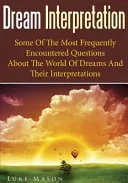
Dream Interpretation
 78
78

Dream Interpretation
Luke Mason's "Dream Interpretation" grapples with a subject as old as consciousness itself. While its initial blurb promises comprehensive information, the work actually offers a more nuanced exploration than a simple how-to guide. Mason wisely grounds the practice within its historical context, referencing early Mesopotamian and Greek approaches, which adds significant weight. A particular strength lies in his careful distinction between objective symbol interpretation and the deeply personal associations each dreamer brings. However, the book occasionally falters by not providing more concrete, actionable examples of applying complex interpretive frameworks to diverse dream scenarios. A passage discussing the 'shadow self' as it manifests in dream figures is particularly insightful, highlighting the psychological depth Mason can achieve. Ultimately, "Dream Interpretation" serves as a solid, if sometimes reserved, primer on understanding the language of dreams.
📝 Description
78
Luke Mason's Dream Interpretation, published in 2023, moves beyond simple symbol dictionaries.
This book approaches dream interpretation from historical and practical angles. It suggests that understanding dreams is not just about prediction, but a path toward self-knowledge and psychological insight. The author details how to analyze recurring patterns and intense dream imagery, providing a structured method for those interested in their inner lives.
The text covers core ideas for dream analysis, such as the difference between a dream's surface story and its hidden meaning, the significance of archetypal images, and how personal associations shape a symbol's significance for an individual. It stresses that effective interpretation relies on personal reflection, not just looking up definitions.
Mason aims this work at readers who want a systematic way to understand their dreams. It is for anyone curious about the psychological or spiritual aspects of their inner world. Whether a novice or someone with prior experience in dream analysis, readers will find a thorough structure for engaging with their subconscious.
Mason places dream interpretation within a long human tradition, tracing its roots from ancient Mesopotamia, Egypt, and Greece. These early cultures often saw dreams as divine communications. The book acknowledges this history, connecting ancient practices to modern psychological and symbolic analysis of the unconscious mind. It views dream work as a continuous human effort to understand inner experiences.
💡 Why Read This Book?
• Gain practical methods for analyzing your own dreams, moving beyond generic symbol dictionaries by learning to identify personal associative contexts, a skill elaborated upon in the chapter on 'Symbolic Meaning'. • Understand the historical evolution of dream interpretation, from ancient Mesopotamian practices to modern psychological theories, providing context not found in superficial guides. • Explore the concept of the 'manifest and latent dream content' as outlined by Mason, enabling a deeper comprehension of the hidden messages within your nocturnal narratives.
⭐ Reader Reviews
Honest opinions from readers who have explored this book.
❓ Frequently Asked Questions
When was Luke Mason's 'Dream Interpretation' first published?
Luke Mason's 'Dream Interpretation' was first published on October 27, 2014. This publication date places it within contemporary discussions of psychology and esoteric studies.
What historical periods are discussed in relation to dream interpretation?
The book references ancient civilizations such as Mesopotamia and Greece, highlighting their systematic approaches to dream analysis and the divine or prophetic significance attributed to dreams.
Does the book offer a simple dictionary of dream symbols?
No, while it acknowledges the existence of symbols, the book emphasizes that interpretation requires understanding personal associations and the distinction between manifest and latent dream content, rather than relying solely on a fixed dictionary.
What is the difference between manifest and latent dream content?
Manifest content refers to the actual images and storyline of the dream as remembered, while latent content represents the hidden, unconscious meaning or desire that the dream symbolizes.
Is this book suitable for beginners in dream analysis?
Yes, the book provides a comprehensive framework and discusses core concepts, making it suitable for individuals new to dream analysis seeking a structured approach to understanding their dreams.
What is the 'shadow self' in the context of dream interpretation?
The 'shadow self' in dreams refers to aspects of the personality that the dreamer disowns or represses. Interpreting these dream figures can offer insights into these hidden parts of oneself.
🔮 Key Themes & Symbolism
Manifest vs. Latent Content
This foundational concept distinguishes between the surface narrative of a dream (manifest content) and its underlying, often disguised, psychological meaning (latent content). Mason's work guides readers to see beyond the literal events of a dream, encouraging an investigation into the symbolic language and unconscious desires that shape its true significance. This analytical approach is crucial for uncovering personal truths hidden within the dreamscape.
Historical Roots of Dream Analysis
The book traces the practice of dream interpretation back to ancient civilizations like Mesopotamia and Greece, where dreams were often viewed as divine communications or prophecies. By situating modern techniques within this long historical continuum, Mason highlights the enduring human quest to understand the messages from the unconscious mind and the evolution of these interpretive methods over millennia.
The Role of Personal Association
A critical element explored is the idea that dream symbols do not have universal, fixed meanings. Instead, their significance is deeply personal, derived from the dreamer's unique life experiences, memories, and emotional connections. Mason emphasizes the importance of subjective association in unlocking the true meaning of dream imagery, moving beyond generic symbol dictionaries.
Archetypal Imagery in Dreams
The work touches upon the presence of universal symbols and figures within dreams, often referred to as archetypes. These recurring patterns in the collective unconscious, as proposed by theorists like Carl Jung, can manifest in dreams, carrying profound meaning. Understanding these archetypal elements offers a bridge between the personal and the universal dimensions of dream experience.
💬 Memorable Quotes
Direct passages from the work, attributed to the author.
“The interpretation of dreams by dream experts may be almost as old as dreaming itself.”
— This highlights the deep historical and continuous human engagement with understanding dreams, suggesting that the desire to decode our nocturnal visions is an intrinsic part of our nature, stretching back to the earliest known human societies.
“We know that all humans, and many animals, dream every night.”
— This factual statement underscores the universality of dreaming as a biological and psychological phenomenon, serving as a baseline for why understanding dreams is relevant to nearly everyone.
“humans have always been fascinated to learn what causes dreams and what they mean.”
— This points to the enduring psychological and intellectual curiosity surrounding the phenomenon of dreaming, framing the study of dream interpretation as a response to a fundamental human drive for knowledge about the self.
“Get all the info you need here.”
— This is a direct, albeit somewhat simplistic, claim about the book's comprehensiveness, suggesting it aims to be a singular resource for those seeking knowledge about dream interpretation.
“Symbols gain their true meaning through personal association.”
— The book argues that dream symbols derive their power not from a fixed lexicon, but from the individual dreamer's unique emotional and experiential landscape.
🌙 Esoteric Significance
Tradition
This work engages with the broader esoteric tradition of understanding the psyche through symbolic language, drawing parallels with depth psychology and ancient divinatory practices. While not strictly tied to a single lineage like Hermeticism or Kabbalah, it shares the esoteric emphasis on hidden knowledge accessible through non-ordinary states of consciousness, particularly dreams. It aligns with traditions that view dreams as a bridge between the conscious and unconscious, or even between the material and spiritual realms.
Symbolism
Key symbols explored include archetypal figures such as the 'shadow self,' representing repressed aspects of the personality, and recurring motifs that Mason suggests are deeply personal. The book encourages readers to look beyond common interpretations, emphasizing that a symbol like 'falling' or 'flying' might hold vastly different meanings depending on the individual's unique life context and emotional associations.
Modern Relevance
Contemporary practitioners of Jungian analysis, as well as those involved in spiritual or self-help movements focused on inner work, frequently draw upon the principles outlined in works like Mason's. The emphasis on personal association and the exploration of the unconscious psyche speaks to modern therapeutic approaches and mindfulness practices that seek to integrate fragmented aspects of the self.
👥 Who Should Read This Book
• Individuals interested in Jungian psychology and archetypal dream analysis seeking a structured guide to interpreting their subconscious narratives. • Beginners in esoteric studies looking for practical tools to explore the symbolic language of dreams and its connection to personal growth. • Those undergoing personal development or therapy who wish to deepen their understanding of their inner world and unlock insights from their dream experiences.
📜 Historical Context
Published in 2014, Luke Mason's "Dream Interpretation" emerged during a period of renewed interest in psychoanalytic and esoteric traditions, often blending academic curiosity with personal exploration. While not directly engaging with a specific intellectual movement like the Surrealists' use of dream imagery in the early 20th century, the work situates itself within a broader contemporary resurgence of interest in consciousness studies and Jungian psychology. It acknowledges ancient traditions, particularly those of Mesopotamia and Greece, as foundational to the practice. The book's approach distinguishes itself from purely clinical psychoanalysis by incorporating more esoteric perspectives on dream symbolism. Its publication predates the widespread accessibility of AI-driven dream analysis tools, positioning it as a manual for human-led interpretation rooted in established psychological and historical frameworks.
📔 Journal Prompts
The manifestation of the shadow self in your dreams: identify a recurring figure or scenario.
Personal associations with the symbol of 'water' across different dreams.
Comparing the manifest content of a recent dream with your hypothesized latent content.
Reflect on how ancient dream interpretations from Mesopotamia or Greece might apply to a modern dream.
Identify archetypal figures or themes present in your dreams over the past month.
🗂️ Glossary
Manifest Content
The actual storyline and imagery of a dream as it is consciously remembered by the dreamer, devoid of interpretation.
Latent Content
The hidden, underlying, unconscious meaning of a dream, which is believed to be concealed by the manifest content.
Personal Association
The unique meanings and emotional connections an individual attaches to a symbol or image based on their personal experiences and history.
Archetype
Universal, archaic patterns and images that derive from the collective unconscious and are the psychic counterpart of a biological instinct.
Shadow Self
In Jungian psychology, the 'shadow' represents the unconscious or repressed aspects of the personality that the conscious ego does not identify with.
Symbol
An image, object, or event in a dream that stands for something else, often representing unconscious thoughts, feelings, or desires.
Dreamscape
The landscape or environment of a dream, encompassing its setting, characters, and overall atmosphere, often reflecting the dreamer's internal state.