The Templar Knights And The Mysterious Stones in Northern New Mexico
 78
78

The Templar Knights And The Mysterious Stones in Northern New Mexico
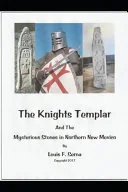
Louis F. Serna’s "The Templar Knights And The Mysterious Stones in Northern New Mexico" presents a curious proposition: Templars in the Land of Enchantment centuries before Columbus. The author’s dedication to detailing the location near Wheeler Peak, and the specific timeframe of 1200-1400 AD, lends a certain groundedness to an otherwise speculative premise. The strength lies in its directness; it doesn't shy away from the audacious claim. However, the work’s primary limitation is its reliance on a narrative that, while intriguing, lacks definitive archaeological or textual corroboration beyond the author’s interpretation of the site. The concept of the obelisk-shaped stones as Templar markers, placed upright in a remote valley within Carson National Forest, is the central enigma that drives the text. While Serna meticulously describes the supposed placement and time, the leap to Templar origin remains unsubstantiated within the provided material. It’s a bold assertion for enthusiasts of North American esoteric mysteries.
📝 Description
78
Louis F. Serna's book examines a claim of Knights Templar presence in New Mexico between 1200 and 1400 AD.
This work investigates an unverified account suggesting the Knights Templar visited northern New Mexico between 1200 and 1400 AD. The book proposes that this medieval military order left behind two enigmatic, obelisk-shaped stones. These markers, according to the text, were found in a remote mountain area within the Carson National Forest, near Wheeler Peak, New Mexico's highest point. The narrative places this potential Templar activity centuries before Columbus's voyages, challenging conventional historical timelines of European exploration and settlement. It posits an earlier, clandestine interaction with the New World by a known European group.
The central ideas concern the possibility of Templar activity in North America, symbolized by these mysterious obelisks. The author discusses the consequences of such a discovery for established historical accounts, the function of ancient markers, and the potential for hidden histories within the Southwest's landscape. Readers interested in fringe historical theories, alternative archaeology, and speculative histories of secret orders will find this book appealing. It is for those who question accepted timelines and look for links between old European traditions and North America, especially regarding unusual artifacts and potential pre-Columbian European contact.
This book engages with traditions that explore hidden histories and alternative interpretations of historical events, particularly concerning secret societies like the Knights Templar. It aligns with esoteric thought that seeks connections between ancient European orders and geographically distant lands, suggesting a broader, often concealed, influence. The focus on mysterious artifacts and potential pre-Columbian contact fits within a broader esoteric interest in uncovering lost knowledge and challenging mainstream narratives about human civilization's past.
💡 Why Read This Book?
• Gain insight into a fringe historical theory by examining the proposed 1200-1400 AD Templar presence in New Mexico, challenging conventional timelines of exploration. • Explore the symbolic significance of the mysterious obelisk-shaped stones allegedly left by the Knights Templar in the foothills of Wheeler Peak. • Understand the potential implications of esoteric orders operating in North America centuries before documented European contact, as detailed in this specific account.
⭐ Reader Reviews
Honest opinions from readers who have explored this book.
❓ Frequently Asked Questions
When did the Knights Templar supposedly visit Northern New Mexico according to the book?
The book posits that the Knights Templar visited Northern New Mexico sometime between 1200 AD and 1400 AD, a period significantly predating Columbus's voyages.
What mysterious artifacts are discussed in relation to the Templars in New Mexico?
The book focuses on two mysterious obelisk-shaped stones that are claimed to have been left by the Knights Templar in a remote location in Northern New Mexico.
Where in Northern New Mexico are these stones purportedly located?
The stones are described as being located high in the mountain foothills of Wheeler Peak, the highest mountain in New Mexico, within the Carson National Forest.
How does the book's timeline compare to Columbus's arrival?
The book's proposed timeframe of 1200-1400 AD for Templar activity in New Mexico is approximately 100-300 years before Christopher Columbus's first voyage in 1492.
What is the significance of Wheeler Peak in this context?
Wheeler Peak, being the highest mountain in New Mexico at 13,000 feet, serves as a prominent geographical marker for the obscure location where the mysterious stones are said to have been placed.
What is the primary subject of Louis F Serna's book?
The primary subject is the theory of Knights Templar visiting Northern New Mexico between 1200 and 1400 AD and leaving behind two mysterious obelisk-shaped stones.
🔮 Key Themes & Symbolism
Pre-Columbian Templar Presence
The work explores the audacious claim of Knights Templar activity in Northern New Mexico between 1200 and 1400 AD. This theme challenges established historical timelines of European exploration, suggesting a clandestine presence centuries before Columbus. It positions the Templars as potential early visitors, leaving behind enigmatic markers that hint at their activities and purpose in the region.
Mysterious Obelisk Markers
Central to the narrative are two obelisk-shaped stones found in an obscure mountain location near Wheeler Peak. These artifacts are presented as tangible evidence of the Templar visit. The book examines their placement, shape, and potential symbolic meaning within an esoteric framework, inviting speculation about their function as waymarkers or ritualistic objects left by the order.
Hidden Histories of the Southwest
This theme looks at the idea that the American Southwest, particularly New Mexico, holds hidden historical narratives beyond conventional accounts. The proposed Templar connection suggests a layer of esoteric history interwoven with the landscape, waiting to be uncovered. The book prompts readers to reconsider the region’s past through an esoteric and unconventional lens.
Challenging Historical Timelines
The book directly confronts accepted historical chronology by placing significant European activity in North America hundreds of years earlier than commonly believed. It encourages a re-evaluation of when and by whom the continent was first explored and influenced, focusing on the period from 1200 to 1400 AD as a potentially active era for groups like the Templars.
💬 Memorable Quotes
Direct passages from the work, attributed to the author.
“Two mysterious obelisk shaped stones in a most obscure location high in the mountain foothills of Wheeler Peak.”
— This statement captures the core mystery of the book, highlighting the enigmatic nature of the artifacts and their remote setting, suggesting they are deliberate markers of a hidden historical event.
“Knights Templar who visited northern New Mexico sometime in the period of 1200 AD to 1400 AD.”
— This phrase establishes the book's central, provocative thesis, placing a well-known medieval order in a geographical and temporal context far outside mainstream historical understanding.
“This is some 300 years before Columbus!”
— This direct assertion emphasizes the radical nature of the book's claim, underscoring the significant temporal displacement of the proposed Templar presence relative to the widely recognized Age of Discovery.
“The obelisk shaped stones were placed upright in locations near each other.”
— This detail suggests intentionality behind the placement of the stones, implying they were not random occurrences but deliberate markers or components of a larger plan or structure.
💡 Key Ideas
Editorial paraphrase of the work's core concepts — not direct quotes.
The location of the area is in the Carson National Forest, in a valley known
This quote grounds the speculative narrative in a real geographical setting, the Carson National Forest, adding a layer of factual detail to the mysterious discovery of the obelisks.
🌙 Esoteric Significance
Tradition
The work engages with esoteric traditions by exploring the Knights Templar, a group often associated with Gnostic, Hermetic, and Kabbalistic undercurrents, though their direct lineage is debated. It aligns with esoteric literature that posits secret knowledge and hidden agendas of historical orders, suggesting they acted as custodians of ancient wisdom and potentially influenced global events and locations far from their known European bases.
Symbolism
The primary symbols discussed are the obelisk-shaped stones. In various esoteric traditions, obelisks represent stability, connection to the divine, solar worship, and markers of sacred or powerful sites. Their upright placement near each other suggests a deliberate configuration, possibly indicating astronomical alignments, territorial markers, or conduits for spiritual energy, fitting into a pattern of sacred geometry and landscape mapping common in esoteric thought.
Modern Relevance
Contemporary interest in Templar lore, ancient mysteries, and alternative historical narratives continues to draw readers to works like Serna's. Thinkers and practitioners exploring ley lines, sacred sites, and the hidden histories of North America might find the book's specific claims about New Mexico relevant to their research or spiritual geography explorations.
👥 Who Should Read This Book
• Enthusiasts of alternative history and fringe archaeological theories seeking to explore unverified narratives of pre-Columbian contact. • Researchers interested in the lore and alleged activities of the Knights Templar beyond their European context, particularly in North America. • Readers fascinated by the mystique of the American Southwest and its potential for harboring hidden historical secrets and esoteric markers.
📜 Historical Context
Published in 2020, Louis F. Serna's work enters a field already rich with speculation about pre-Columbian trans-oceanic contact, particularly concerning the Knights Templar. The late 20th and early 21st centuries saw a surge in popular literature and fringe theories exploring alternative histories, often engaging with symbols and myths associated with the Templars, such as in works by authors like Graham Hancock or Charles Berlitz. Serna's book positions itself within this milieu, proposing a specific, geographically focused hypothesis about Templar presence in the American Southwest. Unlike more generalized theories, Serna anchors his claims to the alleged discovery of two obelisk-shaped stones near Wheeler Peak, New Mexico, during the 1200-1400 AD period. This era predates the established timeline of European exploration by centuries. While academic historians generally dismiss such claims due to lack of concrete evidence, Serna's contribution adds a specific, localized narrative to the ongoing popular fascination with Templar mysteries and hidden ancient connections.
📔 Journal Prompts
The Templar Knights' alleged 1200-1400 AD presence in New Mexico.
The symbolic meaning of the obelisk-shaped stones near Wheeler Peak.
Interpreting the significance of Carson National Forest as a location for Templar markers.
Contrasting the book's timeline with established historical accounts of North American exploration.
Potential purposes of the obelisks if they were indeed Templar markers.
🗂️ Glossary
Knights Templar
A Catholic military order founded around 1119 AD, known for its role in the Crusades and its vast wealth and influence, which was later suppressed in the early 14th century.
Obelisk
A tall, four-sided, narrow tapering monument which ends in a pyramid-like shape or 'benbenet' at the top. They were often erected by ancient Egyptians.
Wheeler Peak
The highest natural point in New Mexico, reaching an elevation of 13,161 feet (4,011 meters), located in the Sangre de Cristo Mountains.
Carson National Forest
A national forest in northern New Mexico, established in 1908, encompassing over 1.5 million acres and known for its mountainous terrain and diverse ecosystems.
1200 AD to 1400 AD
The medieval period, also known as the High Middle Ages and the Late Middle Ages, a significant era in European history preceding the Age of Discovery.
Northern New Mexico
The geographic region in the northern part of the U.S. state of New Mexico, known for its unique landscape, cultural heritage, and historical significance.
This book appears in 1 collection
🔮 Readers Also Liked
Browse all →









From the “Templar Knights” Collection
View all →




![EBOOK COLLECTION ( PART 8) [ CSI][h 33t]](/img/thumb/ebook-collection-part-8-csi-h-33t.webp)


More Free Occult Philosophy Books
View all →