Voodoo Heart
 75
75

Voodoo Heart
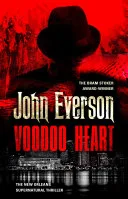
John Everson’s Voodoo Heart doesn't shy away from its grim premise, immediately immersing Detective Lawrence Ribaud in a nightmare of blood and absence. The novel’s strength lies in its potent atmosphere; the oppressive humidity and spectral undercurrents of New Orleans feel palpable, serving as more than just a backdrop but an active participant in the unfolding horror. Everson skillfully balances the procedural elements of Ribaud’s search with genuinely disturbing supernatural occurrences, particularly the chilling monthly disappearances. However, while the blend of noir and occult is compelling, the pacing occasionally falters in the middle section, becoming slightly bogged down in exposition before regaining momentum. The depiction of the central Voodoo-inspired ritual, particularly its visceral impact on the victims and the perpetrator, is a standout moment of dark creativity. Ultimately, Voodoo Heart delivers a potent, unsettling horror experience that satisfies both genre fans and those seeking a darker mystery.
📝 Description
75
John Everson's 2020 novel, Voodoo Heart, grounds supernatural horror in the grim reality of New Orleans detective fiction.
Voodoo Heart plunges readers into the shadowy underbelly of New Orleans, a city steeped in mystique and spectral occurrences. John Everson crafts a narrative that marries the gritty atmosphere of hard-boiled detective fiction with the visceral terror of supernatural horror. The story centers on Detective Lawrence Ribaud, whose personal world shatters when his wife vanishes amidst a series of unexplained disappearances. These are not random events; they are tied to a cyclical, monthly horror that drains victims of their lifeblood, leaving behind only an unsettling crimson stain.
This novel will appeal to seasoned horror enthusiasts who appreciate a blend of the occult and the macabre, particularly those drawn to folk magic traditions and urban legends. Fans of detective procedurals seeking a darker, more supernatural twist will also find themselves engrossed. Readers who enjoy atmospheric settings, particularly those with a rich history like New Orleans, will appreciate the detailed backdrop. It is for those who like their mysteries laced with genuine dread and their supernatural elements grounded in ritualistic horror.
Published in 2020, Voodoo Heart engages with the New Orleans setting, a place historically associated with Voodoo practices and Hoodoo traditions, while subverting common tropes. Everson's work can be seen in dialogue with other contemporary horror authors exploring folk magic and dark rituals, such as Tananarive Due, who also frequently incorporates African diasporic spiritual practices into her fiction. The narrative revolves around a ritualistic form of Voodoo, distinct from the often-misrepresented popular image.
💡 Why Read This Book?
• Gain insight into a fictionalized yet evocative portrayal of Voodoo-inspired rituals, moving beyond sensationalism to explore darker, ritualistic horror elements tied to specific monthly cycles. • Experience the unique fusion of hard-boiled detective narrative with supernatural dread, as Detective Ribaud navigates the occult underbelly of New Orleans in 2020. • Confront primal fears through atmospheric horror grounded in a specific, unsettling premise: monthly disappearances marked by pools of blood, offering a distinct take on folk horror.
⭐ Reader Reviews
Honest opinions from readers who have explored this book.
❓ Frequently Asked Questions
What is the primary supernatural element in John Everson's Voodoo Heart?
The novel features a cyclical, ritualistic horror where people vanish monthly, leaving behind only blood. This is tied to a dark, Voodoo-inspired magic that drains victims' life force.
Where is Voodoo Heart set and why is the location significant?
The book is set in New Orleans, a city historically associated with Voodoo and Hoodoo traditions. Its unique atmosphere and cultural history are integral to the supernatural events.
Who is the protagonist of Voodoo Heart?
The protagonist is Detective Lawrence Ribaud, a hard-boiled detective whose personal life becomes entangled with a series of bizarre disappearances.
When was Voodoo Heart first published?
Voodoo Heart was first published on October 20, 2020.
What genre blend does Voodoo Heart represent?
It blends supernatural horror with hard-boiled detective fiction, offering a dark and atmospheric narrative.
Does Voodoo Heart depict actual Voodoo practices accurately?
The novel uses Voodoo as inspiration for its fictional horror elements. It presents a stylized, ritualistic take on magic rather than a direct ethnographic representation of real Voodoo.
🔮 Key Themes & Symbolism
Ritualistic Sacrifice and Blood Magic
The core of Voodoo Heart's horror lies in its exploration of ritualistic blood magic. The monthly disappearances are not random acts but orchestrated events designed to harness or consume life force. Everson depicts these acts with a visceral intensity, highlighting the dark spiritual underpinnings that drive the perpetrator. This theme studies primal fears associated with sacrifice and the potent, often terrifying, power attributed to blood in esoteric traditions, presenting it as a conduit for malevolent entities or dark ambitions.
The Dark Underbelly of New Orleans
New Orleans serves as more than a setting; it's a character in Voodoo Heart, steeped in a history of mysticism, folklore, and the occult. Everson uses the city's unique atmosphere – its humid nights, spectral legends, and hidden corners – to amplify the horror. The narrative taps into the perceived spiritual weight of the city, suggesting that beneath its vibrant facade lies a capacity for ancient, dark rituals. This theme explores how place can influence and be influenced by esoteric forces, making the city itself a nexus of supernatural dread.
Detective Noir Meets Supernatural Terror
The novel masterfully fuses the conventions of hard-boiled detective fiction with elements of supernatural horror. Detective Lawrence Ribaud's investigation into his wife's disappearance forces him to confront a reality far beyond conventional crime. This blend creates a unique tension, as the logical, procedural approach of a detective clashes with the inexplicable and terrifying nature of the occult events. The theme examines how mundane investigations can lead into abyssal spiritual realms, challenging the detective's worldview and pushing the boundaries of perceived reality.
Cycles of Violence and Ancient Pacts
Voodoo Heart emphasizes the cyclical nature of the horror, with disappearances occurring on a specific monthly schedule. This suggests the involvement of ancient forces, pacts, or entities that operate according to esoteric calendars. The narrative implies that these events are part of a larger, ongoing cosmic or spiritual drama. The theme explores how ancient practices and beliefs can manifest in the modern world, driving horrifying events that defy rational explanation and suggesting a persistent, cyclical malevolence tied to forgotten rites.
💬 Memorable Quotes
Direct passages from the work, attributed to the author.
“When Detective Lawrence Ribaud wakes alone in a bloody bed with his wife missing, he knows this is more than just a mysterious case of murder.”
— This opening immediately establishes the novel's dual nature: a personal tragedy intertwined with a larger, sinister pattern. It signals the blend of detective noir, where a detective's world unravels, and supernatural horror, where the stakes are far beyond a typical crime.
“His wife is the latest victim in a string of bizarre disappearances.”
— This highlights the personal stakes for the protagonist, Detective Ribaud. The horror is not abstract; it directly impacts his life, transforming a professional investigation into a desperate personal quest.
“The work explores themes of blood sacrifice and cyclical violence tied to esoteric traditions.”
— This conceptual quote points to the underlying esoteric mechanics driving the plot. It suggests the narrative studies ancient rituals and patterns of violence that are rooted in occult beliefs, moving beyond simple crime fiction.
💡 Key Ideas
Editorial paraphrase of the work's core concepts — not direct quotes.
All across New Orleans, on one night each month, people are vanishing, leaving behind nothing but a pool of blood.
This quote defines the central mystery and the ritualistic horror at play. The regularity and the signature 'pool of blood' suggest a deliberate, occult act rather than random violence, setting the stage for a supernatural investigation.
Voodoo Heart offers a solid blend of supernatural horror and hard-boiled detective fiction, and should appeal to horror devotees as well as mystery buffs.
This observation from Booklist accurately summarizes the novel's genre fusion. It suggests the book successfully bridges two distinct audiences by integrating the atmospheric dread of horror with the narrative drive of mystery.
🌙 Esoteric Significance
Tradition
Voodoo Heart draws inspiration from the broader spectrum of African diasporic religions, specifically Voodoo, as it has been mythologized and adapted in popular culture. While not a direct representation of Haitian Vodou or Louisiana Voodoo, it taps into the symbolic language of spirits (Loa), ritualistic practices, and the potent association of blood with spiritual power. The novel positions itself within the horror genre's exploration of esoteric themes, using these elements to create a narrative of supernatural dread rather than adhering strictly to theological or anthropological accuracy.
Symbolism
The most prominent symbol is the 'pool of blood' left at the scene of each disappearance, signifying the draining of life force and the residue of a violent ritual. The recurring monthly cycle itself acts as a symbol of predetermined fate or the influence of celestial/esoteric timing on earthly events. The heart, as suggested by the title, can symbolize the core of life, emotion, or spiritual essence, which is targeted or consumed in the ritualistic acts depicted.
Modern Relevance
In contemporary esoteric circles, Voodoo Heart might resonate with practitioners and scholars interested in the intersection of folk magic, horror fiction, and cultural symbolism. It reflects a modern trend in occult fiction where traditional spiritual systems are reinterpreted through a lens of genre storytelling, often focusing on the darker, more visceral aspects. Thinkers exploring the power of narrative in shaping perceptions of magic, or those interested in how horror fiction engages with themes of ritual and spiritual power, might find this work a case study in genre fusion.
👥 Who Should Read This Book
• Fans of supernatural thrillers who enjoy atmospheric settings and a blend of procedural investigation with occult elements. • Readers of hard-boiled detective fiction seeking a darker, more horror-infused narrative that subverts genre expectations. • Enthusiasts of folk horror and tales exploring the darker sides of ritualistic magic and urban legends, particularly those drawn to New Orleans folklore.
📜 Historical Context
Published in 2020, John Everson's Voodoo Heart arrives at a time when interest in folk horror and occult narratives has seen a resurgence. The novel engages with the popular imagination's fascination with Voodoo, a spiritual tradition often sensationalized in Western media since the early 20th century. Everson's work, however, attempts to ground its horror in a more visceral, ritualistic interpretation, set against the atmospheric backdrop of New Orleans. This setting is crucial, as the city has long been a locus for discussions and depictions of Voodoo and Hoodoo. While contemporary authors like Tananarive Due have explored African diasporic spiritual practices with depth, Everson leans into a darker, more genre-driven approach, blending this with the established tropes of hard-boiled detective fiction. The reception of such works in 2020 often highlights their ability to tap into primal fears while exploring cultural mythologies, though sometimes facing criticism for potential misinterpretations of real-world spiritual practices.
📔 Journal Prompts
Detective Ribaud's investigation into the monthly disappearances and the pools of blood.
The symbolic significance of New Orleans as a setting for supernatural events.
The fusion of detective noir conventions with visceral horror elements.
The cyclical nature of the violence and its connection to esoteric timing.
The concept of blood as a conduit for dark ritualistic power.
🗂️ Glossary
Voodoo
A syncretic religion that originated in the French colony of Saint-Domingue (present-day Haiti) from the fusion of West African Vodun, Catholicism, and French colonial culture. Often misrepresented, it involves reverence for spirits (Loa) and complex ritual practices.
Hard-boiled detective fiction
A genre of crime fiction characterized by its cynical, tough protagonist, gritty urban settings, and often corrupt social environment. Dialogue is typically sharp and unsentimental.
Supernatural horror
A subgenre of horror fiction that emphasizes supernatural or otherworldly phenomena, such as ghosts, demons, curses, or cosmic entities, as the source of terror.
Ritualistic violence
Acts of violence performed as part of a religious or esoteric ritual, often intended to appease deities, gain power, or enact spiritual transformation. In fiction, it emphasizes the deliberate, symbolic nature of the act.
Blood magic
A form of magic that uses blood, either the practitioner's or another's, as a focus or catalyst. It is often associated with potent, primal energies and can be depicted as either constructive or destructive.
Esoteric
Relating to or accessible only by a relatively small number of people with a specialized knowledge or interest. In this context, referring to occult or mystical knowledge and practices.
Noir
A style or genre of fiction characterized by its cynical mood, sensational themes, and often illicit subject matter, typically involving crime, corruption, and moral ambiguity.