The teachings of Don Juan

 83
83

The teachings of Don Juan
Castaneda's account of his tutelage under Don Juan Matus is undeniably compelling, drawing the reader into a world governed by different laws of perception and being. The early chapters, detailing the acquisition and effects of 'mescalito,' are particularly vivid, presenting a stark contrast to conventional reality. The work's strength lies in its immersive narrative and its exploration of an epistemology where subjective experience holds primacy. However, the text's allegorical nature, while its purported strength for some, becomes its limitation for critical readers seeking ethnographic certainty. The concept of 'seeing,' as elaborated by Don Juan, where the world is perceived as an energetic assemblage rather than solid objects, represents a pivotal, albeit challenging, idea presented in the book. Ultimately, *The Teachings of Don Juan* functions less as a factual ethnography and more as a philosophical narrative about the nature of knowledge and reality.
📝 Description
83
Carlos Castaneda's *The Teachings of Don Juan* was first published in 1968.
This book details Carlos Castaneda's apprenticeship with Don Juan Matus, a Yaqui shaman. Castaneda recounts his initiation into a system of knowledge originating in the southwestern United States and Mexico, focusing on practices and beliefs that differ markedly from typical anthropological descriptions of indigenous spirituality. The narrative follows Castaneda's experiences as he learns from Matus.
The work emerged during the 1960s, a time of significant cultural change and interest in Eastern religions, indigenous cultures, and altered states of consciousness. *The Teachings of Don Juan* resonated with this period's zeitgeist, presenting a distinct spiritual path. While sometimes associated with the era's psychedelic exploration, Castaneda differentiated his experiences from drug use. The book's authenticity sparked debate among anthropologists and readers, a discussion that has persisted.
Published in 1968, *The Teachings of Don Juan* entered a cultural moment fascinated by alternative spiritualities and indigenous traditions. It presented a vision of shamanism distinct from academic portrayals, detailing specific practices and a cosmology tied to the American Southwest. The book tapped into a broader interest in altered states of consciousness and non-Western ways of knowing, positioning itself within a lineage of texts that explore esoteric knowledge and spiritual transformation outside conventional religious frameworks.
💡 Why Read This Book?
• Learn about the concept of 'seeing' as described by Don Juan Matus, offering a non-ordinary framework for perceiving the energetic nature of reality beyond everyday sensory input. • Understand the role of 'mescalito' as a teacher plant within the shamanic tradition presented, exploring its use in altering perception and facilitating spiritual insight in the 1960s context. • Gain insight into the apprenticeship dynamic between Castaneda and Don Juan, illustrating a pedagogical approach focused on direct experience and challenging conventional rationality.
⭐ Reader Reviews
Honest opinions from readers who have explored this book.
❓ Frequently Asked Questions
Is Carlos Castaneda's The Teachings of Don Juan an accurate anthropological study?
The book is widely debated among anthropologists. While it offers detailed descriptions of shamanic practices, many scholars question its factual accuracy and ethnographic rigor, viewing it as potentially fictionalized or allegorical.
What is the significance of 'mescalito' in The Teachings of Don Juan?
'Mescalito' (peyote cactus) is presented as a sentient teacher plant that guides Carlos Castaneda through altered states of consciousness, revealing aspects of reality inaccessible through ordinary perception.
Who was Don Juan Matus?
Don Juan Matus is presented as a Yaqui shaman and the spiritual mentor of Carlos Castaneda. His teachings form the core of the book, focusing on a specific lineage of sorcery and a unique worldview.
What does 'seeing' mean in the context of Don Juan's teachings?
In Don Juan's teachings, 'seeing' refers to a direct, non-conceptual perception of the world as a flux of energy, moving beyond the ordinary analytical mind to apprehend the true nature of things.
When was The Teachings of Don Juan first published?
The Teachings of Don Juan was first published in 1968, becoming a significant text within the counterculture movement of the late 1960s and early 1970s.
What is the role of the 'power plant' in Castaneda's work?
Power plants, such as mescalito and the 'demon weed,' are depicted as allies or tools used in Don Juan's system to induce altered states of consciousness, facilitating shamanic learning and perception.
🔮 Key Themes & Symbolism
The Nature of Reality
The book fundamentally challenges the Western empirical view of reality, proposing that what we perceive is a construct of the ordinary mind. Don Juan's teachings advocate for a shift in perception, termed 'seeing,' where the world is understood as a dynamic field of energy. This involves recognizing that ordinary reality is a 'controlled hallucination,' a consensus we agree upon. The work explores how different states of consciousness, induced through various means including psychotropic plants and disciplined mental practices, can reveal alternative layers of existence, suggesting a much vaster and more fluid universe than conventionally accepted.
Shamanic Apprenticeship
The narrative centers on Castaneda's arduous journey as an apprentice to Don Juan Matus, a figure presented as a sorcerer from a lineage predating modern anthropological understanding. This apprenticeship is not about acquiring academic knowledge but about undergoing a radical transformation of being. It involves rigorous training, often involving disorientation, confrontation with fear, and the dissolution of the apprentice's ego and preconceived notions. The relationship highlights a pedagogical model where direct, often challenging, experiential learning under the guidance of a master is paramount for accessing esoteric knowledge.
Altered States of Consciousness
Central to Don Juan's system are the deliberate manipulation and exploration of altered states of consciousness. The book details the use of psychotropic plants like peyote ('mescalito') and Datura ('demon weed') as 'teacher plants' to break down ordinary perceptual filters. However, Castaneda emphasizes that these plants are merely tools, and true shamanic power arises from disciplined internal control and a reorientation of awareness, not solely from chemical induction. These states are presented as gateways to understanding the energetic structure of the universe and communicating with non-ordinary entities.
The Role of the Sorcerer
Don Juan Matus embodies the archetype of the sorcerer, a figure who operates outside societal norms and possesses specialized knowledge of the hidden forces of the universe. His role is not merely that of a healer or mystic but as a guardian of an ancient lineage of 'knowledge.' The book portrays the sorcerer as an individual who has mastered the art of navigating different realities, utilizing allies (like power animals or plants), and manipulating energetic fields. This figure challenges conventional notions of power, wisdom, and the human potential for extraordinary abilities.
💬 Memorable Quotes
Direct passages from the work, attributed to the author.
“I must not interrogate you; I must not ask you questions. I must only obey.”
— This statement highlights the non-rational, obedience-based learning structure of Don Juan's apprenticeship. It signifies a necessary surrender of the analytical mind, a core tenet for acquiring the 'sorcerer's knowledge' which defies conventional logic.
“A man of knowledge lives life, he does not merely exist.”
— This captures the goal of Don Juan's teachings: to achieve a fully realized state of being. It contrasts passive existence with active, conscious engagement with the world, emphasizing vitality and purpose derived from esoteric understanding.
“The world is precisely as it is. It has no hidden meaning; it has no hidden intention; it has no hidden purpose.”
— This interpretation challenges anthropocentric views. It suggests that reality simply *is*, and meaning or purpose are human impositions. The 'sorcerer's' task is to perceive this raw reality without overlaying subjective interpretations.
“To be a man of knowledge one must be poor. One must not have any ambition. One must not be in the least bit arrogant.”
— This describes the ethical and psychological prerequisites for attaining true esoteric knowledge. It implies that attachment to material possessions, ego, and personal ambition are hindrances to perceiving the energetic truths of existence.
“The world is a hunter. We are the hunted.”
— This metaphor illustrates the precariousness of existence from a shamanic perspective. It suggests a constant interplay of forces where vigilance and awareness are essential for survival and working through the dangers inherent in the cosmic order.
🌙 Esoteric Significance
Tradition
While not explicitly aligning with a single named tradition like Hermeticism or Kabbalah, Don Juan's teachings draw heavily from indigenous Mesoamerican shamanism, particularly Yaqui cosmology. It presents a system of sorcery and perception that departs from Western esoteric lineages by emphasizing a direct, often confrontational, engagement with the energetic fabric of the universe. Its lineage is presented as ancient and distinct, focusing on the 'sorcerer's path' as a means to achieving a different state of awareness and power, rather than adhering to established symbolic frameworks.
Symbolism
Key symbols include 'mescalito' (peyote), representing a sentient teacher plant capable of inducing altered states and revealing hidden aspects of reality. The 'black and white checkerboard' motif often appears, symbolizing the duality and the potential for traversing paradoxical states or realms. Another significant motif is the 'wind,' representing unseen forces, knowledge, and the breath of life that connects all beings. These symbols are not merely decorative but integral to the shamanic understanding and manipulation of energetic realities.
Modern Relevance
Castaneda's work continues to influence contemporary shamanic practitioners, consciousness researchers, and those exploring the boundaries of psychology and spirituality. Modern neo-shamanic movements often cite him as a foundational text, adapting concepts like 'seeing' and the importance of allies. Thinkers in fields like transpersonal psychology and certain strands of New Age spirituality engage with his ideas on perception and reality construction, even as academic skepticism persists. The work remains a touchstone for discussions on the validity of subjective experience and alternative ways of knowing.
👥 Who Should Read This Book
• Aspiring practitioners of shamanism or those interested in comparative indigenous spiritual systems, seeking an introduction to concepts of altered states and non-ordinary perception. • Readers exploring the philosophical implications of consciousness and reality, particularly those intrigued by epistemologies that challenge empirical Western frameworks. • Students of counter-culture literature and anthropology of the 1960s, looking to understand a text that significantly impacted discussions on spirituality and altered states during that era.
📜 Historical Context
Published in 1968, *The Teachings of Don Juan* emerged during a period of profound cultural and intellectual upheaval. The 1960s witnessed a widespread questioning of established norms and a burgeoning interest in non-Western spiritual traditions, psychedelics, and altered states of consciousness. Castaneda’s work tapped into this milieu, offering a narrative of shamanic initiation that resonated with a generation seeking alternatives to Western materialism and rationalism. Its publication coincided with growing anthropological interest in indigenous psychotropic practices, though it stood apart from more conventional ethnographic accounts. Competing with the rise of Theosophy and the Beat Generation's exploration of Eastern philosophies, Castaneda presented a seemingly more direct and visceral path to esoteric knowledge. The book’s reception was notably polarized; while lauded by some for its vivid descriptions, it faced significant criticism from academic anthropologists like Weston La Barre, who questioned its authenticity, initiating a debate about its veracity that continues to shape its legacy.
📔 Journal Prompts
Don Juan's concept of 'seeing' as energy, contrasting it with everyday perception.
The role of fear in the apprenticeship, and its relation to confronting the unknown.
Reflecting on the definition of a 'man of knowledge' versus an ordinary person.
The function of 'allies' in Don Juan's system of sorcery.
Analyzing the 'controlled hallucination' of ordinary reality as described by Don Juan Matus.
🗂️ Glossary
Don Juan Matus
The central figure and narrator's teacher, presented as a Yaqui shaman or sorcerer. He guides Carlos Castaneda through a complex system of knowledge and practices.
Mescalito
A name used by Don Juan for the peyote cactus, viewed not just as a psychotropic substance but as a sentient 'teacher plant' capable of communicating and guiding.
Seeing
A form of direct, non-conceptual perception that apprehends the world as an energetic assemblage, distinct from ordinary sensory experience and conceptual thought.
Sorcerer
One who possesses and utilizes esoteric knowledge and power, capable of navigating different realities and manipulating energetic forces, as taught by Don Juan.
Power Plant
A psychotropic plant (like mescalito or the 'demon weed') used within Don Juan's system to induce altered states of consciousness and facilitate learning.
Ordinary Mind
The conventional, analytical, and rational mode of consciousness that constructs everyday reality and often hinders access to deeper perceptual states.
Controlled Hallucination
The concept that everyday reality is a shared, agreed-upon illusion or hallucination, constructed by the combined perceptions and beliefs of individuals.
🔮 Readers Also Liked
Browse all →








More by Carlos Castaneda
All books →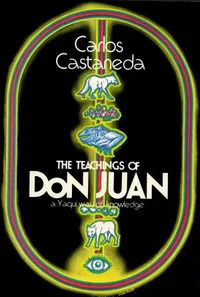


More Free Occult Philosophy Books
View all →