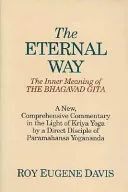
The Eternal Way
 80
80

The Eternal Way
Roy Eugene Davis's The Eternal Way attempts to demystify the spiritual journey through allegorical interpretation, a laudable goal. The text excels in its methodical breakdown of the soul's awakening, mapping out stages from egoic entanglement to pure consciousness. Davis's strength lies in his clear, almost instructional prose, guiding the reader through the inherent challenges of this inner work. However, the allegorical approach, while potent, can sometimes feel detached from the visceral realities of spiritual struggle; the "great war" feels more like a conceptual exercise than a lived battle. A particularly effective passage describes the "veil of Maya" not as an external illusion but as a self-imposed construct of the mind, a point that grounds the esoteric in psychological terms. Ultimately, The Eternal Way offers a structured, albeit intellectual, framework for understanding spiritual progression.
📝 Description
80
Roy Eugene Davis published The Eternal Way in 1996, offering an allegorical interpretation of spiritual awakening.
The Eternal Way uses allegory to describe the soul's progression from ordinary self-awareness to the recognition of its true nature as pure consciousness. Roy Eugene Davis outlines this development, moving beyond a literal interpretation to symbolic depictions of the soul's inner journey. The text details the steps toward realizing one's inherent divinity.
This book is for those engaged in self-discovery and spiritual inquiry. It addresses the internal obstacles faced during consciousness expansion and the methods for overcoming everyday limitations. Readers interested in comparative mysticism and the perennial philosophy will find its symbolic approach useful for understanding spiritual concepts.
Published in the mid-1990s, The Eternal Way sits within a period of renewed interest in both Eastern philosophies and Western esoteric traditions. Roy Eugene Davis's work emerged amid influences from figures like Paramahansa Yogananda and the broader New Age movement. However, Davis's perspective emphasized a more direct, introspective path to spiritual realization, differing from systems focused heavily on ritual or dogma.
💡 Why Read This Book?
• Understand the soul's evolutionary arc from personal identity to universal consciousness, as detailed in the opening allegorical chapter. • Identify common psychological and spiritual obstacles on the path to self-realization, as presented in the text's exploration of challenges. • Grasp the concept of liberation not as an external reward, but as the inherent realization of one's true nature, a central theme throughout the work.
⭐ Reader Reviews
Honest opinions from readers who have explored this book.
❓ Frequently Asked Questions
What is the primary allegory presented in The Eternal Way?
The book uses an allegorical depiction of a "great war" between opposing factions to represent the soul's internal struggle and progress towards awakening. This narrative symbolizes the journey from self-consciousness tied to physical and psychological circumstances to the realization of pure consciousness.
When was The Eternal Way first published?
The Eternal Way was first published in 1996, placing it within a period of burgeoning interest in spiritual and metaphysical literature.
Who is the author of The Eternal Way?
The author is Roy Eugene Davis, a spiritual teacher who published this work in 1996. His teachings often focus on self-realization and the direct experience of consciousness.
What esoteric tradition does The Eternal Way draw from?
While not strictly confined to one tradition, the book's emphasis on consciousness, self-realization, and the inner journey aligns with principles found in Vedanta, Hermeticism, and various forms of mysticism.
Does The Eternal Way offer practical guidance?
Yes, beyond its allegorical framework, the book aims to reveal the challenges of spiritual awakening and the process of achieving liberation, implying practical application for the earnest seeker.
What is the main goal of the spiritual progress described in the book?
The ultimate goal is the realization of one's true nature as pure consciousness, transcending limited self-identifications with physical and psychological conditions.
🔮 Key Themes & Symbolism
The Soul's Awakening
The core of The Eternal Way is the journey of the soul from limited self-awareness to the recognition of its essential nature as pure consciousness. This progression is depicted allegorically, illustrating the soul's movement beyond entanglement with physical and psychological phenomena. The book emphasizes that this awakening is an internal process, a shedding of illusions and a realization of innate being rather than an acquisition of something new.
Challenges on the Path
Davis addresses the common obstacles encountered during spiritual development. These are not merely external difficulties but internal hurdles rooted in the mind's attachments and identifications. The text suggests that understanding these challenges is the first step toward overcoming them, allowing the aspirant to work through the complexities of inner transformation with greater awareness and resilience.
Liberation Through Consciousness
The book posits liberation not as an endpoint achieved after a struggle, but as the inherent state realized when the soul recognizes its true nature. This realization transcends the dualities of the manifest world and the limitations of the ego. The Eternal Way guides the reader toward this understanding, suggesting that freedom is found in the direct apprehension of consciousness itself, unburdened by self-imposed limitations.
Allegory as a Teaching Tool
The primary method employed in The Eternal Way is allegory, particularly in its initial chapters depicting a war. This symbolic narrative serves to convey profound spiritual truths in a manner accessible to the intellect while pointing towards a deeper, intuitive understanding. The use of allegory allows for the exploration of abstract concepts like consciousness and liberation without resorting to rigid dogma.
💬 Memorable Quotes
Direct passages from the work, attributed to the author.
“When interpreted as an allegory the esoteric meaning portrays a drama far more significant than any transitory historical event.”
— This highlights the book's core interpretive strategy: moving beyond the literal to uncover deeper spiritual truths. It asserts that the 'war' described is not historical but a timeless, personal drama of consciousness unfolding.
“The progress of the soul's awakening from self-conscious involvements with physical and psychological circumstances to realisation of its true nature as pure consciousness.”
— This succinctly defines the entire arc of spiritual evolution as presented in the text. It charts the journey from identification with the material and mental self to the ultimate recognition of one's essential being.
“The challenges commonly confronted during the process.”
— This points to the practical aspect of the book, acknowledging that the path to spiritual realization is not without its difficulties. It suggests that the text will offer insights into these common obstacles faced by seekers.
“Liberat[ion]...”
— This fragment from the original blurb emphasizes the ultimate outcome of the spiritual process. Liberation, in this context, signifies freedom from the limitations of the ego and the realization of one's true, unconditioned nature.
💡 Key Ideas
Editorial paraphrase of the work's core concepts — not direct quotes.
The opening chapter portrays a great war between opposing factions.
This line introduces the central allegory of the book, framing the spiritual journey not as a peaceful stroll but as an internal conflict. It signifies the battle between the ego's limitations and the soul's innate desire for freedom and realization.
🌙 Esoteric Significance
Tradition
The Eternal Way aligns primarily with the Advaita Vedanta tradition and the broader perennial philosophy, emphasizing the non-dual nature of reality and the inherent divinity within each individual. It shares common ground with Hermeticism in its focus on inner transformation and the understanding of cosmic laws through self-awareness. The book departs from more dogmatic religious structures, advocating for a direct, experiential path to truth that transcends organized doctrine.
Symbolism
The central symbol is the "great war," an allegory for the internal conflict between the egoic self, bound by limitations, and the higher Self, yearning for realization. Another key motif is the "veil of Maya," representing the illusions and misidentifications that obscure one's true nature. The "progress of the soul" symbolizes the evolutionary journey through various states of consciousness towards ultimate awakening.
Modern Relevance
Contemporary spiritual seekers, particularly those interested in non-dualism, consciousness studies, and practical meditation, find resonance in Davis's teachings. His work informs modern mindfulness practices and self-inquiry techniques. Thinkers and practitioners exploring the intersection of psychology and spirituality, such as those influenced by transpersonal psychology, often draw upon the principles articulated in The Eternal Way for understanding the stages of inner development.
👥 Who Should Read This Book
• Individuals exploring non-dual philosophies and the concept of pure consciousness, seeking a structured understanding of spiritual awakening. • Seekers interested in interpreting spiritual texts allegorically, moving beyond literal meanings to uncover deeper psychological and metaphysical truths. • Practitioners of meditation and self-inquiry looking for guidance on overcoming common inner obstacles and achieving liberation from egoic identification.
📜 Historical Context
The Eternal Way emerged in 1996, a period marked by a significant global resurgence of interest in spiritual and esoteric studies. The preceding decades had seen the popularization of Eastern philosophies and meditation techniques in the West, partly through figures like Alan Watts and the Beat Generation's engagement with Zen Buddhism. Davis's work, while participating in this broader milieu, offered a distinct emphasis on direct experiential realization rooted in a non-dualistic understanding of consciousness. It existed alongside the continued influence of the Theosophical Society and the works of authors like Helena Blavatsky and Rudolf Steiner, yet it steered towards a more personal, introspective path, perhaps less concerned with elaborate cosmologies and more focused on the immediate transformation of the individual psyche. The late 20th century also saw a growing academic interest in comparative religion and mysticism, which provided a receptive audience for works like Davis's.
📔 Journal Prompts
The "great war" as an allegory for your own internal conflicts.
Reflect on the "self-conscious involvements" that obscure your true nature.
Identify one "challenge commonly confronted" on your spiritual path and how this book illuminates it.
Consider the meaning of "realisation of its true nature as pure consciousness" in your daily life.
How does the concept of "liberat[ion]" as inherent realization, rather than an acquired state, shift your perspective?
🗂️ Glossary
Allegory
A story, poem, or picture that can be interpreted to reveal a hidden meaning, typically a moral or political one. In The Eternal Way, it's used to convey spiritual truths symbolically.
Pure Consciousness
The fundamental reality or awareness underlying all existence, unconditioned by thought, emotion, or sensory experience. It is considered the true nature of the self.
Soul's Awakening
The process by which an individual becomes aware of their true spiritual nature, transcending the limitations of the ego and the material world.
Self-Conscious Involvements
The state of being identified with the personal ego, its thoughts, feelings, and physical sensations, which can obscure a broader awareness.
Liberation
Freedom from the bonds of ignorance, suffering, and the limitations of the ego. In this context, it is often seen as the realization of one's inherent divine nature.
Maya (Veil of)
In Hindu philosophy, Maya refers to the illusory power that conceals the true nature of reality. The 'veil' represents the deceptive appearances and misidentifications that bind the individual.
Esoteric Meaning
Hidden or secret knowledge or meaning, typically intended for a select group of initiates. In this book, it refers to the spiritual interpretation underlying the literal narrative.