The Goetia
 82
82

The Goetia
The 1904 Mathers/Crowley edition of The Goetia is less a historical artifact and more a functional grimoire, albeit one steeped in the occult revival of the late Victorian and Edwardian eras. Its strength lies in its direct, unvarnished presentation of ritual procedures for spirit evocation. The detailed descriptions of the 72 spirits, their seals, and the specific conjurations offer a clear, if daunting, path for practitioners. The inclusion of Crowley's "Initiated Interpretation" adds a layer of theoretical justification, attempting to reconcile these older traditions with his developing magical philosophy.
However, the text is not without its limitations. The translations can be archaic, and the ritualistic demands are exceptionally high, requiring significant knowledge of Kabbalistic correspondences, Hebrew, and Latin, which are not always explicitly provided within the text itself. The inherent dangers of summoning entities, even within the protective framework described, are implicitly acknowledged but perhaps not fully conveyed to a novice. The sigil for the spirit Paimon, for instance, is presented without extensive commentary on the spiritual or psychological implications of interacting with such a powerful entity.
Read more ↓
Ultimately, this edition serves as a crucial, if challenging, primary source for understanding practical ceremonial magic as it was practiced and interpreted by key figures of early 20th-century occultism.
📝 Description
82
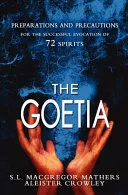
The 1904 edition of The Goetia, translated by S. L. Mathers and augmented by Aleister Crowley, details 72 demons attributed to King Solomon.
This work is a practical manual for ceremonial magic, presenting a catalog of 72 demons. It includes detailed instructions for their evocation, such as the necessary preparations, rituals, and protective measures. Specific sigils, incantations, and the hierarchy of these entities are laid out for practitioners.
The 1904 edition, a significant compilation in Western Esotericism, emerged from a resurgence of occult traditions in late 19th and early 20th century Europe. S. L. Mathers' translation of the Lemegeton, which contains the Goetia, was influenced by the Hermetic Order of the Golden Dawn. Aleister Crowley's contributions, including his essay on ceremonial magic, further integrated this grimoire into his Thelemic system. It is intended for serious students of ceremonial magic, Kabbalah, and Hermeticism who understand the need for careful preparation and ethical conduct in magical practice.
Published in 1904, The Goetia's modern form reflects a period of intense interest in occultism. Influenced by figures like S. L. Mathers and Aleister Crowley, it connects to the Hermetic Order of the Golden Dawn's revival of magical practices. This grimoire stands as a key text for understanding the development of ceremonial magic and its relationship to older esoteric systems in the early 20th century.
💡 Why Read This Book?
• Learn the specific ritualistic steps and protective measures for the evocation of the 72 Goetic spirits, as detailed in the text's conjurations and preparations. • Understand the historical context of the Lemegeton's compilation by S. L. Mathers in 1904, a pivotal moment in the Western Esoteric revival. • Gain insight into Aleister Crowley's "Initiated Interpretation," which offers a Thelemic perspective on the practical and philosophical underpinnings of Goetic magic.
⭐ Reader Reviews
Honest opinions from readers who have explored this book.
❓ Frequently Asked Questions
What is the origin of The Goetia?
The Goetia is the first book of the Lemegeton, a 17th-century grimoire compiled from earlier sources. The 1904 edition by S. L. Mathers and Aleister Crowley is a significant modern iteration, translating and interpreting these older magical texts.
Who are the 72 spirits described in The Goetia?
These are entities traditionally attributed to King Solomon, described as demons or spirits, each with unique ranks, seals, and purported abilities. The text provides detailed sigils for each.
What are the essential preparations for Goetic evocation?
The text emphasizes the creation of a magic circle for protection, a triangle of manifestation for the spirit, specific ritual garments, divine invocations, and the use of the spirit's unique sigil or seal.
Is The Goetia suitable for beginners?
While it provides instructions, The Goetia is a complex grimoire intended for serious practitioners. It requires significant background knowledge in occultism, ritual practice, and protective measures, making it challenging for absolute beginners.
What is the significance of Aleister Crowley's contribution?
Crowley provided his "Initiated Interpretation of Ceremonial Magic," offering a Thelemic perspective on the Goetia, reinterpreting its practices within his own magical system and emphasizing the psychological and spiritual dimensions.
When was this specific edition of The Goetia first published?
The edition translated by S. L. Mathers with additions by Aleister Crowley was first published in 1904.
🔮 Key Themes & Symbolism
Spirit Evocation Rituals
The central theme is the systematic evocation of the 72 Goetic spirits. The book provides explicit instructions for conjurations, invocations, and the creation of necessary magical tools and spaces, such as the magic circle and the triangle of manifestation. It details the specific order and method for compelling these entities to appear and perform tasks, emphasizing the importance of divine authority and precise ritual execution as outlined in the Lemegeton's first book.
The Hierarchy of Spirits
The Goetia meticulously maps out a complex hierarchy among the 72 spirits, assigning them ranks such as Kings, Dukes, Marquises, Earls, Knights, and Presidents. Understanding this structure is crucial for effective command. Each spirit is described with its specific rank, the number of legions under its command, and its unique seal (sigil), which serves as a key for recognition and control during ritual.
Protective and Commanding Magic
A paramount concern throughout the text is the practitioner's safety and authority. The book details extensive protective measures, including the construction and consecration of the magic circle and the use of divine names and pentacles. These elements are designed to shield the magician from harm while simultaneously providing the power to command the summoned spirits, ensuring the ritual proceeds according to the magician's will.
Solomonic Magic and Grimoire Tradition
The Goetia is firmly rooted in the Solomonic tradition of magic, claiming descent from the legendary King Solomon. It represents a significant example of the Western grimoire tradition, which flourished from the medieval period onwards. This work’s compilation and translation by figures like Mathers and Crowley in the early 20th century placed it at the forefront of occult scholarship and practice during that era.
💬 Memorable Quotes
Direct passages from the work, attributed to the author.
“The Exorcism of the Pentagram”
— This ritual, foundational in many Western magical systems, is used to banish or invoke specific energies and is often employed as a preliminary or concluding rite in Goetic operations for purification and protection.
“Seal of the Spirit”
— Each of the 72 spirits possesses a unique sigil, or seal, which is essential for their identification and command during evocation. The correct rendering and presentation of these seals are critical components of the ritual.
“The Triangle of Art”
— This is a sacred geometric space, typically drawn or inscribed, where the evoked spirit is compelled to manifest. The text specifies its dimensions and the divine names inscribed upon it to ensure the spirit's appearance and containment.
“The Divine Names”
— The Goetia heavily relies on the invocation of divine names, often from Hebrew and Latin traditions, as a source of authority to command the spirits. These names are considered potent tools for control and protection.
“The Master's Preparation”
— The text stresses the importance of the magician's personal purity, specific ritual attire, and the meticulous preparation of all magical tools and the ritual environment before commencing any evocation.
🌙 Esoteric Significance
Tradition
The Goetia is a cornerstone text within the Western Esoteric tradition, specifically ceremonial magic. It draws heavily from the Solomonic magical lineage, a tradition attributed to King Solomon and characterized by the evocation of spirits. It also intersects with Kabbalistic principles through its use of divine names and its conceptualization of spiritual hierarchies, fitting within the broader Hermetic framework that seeks to understand the universe through correspondences and divine principles.
Symbolism
Key symbols include the magic circle, representing divine protection and the magician's consecrated space, often inscribed with divine names and geometric patterns. The Triangle of Art is the designated area for the spirit's manifestation, a contained space designed for observation and control. The seals or sigils of the 72 spirits are perhaps the most iconic symbols, serving as unique identifiers and conduits of power for each entity, essential for the magician's command.
Modern Relevance
Contemporary practitioners of ceremonial magic, particularly those within Thelemic and broader Golden Dawn-inspired lineages, continue to study and work with The Goetia. It remains a primary source for understanding the practical application of spirit evocation. Modern occultists often engage with the text through psychological or symbolic interpretations, exploring the nature of consciousness and the subconscious as much as external spiritual entities.
👥 Who Should Read This Book
• Students of Western Ceremonial Magic: Those seeking to understand the historical foundations and practical methodologies of spirit evocation as practiced in traditions like the Golden Dawn. • Researchers of Esoteric History: Scholars interested in the evolution of grimoires, occult literature, and magical practices from the medieval period through the early 20th century. • Practitioners of Thelemic Magic: Individuals following Aleister Crowley's system will find value in his "Initiated Interpretation" and the direct engagement with a text central to his magical work.
📜 Historical Context
The Goetia, as presented in the 1904 Mathers/Crowley edition, emerged from the fertile ground of the late 19th and early 20th-century occult revival. This era saw a significant re-engagement with ancient magical texts and traditions, largely spurred by organizations like the Hermetic Order of the Golden Dawn, founded in 1888. S. L. Mathers, a key figure in the Golden Dawn, compiled and translated various grimoires, including the Lemegeton (of which The Goetia is the first book), drawing from manuscripts dating back to the 17th century and earlier. This period was also marked by intellectual currents exploring comparative mythology, ancient religions, and psychological interpretations of esoteric phenomena, influenced by figures like Carl Jung. Aleister Crowley, a former member of the Golden Dawn, would later integrate the Goetia into his own Thelemic system, publishing his influential essay "The Initiated Interpretation of Ceremonial Magic" alongside the 1904 edition, thus shaping its reception and practice for subsequent generations.
📔 Journal Prompts
The specific conjurations for the spirit Paimon.
The detailed description of the magic circle's construction.
Aleister Crowley's "Initiated Interpretation" of the Goetic spirits.
The hierarchy and ranks assigned to each of the 72 spirits.
The sigils used for commanding the various Goetic entities.
🗂️ Glossary
Lemegeton
A 17th-century grimoire, often called the "Lesser Key of Solomon." The Goetia is the first of its five books, focusing on the evocation of 72 spirits.
Sigil
A symbol or magical sign, often unique to a specific spirit or angelic being, used for invocation or evocation. The Goetia provides the sigils for its 72 spirits.
Magic Circle
A consecrated space created for ritualistic purposes, typically inscribed with divine names and symbols, intended to protect the magician and serve as a sacred working area.
Triangle of Manifestation
A geometric figure, often drawn or inscribed within the magic circle, where the evoked spirit is commanded to appear. It is also consecrated with divine names.
Concordance
A table or list showing correspondences between different magical systems or elements, such as planets, Hebrew letters, colors, and spirits.
Lamen
A magical pendant or breastplate, often inscribed with symbols or the seal of a spirit, worn by the magician during rituals for protection and authority.
Evocation
The act of calling forth or summoning a spirit or entity from its own realm into a visible or perceptible manifestation, typically within a prepared magical space.