The Tarot

 71
71

The Tarot
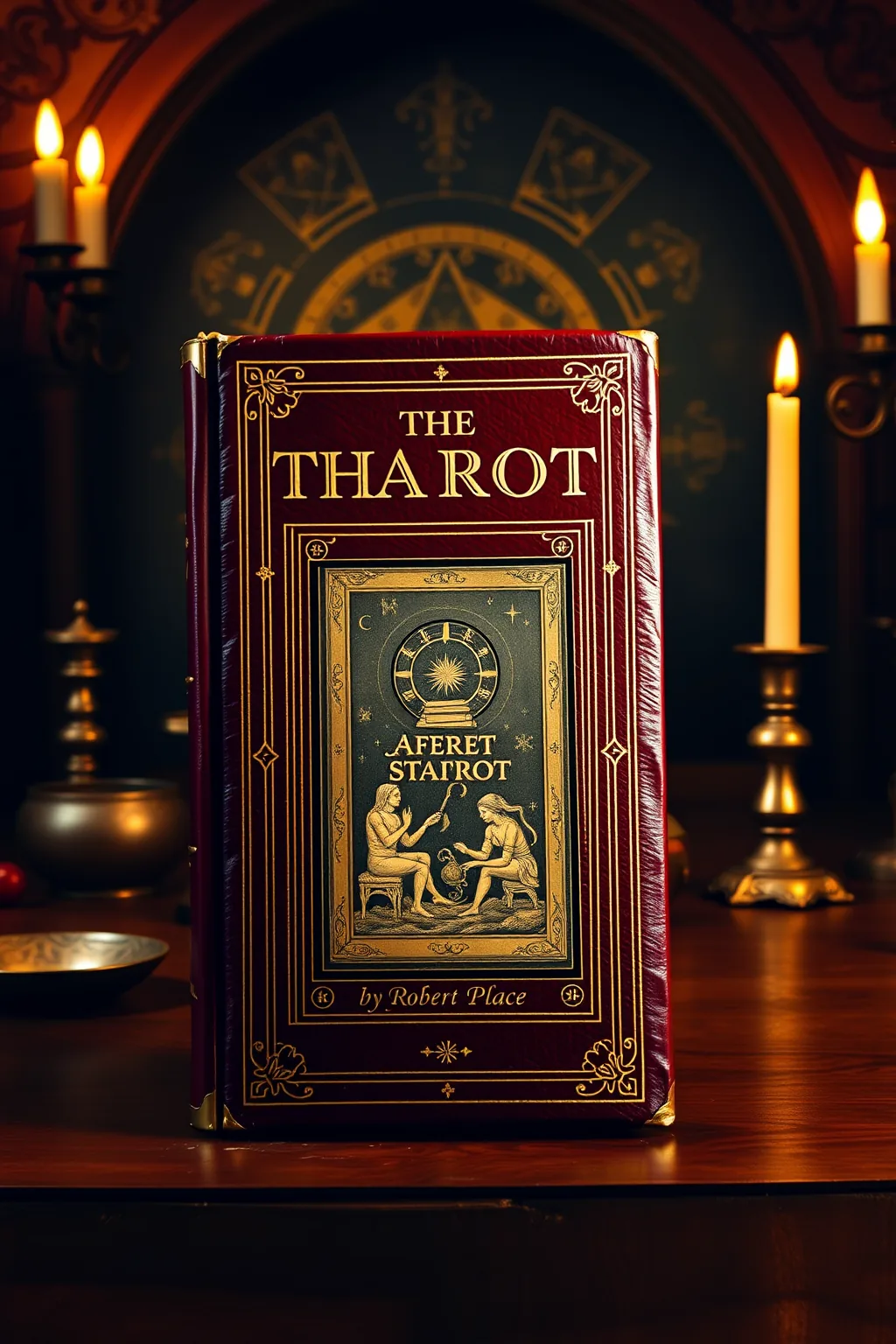
Robert Place's "The Tarot" offers a refreshing departure from the many superficial guides saturating the market. It anchors the deck in historical context, particularly its divergence from simple cartomancy into a complex system of occult philosophy. Place's strength lies in his ability to connect Tarot symbolism to tangible historical developments, such as the influence of Renaissance Neoplatonism, rather than presenting it as a purely abstract or divinely revealed system. His analysis of the Fool, for instance, moves beyond simple interpretations to explore its potential roots in medieval jester iconography and its symbolic role as the uninitiated traveler. A notable limitation, however, is that the sheer density of historical and symbolic connections can occasionally feel overwhelming for readers without prior background in esoteric traditions. The section detailing the correspondences between the Major Arcana and the Kabbalistic Tree of Life, while meticulously researched, demands significant reader engagement. "The Tarot" provides a robust, scholarly foundation for understanding the deck's enduring appeal.
📝 Description
71
Robert Place's 2005 book examines the 78-card Tarot deck's lineage and symbolic language.
Published in 2005, Robert Place's "The Tarot" moves beyond simple fortune-telling to investigate the deck's philosophical and esoteric foundations. The book analyzes both the Major and Minor Arcana, detailing the archetypal stories and occult connections within each card. It serves as both an academic study and a practical manual for those who wish to grasp the Tarot as a wisdom system, rather than solely a predictive instrument.
This work is aimed at dedicated students of esoteric traditions, especially those focused on Western esotericism, Hermeticism, and the history of occult symbols. It will appeal to Tarot enthusiasts seeking a more scholarly and historically informed viewpoint than is common in general guides. Researchers in comparative religion, art history, and cultural studies will also find its thorough analysis of a significant symbolic system valuable. The book is suited for individuals ready to engage with complex ideas and their historical context.
Place's work acknowledges the Tarot's place within the broader currents of Western esotericism. It traces the deck's evolution from playing cards and its incorporation into occult systems by figures such as Eliphas Lévi in the 19th century. The book engages with scholarly discussions about the Tarot's origins and its development into a rich symbolic language over centuries, a subject that has seen renewed academic interest.
💡 Why Read This Book?
• Learn the specific historical trajectory of the Tarot from playing cards to an occult system, as detailed in Place's exploration of decks from the 15th century onward, providing a factual basis for its symbolism. • Understand the integration of Kabbalistic concepts into Tarot imagery, as Place meticulously maps the 22 Major Arcana to the paths on the Tree of Life, offering a structured esoteric framework. • Gain insight into the archetypal narratives embedded within the Tarot, particularly the Fool's journey, as presented through Place's analysis of the Major Arcana's progression and its philosophical implications.
⭐ Reader Reviews
Honest opinions from readers who have explored this book.
❓ Frequently Asked Questions
When was Robert Place's "The Tarot" first published?
Robert Place's "The Tarot" was first published in 2005, offering a scholarly examination of the deck's history and symbolism.
What is the main focus of Robert Place's "The Tarot"?
The book focuses on the Tarot's historical development, its occult symbolism, and its philosophical underpinnings, moving beyond simple divination to explore it as a system of wisdom.
Does "The Tarot" by Robert Place discuss Kabbalah?
Yes, a significant aspect of Place's work involves exploring the correspondences between the Tarot's Major Arcana and the Kabbalistic Tree of Life.
Is this book suitable for beginners in Tarot?
While valuable for all levels, the book's depth and historical context make it particularly suited for intermediate to advanced Tarot students or those with an interest in esoteric history.
What historical period does Place focus on for the Tarot's origins?
Place examines the Tarot's origins in 15th-century playing cards and its subsequent evolution through various esoteric traditions, notably the 19th-century occult revival.
What esoteric traditions are discussed in relation to the Tarot in this book?
The book links the Tarot to Western esotericism, Hermeticism, Kabbalah, and astrological correspondences, providing a multi-faceted understanding of its symbolic language.
🔮 Key Themes & Symbolism
Tarot as Esoteric System
Place presents the Tarot not as a mere fortune-telling device, but as a sophisticated esoteric system with deep roots in Western occult traditions. The book details how the 78 cards, particularly the 22 Major Arcana, function as a symbolic language capable of conveying complex philosophical and spiritual ideas. This perspective is grounded in historical analysis, showing how the Tarot evolved from playing cards into a tool for initiation and self-knowledge, aligning with Hermetic principles of correspondence and microcosm-macrocosm understanding.
Kabbalistic Correspondences
A central theme is the intricate mapping of the Major Arcana onto the Kabbalistic Tree of Life. Place meticulously illustrates how each of the 22 archetypal cards represents a specific path or Sephirah on the Tree. This connection provides a structured framework for understanding the symbolic progression and esoteric meanings of the Tarot, linking it directly to one of the foundational systems of Jewish mysticism and its Western occult adaptations, offering a profound interpretive lens.
Historical Evolution of the Deck
The book traces the lineage of the Tarot deck, beginning with its earliest known forms as playing cards in 15th-century Italy. Place differentiates between these early decks and later esoteric interpretations that emerged, particularly during the 19th century with figures like Eliphas Lévi. This historical perspective is crucial for understanding how the Tarot acquired its rich layers of symbolism and became integrated into various occult traditions, demonstrating its dynamic transformation over centuries.
Archetypal Narratives and Psychology
Place explores the Tarot's Major Arcana as a representation of universal archetypal journeys, often compared to the hero's journey. The progression from The Fool to The World symbolizes stages of spiritual development, psychological integration, and cosmic understanding. This thematic approach views the Tarot as a mirror to the human psyche and a map for spiritual evolution, resonating with Jungian concepts of archetypes and the process of individuation, offering profound self-reflective potential.
💬 Memorable Quotes
Direct passages from the work, attributed to the author.
“The Tarot is not merely a deck of cards used for divination, but a system of esoteric knowledge.”
— This statement expresses the book's core argument: that the Tarot's value lies in its symbolic depth and philosophical framework, positioning it as a serious tool for spiritual and psychological exploration rather than solely a predictive instrument.
“The Fool's journey through the Major Arcana represents the path of initiation.”
— This interpretation highlights the archetypal narrative structure within the Tarot, suggesting that the sequence of Major Arcana cards mirrors a process of growth, learning, and transformation, akin to an alchemical or spiritual quest.
“Kabbalistic correspondences provide a structured means to interpret Tarot symbolism.”
— This emphasizes the book's methodological approach, showcasing how the intricate system of the Kabbalistic Tree of Life offers a coherent and profound framework for understanding the complex meanings embedded within each Tarot card.
“Each card in the Tarot is a microcosm reflecting universal laws.”
— This points to the Hermetic principle of "As Above, So Below," suggesting that the individual Tarot cards contain profound wisdom that mirrors the greater cosmic order and the inner workings of the human psyche.
💡 Key Ideas
Editorial paraphrase of the work's core concepts — not direct quotes.
The historical development of the Tarot is crucial to understanding its esoteric significance.
This quote underscores Place's commitment to historical accuracy, indicating that an appreciation of the Tarot's evolution from playing cards to an occult tool is essential for grasping its many-sided symbolic language.
🌙 Esoteric Significance
Tradition
Place's work firmly sits within the Western Esoteric Tradition, drawing heavily on Hermeticism and Kabbalah. It follows in the footsteps of earlier occultists who integrated Tarot symbolism with these systems, particularly the Kabbalistic Tree of Life. However, Place also distinguishes himself by seeking to connect these esoteric interpretations to historical evidence, aiming to provide a more grounded understanding of how the Tarot evolved into its current occult form, rather than presenting it as solely a divinely revealed or static system.
Symbolism
Key symbols explored include the 22 Major Arcana, which Place correlates with the paths and Sephiroth of the Kabbalistic Tree of Life. The Fool, representing the journey of initiation and the unmanifest potential, is a central motif. The book also examines the symbolism of the Minor Arcana and the court cards, revealing their connections to elemental forces, astrological influences, and psychological archetypes, demonstrating how the entire deck forms a coherent symbolic map.
Modern Relevance
Contemporary practitioners of Hermeticism, Kabbalah, and Tarot enthusiasts seeking a deeper, historically informed understanding frequently draw upon Place's meticulous research. His work informs modern approaches to Tarot that emphasize psychological depth and archetypal exploration, aligning with Jungian psychology. Thinkers and educators in the field of Western esotericism often cite "The Tarot" as a foundational text for understanding the deck's complex symbolic language and its historical integration into occult philosophy.
👥 Who Should Read This Book
• Students of Western Esotericism: Individuals seeking to understand the historical development and symbolic connections of the Tarot within traditions like Hermeticism and Kabbalah will find a rigorous academic framework. • Advanced Tarot Enthusiasts: Those who have moved beyond basic divination and wish to explore the philosophical, psychological, and historical underpinnings of the Tarot will gain a profound new perspective. • Researchers of Comparative Symbolism: Scholars interested in how symbolic systems evolve and integrate across cultures and historical periods will find valuable insights into the Tarot's many-sided nature.
📜 Historical Context
Published in 2005, Robert Place's "The Tarot" arrived during a period of increasing academic and serious popular interest in the historical and esoteric dimensions of the Tarot, moving beyond the more simplistic divination-focused literature that had previously dominated. The work engages with the legacy of 19th-century occultists like Eliphas Lévi and the Hermetic Order of the Golden Dawn, who were instrumental in codifying the Tarot's esoteric meanings and its connection to Kabbalah. Place situates his research within this lineage while also seeking to ground it in earlier historical contexts, such as the Tarot's origins as playing cards in 15th-century Italy. This scholarly approach contrasts with purely intuitive or New Age interpretations and aligns with a broader trend in Western esotericism studies that demands rigorous historical and textual analysis, acknowledging contemporaries like Antoine Faivre who championed the academic study of Western esotericism.
📔 Journal Prompts
The Fool's journey as a map of initiation: Trace your own symbolic 'Fool's journey' through a significant life phase.
Kabbalistic Tree of Life correspondences: Reflect on how the concept of the Sephiroth might illuminate your understanding of the Major Arcana.
Tarot's transition from playing cards: Consider how the mundane origins of the Tarot influence its esoteric interpretations.
Archetypal symbolism in the Minor Arcana: Identify an archetype from the Minor Arcana that currently manifests in your daily life.
The Tarot as a mirror: How do the archetypal narratives within the Major Arcana reflect challenges or growth in your personal development?
🗂️ Glossary
Major Arcana
The set of 22 trump cards in a Tarot deck, representing significant archetypal themes, spiritual lessons, and major life events. They are often seen as the backbone of the Tarot's esoteric meaning.
Minor Arcana
The 56 cards of a Tarot deck, divided into four suits (Wands, Cups, Swords, Pentacles), which typically represent everyday events, challenges, and circumstances. They provide context and detail to the Major Arcana's themes.
Kabbalistic Tree of Life
A diagram used in Kabbalah representing the process of creation and the nature of God through ten emanations (Sephiroth) and 22 paths. It is a foundational model in Western esotericism.
Hermeticism
A philosophical and religious tradition based on writings attributed to Hermes Trismegistus, emphasizing divine wisdom, the interconnectedness of all things, and the pursuit of spiritual enlightenment through understanding cosmic principles.
Archetype
In psychology and mythology, a universal, archaic pattern or image that derives from the collective unconscious and is believed to influence behavior and personality. The Tarot's Major Arcana are often interpreted through archetypal lenses.
Sephiroth
The ten divine attributes or emanations described in Kabbalistic cosmology, forming the structure of the Tree of Life. Each Sephirah represents a different aspect of the divine and its manifestation in the universe.
Cartomancy
The practice of divination using cards, most commonly referring to the use of Tarot or standard playing cards for fortune-telling purposes.
🔮 Readers Also Liked
Browse all →








More by Robert Place
All books →


More Free Divination & Tarot Books
View all →