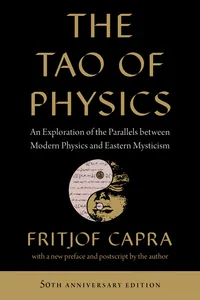
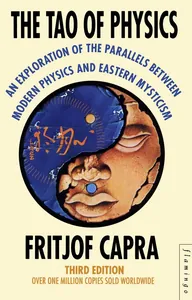
The Tao of Physics

 75
75

The Tao of Physics
Fritjof Capra’s 1984 exploration, The Tao of Physics, attempts to map the conceptual terrain shared by quantum mechanics and Eastern mysticism. It succeeds remarkably in presenting complex physics ideas in accessible language, drawing parallels between subatomic behavior and concepts like Brahman or emptiness. The strength lies in its persuasive synthesis, making the esoteric feel intellectually grounded. However, the book's primary limitation is its occasional tendency to overstate these parallels, sometimes glossing over significant differences between scientific models and spiritual doctrines to force a connection. The discussion of the observer effect in quantum mechanics, for instance, is compellingly linked to subjective experience, but the leap to a universal spiritual consciousness warrants careful consideration. It’s a seminal work that opened many minds, though a critical reader will still need to engage their own discernment.
📝 Description
75
Fritjof Capra's 1975 book connects 20th-century physics with Eastern mysticism.
Published in 1975, The Tao of Physics by Fritjof Capra draws parallels between the discoveries of modern physics and the spiritual traditions of Hinduism, Buddhism, and Taoism. Capra argues that contemporary physics, particularly quantum mechanics and relativity, reveals a worldview that aligns remarkably with ancient Eastern philosophies. Despite their different methods, both scientific investigation and spiritual practices seem to arrive at similar conclusions about the fundamental nature of reality.
The book is for readers interested in how science and spirituality might intersect, especially those who find purely materialistic or reductionist scientific models insufficient. It speaks to individuals curious about comparative philosophy, the history of scientific thought, or the philosophical questions raised by quantum theory and Einstein's theories. It offers a way for those seeking to reconcile rational analysis with intuitive understanding.
Capra discusses key concepts such as the observer effect in quantum mechanics, where observation impacts the observed, and the deep interconnectedness of all things. These ideas challenge the classical Newtonian view of the universe, suggesting a unified reality beneath apparent distinctions. The work presents energy as the basic building block of matter.
The Tao of Physics emerged during a period of growing interest in Eastern philosophies within Western counterculture. It resonated with a generation questioning established scientific and societal paradigms. The book's synthesis of physics and mysticism built upon earlier efforts to bridge these domains, influenced by thinkers like David Bohm and movements that sought to unify scientific and spiritual understanding.
💡 Why Read This Book?
• You will gain a new perspective on 20th-century physics discoveries, understanding how concepts like the observer effect (discussed in Chapter 4) challenge classical determinism. • You will learn to see potential correlations between scientific models, such as particle-wave duality, and philosophical ideas from traditions like Buddhism, as explored throughout the text. • You will explore how Fritjof Capra connects the interconnectedness of subatomic particles to the concept of Brahman in Hinduism, offering a holistic worldview.
⭐ Reader Reviews
Honest opinions from readers who have explored this book.
❓ Frequently Asked Questions
When was The Tao of Physics first published?
The Tao of Physics by Fritjof Capra was first published in 1984, marking a significant moment in the dialogue between science and spirituality.
What is the main argument of The Tao of Physics?
The book's central argument is that modern physics, particularly quantum mechanics and relativity, reveals a reality that is fundamentally interconnected and dynamic, mirroring concepts found in Eastern mystical traditions.
Which Eastern traditions does The Tao of Physics reference?
Fritjof Capra's work draws parallels with Hinduism, Buddhism (especially Zen), and Taoism, exploring their shared philosophical underpinnings with contemporary physics.
Is The Tao of Physics a scientific text or a philosophical one?
It functions as a bridge between science and philosophy. While it explains scientific concepts, its primary aim is to explore their philosophical and mystical implications, making it a work of comparative philosophy.
Who is Fritjof Capra?
Fritjof Capra is an Austrian-born physicist and systems theorist, best known for authoring The Tao of Physics, which popularized the connections between physics and Eastern spirituality.
What does the book say about the nature of reality?
The book suggests that reality, as understood by modern physics, is not composed of discrete, objective entities but is a dynamic, interconnected web of energy and relationships, echoing ideas of unity in Eastern thought.
🔮 Key Themes & Symbolism
Unity and Interconnectedness
A core theme is the fundamental unity of all things, a concept Capra links between quantum field theory and the Eastern spiritual idea of Brahman or the Tao. The work explores how subatomic particles are not separate entities but interconnected nodes in a cosmic web. This challenges the classical view of a world composed of independent objects, suggesting instead a holistic reality where separation is an illusion. The implications for consciousness and our relationship with the universe are profound.
The Observer Effect
The book highlights the observer effect in quantum mechanics, where the act of measurement influences the state of a quantum system. Capra draws parallels between this phenomenon and the emphasis on subjective experience and consciousness in Eastern traditions like Zen Buddhism. It suggests that the distinction between the observer and the observed, a core part of classical science, breaks down at the quantum level, hinting at a deeper integration of mind and matter.
Dynamic and Relational Reality
The Tao of Physics posits that reality is not static but a continuous flow of energy and processes. Modern physics describes particles as patterns of energy that constantly interact and transform, a perspective echoed in the Taoist concept of the Tao as an ever-flowing, dynamic principle. This view moves away from a mechanistic universe to one characterized by flux, rhythm, and constant change, emphasizing relationships over isolated components.
Limitations of Linear Language
Capra implicitly addresses the limitations of language and conceptual frameworks in describing ultimate reality. He notes how the rational, analytical language of Western science struggles to capture the holistic insights of Eastern mysticism. The book itself serves as an attempt to use language to point towards these deeper, often ineffable, truths about the cosmos and consciousness.
💬 Memorable Quotes
Direct passages from the work, attributed to the author.
“The observer and the observed are one.”
— This interpretation highlights the quantum mechanical principle that the act of observation affects the observed. It proposes that the apparent separation between consciousness and the physical world is not absolute, hinting at a unified field of reality where mind and matter are intrinsically linked.
“Matter is energy, and energy is matter.”
— This reflects Einstein's famous E=mc² equation. Capra uses it to show how physics demonstrates that matter and energy are interchangeable, supporting the idea of a fundamental, unified substance underlying the physical world, akin to the concept of 'Shakti' in Hinduism.
“We are all part of a cosmic web.”
— This interpretation emphasizes the interconnectedness of all phenomena. It suggests that individual existence is not isolated but deeply interwoven with the entire universe, reflecting concepts of dependent origination found in Buddhist philosophy.
💡 Key Ideas
Editorial paraphrase of the work's core concepts — not direct quotes.
The universe is not a machine, but a great thought.
This paraphrased concept suggests a shift from a mechanistic worldview to one where consciousness or intelligence is fundamental. It implies that reality might be organized by principles more akin to mind than to clockwork, aligning with certain philosophical and spiritual interpretations of existence.
The Tao is the source of all things, yet it is empty.
This paraphrased concept from Taoism speaks to the ineffable nature of ultimate reality. It suggests that the fundamental ground of being is not a 'thing' but a potentiality, a void from which all manifest phenomena arise, echoing concepts of 'sunyata' (emptiness).
🌙 Esoteric Significance
Tradition
The work aligns with Hermetic and Neoplatonic impulses to find universal principles across diverse systems of thought. It bridges modern scientific cosmology with ancient Eastern metaphysics, particularly Vedanta Hinduism and Mahayana Buddhism, by identifying shared ontological and epistemological concerns. While not strictly adhering to any single esoteric lineage, it functions as a modern interpretation of perennial philosophy, suggesting a unified spiritual truth accessible through both rational inquiry and intuitive wisdom.
Symbolism
The book uses concepts like the 'particle' and 'field' as symbolic touchstones. The quantum particle, often depicted as a point-like entity, symbolically represents the illusion of discrete individuality. Conversely, the quantum field, a pervasive substratum of energy, symbolizes the underlying unity and interconnectedness of all existence, akin to the concept of the 'Akashic Field' in Theosophy or the 'Brahman' in Vedanta. The dynamic interplay between particle and field mirrors cosmic processes.
Modern Relevance
Capra's work continues to influence contemporary thinkers in systems theory, ecological studies, and consciousness research. It laid groundwork for the ongoing dialogue between neuroscience and contemplative traditions, and its ideas are echoed in popular science writing that explores the non-dualistic nature of reality. Modern proponents of integrated spirituality and science, as well as those in transpersonal psychology, often cite The Tao of Physics as a foundational text that validated cross-disciplinary exploration.
👥 Who Should Read This Book
• Aspiring physicists and philosophy students interested in the historical and conceptual evolution of scientific thought, particularly the shift from classical to quantum paradigms. • Readers of comparative religion and Eastern philosophy seeking to understand potential correlations between ancient wisdom traditions and modern scientific discoveries. • Individuals exploring holistic worldviews and seeking to reconcile scientific understanding with spiritual or metaphysical perspectives on the nature of reality.
📜 Historical Context
The Tao of Physics arrived in 1984 amidst a vibrant countercultural and New Age milieu that actively sought to synthesize Eastern spirituality with Western scientific advancements. The preceding decades had seen a surge of interest in meditation, quantum physics, and holistic thinking. Physicists like David Bohm, whose ideas on the 'implicate order' are discussed by Capra, were themselves exploring the philosophical implications of their work. The book's success can be partly attributed to its ability to articulate these complex ideas in an accessible manner, providing a framework for understanding the universe that felt both scientifically modern and spiritually resonant. It arrived at a time when Western thought was beginning to question purely materialistic paradigms, making its message particularly timely and influential.
📔 Journal Prompts
The concept of Brahman as underlying unity.
Observer effect in quantum mechanics.
The Taoist idea of dynamic, flowing reality.
Parallels between particle-wave duality and Eastern philosophical concepts.
The implication of 'matter is energy' for personal identity.
🗂️ Glossary
Quantum Mechanics
A fundamental theory in physics that describes nature at the smallest scales of energy and matter. It introduced concepts like quantization, wave-particle duality, and the uncertainty principle, challenging classical physics.
Relativity
Einstein's theories of special and general relativity, which revolutionized our understanding of space, time, gravity, and the universe. Key concepts include spacetime and the equivalence of mass and energy (E=mc²).
Brahman
A central concept in Hinduism, referring to the ultimate reality, the supreme cosmic spirit, or the unchanging, underlying essence of all existence. It is often described as infinite, eternal, and beyond human comprehension.
Tao
A fundamental concept in Taoism, often translated as 'the Way.' It refers to the natural order of the universe, the underlying principle that governs all things, and the source from which all phenomena arise.
Zen Buddhism
A school of Mahayana Buddhism that emphasizes meditation, intuition, and direct experience of enlightenment. It often uses koans (paradoxical riddles) to break down rationalistic thought processes.
Observer Effect
In quantum mechanics, the phenomenon where the act of observing or measuring a system inevitably influences its state. This suggests a fundamental link between consciousness and the physical world.
Particle-Wave Duality
A principle in quantum mechanics stating that elementary particles can exhibit properties of both waves and particles, depending on the experimental setup. It challenges the classical distinction between these two concepts.
🔮 Readers Also Liked
Browse all →









More by Fritjof Capra
All books →


More Free Occult Philosophy Books
View all →