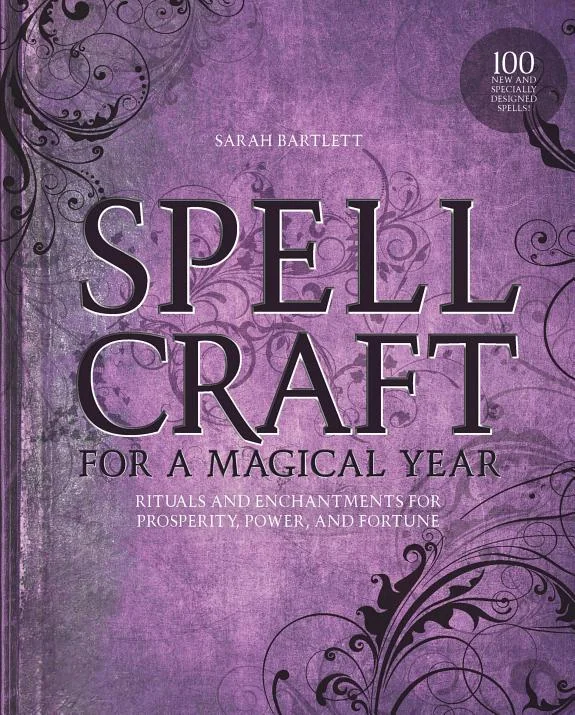
Spellcraft for a Magical Year
 76
76

Spellcraft for a Magical Year
Sarah Bartlett’s *Spellcraft for a Magical Year* offers a pragmatic, calendar-driven approach to spellwork that feels grounded rather than ethereal. The strength lies in its systematic organization, providing a clear pathway through the year’s magical potential. For instance, the detailed breakdown of correspondences for each month, linking specific Sabbats like Ostara with relevant spell intentions, is exceptionally useful. However, the book occasionally leans towards a prescriptive tone, which, while helpful for beginners, might feel limiting for more experienced practitioners seeking innovative approaches. A passage discussing the energy of the summer solstice, suggesting rituals focused on solar deities, exemplifies this blend of tradition and direct application. The work serves as a reliable companion for consistent magical practice.
📝 Description
76
Sarah Bartlett's 2015 almanac guides practitioners through a year of spellcraft aligned with cosmic and natural cycles.
Spellcraft for a Magical Year, published in 2015, acts as a detailed guide for those who practice magic. It presents a month-by-month plan that includes spells, rituals, and enchantments. These magical workings are designed to use influences such as planetary alignments, solar energies, natural events, and important dates from pagan traditions, goddess worship, and established festivals.
The book is for individuals already involved in or wishing to start practical magical work. It is particularly useful for those who understand how timing affects spellcasting and want to improve their results by working with specific energetic periods. Both beginners and those with some experience in magic will find its structured approach and monthly themes helpful for their practice throughout the year.
This book reflects a modern engagement with folk magic, Wicca, and neo-paganism, traditions that have historically relied on calendrical and astronomical patterns. It differs from purely academic studies by giving readers direct methods to adapt older practices. The text aims to support personal empowerment and spiritual development within contemporary Western esoteric practices, grounding magical work in observable natural and celestial rhythms.
💡 Why Read This Book?
• Learn to synchronize spellcasting with natural cycles, maximizing potency by understanding the energetic significance of each month, as detailed in the guide's month-by-month structure. • Discover specific rituals and enchantments tailored to pagan holidays like Samhain and All Souls' Day, drawing power from ancient traditions and historical celebrations. • Harness planetary and solar influences for targeted spellwork, understanding how celestial timing, as explained by Sarah Bartlett, can enhance the success of your magical intentions.
⭐ Reader Reviews
Honest opinions from readers who have explored this book.
❓ Frequently Asked Questions
What is the primary focus of Sarah Bartlett's Spellcraft for a Magical Year?
The book focuses on providing a month-by-month guide to spells, rituals, and enchantments, emphasizing the use of planetary, solar, and natural influences to maximize spell success throughout the year.
When was Spellcraft for a Magical Year first published?
Spellcraft for a Magical Year was first published on July 15, 2015.
What types of holidays and celebrations does the book cover?
It covers pagan holidays (Sabbats), traditional festive dates, goddess energy, and specific celebrations like Halloween and All Souls' Day.
Who is the author of Spellcraft for a Magical Year?
The author is Sarah Bartlett, a renowned figure in the field of esoteric literature and divination.
Does the book offer guidance on specific types of spells?
Yes, it offers guidance on which spells work best during particular times of the year, aligning them with natural and celestial influences.
Is Spellcraft for a Magical Year suitable for beginners?
Yes, its structured, month-by-month approach makes it accessible for beginners seeking to understand and apply magical principles throughout the year.
🔮 Key Themes & Symbolism
Cyclical Magic and Timing
The core of this work revolves around the principle that magical efficacy is deeply tied to temporal and cosmic alignment. Bartlett meticulously maps out the year, demonstrating how to draw upon the specific energetic currents of each month. This includes honoring the progression of the seasons, the phases of the moon, and the transits of planets. The book encourages practitioners to view magic not as an isolated act, but as a practice integrated with the natural rhythms of the Earth and the cosmos, thereby amplifying intent and outcome.
Pagan and Goddess Traditions
A significant aspect of the book is its engagement with pagan holidays, often referred to as Sabbats in Wiccan and neo-pagan traditions. Bartlett connects these celebrations, such as Yule, Ostara, Beltane, Litha, Lughnasadh, Mabon, and Samhain, with specific goddess energies and archetypes. The text provides rituals and spells designed to honor these deities and tap into the unique spiritual power inherent in each festival, fostering a connection to ancient earth-based spiritualities.
Planetary and Solar Influences
Bartlett emphasizes the practical application of astrological principles within spellcraft. The book details how to utilize the energies associated with different planets and the sun for specific magical purposes. This involves understanding the traditional significations of celestial bodies—for instance, Venus for love spells or Mars for energetic workings—and timing rituals accordingly. This systematic approach aims to imbue spells with greater power by aligning them with corresponding cosmic forces active at particular times.
Ritual and Enchantment Crafting
Beyond mere theoretical discussion, *Spellcraft for a Magical Year* offers concrete instructions for crafting and performing spells and rituals. It guides readers through the process of intention setting, ingredient selection, and procedural execution, all contextualized within the monthly and celestial frameworks provided. The book empowers individuals to create their own magical practices, adapted to their needs while respecting the established wisdom of esoteric traditions.
💬 Memorable Quotes
Direct passages from the work, attributed to the author.
“Draw upon beneficial universal energy at any time in the year to maximize your spell success!”
— This statement expresses the book's fundamental premise: that by understanding and aligning with natural and cosmic cycles, practitioners can significantly enhance the effectiveness of their magical workings regardless of the specific day.
“Using planetary, solar, and other natural influences, as well as the ancient power of pagan holidays, goddess energy, and traditional festive dates...”
— This highlights the diverse sources of power the book draws upon, illustrating its comprehensive approach to magical timing and practice by integrating celestial, terrestrial, and cultural influences.
“Spellcraft for a Magical Year gives a month-by-month guide to spells, rituals, and enchantments.”
— This concisely describes the book's structure and primary function as a practical almanac, offering sequential guidance for magical activities throughout the year.
“Discover which spells work best on Sabbats, Halloween or All Souls' Day.”
— This points to the book's utility in aligning specific magical practices with significant dates within pagan and traditional calendars, suggesting a focus on timely and relevant spellwork.
“This comprehensive almanac by the renowned Sarah Bartlett includes important celebrations.”
— This emphasizes the thoroughness of the guide and the author's established reputation, assuring readers of the depth and credibility of the information provided.
🌙 Esoteric Significance
Tradition
The work firmly resides within the Western Esoteric Tradition, specifically drawing from contemporary Wicca, neo-paganism, and folk magic practices. It departs from more rigid, dogmatic systems by focusing on accessible, adaptable techniques that can be integrated into modern life. Its lineage connects to older European folk traditions and the ceremonial magic revived in the late 19th and early 20th centuries, but with a modern emphasis on personal empowerment and natural cycles.
Symbolism
Key symbols include the Wheel of the Year, representing the eight major pagan festivals and the cyclical nature of life, death, and rebirth. The Moon, with its distinct phases, is crucial for timing various spells, symbolizing intuition, the subconscious, and the feminine principle. Planetary symbols (e.g., Mars for energy, Venus for love) are also central, used to imbue rituals with specific cosmic energies and intentions.
Modern Relevance
Contemporary practitioners of witchcraft, modern druidry, and various forms of earth-based spirituality continue to find value in Bartlett's systematic approach. Thinkers and practitioners focused on eco-spirituality and seasonal living often reference the importance of aligning with natural cycles, a concept central to this book. Its accessible format makes it a foundational text for many exploring personal magical practice today.
👥 Who Should Read This Book
• Aspiring Witches and Pagans seeking a structured, year-long magical practice guide that connects spellwork to natural cycles and festivals. • Intermediate practitioners looking to deepen their understanding of timing in magic, specifically by utilizing planetary hours, lunar phases, and seasonal energies. • Individuals interested in comparative religion or folklore studies, wanting to explore the practical application of traditions surrounding pagan holidays and goddess veneration.
📜 Historical Context
Published in 2015, *Spellcraft for a Magical Year* arrived during a period of burgeoning interest in practical esotericism and neo-paganism, building upon decades of revived interest in witchcraft and earth-based spiritualities. This era saw a proliferation of accessible guides aimed at clarifying magical practices for a wider audience. Unlike the more academic or historically focused works of earlier esoteric scholars like Eliphas Lévi in the 19th century, Bartlett’s approach is distinctly contemporary and practitioner-oriented. The book found its place within a landscape populated by authors like Doreen Virtue and Scott Cunningham, who also offered accessible pathways into spiritual and magical disciplines. Its reception was generally positive within its target audience, appreciated for its clear structure and actionable advice, fitting comfortably into the growing market for personal magical development.
📔 Journal Prompts
Reflect on the energetic correspondences of the month of Ostara and how they might apply to a personal goal.
Consider the symbolism of the Waxing Moon and its potential use in a spell for growth.
Analyze the significance of Samhain within the context of the Wheel of the Year.
How can the archetypal energy of a specific goddess, mentioned in relation to a Sabbat, inform your current life challenges?
Evaluate the practical application of planetary hours for a ritual you plan to perform.
🗂️ Glossary
Sabbat
One of the eight major festivals in the Wiccan and neo-pagan Wheel of the Year, marking significant points in the solar cycle and agricultural seasons (e.g., Samhain, Yule, Beltane).
Wheel of the Year
A cyclical representation of the eight principal festivals observed by many modern Pagans and Wiccans, symbolizing the annual progression of seasons and the interplay of light and dark.
Planetary Hours
An ancient system where each hour of the day and night is assigned to one of the seven classical planets, believed to imbue that hour with the planet's specific energies for magical work.
Goddess Energy
The archetypal feminine divine power associated with specific aspects of life, nature, or consciousness, often venerated during particular festivals or lunar phases.
Sympathetic Magic
A form of magic based on the principle that like affects like; actions performed on one object or person can have a sympathetic effect on another related object or person.
Correspondences
The symbolic associations between different elements, such as colors, herbs, crystals, planets, and deities, used to enhance the focus and power of magical workings.
All Souls' Day
A Christian observance on November 2nd for commemorating the departed, which shares a temporal proximity with the pagan festival of Samhain, often blending or influencing related traditions.
This book appears in 1 collection
🔮 Readers Also Liked
Browse all →









From the “Spellcraft” Collection
View all →


More Free Occult Philosophy Books
View all →