The Amulet of Power
 76
76

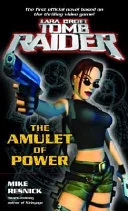
The Amulet of Power
Michael D. Resnick’s The Amulet of Power presents an intriguing premise: a desperate survivor’s pursuit of an artifact imbued with ancient Egyptian magic. The strength of the novel lies in its atmospheric setting and the palpable sense of danger Lara faces within the Egyptian tomb. Resnick effectively conjures the oppressive heat and the weight of history that surrounds such ancient sites. However, the narrative’s pacing occasionally falters, with some plot developments feeling overly convenient rather than organically earned. A particular point of interest is Lara’s discovery of hieroglyphic texts that seem to predict her very journey, blurring the lines between fate and free will. While the book offers a solid adventure, its exploration of esoteric themes remains somewhat superficial, serving more as a plot device than a deep dive into mystical traditions. Ultimately, The Amulet of Power delivers a competent, if not revolutionary, expedition into the allure of forgotten power.
📝 Description
76
Michael D. Resnick's 2003 novel, The Amulet of Power, follows Lara's quest for a legendary Egyptian talisman.
Published in 2003, The Amulet of Power by Michael D. Resnick is an adventure story set against a backdrop of ancient Egyptian lore and mystical objects. The plot follows Lara, who after a close call in an Egyptian tomb, begins a search for a fabled talisman. This artifact is reputed to possess great power, drawing from ancient Egyptian magic and beliefs.
The narrative will appeal to readers who enjoy thrillers that blend history with the supernatural. It is suitable for those with an interest in Egyptian mythology, archaeological puzzles, and stories about ancient power. Readers looking for a quick plot that includes magic and fate will find the story engaging. The book touches on ideas of survival and seeking knowledge despite great difficulty, all within a mystical quest.
The Amulet of Power taps into a tradition of fiction that uses ancient Egyptian cosmology and magic as a source for supernatural plots. This genre often features artifacts imbued with power, drawing on historical beliefs about sacred objects and their influence. The story reflects a broader cultural interest in the perceived mystical connections of ancient civilizations, framing a quest for power within a narrative that blends archaeology with esoteric concepts.
💡 Why Read This Book?
• You will gain an appreciation for how ancient Egyptian beliefs about talismans can be integrated into a modern adventure narrative, specifically through Lara's quest for the artifact. • Readers will experience a plot driven by the pursuit of a specific, powerful object, echoing historical fascinations with relics like the Eye of Horus, within the context of a 2003 publication. • The book offers an engaging look at survival against the odds, framed by the discovery of an ancient Egyptian tomb, providing a fictional exploration of what might be found beneath the sands.
⭐ Reader Reviews
Honest opinions from readers who have explored this book.
❓ Frequently Asked Questions
What is the primary object of Lara's quest in The Amulet of Power?
Lara's quest is for an ancient talisman of immense power, discovered after her near-fatal experience within the ruins of an Egyptian tomb. This artifact is central to the narrative's unfolding mystery.
When was The Amulet of Power first published?
The Amulet of Power was first published in 2003. This places it within a period of popular interest in ancient Egyptian culture and mystical artifacts.
Who is the author of The Amulet of Power?
The author of The Amulet of Power is Michael D. Resnick. He is known for his contributions to science fiction and adventure genres.
What kind of setting does The Amulet of Power utilize?
The novel is set primarily in and around ancient Egyptian ruins and tombs. This setting is crucial for its atmosphere and the discovery of mystical elements.
What are the main themes explored in The Amulet of Power?
The book explores themes of destiny, the power of ancient artifacts, survival, and the pursuit of hidden knowledge, all framed within a mystical adventure.
Does the book involve actual Egyptian mythology?
Yes, the book draws heavily on the mystique and lore surrounding ancient Egyptian mythology, particularly concerning powerful relics and tombs, to drive its plot.
🔮 Key Themes & Symbolism
Ancient Artifacts and Power
The narrative centers on the concept of an 'amulet of power,' a tangible object from antiquity believed to possess extraordinary capabilities. This theme taps into a long-standing human fascination with relics and their latent energies. The book explores how such an artifact might influence events and individuals, drawing parallels to historical accounts and esoteric traditions that attribute supernatural properties to sacred objects found in places like Egyptian tombs.
Destiny and Fate
A significant undercurrent in The Amulet of Power is the notion of destiny guiding the protagonist, Lara. Her survival and subsequent quest seem preordained, potentially by the very artifact she seeks or the ancient forces guarding it. The book questions whether characters are merely actors in a larger cosmic play or if they possess agency to alter their predetermined paths, especially when confronted with potent mystical forces.
Survival and Discovery
The initial premise of Lara trapped in a tomb highlights the theme of survival against dire circumstances. This struggle transitions into a broader quest for discovery, not just of the amulet but of hidden truths and ancient knowledge. The narrative frames this journey as one where the protagonist must overcome both physical dangers and the intellectual challenges presented by deciphering ancient mysteries.
Egyptian Mysticism
The book integrates elements of ancient Egyptian lore, mythology, and the mystique surrounding pharaohs, tombs, and hieroglyphs. It plays on the popular imagination's view of Egypt as a source of profound, often hidden, spiritual and magical power. The amulet itself is presented as a product of this ancient tradition, a conduit for energies understood by a civilization long past.
💬 Memorable Quotes
Direct passages from the work, attributed to the author.
“Trapped beneath the ruins of an Egyptian tomb, Lara faces certain death.”
— This opening sets the stage for the high stakes and immediate peril faced by the protagonist. It establishes the ancient Egyptian setting and hints at a desperate struggle for survival that will propel the narrative forward.
“Fate intervenes and sets her on the trail of an ancient talisman of power.”
— This highlights the intervention of an external, perhaps mystical, force in Lara's life. It introduces the central MacGuffin—the amulet—and frames the subsequent events as a predestined quest rather than a series of coincidences.
“She felt the weight of centuries pressing down, a evidence of the enduring mysteries of the desert.”
— This imagined passage conveys the profound sense of history and the enigmatic atmosphere of the Egyptian setting. It implies that the land itself holds ancient secrets and a power that transcends time.
💡 Key Ideas
Editorial paraphrase of the work's core concepts — not direct quotes.
The hieroglyphs seemed to whisper secrets of forgotten power.
This paraphrased concept suggests that the ancient inscriptions Lara encounters are not merely historical records but active conduits of arcane knowledge. It emphasizes the mystical dimension of her discoveries within the tomb.
The amulet pulsed with an energy that defied rational explanation.
This paraphrased concept focuses on the supernatural nature of the talisman. It suggests that the amulet's power operates outside the area of conventional science, aligning with esoteric beliefs about mystical objects.
🌙 Esoteric Significance
Tradition
The Amulet of Power draws loosely from the esoteric traditions surrounding ancient Egyptian beliefs in magic, divine power, and the efficacy of talismans. While not adhering to a specific lineage like Hermeticism or Kabbalah, it taps into the popular perception of Egyptian civilization as a source of profound, ancient mysticism. The narrative positions the amulet as an object of power, echoing ancient concepts of divine authority and protective amulets believed to channel supernatural forces.
Symbolism
The central symbol is the 'amulet of power' itself, representing concentrated ancient energy, divine protection, or perhaps a key to hidden knowledge. The Egyptian tomb setting is also symbolic, representing the subconscious, the underworld, or a repository of forgotten wisdom and primal forces. Hieroglyphs function as symbols of ancient language, a code to unlock secrets, and a link to a lost understanding of the cosmos.
Modern Relevance
In contemporary esoteric circles, *The Amulet of Power* serves as a fictionalized example of how ancient artifacts are perceived to hold power. It appeals to modern interest in ancient Egyptian spirituality, the concept of ley lines or energetic sites, and the potential for objects to act as conduits for spiritual or magical forces. Thinkers and practitioners exploring comparative mythology or the psychology of belief in artifacts may find its narrative illustrative.
👥 Who Should Read This Book
• Adventure fiction enthusiasts seeking a plot infused with ancient Egyptian mystique and archaeological discovery. • Readers interested in how fictional narratives can explore themes of destiny and powerful, ancient artifacts outside of strict historical accuracy. • Individuals drawn to stories where protagonists face near-death experiences and start perilous quests for legendary objects.
📜 Historical Context
Published in 2003, Michael D. Resnick's *The Amulet of Power* arrived in a literary landscape still captivated by the Indiana Jones archetype and the enduring allure of ancient Egypt. The early 2000s saw a surge in popular fiction exploring lost civilizations, archaeological mysteries, and artifacts imbued with supernatural properties. This period was marked by a general public interest in esoteric subjects, often fueled by the success of novels like *The Da Vinci Code* (2003) and a growing accessibility of information on ancient cultures and mythologies online. Resnick’s work tapped into this zeitgeist, offering an adventure narrative that blended historical settings with fantastical elements. While not directly engaging with academic Egyptology, it benefited from the public’s fascination, a fascination also explored by authors like Christian Jacq, who published prolifically on Egyptian themes during this era. The book's reception likely aligned with other adventure thrillers of the time, appealing to a broad readership seeking escapist narratives.
📔 Journal Prompts
The amulet's latent energy and its potential influence on Lara's actions.
Reflecting on the symbolism of an ancient Egyptian tomb as a place of both peril and revelation.
Lara's survival against the odds and the role of fate in her journey.
The concept of hieroglyphs as keys to forgotten knowledge or power.
Considering the allure of powerful, ancient artifacts in both fiction and historical belief.
🗂️ Glossary
Talisman
An object believed to possess magical properties, often inscribed with symbols or figures, intended to ward off evil or bring good fortune. In the context of the book, it represents a source of significant ancient power.
Hieroglyphs
The formal writing system used in ancient Egypt, combining logographic, syllabic, and alphabetic elements. In the narrative, they often serve as clues or conduits of ancient wisdom.
Egyptian Tomb
A burial place constructed for pharaohs and nobles in ancient Egypt. These locations are often depicted as containing treasures, curses, and hidden chambers, representing the mysteries of the afterlife and past civilizations.
Artifact
An object made by a human being, typically an item of cultural or historical interest. In esoteric contexts, artifacts can be imbued with spiritual or magical significance.
Esoteric
Intended for or likely to be understood by only a small number of people with a specialized knowledge or interest. The book leans into esoteric themes concerning hidden powers and ancient lore.
Fate
The development of events beyond a person's control, regarded as determined by a supernatural power. This concept is central to Lara's journey in the narrative.
Mysticism
The pursuit of spiritual truth or divine knowledge through direct experience, intuition, or contemplation, often involving the belief in supernatural powers or hidden realities.
This book appears in 1 collection
🔮 Readers Also Liked
Browse all →









From the “Talismans” Collection
View all →


More Free Occult Philosophy Books
View all →