Fritjof Capra is an author and physicist known for connecting modern physics with Eastern mysticism and systems theory.
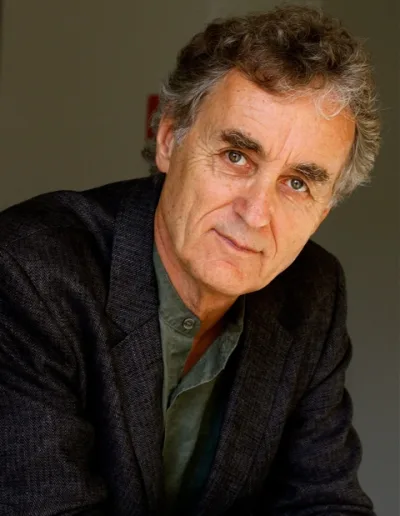
Fritjof Capra, born in Austria in 1939, is an author, physicist, and systems theorist recognized for his work bridging scientific concepts with philosophical and spiritual traditions. He earned a PhD in theoretical physics from the University of Vienna and conducted research at various institutions globally. His early career involved work in particle physics and systems theory. Capra's writings explore the implications of scientific discoveries, particularly drawing parallels between quantum physics and Eastern mystical thought.
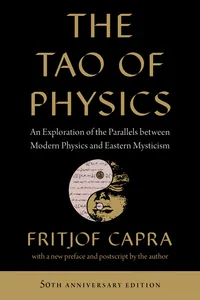
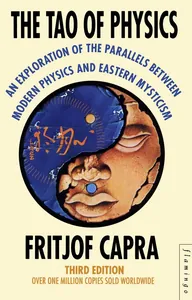
He is widely known for his seminal book, "The Tao of Physics," which posits that modern physics and Eastern metaphysics converge towards similar understandings of reality. Capra also co-founded the Center for Ecoliteracy in Berkeley, California, dedicated to promoting ecological awareness and systems thinking in education. His work extends to deep ecology, the philosophy of science, and the interconnectedness of life systems, influencing discussions on science, society, and culture.
Bridging Physics and Mysticism
Fritjof Capra gained significant recognition with his 1975 book, "The Tao of Physics: An Exploration of the Parallels Between Modern Physics and Eastern Mysticism." This work, which became an international bestseller, suggests a profound convergence between the findings of 20th-century physics, particularly quantum mechanics, and the ancient wisdom traditions of the East, such as Hinduism and Buddhism. Capra argues that both scientific inquiry and mystical experience can lead to similar insights about the fundamental nature of reality, describing the universe as an interconnected web of relationships rather than a collection of separate entities. His exploration of these parallels has been credited with influencing the rise of quantum mysticism and introducing these ideas to a broad audience.
Systems Theory and Deep Ecology
Beyond his initial work, Capra has been a prominent advocate for systems theory and its application to understanding complex phenomena, including ecological and social systems. His book "The Web of Life: A New Scientific Understanding of Living Systems" synthesizes recent theories in complexity and nonlinear dynamics to propose a new framework for describing life. Capra's work in deep ecology emphasizes the interconnectedness of all living beings and the environment, advocating for a shift in human perspective from dominance over nature to a sense of belonging within the ecological web. He co-founded the Center for Ecoliteracy, which aims to integrate these ecological and systems thinking principles into educational curricula, fostering a more sustainable and holistic understanding of the world.
Intellectual Influences and Evolution
Capra identifies physicist Geoffrey Chew as a key mentor, particularly through his association with Chew's research group and the S-matrix bootstrap theory. This theory, which viewed the universe as a self-consistent web of interrelated events, served as a foundational element for Capra's systemic philosophy. While bootstrap theory was later superseded in mainstream physics by the Standard Model, Capra has suggested its underlying principles might be revisited. His intellectual journey has involved engaging with thinkers across various disciplines, exploring the evolving paradigms in science, society, and spirituality, and contributing to dialogues on the nature of knowledge and reality.
Key Ideas
- Parallels between modern physics and Eastern mysticism
- The universe as an interconnected web of relationships
- Application of systems theory to ecological and social issues
- Deep ecology and the interconnectedness of life
- Holistic understanding of science, society, and spirituality
Books by
7 free public domain books · Read online or download