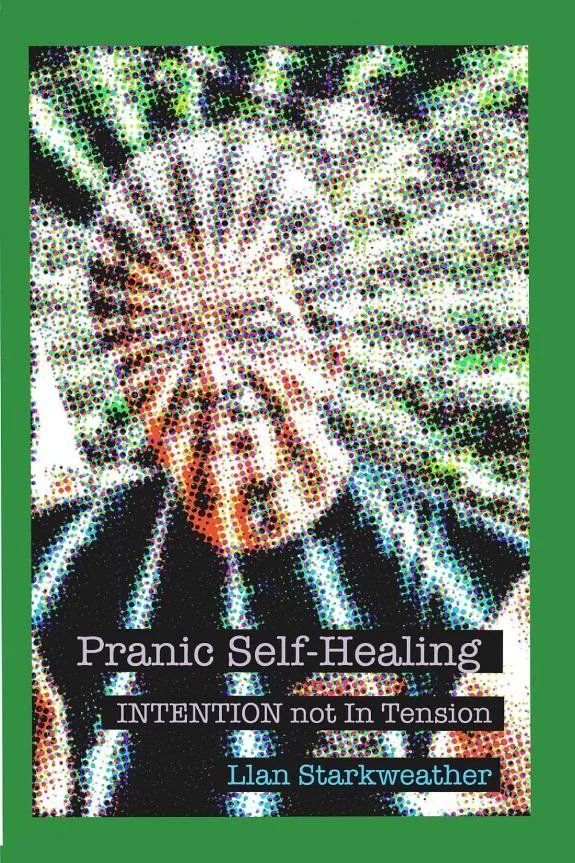
Pranic Self-Healing - Intention Not in Tension
 77
77

Pranic Self-Healing - Intention Not in Tension
Llan Starkweather’s Pranic Self-Healing - Intention Not in Tension offers a distinct perspective on energetic healing, emphasizing the power of relaxed intent over forceful application. The book’s strength lies in its direct engagement with the teachings of Master Cho, providing a focused exploration of pranic energies. Starkweather’s articulation of "Intention Not in Tension" is particularly compelling, suggesting a more subtle and potentially accessible approach to self-healing than methods that rely on intense exertion. However, the work occasionally feels like an assemblage of ideas rather than a fully cohesive doctrine, with the specific source material sometimes acting as a foundation for broader, less clearly defined concepts. A notable passage discusses the energetic field's response to focused, calm direction, a concept that highlights the book's core thesis. While valuable for its specific focus, readers seeking a comprehensive system might find it requires supplementation. Nevertheless, it provides a useful lens for understanding the interplay of consciousness and vital energy in physical well-being.
📝 Description
77
Llan Starkweather's 2007 book outlines a method for manipulating vital energies.
Pranic Self-Healing - Intention Not in Tension details a system for understanding and directing the body's vital energies, building on teachings attributed to Master Cho. The text explains how natural energetic flows influence physical health and rejuvenation. It moves beyond simple health concepts, showing the link between conscious intention, energetic states, and the body's healing abilities. Starkweather's work offers practical guidance for using these energies to improve vitality.
This book is for people looking for concrete ways to boost their physical health using energetic practices. It will interest those already familiar with chi or prana and seeking specific applications. Readers interested in alternative healing, the mind-body connection, and the body's energetic anatomy will find useful information. Students of esoteric philosophies interested in applying energetic principles to daily life for personal well-being will also benefit.
Published in 2007, Pranic Self-Healing - Intention Not in Tension emerged during a period of increased Western interest in Eastern spiritual practices. The book references Master Cho (Choa Kok Sui), a figure known for popularizing Pranic Healing and Arhatic Yoga. These systems focus on manipulating life force energy, or prana, for therapeutic aims. Starkweather's contribution centers on the role of intention within this framework, aligning with a broader trend of integrating spiritual and energetic ideas.
💡 Why Read This Book?
• Learn the specific principle of "Intention Not in Tension" directly from Starkweather's interpretation of Master Cho's teachings, a unique approach to energetic self-healing. • Gain practical understanding of pranic health and natural body rejuvenation, focusing on how to harness inherent life force energy without strain. • Explore the energetic anatomy of the body as presented in the text, offering a framework for identifying and addressing energetic imbalances for improved vitality.
⭐ Reader Reviews
Honest opinions from readers who have explored this book.
❓ Frequently Asked Questions
What is the core philosophy of 'Pranic Self-Healing - Intention Not in Tension'?
The book's central philosophy is "Intention Not in Tension," advocating for healing through focused, relaxed intent rather than forceful effort. It explores how natural pranic health relies on the body's vital energies and how conscious, calm intention can facilitate rejuvenation.
Who is Master Cho, and what is his connection to this book?
Master Cho, likely referring to Choa Kok Sui, is a prominent figure in modern Pranic Healing. This book draws upon and expands upon his teachings regarding the energetic principles of the body and healing.
What are 'pranic energies' as discussed in the book?
Pranic energies, also known as chi or life force, are the vital energies that permeate and sustain all living beings. The book explains how understanding and working with these energies is key to natural healing and vitality.
How does this book differ from other energy healing techniques?
It distinguishes itself by emphasizing 'Intention Not in Tension,' suggesting a less strenuous, more mindfully directed approach to manipulating prana compared to some more physically or mentally demanding methods.
Can this book help with specific physical ailments?
While the book focuses on general pranic health and rejuvenation, the principles discussed on manipulating energetic flows and applying intention could be applied by readers to address imbalances that may contribute to various physical conditions.
When was 'Pranic Self-Healing - Intention Not in Tension' first published?
The book was first published on August 1, 2007, placing it within the early 21st-century landscape of esoteric and self-healing literature.
🔮 Key Themes & Symbolism
The Power of Intention
The core of Starkweather's work lies in the concept of "Intention Not in Tension." This theme posits that the effectiveness of energetic healing is significantly amplified when intent is clear, focused, and free from muscular or mental strain. It suggests that the body's natural healing mechanisms are more responsive to a calm, directed consciousness than to forceful manipulation. This approach aims to explain energetic practices, making them accessible by emphasizing a relaxed yet precise mental focus as the primary tool for influencing vital life force, prana.
Pranic Health and Rejuvenation
This theme examines the fundamental nature of prana, or life force energy, as the basis of physical health and vitality. The book explores how the natural flow and balance of pranic energy within the body are essential for its well-being and capacity for self-repair. It offers insights into identifying and rectifying energetic blockages or deficiencies that can impede natural rejuvenation processes. The goal is to empower readers with knowledge of their own energetic systems to foster sustained health and vitality.
Energetic Anatomy and Healing
Starkweather's text addresses the body's energetic structure, likely referencing concepts such as chakras and nadis (energy channels) common in pranic traditions. This theme focuses on how these energetic components interact and how imbalances within them can manifest as physical ailments. By understanding this energetic anatomy, readers are guided on how to direct their intention to clear blockages, harmonize energy flow, and thereby support the body's innate healing capabilities. The emphasis is on a non-invasive, consciousness-driven approach to restoring energetic equilibrium.
The Teachings of Master Cho
A significant aspect of the book is its grounding in the teachings attributed to Master Cho. This theme highlights the lineage and specific methodologies derived from his work on Pranic Healing. Starkweather's exploration expands upon these foundational principles, offering his particular perspective on the role of intention and the practical application of pranic energy for self-healing. It serves as an accessible entry point for those interested in the specific school of thought popularized by Master Cho.
💬 Memorable Quotes
Direct passages from the work, attributed to the author.
“The body heals when intention is applied without tension.”
— This captures the book's central thesis: that effective energetic healing relies on a calm, focused mind directing energy, rather than forceful exertion or strain, which can impede natural processes.
“Prana flows most readily when the mind is clear and at ease.”
— This highlights the connection between mental state and vital energy. A relaxed and focused mind allows prana to move freely, supporting health, whereas agitation or tension can create blockages.
“Understanding the energetic pathways is key to facilitating rejuvenation.”
— This points to the importance of knowing the body's subtle energy system, often referred to as energetic anatomy, as a prerequisite for effectively directing prana for healing.
“Directing life force energy requires conscious, directed awareness.”
— This emphasizes that working with prana is not passive but an active process involving conscious attention and the deliberate application of one's mental faculties.
“The learnings from Master Cho illuminate the body's natural curative powers.”
— This acknowledges the foundational influence of Master Cho's teachings, suggesting that they provide essential knowledge for understanding and activating the body's inherent capacity for self-healing.
🌙 Esoteric Significance
Tradition
This work aligns with the broader Neo-Theosophical and New Age movements that synthesized Eastern energetic concepts with Western psychological and healing frameworks. Specifically, it draws from the modern Pranic Healing system popularized by Master Cho (Choa Kok Sui), which itself integrates elements from various yogic and spiritual traditions. Starkweather's contribution emphasizes a particular facet—the quality of intention—within this existing system, focusing on a less forceful, more mindful application of pranic energy manipulation.
Symbolism
While the book may not heavily rely on overt traditional symbolism, the concept of "prana" itself functions symbolically as the universal life force, analogous to the Greek 'pneuma' or Hebrew 'ruach'. The emphasis on "intention not in tension" can be seen as a symbolic representation of the balance between active will (intention) and passive receptivity (non-tension), a common theme in many esoteric paths that seek harmony between opposing forces.
Modern Relevance
The principles discussed in *Pranic Self-Healing* remain relevant in contemporary wellness culture, particularly within circles interested in energy medicine, mindfulness-based stress reduction, and the mind-body connection. Thinkers and practitioners in fields like bioenergetics, somatic therapy, and even certain branches of transpersonal psychology might find Starkweather's focus on intention and subtle energy fields resonant with their own work.
👥 Who Should Read This Book
• Individuals interested in exploring energy healing techniques derived from Eastern traditions, particularly those familiar with or curious about Pranic Healing as taught by Master Cho. • Practitioners of meditation and mindfulness seeking to deepen their understanding of how focused intention can influence physical well-being and promote self-healing. • Those looking for practical, accessible methods to enhance their personal vitality and explore the connection between mental states and physical health.
📜 Historical Context
Published in 2007, Llan Starkweather's *Pranic Self-Healing - Intention Not in Tension* emerged during a period of significant Western engagement with Eastern healing arts and esoteric philosophies. The work explicitly references "recent learnings from Master Cho," referring to the popularizer of Pranic Healing, Choa Kok Sui. Choa Kok Sui’s foundational texts, such as *Pranic Healing* (first published in 1987), established a widespread framework for understanding and manipulating life force energy for therapeutic purposes. Starkweather's book situates itself within this lineage, offering a specific interpretation that emphasizes the role of relaxed intention. This period saw numerous authors exploring mind-body connections and subtle energy systems, often drawing from traditions like Yoga, Taoism, and Tibetan Buddhism. While Choa Kok Sui's approach was widely adopted, other energy healing modalities, such as Reiki (popularized in the West from the mid-20th century) and various forms of shamanic healing, also held significant presence, offering alternative frameworks for understanding energetic therapeutics.
📔 Journal Prompts
Reflect on the concept of 'Intention Not in Tension' in your daily life.
Describe a time your physical tension hindered a desired outcome.
How might focusing on pranic energy alter your perception of vitality?
Consider the energetic pathways mentioned in the book and their potential blockages.
Explore the role of Master Cho's teachings in your understanding of healing.
🗂️ Glossary
Prana
The fundamental life force energy that animates all living beings. In this context, it refers to the vital energy manipulated for healing and rejuvenation.
Intention Not in Tension
The core principle of the book, suggesting that healing and energetic work are most effective when performed with focused, relaxed intent rather than forceful effort.
Energetic Anatomy
The subtle structure of the body composed of energy channels (nadis) and centers (chakras) through which prana flows. Understanding this is key to pranic healing.
Rejuvenation
The process of restoring vitality and youthfulness, achieved in this context through the proper manipulation and flow of pranic energy within the body.
Curative
Having the power to heal or cure; relating to the process of recovery from illness or disease through natural or energetic means.
Master Cho
A reference likely to Master Choa Kok Sui, the founder of modern Pranic Healing, whose teachings form a basis for the concepts presented in this book.
Vitality
The state of being strong, active, and energetic; characterized by life force and vigor, directly influenced by the state of one's prana.
This book appears in 1 collection
🔮 Readers Also Liked
Browse all →








From the “Pranic Healing” Collection
View all →







More Free Occult Philosophy Books
View all →