Magic Spells and Incantations
 84
84

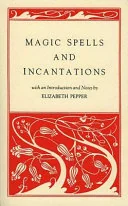
Magic Spells and Incantations
Elizabeth Pepper's Magic Spells and Incantations offers a welcome antidote to the often sensationalized or oversimplified treatments of magical practice. What distinguishes this work is its commitment to historical context, presenting spells not as isolated curiosities but as elements embedded within specific cultural and temporal frameworks. Pepper’s methodical approach, evident in her discussion of ancient Egyptian conjurations, provides a solid grounding for understanding the evolution of ritual language. However, the sheer breadth of coverage, while impressive, occasionally leads to a somewhat encyclopedic tone, where the depth of analysis might be sacrificed for the sake of inclusion. A particularly strong section details the commonalities between medieval European protective charms and earlier Mesopotamian apotropaic rituals. While the book excels in historical surveying, readers seeking practical, step-by-step spellcasting guides might find it more academic than instructional. It is a scholarly compendium that illuminates the historical landscape of magic.
📝 Description
84
Elizabeth Pepper's 2001 book, Magic Spells and Incantations, catalogs ritualistic practices and verbal enchantments.
First published in 2001, Elizabeth Pepper's Magic Spells and Incantations surveys ritualistic practices and verbal enchantments across diverse cultures and historical periods. The volume meticulously documents spells and incantations, alongside their lore. Pepper moves beyond simple recitation, examining the principles and historical evolution of magical arts. This is a structured exploration, not a simple compilation of arcane phrases.
The book is intended for serious students of the occult, comparative religion scholars, and practitioners interested in the historical roots of modern magical traditions. It appeals to those intrigued by ritual mechanics, the development of belief systems, and the cross-cultural transmission of esoteric knowledge. Individuals valuing scholarly rigor applied to mystical subjects will find this work valuable.
Pepper situates magical practices within their historical settings, tracing connections from ancient Egyptian funerary rites and Mesopotamian incantations to medieval European grimoires and modern folk magic. The work acknowledges how historical events and societal shifts influenced the preservation and adaptation of these traditions. It highlights the persistence and transformation of certain spells and concepts over centuries, demonstrating a continuous engagement with enchantment.
This work engages with the academic study of magic and ritual, situating spells and incantations within their historical and cultural contexts. It examines the underlying structures and beliefs that informed magical practices across various eras, from ancient Mesopotamia to medieval Europe and beyond. By detailing specific traditions and concepts like sympathetic magic and the role of intent, Pepper provides a framework for understanding the historical development and cross-cultural transmission of esoteric knowledge.
💡 Why Read This Book?
• Gain a structured understanding of spell components and their historical evolution, drawing connections between ancient Egyptian rituals and later European grimoires. • Learn about the concept of sympathetic magic, as illustrated through examples of its application across different cultural periods, as discussed in the text. • Discover the significance of specific incantatory phrases and their perceived power, as detailed in sections covering the spoken word's role in magic since antiquity.
⭐ Reader Reviews
Honest opinions from readers who have explored this book.
❓ Frequently Asked Questions
What historical periods does Elizabeth Pepper's Magic Spells and Incantations cover?
The book spans a vast historical range, from ancient Egyptian practices and Mesopotamian incantations to medieval European grimoires and contemporary folk magic traditions.
Is Magic Spells and Incantations a practical guide for casting spells?
While it explores the history and concepts behind spells, it is primarily an academic survey rather than a step-by-step manual for modern spellcasting.
What is sympathetic magic as presented in the book?
The book defines sympathetic magic as the belief that like affects like, often involving the use of effigies or objects connected to the target, a concept explored across various historical examples.
Does the book discuss the origins of magical words or incantations?
Yes, it examines the power attributed to the spoken word (logos) and the historical development of incantatory formulas across different cultures and belief systems.
Who is Elizabeth Pepper, the author?
Elizabeth Pepper is the author of Magic Spells and Incantations, first published in 2001, known for her scholarly approach to esoteric subjects.
What kind of research methodology does Pepper employ?
Pepper utilizes a historical and comparative approach, analyzing primary sources and tracing the lineage of magical practices and concepts across millennia.
🔮 Key Themes & Symbolism
Evolution of Ritual Language
This theme focuses on how spoken words and incantations have been employed across different eras to enact magical will. Pepper traces the development from early invocations in ancient Egypt, where the precise utterance was believed to hold inherent power, through the structured formulas of medieval grimoires, to the more personalized charms of folk traditions. The work emphasizes that the efficacy was often tied not just to the words themselves, but to the belief system and cultural context that imbued them with meaning and power. It highlights the enduring human impulse to harness the potency of language for transformative ends.
Sympathetic Magic Across Cultures
Pepper examines the principle of sympathetic magic—the idea that 'like produces like' or that an effect resembles its cause—as a pervasive element in magical traditions worldwide. The book provides examples ranging from ancient Mesopotamian rituals, where effigies were used to influence individuals, to European folk practices involving dolls or images. This section explores how this fundamental concept manifests in diverse forms, illustrating a shared human logic applied to manipulating reality through perceived connections between objects, actions, and desired outcomes.
The Role of Intent and Belief
A central thread in the book is the critical importance of the practitioner's intent and the prevailing belief systems in validating magical acts. Pepper discusses how spells and incantations are more than mere scripts; they are vehicles for focused psychological and spiritual energy. The work implies that the cultural acceptance and individual conviction surrounding a ritual significantly contribute to its perceived success, bridging the gap between subjective experience and objective manifestation. This underscores the psychological dimension inherent in many esoteric practices.
Classification of Magical Aims
The book categorizes spells and incantations based on their intended purposes, offering a structured overview of how different societies have sought to influence outcomes. This includes spells for protection against harm, rituals for healing ailments, practices for divination and prophecy, and enchantments aimed at manifestation or prosperity. By analyzing these distinct categories, Pepper illustrates the universal human desires that drive magical inquiry and the diverse methods developed to address them throughout history.
💬 Memorable Quotes
Direct passages from the work, attributed to the author.
“Ancient spells often relied on the precise articulation of divine names or cosmic principles.”
— This highlights the belief in the inherent power of specific terminology and the connection to larger universal forces within early magical systems.
“The use of effigies or personal items in rituals is a manifestation of sympathetic magic.”
— This statement clarifies a core concept, explaining how the principle of connection, where influencing one object affects another, forms the basis for many magical practices.
“Folk incantations frequently incorporated elements of Christian prayer and older pagan beliefs.”
— This illustrates the syncretic nature of many magical traditions, showing how different belief systems blend over time to create new forms of ritual.
“The effectiveness of a spell was often considered dependent on the purity of the practitioner's intent.”
— This emphasizes the ethical and psychological dimensions of magic, suggesting that the practitioner's mental state and moral focus are crucial to the outcome.
“Early Mesopotamian rituals sought to ward off malevolent spirits through spoken formulae and symbolic gestures.”
— This points to the ancient origins of apotropaic magic, demonstrating the long-standing human effort to protect oneself from unseen negative forces through ritual action.
🌙 Esoteric Significance
Tradition
While not strictly adhering to a single esoteric lineage, Pepper's work engages with practices and concepts found across various Western Esoteric traditions, including Hermeticism and folk magic. It draws parallels between the ceremonial aspects of older magical systems and the more intuitive expressions of enchantment found in folk practices. The book serves as a bridge, illustrating how core principles like the power of the spoken word and sympathetic resonance persist and adapt across different historical and cultural manifestations of the occult.
Symbolism
Key symbols explored include the use of effigies, representing sympathetic magic where an object stands for a person or thing, allowing for influence at a distance. Another significant motif is the power of divine or cosmic names, a concept deeply rooted in Hermetic and Kabbalistic traditions, where invoking specific appellations is believed to channel potent energies. The inherent power of specific gestures and ritualistic actions, often tied to cosmological alignments or elemental forces, also forms a recurring symbolic language.
Modern Relevance
Contemporary practitioners of witchcraft, modern paganism, and eclectic magical paths often reference historical spell structures and concepts detailed in works like Pepper's. Thinkers and authors exploring the psychology of belief, the history of ritual, and the cultural anthropology of magic also draw upon such compilations. The book’s focus on the historical continuity of magical intent and practice provides a valuable lens for understanding modern ritual innovation and the enduring human engagement with the mystical.
👥 Who Should Read This Book
• Students of comparative religion and folklore seeking to understand the historical development and cross-cultural presence of magical practices. • Practitioners of modern witchcraft or ritual magic interested in the historical roots and diverse expressions of spells and incantations. • Academics and researchers studying the history of belief, the power of language in ritual, and the evolution of esoteric traditions across millennia.
📜 Historical Context
Published in 2001, Elizabeth Pepper's Magic Spells and Incantations emerged during a period of renewed popular interest in esotericism, following the New Age movements of previous decades. The academic study of magic and witchcraft also saw significant growth, with scholars like Owen Davies and Ronald Hutton publishing influential works on European witchcraft and magical traditions. Pepper's book contributed to this discourse by systematically cataloging and contextualizing spells from ancient Egypt, Mesopotamia, and medieval Europe, situating them within their respective societal frameworks. Unlike purely theoretical works on magic, Pepper's approach emphasized the practical application and evolution of incantatory practices. While not directly engaging with contemporary occult figures, her research implicitly connected with practitioners seeking historical grounding for their work, offering a scholarly overview that complemented the more experiential approaches prevalent in popular occultism.
📔 Journal Prompts
The enduring power of ancient Egyptian incantations in contemporary magical thought.
Analysis of sympathetic magic examples from Mesopotamian rituals versus European folk charms.
The role of intent in ritual efficacy across different historical periods.
Evolution of protective spells from antiquity to medieval grimoires.
Personal reflection on the relationship between spoken word and perceived reality.
🗂️ Glossary
Incantation
A series of words said in a ritual or magical context, believed to have supernatural power; a spell.
Sympathetic Magic
A type of magic based on the principle that like produces like, or that a person or thing can be affected by the manipulation of something resembling it.
Apotropaic
Having the power to turn away or ward off evil; specifically, magical means of protection.
Grimoire
A textbook of magic or witchcraft, typically containing instructions on how to make magical items, cast spells, and perform rituals.
Logos
In this context, referring to the power of the spoken word, divine reason, or creative principle, often central to magical utterances.
Effigy
A representation or image of a person, often made for magical purposes, such as in sympathetic magic.
Syncretism
The amalgamation of different religions, cultures, or schools of thought, often seen in the blending of magical traditions.
This book appears in 1 collection
🔮 Readers Also Liked
Browse all →








From the “Incantations” Collection
View all →





More Free Occult Philosophy Books
View all →