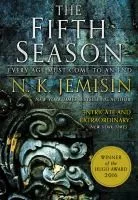
The Fifth Season
 83
83

The Fifth Season
Jemisin’s construction of the Stillness, a world ravaged by predictable apocalyptic seasons, is a formidable achievement. The narrative’s tripartite structure, shifting between the perspectives of Essun, Damaya, and Syenite, initially presents a fractured portrait, but the eventual convergence of their stories is masterfully handled. The novel's exploration of prejudice against orogenes, beings who can manipulate earth and stone, feels acutely relevant. A particular strength lies in the unflinching depiction of how trauma shapes individuals and communities, forcing adaptation or destruction. However, the constant barrage of hardship, while thematically resonant, can sometimes feel relentless, occasionally overshadowing subtler character moments. The direct address to the reader in the second-person perspective for Syenite’s arc is a bold choice that, while effective in immersing the reader in her immediate experience, might alienate some. Despite this, The Fifth Season is a powerful and necessary exploration of survival and identity in a world designed to break its most powerful inhabitants.
📝 Description
83
N. K. Jemisin's 2016 novel, The Fifth Season, imagines a world perpetually nearing collapse.
The narrative follows three women in a world that experiences recurring, continent-shattering climate disasters known as 'Fifth Seasons.' These periods of intense geological upheaval and societal breakdown are a constant threat, forcing survivors to adapt or perish. The protagonists, each dealing with the unique challenges of their lives, possess the ability to manipulate seismic forces, a power called orogeny. This ability is both revered and feared, leading to the persecution of its wielders.
The world of the Stillness, where the novel is set, is shaped by these cataclysms. Society has developed rigid structures and deep-seated prejudices to survive the unpredictable environmental shifts. The story examines how individuals cope with systemic oppression, personal loss, and the struggle for survival against both natural and human-made disasters. Jemisin constructs a complex society where magic, geology, and social hierarchy are deeply intertwined.
Published in 2016, The Fifth Season engages with themes of environmental upheaval and societal collapse that resonate with traditions exploring cyclical destruction and rebirth. The novel's depiction of orogeny, the ability to control seismic forces, touches upon concepts of elemental magic and humanity's relationship with the earth's power. The recurring 'Fifth Season' itself acts as a potent metaphor for apocalyptic events found in various mythologies and esoteric philosophies, examining how societies rebuild and endure after profound disruption. The 'stone eaters' also hint at ancient, earthbound entities, adding a layer of deep, geological mysticism to the world's history.
💡 Why Read This Book?
• Gain an understanding of "orogeny," a unique earth-magic system, and how its wielders are systematically oppressed, mirroring real-world patterns of persecution based on innate abilities or identity, as seen in the treatment of Damaya. • Experience a narrative that uses the recurring "Fifth Season" – a period of catastrophic climate change – as a powerful metaphor for societal collapse and resilience, forcing characters to adapt in extreme circumstances. • Witness the innovative use of second-person narration in exploring Syenite’s dangerous mission and her internal state, offering a visceral, immediate connection to her perilous journey.
⭐ Reader Reviews
Honest opinions from readers who have explored this book.
❓ Frequently Asked Questions
What is the central conflict in The Fifth Season?
The central conflict revolves around the struggle for survival in a world plagued by recurring, devastating climate events known as 'Fifth Seasons.' It also deeply explores the societal oppression of 'orogenes,' individuals with the power to control geological forces.
Who are the main characters and what are their roles?
The story follows three orogenes: Essun, a mother searching for her abducted child; Damaya, a young girl sent to a training facility; and Syenite, an imperial agent on a critical mission. Their lives are interconnected by their shared abilities and the world's harsh realities.
What is an 'orogene' in the context of The Fifth Season?
An orogene is a person born with the innate ability to sense and manipulate geological forces, such as earthquakes and volcanic activity. They are vital for rebuilding society after disasters but are also feared and persecuted by the general populace.
What is the significance of the 'Fifth Season'?
The 'Fifth Season' refers to periods of extreme, world-ending climate change that occur periodically throughout the world's history. These seasons are the primary drivers of societal collapse and the constant struggle for survival depicted in the novel.
What themes does The Fifth Season explore?
The novel delves into themes of oppression, prejudice, survival, motherhood, trauma, and the cyclical nature of destruction and rebirth. It examines how individuals and societies cope with systemic injustice and environmental catastrophe.
Is The Fifth Season part of a series?
Yes, The Fifth Season is the first book in The Broken Earth trilogy by N. K. Jemisin. The subsequent books are 'The Obelisk Gate' and 'The Stone Sky.'
🔮 Key Themes & Symbolism
Orogeny and Oppression
The core of the narrative lies in the concept of orogeny, the power to control seismic and geological forces. This ability, while essential for rebuilding civilization after cataclysms, makes its wielders, the orogenes, objects of intense fear and persecution. Jemisin meticulously details the systemic discrimination, from forced training and sterilization to outright murder, mirroring historical and ongoing patterns of prejudice against marginalized groups. The narrative challenges readers to consider the ethics of power, the nature of innate abilities, and the societal tendency to demonize those who are different or possess exceptional, uncontrollable talents.
Apocalypse and Adaptation
The world of the Stillness is defined by the recurring 'Fifth Season,' a period of devastating geological and climatic upheaval that resets civilization. This cyclical apocalypse is not just a backdrop but a fundamental force shaping every aspect of life, from societal structures to individual psychology. The novel examines the human capacity for adaptation and resilience in the face of unimaginable loss and constant threat. It explores how communities and individuals develop survival strategies, often at great moral cost, and how the memory of past apocalypses influences present actions and future anxieties.
Motherhood and Survival
Motherhood is a powerful, driving force, particularly for Essun, whose desperate search for her abducted daughter fuels much of the plot. Jemisin portrays the fierce, primal protectiveness of a mother, even one who is herself a powerful and feared orogene. This theme is interwoven with the broader struggle for survival, highlighting how personal bonds and familial love persist and motivate action even in the most brutal environments. The novel questions what it means to be a parent in a world that actively seeks to destroy one's children, and the sacrifices made in the name of protection and lineage.
Identity and Trauma
The characters in The Fifth Season are deeply shaped by their experiences of trauma, both personal and collective. Orogenes are traumatized by societal abuse, while the entire world is traumatized by the recurring Fifth Seasons. Jemisin explores how this trauma manifests – in suppressed emotions, reactive behaviors, and altered perceptions of reality. The narrative challenges readers to understand how identity is forged not just by inherent traits but by the cumulative weight of lived experiences, particularly those involving systemic violence and loss. The journey of self-discovery and acceptance, especially for the orogenes, is a central arc.
💬 Memorable Quotes
Direct passages from the work, attributed to the author.
“Let her be herself.”
— This simple plea, likely uttered in a moment of desperation or defiance, captures the yearning for autonomy and acceptance. It speaks to the core struggle of the orogenes, who are often forced to suppress their true nature or conform to societal expectations, highlighting the profound desire to simply exist as one is.
“You are the world.”
— A profound statement suggesting an intrinsic connection between the individual and the planet. It implies that the power of an orogene is not separate from the earth but an extension of it, highlighting a deep, often feared, unity with geological forces.
“The ground is always there.”
— This phrase speaks to an underlying stability and permanence, even amidst chaos. It suggests that despite the earth-shattering events of the Fifth Seasons, the fundamental reality of the planet endures, offering a grim form of comfort or a reminder of the earth's enduring power.
“When you have been where I have been, you will not care about your own comfort.”
— This reflects the hardened perspective of someone who has endured immense suffering. It implies that extreme hardship recalibrates one's priorities, making personal comfort trivial in comparison to larger goals or the weight of past experiences.
“They are not gone. They are just… elsewhere.”
— This interpretation of loss and presence suggests that loved ones or aspects of oneself are not truly lost but exist in a different state or dimension. It offers a framework for understanding absence not as an end, but as a transformation or relocation.
🌙 Esoteric Significance
Tradition
While not adhering strictly to any single esoteric lineage, The Fifth Season draws heavily from earth-centric spiritualities and Gnostic themes of a flawed, oppressive demiurge (represented by the world's societal structures and the governing powers). The concept of orogeny and the deep connection to geological forces aligns with animistic beliefs and certain Hermetic principles regarding elemental mastery. The cyclical destruction and rebirth echo concepts found in various esoteric traditions concerning cosmic ages and universal dissolution, but Jemisin recontextualizes them through a lens of systemic oppression and survival.
Symbolism
The primary symbol is the 'orogene,' representing those with innate, powerful, and feared abilities, akin to the Gnostic concept of the 'spark' or the 'elect' who possess divine potential but are trapped in a material world that oppresses them. The 'Fifth Season' itself symbolizes recurring societal collapse, ecological disaster, and the ultimate test of resilience, reflecting archetypal patterns of destruction and renewal found in many mythologies. 'Stone,' as the medium of orogenic power, represents the deep earth, primal power, and the hidden, fundamental forces of existence that society both relies upon and fears.
Modern Relevance
Contemporary esoteric thought, particularly within circles focused on eco-spirituality, earth-based magic, and social justice, finds significant resonance in The Fifth Season. Thinkers and practitioners exploring concepts of deep ecology, elemental consciousness, and the spiritual dimensions of climate change often cite Jemisin's work. It provides a potent fictional framework for discussing the consequences of societal exploitation of natural resources and the oppression of those who are intrinsically connected to the earth's energies. The novel's depiction of systemic injustice also informs discussions on liberation theology and intersectional spirituality.
👥 Who Should Read This Book
• Readers interested in earth-based magical systems and elemental correspondences, particularly those seeking to understand how such powers might be perceived and feared within a structured society. • Students of comparative mythology and esotericism who wish to analyze modern fictional interpretations of cyclical destruction, creation myths, and the archetype of the oppressed gifted individual. • Social justice advocates and readers focused on themes of systemic oppression, prejudice, and the psychological impact of trauma, seeking fictional narratives that powerfully illustrate these concepts through speculative world-building.
📜 Historical Context
The Fifth Season, published in 2016, arrived at an important moment for speculative fiction, a genre increasingly recognized for its capacity to address complex social and political issues. Jemisin's work emerged in a landscape where authors like China Miéville and Jeff VanderMeer were already pushing boundaries with intricate world-building and thematic depth. The novel’s exploration of systemic oppression, climate catastrophe, and marginalized identities resonated with contemporary concerns, making it a significant contribution to the discourse. Its success, culminating in the first of three consecutive Hugo Awards for Best Novel (starting with this book in 2016), signaled a shift in mainstream genre recognition, elevating works that challenged traditional fantasy narratives and offered diverse perspectives. This period saw a growing awareness of the need for more inclusive storytelling, and Jemisin’s novel became a touchstone for that movement, proving that genre fiction could be both critically acclaimed and commercially successful while engaging deeply with difficult truths about the world.
📔 Journal Prompts
The societal fear of orogenes and their forced roles.
The cyclical nature of the 'Fifth Season' as a world-altering event.
Essun's relentless search for her child amidst global catastrophe.
The concept of 'stone eaters' and their ancient connection to the earth.
The narrative's use of second-person perspective to immerse the reader.
🗂️ Glossary
Orogene
An individual born with the ability to sense and manipulate seismic and geological forces, such as earthquakes, volcanoes, and tectonic shifts. They are vital for rebuilding civilization but are feared and oppressed.
Fifth Season
A recurring period of catastrophic climate change and geological upheaval that devastates the world, leading to societal collapse and the need for rebuilding. The novel is set during one such season.
Stillness
The name given to the world in which the story takes place, characterized by its extreme geological instability and the constant threat of the Fifth Seasons.
Stone Eater
Ancient, powerful beings intrinsically connected to the earth's core and geological processes. They are often depicted as mysterious and formidable figures with a deep, primal understanding of the planet.
Fulcrum
A powerful orogene who serves as an agent of the state, often tasked with dangerous missions, including suppressing rebellions or enforcing the will of the Sanze Empire.
Comm
A form of empathic communication or connection, often used by orogenes to share feelings or information, sometimes involuntarily or under duress.
Gag
A device used to suppress or control the powers of an orogene, often worn by them to prevent accidental or intentional use of their abilities, contributing to their subjugation.
🔮 Readers Also Liked
Browse all →








More by N. K. Jemisin
All books →


More Free Occult Philosophy Books
View all →