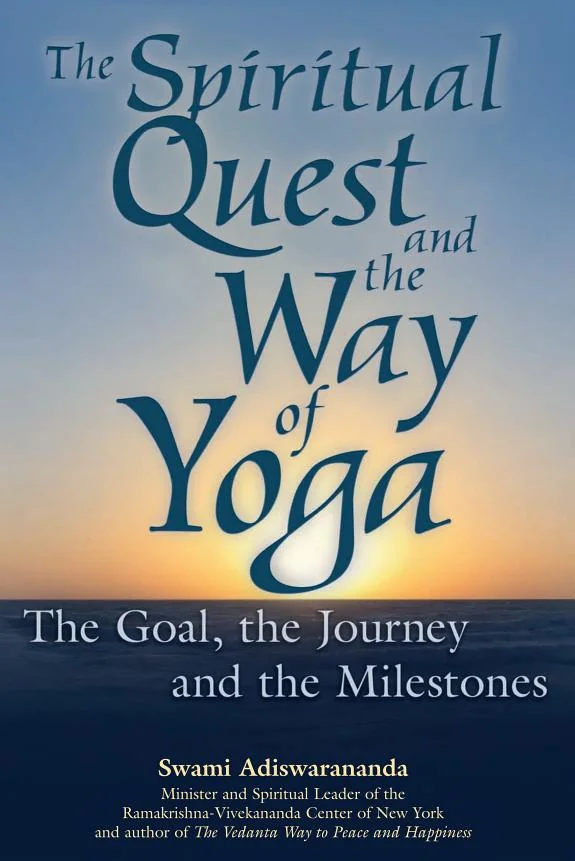
The Spiritual Quest and the Way of Yoga
 84
84

The Spiritual Quest and the Way of Yoga
Swami Adiswarananda's "The Spiritual Quest and the Way of Yoga" offers a refreshing, no-nonsense approach to a subject often mired in jargon. The author’s assertion that spiritual seeking is a "vital necessity" rather than a casual hobby is a strong opening gambit. He meticulously outlines a path toward Self-knowledge, grounded in yogic principles, that feels remarkably attainable. A particular strength lies in its clear articulation of how "reconnecting with the center of your being" is a tangible process, not a nebulous aspiration. However, the book could benefit from more direct engagement with specific yogic philosophical schools, such as Samkhya or Vedanta, beyond general references to "yoga" to provide a richer historical and theoretical grounding for its claims. Despite this, the work stands as a valuable guide for those seeking practical direction on their spiritual path.
📝 Description
84
Swami Adiswarananda's 2005 book frames spiritual realization as a fundamental human necessity.
The Spiritual Quest and the Way of Yoga argues that the innate human drive toward spiritual realization is not an optional pursuit but a core requirement for complete well-being. Swami Adiswarananda provides a philosophical and practical structure to understand this inherent quest. The book is designed for individuals seeking Self-knowledge, regardless of their religious or cultural background. It aims to show readers that reconnecting with one's true Self, the center of being, is an attainable goal. The work speaks to those who feel a call toward a deeper understanding of existence and desire a clear path to that realization.
This book emerged in the early 21st century, a time when Western interest in Eastern spiritual traditions, especially yoga, was significant. Many people sought alternative paths to fulfillment, and practices like yoga gained popularity, sometimes divorced from their philosophical underpinnings. Swami Adiswarananda's work offers a connection between traditional yogic philosophy and contemporary spiritual desires. It addresses the underlying need for spiritual inquiry, presenting it as an inherent part of human experience.
This work is situated within the Advaita Vedanta tradition, which emphasizes the non-dual nature of reality and the identity of the individual Self (Atman) with the universal consciousness (Brahman). Swami Adiswarananda, as a monk of the Ramakrishna Order, draws upon this lineage, which seeks to guide the aspirant toward the direct experience of this unity. The book translates these philosophical insights into accessible terms, linking them to the practices of yoga as a means to achieve Self-realization, aligning with the yogic path's aim of stilling the mind to reveal the underlying truth of being.
💡 Why Read This Book?
• You will learn how the yogic tradition views spiritual seeking as a "vital necessity" for well-being, offering a tangible framework for those feeling a deep inner call, as detailed in the book's initial chapters. • Gain a practical "roadmap to Self-knowledge," understanding that accessing your "true Self" is an achievable goal through the methods presented, which is a core tenet of Swami Adiswarananda's approach. • Discover how to "reconnect with the center of your being," a concept explained as a real, tangible outcome of the spiritual quest, providing concrete direction beyond abstract spiritual ideals.
⭐ Reader Reviews
Honest opinions from readers who have explored this book.
❓ Frequently Asked Questions
What is the primary goal of the spiritual quest according to Swami Adiswarananda?
Swami Adiswarananda states the primary goal of the spiritual quest is "Self-knowledge." This involves understanding one's true nature and reconnecting with the "center of your being," which the book presents as a tangible and attainable reality.
Is "The Spiritual Quest and the Way of Yoga" only for Hindu practitioners?
No, the book is explicitly presented as a comprehensive guide for "spiritual seekers of all faiths and backgrounds." It focuses on universal principles of the spiritual quest accessible to anyone interested in self-discovery.
When was "The Spiritual Quest and the Way of Yoga" first published?
The book was first published in 2005. This places it in a period where Eastern spiritual practices were gaining significant traction in the West.
What does the book mean by "reconnecting with the center of your being"?
This refers to the yogic concept of realizing one's innermost Self or consciousness. Swami Adiswarananda explains this as a practical, achievable process of realizing one's true identity beyond the superficial ego.
Does the book offer practical exercises for the spiritual quest?
While primarily a philosophical guide, the book presents a "roadmap" and framework for the spiritual quest, implying a path that can be followed. Its focus is on the understanding that underpins the practice.
What is the author's perspective on the necessity of spiritual seeking?
Swami Adiswarananda argues that the spiritual quest is not a matter of choice but a "vital necessity" for total well-being. This perspective frames spiritual pursuit as fundamental to human health and fulfillment.
🔮 Key Themes & Symbolism
The Inherent Need for Spiritual Quest
Swami Adiswarananda posits that the spiritual quest is not an elective activity but a fundamental requirement for a complete existence. This perspective challenges the notion of spirituality as a hobby, framing it instead as integral to human well-being. The book argues that this innate drive is universal, present in all individuals, and its fulfillment is essential for achieving a state of wholeness and balance. It suggests that ignoring this inner calling leads to a sense of incompleteness.
Self-Knowledge as the Ultimate Goal
The central aim presented is the attainment of Self-knowledge, understood as the realization of one's true identity. This is not mere intellectual understanding but a profound, lived experience of one's innermost being. The book outlines a path toward this realization, emphasizing that the "true Self" is not an abstract concept but a tangible reality accessible through dedicated inquiry and practice, as guided by yogic principles.
Yoga as a Roadmap to the Center
The book positions the "Way of Yoga" as the practical methodology and philosophical underpinning for starting the spiritual quest. It offers a structured "roadmap" designed to guide seekers back to the "center of your being." This journey involves understanding and applying yogic tenets to move beyond the superficial layers of personality and ego towards a direct experience of one's core consciousness.
Tangible Attainability of Spiritual Realization
A crucial aspect of Swami Adiswarananda's message is the emphasis on the practical attainability of spiritual goals. "The Spiritual Quest and the Way of Yoga" asserts that reconnecting with one's true Self is not an elusive or mystical event reserved for a select few. Instead, it is presented as a real, verifiable, and achievable outcome for any sincere seeker who follows the presented path.
💬 Memorable Quotes
Direct passages from the work, attributed to the author.
“Spiritual quest is not a matter of choice but a vital necessity for total well-being.”
— This core assertion frames spiritual seeking as fundamental to human existence, akin to physical or mental health, essential for a complete and balanced life.
“This comprehensive guide... presents a roadmap to Self-knowledge.”
— The book is positioned as a structured guide, offering a clear path and direction for individuals aiming to achieve the ultimate goal of understanding their true nature.
“Reconnecting with the center of your being, your true Self, is real, tangible and attainable.”
— This highlights the book's pragmatic approach, assuring readers that spiritual realization is not an abstract ideal but an achievable experience accessible through the yogic path.
“Seekers of all faiths and backgrounds can benefit.”
— The universality of the message is stressed, indicating that the principles discussed transcend specific religious doctrines and are applicable to anyone on a path of spiritual inquiry.
“The yoga way maintains that...”
— This phrase signifies that the book draws upon established yogic philosophy and practice as its foundational principles for understanding the spiritual journey.
🌙 Esoteric Significance
Tradition
The work is firmly rooted in the Advaita Vedanta and classical Yoga traditions, particularly as interpreted by the Ramakrishna Mission, of which Swami Adiswarananda was a prominent figure. It aligns with the Vedanta lineage's emphasis on non-dualism and the inherent divinity of the Self. While not strictly Hermetic or Gnostic, its focus on inner realization and the transcendence of egoic limitations shares common ground with many esoteric paths seeking direct spiritual experience.
Symbolism
The central symbol is the "center of your being," representing the Atman or pure consciousness, the unchanging core of existence. The "roadmap" itself can be seen as a symbolic representation of the spiritual journey, often depicted in yogic traditions as a progression through various stages or "lokas." The concept of "Self-knowledge" functions as a guiding star, the ultimate destination that illuminates the entire path.
Modern Relevance
In contemporary times, this work remains highly relevant for practitioners of classical yoga and Vedanta seeking to deepen their philosophical understanding beyond asana. Thinkers and teachers focused on consciousness studies, integral yoga, and non-dual spirituality often draw upon the clarity and authenticity of this tradition. Its emphasis on the "vital necessity" of the spiritual quest appeals to a growing number of individuals feeling disillusioned with purely material pursuits.
👥 Who Should Read This Book
['• Students of Vedanta and classical Yoga seeking a philosophically rigorous yet accessible guide to Self-realization, particularly those interested in the teachings originating from the Ramakrishna Mission.', '• Spiritual seekers of any faith background who feel a deep inner call to understand their true nature and are looking for a practical, tangible "roadmap" beyond superficial spiritual trends.', '• Individuals feeling a sense of "vital necessity" for spiritual growth and seeking confirmation that achieving "Self-knowledge" is a real and attainable goal through dedicated practice.']
📜 Historical Context
Swami Adiswarananda's "The Spiritual Quest and the Way of Yoga" was published in 2005, a period marked by a significant global diffusion of yoga and Eastern spiritual practices. Western interest, often influenced by figures like Swami Vivekananda who introduced Vedanta to America in the late 19th century, had blossomed into a broad cultural phenomenon. This era saw a rise in "spiritual but not religious" individuals seeking meaning outside traditional Western religious frameworks. Competing schools of thought, such as New Age spirituality and various forms of Western esotericism, also vied for attention. Adiswarananda's work, rooted in a more orthodox yogic and Vedantic tradition, aimed to provide a philosophically sound and practically applicable path, distinguishing itself from more syncretic or therapeutically focused approaches. The book emerged in a context where there was both widespread enthusiasm for yoga and a need for deeper philosophical grounding.
📔 Journal Prompts
The "vital necessity" of the spiritual quest: How does this concept apply to your daily life?
Reflecting on the "roadmap to Self-knowledge": What are the first steps you can identify on this path?
The "center of your being" as a tangible reality: How can you actively seek to reconnect with this core aspect of yourself?
Understanding the "true Self": What practices might help you discern your true Self from your egoic identification?
The attainment of "Self-knowledge": What does this ultimate goal signify for your personal journey?
🗂️ Glossary
Spiritual Quest
The innate human drive and deliberate pursuit of understanding one's true nature, the purpose of existence, and one's connection to the divine or ultimate reality.
Self-knowledge
The profound realization of one's essential identity, the true Self (Atman), beyond the transient ego, personality, and physical body. It is the ultimate goal of spiritual pursuit.
The Way of Yoga
The philosophical and practical system derived from yogic traditions, offering methods and insights for spiritual development, self-discipline, and the attainment of Self-knowledge.
Center of Your Being
Refers to the innermost core of one's existence, synonymous with the true Self or pure consciousness, understood as the source of awareness and being.
True Self
The eternal, unchanging consciousness that is the essential nature of an individual, distinct from the mind, body, and ego. Often identified with the Atman in Vedanta.
Vital Necessity
An imperative need or requirement for complete well-being and fulfillment, suggesting that spiritual seeking is as crucial as basic physical or psychological health.
Roadmap
A structured plan or guide that outlines the steps and direction necessary to achieve a specific goal, in this context, the goal of Self-knowledge.
This book appears in 1 collection
🔮 Readers Also Liked
Browse all →









From the “Vedanta” Collection
View all →







More Free Occult Philosophy Books
View all →