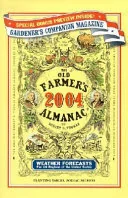
The Old Farmer's Almanac 2004
 78
78

The Old Farmer's Almanac 2004
The 2004 edition of The Old Farmer's Almanac, while adhering to its established formula, presents a curious case for the modern esotericist. Its strength lies in its unbroken lineage tracing back to Robert B. Thomas's 1792 publication, offering a tangible link to historical modes of understanding natural and celestial rhythms. The inclusion of astronomical tables and weather predictions, rooted in observation and some astrological correlation, provides a grounding counterpoint to purely speculative esotericism. However, its limitation is the inherent generality; it serves a broad audience, and its occult or esoteric underpinnings are often subtle, embedded within folklore and traditional practices rather than explicit doctrine. The section on "Old-Fashioned Remedies" offers a glimpse into historical folk medicine, which often intertwined with magical thinking, but it's presented pragmatically, not mystically. The Almanac remains a fascinating artifact of applied knowledge, but its esoteric depth requires careful excavation by the reader.
Verdict: A useful historical snapshot of applied folk knowledge, requiring an esoteric lens to extract deeper meaning.
📝 Description
78
The Old Farmer's Almanac 2004 continued a tradition started in 1792 by Robert B. Thomas.
This 2004 edition of The Old Farmer's Almanac delivers its customary mix of practical guidance, astronomical charts, and lighthearted observations. Established in 1792, the publication acts as a resource for farming, weather forecasting, and household matters, blending standard almanac features with a unique editorial style. It speaks to anyone interested in traditional agriculture, self-sufficient living, and a connection to the rhythms of nature. Readers who enjoy historical Americana, amateur stargazing, or content rooted in folk traditions will find value here, irrespective of their farming background.
The almanac's core function is to share useful, practical knowledge, often presented with a touch of humor. Its content draws from astrological and astronomical data to aid agricultural scheduling, alongside traditional recipes, domestic advice, and folklore. This approach fosters a connection between empirical wisdom and enduring cultural practices, making it a recurring source of information and gentle amusement.
While not strictly an esoteric text in the modern sense, The Old Farmer's Almanac draws on a long tradition of folk almanacs that incorporated astrological and astronomical observations for practical purposes, particularly agriculture. These publications often blended empirical data with folk beliefs and ancient wisdom regarding celestial cycles and their influence on earthly matters. The almanac's inclusion of such information, alongside weather lore and seasonal advice, places it within a lineage of texts that sought to understand and align human activity with natural patterns, a practice common in many historical esoteric traditions.
💡 Why Read This Book?
• Gain practical insights into historical agricultural cycles and weather patterns, as exemplified by the astronomical tables and forecasts presented for 2004, offering a tangible connection to seasonal rhythms. • Understand the evolution of folk wisdom and domestic advice from the late 18th century onward, evidenced by the almanac's consistent publication since 1792, providing context for traditional practices. • Explore the subtle integration of astrological and observational data into daily life, as seen in the almanac's perennial advice sections, which demonstrate a historical approach to aligning human activity with natural phenomena.
⭐ Reader Reviews
Honest opinions from readers who have explored this book.
❓ Frequently Asked Questions
What is the historical origin of The Old Farmer's Almanac?
The almanac was first published in 1792 by Robert B. Thomas, a schoolteacher and amateur astronomer near Boston. The word 'Old' was added to the title in 1832, acknowledging its established legacy.
Does The Old Farmer's Almanac 2004 contain astrological predictions?
Yes, the almanac traditionally includes astrological and astronomical information to guide farming and other activities, though it presents this information with a practical, rather than purely divinatory, focus.
What kind of content can I expect in The Old Farmer's Almanac 2004?
Readers can expect a mix of weather forecasts, planting charts, astronomical data, folklore, recipes, household tips, and humorous essays, following the publication's long-standing tradition.
Is The Old Farmer's Almanac 2004 useful for modern gardening?
While rooted in historical practices, the almanac's advice on planting, weather, and natural cycles can still offer valuable insights for contemporary gardeners, particularly those interested in traditional or organic methods.
When was The Old Farmer's Almanac 2004 first published?
The 2004 edition of The Old Farmer's Almanac was first published on September 9, 2003.
What is the stated editorial philosophy of The Old Farmer's Almanac?
The publication's philosophy, originating from Robert B. Thomas, emphasizes being 'useful, but with a pleasant degree of humor,' aiming to provide practical advice alongside entertaining content.
🔮 Key Themes & Symbolism
Applied Astronomy and Agriculture
The almanac's core utility stems from its integration of astronomical data with agricultural planning. For centuries, farmers have consulted such guides to determine optimal planting and harvesting times based on lunar phases, planetary movements, and seasonal shifts. The 2004 edition continues this tradition, offering specific charts and predictions that connect celestial events to terrestrial cultivation. This reflects a historical worldview where earthly activities were understood to be intrinsically linked with cosmic forces, a concept central to many early esoteric practices.
Folklore and Traditional Wisdom
Beyond practical farming advice, the almanac serves as a repository for folklore, proverbs, and traditional remedies. These elements often contain elements of older, more mystical belief systems and folk magic. The inclusion of recipes, household tips, and seasonal customs provides a window into the cultural fabric of North America, demonstrating how practical knowledge was interwoven with superstition and inherited wisdom. This aspect highlights a continuous thread of popular esotericism embedded within everyday life.
Historical Continuity and Cultural Record
The enduring publication of The Old Farmer's Almanac since 1792 makes it a significant cultural artifact. Each year's edition, including 2004, represents a snapshot of prevailing knowledge, social customs, and popular beliefs. Its consistent format and editorial voice over more than two centuries offer a unique perspective on societal change and continuity. For the esoteric scholar, it provides a long-term record of how practical and potentially occult knowledge has been disseminated and received by the general populace.
The Art of Practical Prophecy
While not overtly occult, the almanac's weather forecasts, which extend far into the future, operate on a principle that borders on practical prophecy. These predictions are based on complex calculations, often incorporating historical weather data and astrological correlations. The public's reliance on these forecasts, despite their inherent uncertainty, speaks to a deep-seated human desire to anticipate the future and align oneself with natural forces, a desire also central to many esoteric disciplines.
💬 Memorable Quotes
Direct passages from the work, attributed to the author.
“We must strive always to be useful, but with a pleasant degree of humor.”
— This guiding principle, attributed to founder Robert B. Thomas, captures the almanac's enduring appeal. It suggests a balanced approach to knowledge dissemination, prioritizing practical application while acknowledging the importance of engaging content and a positive outlook.
“The word Old was added in 1832.”
— This simple factual statement highlights the publication's longevity and its evolution into an established institution. It signifies a transition from a new venture to a recognized and enduring part of North American cultural heritage.
“In 1792, Robert B. Thomas... began a North American institution.”
— This phrase underscores the almanac's foundational role and its lasting impact. It frames the publication not merely as a book, but as a continuous, evolving entity that has shaped and reflected American life for centuries.
“He was confident of his skills and knowledgeable about his readers.”
— This observation speaks to the authorial authority and reader connection that Robert B. Thomas cultivated. It suggests an understanding of the audience's needs and a belief in the value of the information being provided.
“That timeless formula of providing useful advice and entertaining information”
— This describes the core editorial strategy that has allowed the almanac to persist. It emphasizes the dual nature of its content: practical utility combined with engaging presentation, a blend that appeals across generations.
🌙 Esoteric Significance
Tradition
The Old Farmer's Almanac, while primarily a secular publication focused on practical utility, occupies a liminal space within Western esoteric traditions. Its roots lie in pre-modern agricultural practices that were inherently tied to astrological observations, lunar cycles, and folk beliefs about nature's influence. It can be seen as a descendant of medieval and Renaissance almanacs that openly integrated astrological prognostication and herbal magic. While the 2004 edition downplays overt mysticism, the underlying reliance on celestial timing and seasonal rhythms connects it to Hermetic principles of correspondence and the macrocosm/microcosm relationship.
Symbolism
The almanac frequently employs symbols tied to agrarian life and celestial bodies. The sun and moon are central, representing diurnal and nocturnal cycles, essential for planting and harvesting. Astrological symbols for planets and zodiacal signs, though often presented purely for their calendrical implications, carry ancient esoteric meanings related to elemental forces and influences. Furthermore, depictions of farmers, livestock, and seasonal activities serve as symbols of human harmony with the natural world, reflecting an earth-based spirituality and the Hermetic ideal of 'As Above, So Below.'
Modern Relevance
Contemporary practitioners of bioregionalism, permaculture, and homesteading often draw inspiration from the almanac's ethos. These modern movements emphasize living in accordance with natural cycles and local conditions, echoing the almanac's historical function. While not directly referencing occult texts, thinkers in these fields engage with similar principles of applied naturalism and cyclical time. The almanac's enduring popularity also speaks to a modern yearning for tangible connection to the earth and a less mediated experience of time, aligning with a broader resurgence of interest in folk traditions and practical, earth-centered spirituality.
👥 Who Should Read This Book
• Aspiring and practicing gardeners interested in historical methods and understanding seasonal influences, who can glean practical planting advice and weather insights rooted in long-term observation. • Enthusiasts of Americana and historical documents seeking a tangible connection to the past, offering a glimpse into the everyday concerns and knowledge of North Americans since the late 18th century. • Individuals exploring the intersection of folk wisdom and practical living, looking for content that bridges traditional knowledge with contemporary application, often subtly informed by older understandings of natural cycles.
📜 Historical Context
The Old Farmer's Almanac emerged in 1792, a period of burgeoning national identity in the United States and significant intellectual ferment in Europe. While Enlightenment rationalism was ascendant, older traditions of folk wisdom, astrology, and agricultural lore remained deeply embedded in rural life. Robert B. Thomas's publication tapped into this existing need for practical, calendrical information, distinct from the more philosophical or scientific treatises circulating among elites. Contemporaries like Benjamin Franklin had also published almanacs, but Thomas's distinct approach, emphasizing useful data with a friendly tone, allowed his publication to outlast many rivals. The almanac's survival and eventual addition of 'Old' in 1832 demonstrate its successful navigation of changing times, maintaining relevance by consistently offering practical guidance rooted in natural observation and a touch of humor, without succumbing to purely academic or ephemeral trends.
📔 Journal Prompts
The almanac's emphasis on 'useful, but with a pleasant degree of humor'—how does this balance manifest in your own communication?
Robert B. Thomas's confidence in his skills and knowledge of his readers—reflect on a time your confidence in a skill was met with positive reception.
The historical context of almanacs as essential guides before widespread access to scientific data—consider a modern tool you rely on implicitly.
The integration of astronomical data for agricultural purposes—how do celestial rhythms influence aspects of your life, even if indirectly?
The tradition of folklore and remedies passed down through generations—identify one piece of inherited wisdom you practice or recall.
🗂️ Glossary
Farmer's Almanac
The original title of the publication, established in 1792. The word 'Old' was added later, signifying its long history and established reputation as a source of practical information.
Robert B. Thomas
The founder and original publisher of The Farmer's Almanac. He was a schoolteacher, bookseller, and amateur astronomer whose vision shaped the almanac's enduring format and editorial style.
Amateur Astronomer
An individual who studies celestial objects and phenomena as a hobby rather than as a profession. Robert B. Thomas's background in this area directly informed the astronomical content of the almanac.
North American Institution
A phrase used to describe the almanac's long-standing and widespread cultural significance across the continent, indicating its deep integration into the lives of its readers.
Calendrical Data
Information related to the measurement and organization of time, including dates, seasons, astronomical events (like solstices and equinoxes), and traditional holidays.
Folklore
The traditional beliefs, customs, and stories of a community, passed through the generations by word of mouth. Almanacs often included this content as part of their cultural record.
Household Economy
The management and utilization of household resources, including food, finances, and labor. Almanacs provided advice on these matters, particularly for rural and self-sufficient households.
This book appears in 1 collection
🔮 Readers Also Liked
Browse all →









From the “Aura Cleansing” Collection
View all →




More Free Occult Philosophy Books
View all →