Ghosts
 79
79

Ghosts
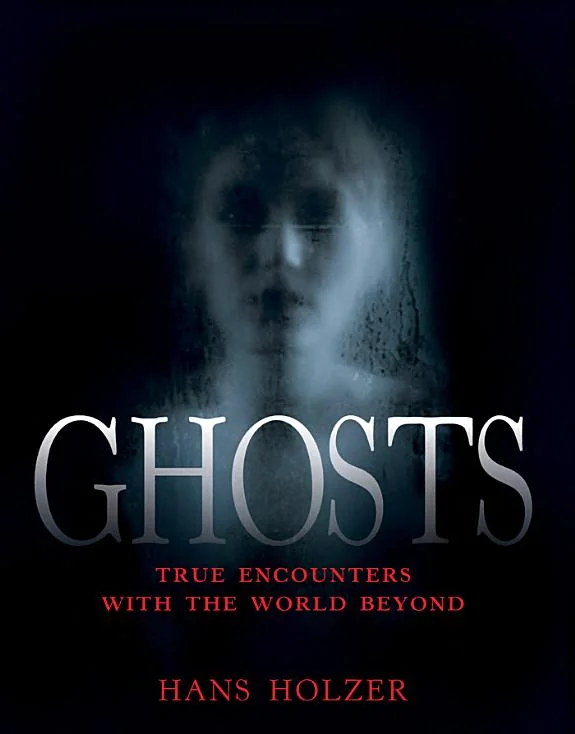
Hans Holzer’s "Ghosts" offers a wide-ranging survey of spectral encounters, drawing from his extensive career. The strength lies in the sheer volume of case studies, which provide tangible examples of reported hauntings. Holzer’s direct, no-nonsense prose makes complex theories accessible. However, the book sometimes feels like a catalog rather than a deeply analytical exploration, particularly when discussing the specific mechanics of the "other side." A passage detailing the interpretation of disembodied voices, for instance, highlights his practical approach but could benefit from more theoretical grounding. Despite this, Holzer remains a significant voice in paranormal documentation. "Ghosts" serves as a robust compendium for anyone seeking to understand the breadth of reported ghostly phenomena.
📝 Description
79
Hans Holzer's 2004 book, Ghosts, analyzes spectral phenomena through extensive case histories.
Hans Holzer's "Ghosts," published in 2004, offers a systematic look at hauntings and apparitions. The book compiles numerous case histories, moving beyond anecdotal accounts to examine the nature of paranormal activity. Holzer aims for clarity, presenting his research in an analytical yet accessible manner designed to make the paranormal less mysterious.
This work is for anyone curious about ghosts and the afterlife. It provides a structured overview of paranormal investigation, with advice on identifying and interpreting potential signs. Those interested in the history of ghost studies will find this book valuable. Holzer, a parapsychologist since the 1960s, draws on decades of research, placing the book's 2004 publication within a continuing wave of interest in the paranormal.
Published in 2004, "Ghosts" arrived during a period where paranormal literature continued to grow in popularity. Holzer, a significant figure in parapsychology since the 1960s, built upon years of personal research and investigation. The book's release followed increased attention to mediumship and hauntings, reflecting earlier 20th-century spiritualist interests but with a more evidence-focused framework. It connects historical spiritualist ideas to contemporary investigations.
💡 Why Read This Book?
• Learn to interpret spectral signals, such as auditory phenomena, by examining hundreds of case histories detailed in "Ghosts," allowing for a more analytical approach to unexplained sounds. • Understand the distinction between residual and intelligent hauntings, a core concept Holzer presents, to better categorize and analyze reported paranormal events. • Gain insight into Hans Holzer's specific methodologies for ghost investigation, as he shares practical tips that have been refined over his decades of work since the 1960s.
⭐ Reader Reviews
Honest opinions from readers who have explored this book.
❓ Frequently Asked Questions
What types of ghostly manifestations does Hans Holzer discuss in "Ghosts"?
Hans Holzer examines a wide spectrum of ghostly manifestations, including visual apparitions, auditory phenomena like voices and unexplained sounds, and other sensory signals. The book categorizes these based on his decades of paranormal research.
When was Hans Holzer's book "Ghosts" first published?
Hans Holzer's "Ghosts" was first published in 2004. This edition compiles his extensive research and case histories gathered over many years in the field of paranormal investigation.
Does "Ghosts" offer practical advice for ghost hunters?
Yes, "Ghosts" provides practical tips from Hans Holzer on interpreting signals from the beyond, recognizing different types of hauntings, and analyzing evidence. It aims to equip readers with tools for understanding paranormal occurrences.
What is the primary focus of Hans Holzer's "Ghosts"?
The primary focus of "Ghosts" is to explore the true nature of the "other side" through extensive case histories of ghostly manifestations. Holzer aims to demystify spectral phenomena and present a structured analysis of hauntings.
Are there photographs of ghostly apparitions in the book?
The original blurb mentions "eye-opening photographs of ghostly apparitions and visitations," suggesting the book includes visual evidence to support its case histories and analysis of spectral activity.
What distinguishes Hans Holzer's approach to ghosts?
Hans Holzer's approach, evident in "Ghosts," is characterized by extensive fieldwork, a vast collection of case studies, and an analytical method aimed at categorizing and understanding different types of hauntings, rather than solely relying on anecdotal accounts.
🔮 Key Themes & Symbolism
Spectral Manifestations
Holzer meticulously documents various forms of ghostly apparitions and visitations, categorizing them based on observable characteristics. He differentiates between phenomena that appear to be traces of past events (residual hauntings) and those suggesting a conscious presence or interaction (intelligent hauntings). The book emphasizes the importance of sensory data – visual and auditory – in understanding these manifestations, moving beyond mere folklore to a more structured analysis of reported encounters.
The Nature of the Other Side
A central theme is Holzer's investigation into what lies beyond physical existence. He presents "Ghosts" as an attempt to glean insights into this "other side" through consistent patterns observed in hauntings across centuries and cultures. The work explores the possibility of consciousness persisting after death and interacting with the physical realm, offering a framework for interpreting these interactions based on extensive case files.
Interpreting Paranormal Signals
The book offers practical guidance on recognizing and interpreting signs from the spectral realm. Holzer details how to approach unexplained sounds, visual anomalies, and other perceived signals. This section empowers readers with tools to analyze their own experiences or reported phenomena, encouraging a critical yet open-minded perspective on evidence gathered during paranormal investigations.
Case History Analysis
Central to Holzer's work are the hundreds of case histories presented. These are not merely anecdotal accounts but form the empirical basis for his theories. By examining specific locations, reported events, and witness testimonies, Holzer builds a cumulative argument about the reality and nature of ghosts, showcasing the breadth of his research conducted since the mid-20th century.
💬 Memorable Quotes
Direct passages from the work, attributed to the author.
“Ghostly manifestations of every variety”
— This phrase expresses the book's comprehensive scope, indicating Holzer's intention to cover the full spectrum of reported paranormal activity, from subtle atmospheric changes to full-bodied apparitions.
“True nature of 'the other side'”
— This points to Holzer's ambition to move beyond simple ghost stories, seeking a deeper understanding of what constitutes post-mortem existence and how it might interact with our world.
“Hundreds of case histories”
— This highlights the empirical foundation of Holzer's work, emphasizing the extensive research and documentation that underpins his analysis of spectral phenomena.
“Tips on interpreting sounds and other signals”
— This suggests the book offers practical, actionable advice for those interested in paranormal investigation, focusing on sensory perception and analytical methods.
“Eye-opening photographs of ghostly apparitions”
— This indicates the inclusion of visual evidence, aiming to provide readers with compelling, potentially verifiable examples of spectral activity documented within the book.
🌙 Esoteric Significance
Tradition
Holzer's work sits adjacent to, rather than strictly within, established esoteric traditions. While drawing on themes common in Spiritualism and Theosophy regarding the survival of consciousness after death, his methodology leans towards empirical documentation and classification of phenomena. He attempts to build a science of hauntings, departing from purely mystical interpretations but acknowledging the spiritual implications of spectral encounters. His approach is more akin to a practical, investigative branch of parapsychology with a spiritual undertone.
Symbolism
While not overtly symbolic in a traditional esoteric sense, "Ghosts" implicitly uses the spectral apparition as a symbol of unresolved energy, lingering consciousness, or psychic imprints. Unexplained sounds, such as whispers or footsteps, function as symbols of presence, indicating a disruption in the normal fabric of reality. The "other side" itself acts as a potent symbol for the unknown, the afterlife, and the enduring mystery of existence beyond the physical.
Modern Relevance
Holzer's meticulous cataloging of hauntings and his attempts to categorize different types of spectral activity remain relevant for contemporary paranormal investigators and enthusiasts. His work provides a foundational text for understanding the history of ghost research and offers a methodology that, while dated, still informs modern approaches to documenting and analyzing alleged hauntings. Thinkers in the field of consciousness studies and those exploring fringe science continue to reference his extensive case files.
👥 Who Should Read This Book
• Aspiring paranormal investigators: Readers seeking practical guidance on identifying, documenting, and interpreting spectral phenomena will find Holzer's tips and case analyses invaluable. • Students of the history of parapsychology: Individuals interested in the evolution of ghost studies and the contributions of key figures like Hans Holzer will appreciate his decades of documented research. • Skeptics and believers alike: Those curious about the breadth of reported ghostly experiences and Holzer's analytical framework for understanding them will find "Ghosts" offers a comprehensive overview.
📜 Historical Context
Hans Holzer's "Ghosts," published in 2004, arrived during a period of renewed public fascination with the paranormal, fueled by television series and a general cultural openness to unexplained phenomena. Holzer himself was a significant figure in parapsychology, beginning his investigations in the late 1950s and continuing for decades. His work positioned itself against purely psychological explanations for hauntings, often engaging with spiritualist traditions and early parapsychological research from figures like J.B. Rhine. While not explicitly censorship-related, Holzer's prolific output and direct claims about the afterlife often met with skepticism from the scientific establishment, a common reception for paranormal researchers of his era. His approach, grounded in extensive fieldwork and detailed case files, offered an alternative to the more academic or esoteric studies of the occult prevalent at the time.
📔 Journal Prompts
Reflect on the concept of residual hauntings as presented in Holzer's work.
Analyze the sensory signals described in "Ghosts" and their potential interpretations.
Consider the historical context of paranormal investigation in the mid-20th century, as illuminated by Holzer's career.
Explore the idea of the 'other side' as depicted through Holzer's case studies.
Examine the photographic evidence mentioned and its role in paranormal documentation.
🗂️ Glossary
Residual Haunting
A type of haunting where paranormal activity is thought to be an imprint or echo of a past event, replaying without conscious intelligence or interaction with the living.
Intelligent Haunting
A haunting characterized by apparent conscious activity from a spectral entity, which may interact with the environment or observers.
Apparition
The visual manifestation of a ghost or spirit, ranging from indistinct shapes to fully formed human figures.
Auditory Phenomena
Unexplained sounds reported during hauntings, such as voices, footsteps, knocks, or disembodied whispers.
The Other Side
A term used to describe the afterlife or a spiritual realm believed to exist beyond physical death, from which spirits may manifest.
Paranormal Investigator
An individual who studies or investigates unexplained phenomena, such as ghosts, hauntings, and other supernatural occurrences.
Case History
A detailed account of a specific paranormal event or haunting, including witness testimonies, environmental data, and investigator findings.
This book appears in 1 collection
🔮 Readers Also Liked
Browse all →









From the “Haunted Places” Collection
View all →






More Free Occult Philosophy Books
View all →