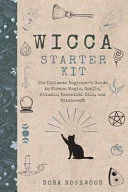
Wicca Starter Kit
 73
73

Wicca Starter Kit
Dora Rosewood's 'Wicca Starter Kit' offers a clear, if somewhat generalized, entry point into the Craft. Its strength lies in its direct address to the solitary practitioner, a significant demographic often overlooked in more traditional coven-focused literature. The section on creating personal rituals, particularly the guidance on establishing sacred space, provides actionable steps for beginners. However, the historical overview feels truncated, glossing over the complex schisms and diverse influences that shaped Wicca post-Gardnerian era. For instance, the book mentions Gerald Gardner but doesn't adequately explore the contributions of figures like Doreen Valiente or the impact of the Alexandrian and Seax-Wica traditions. While it successfully lays out the basics of spellcasting and deity work, it could benefit from a deeper exploration of the philosophical debates within modern Paganism. Overall, it serves as a functional primer but lacks the nuanced depth found in more advanced texts.
📝 Description
73
Dora Rosewood's Wicca Starter Kit, published in 2018, offers a clear path for beginners into modern Wicca.
Wicca Starter Kit by Dora Rosewood is a guide for those new to the modern Pagan religion of Wicca. It explains the fundamental beliefs, practices, and philosophies needed to understand and start practicing Wiccan traditions. The book aims to make Wicca approachable for the individual, moving away from perceptions of it as obscure or difficult.
This guide is written for people who want to practice Wicca on their own, outside of organized groups. It gives readers the information and steps needed to build their own spiritual path, stressing personal growth and a direct connection with Wiccan ideas. The book covers the historical background of Wicca, noting its beginnings in the mid-20th century and mentioning figures like Gerald Gardner. This context helps explain the variety of practices and beliefs found in Wicca today.
This book fits within the modern Paganism movement, specifically the Wiccan tradition that emerged in the mid-20th century. It draws on earlier occult and magical traditions but presents a distinct path focused on nature, deities, and personal practice. Unlike older, more secretive magical orders, Wicca as presented here emphasizes accessibility for the solitary practitioner, aiming to provide a framework for a personal spiritual connection rather than adherence to strict dogma or communal ritual.
💡 Why Read This Book?
• Gain practical instruction for solitary Wiccan practice, including detailed steps for performing rituals and casting spells, directly applicable to establishing your personal spiritual path. • Understand the fundamental beliefs and philosophies of Wicca, such as the concepts of the God and Goddess and the Wheel of the Year, enabling a solid theoretical foundation. • Explore the historical roots of modern Wicca, beginning with its mid-20th century emergence, providing context for the diverse practices observed today.
⭐ Reader Reviews
Honest opinions from readers who have explored this book.
❓ Frequently Asked Questions
What is the main purpose of the Wicca Starter Kit?
The primary purpose of the Wicca Starter Kit is to provide a comprehensive, accessible guide for individuals interested in starting a personal practice of Wicca, particularly for those who intend to practice solitarily.
Does the book explain Wiccan spells and rituals?
Yes, the book offers instructions and knowledge for performing rituals and creating spells, focusing on the steps and elements needed for a solitary practitioner to develop their own unique practice.
What historical aspects of Wicca does the book cover?
It touches upon the history of Wicca and its core philosophies, including foundational beliefs and devotions, providing context for the religion's development.
Is this book suitable for experienced Wiccans?
The book is specifically geared towards beginners and solitary practitioners. Experienced Wiccans might find the foundational information familiar, but it may offer less in-depth exploration of advanced topics.
What are the key beliefs discussed in the Wicca Starter Kit?
Key beliefs covered include the core philosophies, devotional practices, and ethical considerations often associated with Wicca, presented in a way that is easy for newcomers to grasp.
Can I start practicing Wicca immediately after reading this book?
Yes, the book is designed to equip readers with the knowledge and steps necessary to begin performing rituals and establishing their own Wiccan practice immediately.
🔮 Key Themes & Symbolism
Solitary Practice Foundation
This book emphasizes the solitary path within Wicca, providing a structured framework for individuals who choose to practice independently. It offers guidance on establishing personal altars, developing a connection with deities, and creating meaningful rituals without the need for a coven. The aim is to empower the individual practitioner to build a robust and fulfilling spiritual life grounded in Wiccan principles, acknowledging that a significant portion of modern Wiccans practice alone.
Core Wiccan Beliefs and Philosophies
It systematically introduces the fundamental tenets of Wicca, including the dualistic nature of the divine (often represented as the God and Goddess), the cyclical understanding of time through the Wheel of the Year, and the ethical imperative of 'harm none'. The book aims to present these concepts clearly, making them digestible for those unfamiliar with Pagan traditions, and provides a basis for understanding the motivations behind Wiccan practices.
Practical Ritual and Spellcraft
A significant portion of the book is dedicated to the practical application of Wiccan arts. This includes instructions on how to structure spells, the significance of tools, the use of herbs and correspondences, and the execution of common rituals. The focus is on providing actionable steps and explanations that allow beginners to confidently engage in magical work and ceremonial practices.
Historical and Philosophical Context
The work situates Wicca within its historical emergence, particularly in the mid-20th century, and explores its evolving philosophies. It provides a basic understanding of the tradition's roots and how it has branched into various forms. This context is presented as essential for appreciating the diversity within modern Wicca and for understanding the foundational ideas that continue to shape the religion.
💬 Memorable Quotes
Direct passages from the work, attributed to the author.
“This book is your ultimate one-stop guide to get you started with Wiccan arts, philosophies, spells, rituals, herbs, beliefs, and much more!”
— This statement sets the book's ambitious scope, promising comprehensive coverage for absolute beginners. It highlights the practical and theoretical elements intended to equip a new practitioner fully.
“This book is specifically geared toward the solitary practitioner, giving you all of the instructions, knowledge, and steps you will need to perform your rituals and create your unique practice based on the beliefs of Wicca.”
— This emphasizes the book's target audience and its practical, self-directed approach. It assures readers that the content is tailored for independent study and personal application of Wiccan principles.
“History of Wicca and its philosophies, core beliefs and devotions”
— This phrase indicates the foundational knowledge provided, covering the origins, ethical frameworks, and spiritual concepts central to understanding Wicca's worldview and devotional practices.
“Instructions, knowledge, and steps you will need to perform your rituals”
— This points to the book's function as a procedural guide, detailing the 'how-to' of Wiccan ritual, ensuring that beginners have a clear roadmap to follow for their practice.
“Create your unique practice based on the beliefs of Wicca”
— This highlights the book's aim to foster individuality within a structured tradition, encouraging readers to adapt Wiccan principles to their personal spiritual needs and inclinations.
🌙 Esoteric Significance
Tradition
This work aligns with the modern eclectic pagan tradition, specifically focusing on Wicca as a spiritual path. While drawing from older European folk magic and nature-based spirituality, Wicca, particularly as presented for solitary practitioners, represents a 20th-century synthesis. It departs from stricter, lineage-based esoteric orders by emphasizing accessibility and personal interpretation, making it distinct from more formalized Hermetic or Kabbalistic systems.
Symbolism
Key symbols often explored include the Pentacle, representing the five elements and protection, and the Triple Moon, symbolizing the Goddess in her maiden, mother, and crone aspects. The Wheel of the Year, marking the solstices, equinoxes, and cross-quarter days, is central, symbolizing the cyclical nature of life, death, and rebirth, and aligning practitioners with natural rhythms.
Modern Relevance
The principles and practices outlined in this starter kit continue to resonate with contemporary seekers looking for nature-based spirituality outside mainstream religions. Its emphasis on solitary practice is particularly relevant in an era of digital connection and individualistic spirituality, influencing online Pagan communities and self-study groups seeking foundational knowledge.
👥 Who Should Read This Book
• Aspiring solitary Wiccans seeking a clear, step-by-step introduction to core beliefs, practices, and ethical guidelines for independent spiritual exploration. • Individuals curious about modern Paganism and nature-based spirituality who want to understand Wicca's foundational concepts without commitment to a formal group. • Beginners interested in learning practical spellcraft, ritual structure, and the symbolism of the Wiccan calendar, aiming to integrate these into their personal lives.
📜 Historical Context
Dora Rosewood's 'Wicca Starter Kit' emerges from the context of modern Paganism's expansion, particularly following the mid-20th century revival of witchcraft. Wicca, as a distinct religious movement, gained significant public awareness in the 1950s and 1960s, largely due to the work of figures like Gerald Gardner and later Doreen Valiente. This period saw Wicca positioned against a backdrop of established Western religions and societal skepticism towards alternative spiritualities. While Gardner's coven practices were influential, the 1970s and 1980s witnessed a growing interest in solitary practice, partly fueled by the rise of feminist spirituality and the desire for more individualistic approaches. This book directly addresses that trend. Unlike more dogmatic or exclusive spiritual paths, Wicca's decentralized nature and emphasis on personal experience allowed for considerable diversity. However, this also led to debates about authenticity and historical accuracy, a conversation ongoing within Pagan scholarship, with figures like Ronald Hutton critically examining its origins.
📔 Journal Prompts
Reflect on the concept of the 'Wiccan Rede' and its personal implications.
Consider the symbolism of the Pentacle in your own spiritual context.
Identify three elements from nature that resonate with the Wheel of the Year.
Explore the dualistic representation of the God and Goddess in your understanding.
Outline the steps for creating your personal sacred space.
🗂️ Glossary
Wicca
A modern Pagan religion and witchcraft tradition characterized by reverence for nature, the worship of a God and Goddess, and the practice of magic.
Solitary Practitioner
An individual who practices Wicca or other spiritual paths independently, outside of a formal coven or group setting.
Wheel of the Year
The cycle of eight seasonal festivals observed in many Wiccan and Neo-Pagan traditions, marking the solstices, equinoxes, and cross-quarter days.
Wiccan Rede
An ethical code often associated with Wicca, famously summarized by the couplet 'An it harm none, do what ye will.'
Pentacle
A five-pointed star, often enclosed within a circle, used as a symbol in Wicca and other traditions, representing the five elements (Earth, Air, Fire, Water, Spirit).
Deities
In Wicca, typically refers to the worship of a divine couple, the God and Goddess, embodying masculine and feminine divine principles.
Sacred Space
A designated area, often consecrated through ritual, used for magical or spiritual practices, intended to be set apart from the mundane world.
This book appears in 1 collection
🔮 Readers Also Liked
Browse all →








From the “Spellcraft” Collection
View all →




More Free Occult Philosophy Books
View all →