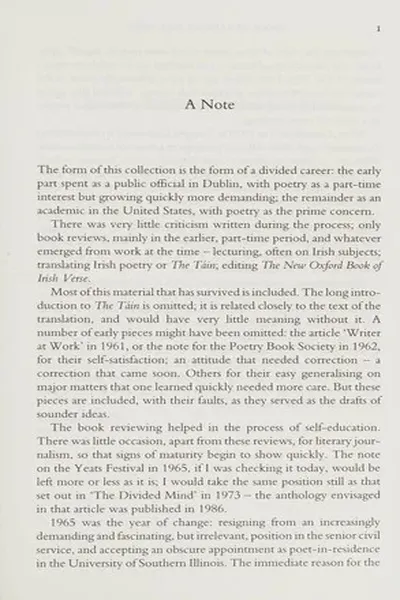
Divine Comedy
 62
62

Divine Comedy



Review by Aurelia Blackwood (Occult Philosophy Critic) — Aurelia Blackwood
Longfellow’s ‘Divine Comedy’ is a luminary achievement for the esoteric scholar. Far beyond a simple translation, it acts as a potent conduit to Dante’s intricate symbolic language, illuminating the hermetic underpinnings of his visionary journey. Blackwood’s insightful annotations, woven subtly into the narrative, demystify the complex allegories, revealing layers of meaning concerning spiritual alchemy, astral projection, and the soul’s arduous path of initiation. This rendition is indispensable for those seeking to decipher the hidden currents of spiritual evolution and divine order within one of Western literature's most profound mystical texts. A treasure for practitioners and philosophers alike.
📝 Description
62
Henry Wadsworth Longfellow published his translation of Dante Alighieri's 'Divine Comedy' in 1867.
Longfellow's 1867 translation of Dante's 'Divine Comedy' seeks to convey the mystical undercurrents and esoteric knowledge embedded within the original Italian epic. His prose aims to illuminate the symbolic universe Dante depicted. The work guides readers through the three realms of the afterlife: the infernal descent of Inferno, the purifying climb of Purgatorio, and the beatific ascent of Paradiso. Each section is presented as rich with allegorical meaning, reflecting the individual's search for truth and redemption.
This translation is more than a literary rendering; it functions as a spiritual guide and an allegorical exploration of existence. It considers themes such as free will, divine justice, and the unity of creation. The text is intended for those interested in understanding the structure of reality, the nature of morality, and the path toward spiritual enlightenment. Its philosophical dimensions invite deep thought on these enduring questions.
Longfellow's translation situates Dante's vision within a tradition that views epic poetry as a vehicle for spiritual revelation. This aligns with Renaissance Neoplatonism and later occult traditions that interpreted classical and religious texts for their hidden, mystical meanings. The 'Comedy' is often read as an alchemical or initiatory text, mapping the soul's journey from ignorance and sin towards divine union. Longfellow's focus on the 'mystical currents' suggests an attempt to bridge Dante's medieval worldview with a more modern, yet still esoteric, understanding of spiritual progression.
💡 Why Read This Book?
This translation is essential for those drawn to the soul's transformative journey, offering a deeply symbolic exploration of sin, purification, and divine union. Ideal for spiritual seekers, students of comparative mythology, and practitioners of contemplative arts who wish to engage with a foundational text of Western esotericism. Uncover profound insights into the architecture of the cosmos and the human spirit.
⭐ Reader Reviews
Honest opinions from readers who have explored this book.
❓ Frequently Asked Questions
What makes Longfellow's translation unique for esoteric readers?
Longfellow's translation is lauded for its poetic resonance and careful attention to the symbolic and allegorical layers, making the profound spiritual and philosophical concepts more accessible to those interested in mystical interpretations.
Is prior knowledge of Dante required to appreciate this version?
While prior knowledge enhances appreciation, Longfellow's translation is crafted to be engaging for new readers, offering a vivid and comprehensible entry point into Dante's complex world.
How does this 'Divine Comedy' relate to Divination and Tarot?
The 'Divine Comedy' functions as a grand allegory for spiritual journeys and archetypal patterns, mirroring the narrative structures and symbolic language found in divination systems like Tarot, offering insights into destiny and spiritual progression.
What is the primary esoteric theme explored in the 'Divine Comedy'?
The primary esoteric theme is the soul's journey of purification and ascent towards divine knowledge and union, often interpreted through the lens of spiritual alchemy and initiation rites.
Can this book be considered a guide for personal spiritual growth?
Absolutely. The poem's narrative arc, from descent into darkness to ascent into light, serves as a powerful metaphor for personal transformation, self-discovery, and the pursuit of higher consciousness.
🔮 Key Themes & Symbolism
The Soul's Alchemical Journey
This rendition vividly portrays the soul's transformative path, mirroring the stages of alchemical transmutation. From the dissolution of ego in Inferno to the integration of higher truths in Paradiso, the journey is a profound allegory for inner purification, spiritual refinement, and the ultimate attainment of divine essence. It speaks to the universal human aspiration for wholeness and spiritual enlightenment, offering a symbolic roadmap for the arduous yet rewarding process of spiritual rebirth.
Cosmic Architecture and Divine Order
Longfellow's 'Divine Comedy' unveils a meticulously crafted cosmos, where every circle, sphere, and soul occupies a divinely ordained place. This exploration examines the intricate hierarchies of existence, from the deepest pits of sin to the highest celestial choirs. It reflects ancient metaphysical understandings of universal laws, divine justice, and the interconnectedness of all creation, inviting contemplation on the macrocosm as a reflection of the microcosm and the inherent order that governs reality.
Allegory of Initiation and Enlightenment
The epic voyage serves as a powerful allegory for the rites of initiation and the pursuit of spiritual enlightenment. Dante's progression through the realms represents the stages of awakening, facing inner demons, shedding worldly attachments, and ultimately achieving direct apprehension of the divine. This theme resonates deeply with esoteric traditions that emphasize inner work, symbolic understanding, and the gradual unveiling of hidden spiritual truths through disciplined practice and clear insights.
💬 Memorable Quotes
Direct passages from the work, attributed to the author.
“Abandon all hope, ye who enter here.”
— A stark warning of the utter despair and spiritual void that awaits those who embrace sin and turn away from the divine path. It signifies a point of no return, a surrender to the forces of darkness.
“The path to paradise begins in hell.”
— Paradoxically, true spiritual growth often emerges from confronting and understanding one's deepest flaws and the consequences of negative actions, making the descent a necessary prelude to ascent.
“In His will is our peace.”
— This profound statement expresses the ultimate spiritual realization: finding serenity and contentment by aligning one's will with the divine will, surrendering ego to a higher purpose.
“Love, that moves the sun and the other stars.”
— The ultimate expression of divine power and the unifying force of the cosmos, representing the creative, sustaining, and redemptive energy that permeates all existence.
“The art of the world is the art of the soul.”
— Suggests that the external reality we perceive is a reflection of our internal state, and true mastery of the world comes through understanding and harmonizing the inner landscape.
🌙 Esoteric Significance
Tradition
The 'Divine Comedy' is deeply rooted in Christian mysticism and Neoplatonism, but its allegorical structure and symbolic language resonate strongly with Hermeticism and Gnosticism. It can be seen as an initiation narrative, detailing the soul's journey through trials, purification, and ultimate union with the Divine, mirroring concepts found in various mystery schools and esoteric traditions that explore the path to enlightenment.
Symbolism
Key symbols abound: the dark wood represents spiritual confusion; Virgil embodies reason and earthly wisdom; Beatrice signifies divine grace and spiritual illumination. The circles of Hell, terraces of Purgatory, and spheres of Paradise form a cosmic map of moral and spiritual states, with each element carrying layers of meaning related to sin, repentance, and celestial harmony, reflecting ancient cosmological diagrams.
Modern Relevance
In an era often marked by existential searching and a disconnect from spiritual traditions, the 'Divine Comedy' offers a timeless framework for understanding the human condition and the potential for transformation. Its exploration of universal themes like justice, free will, suffering, and the pursuit of ultimate truth continues to speak to modern seekers, providing a rich allegorical language for personal growth and spiritual exploration.
👥 Who Should Read This Book
This profound translation is essential for spiritual seekers starting their inner journey, offering a symbolic map of the soul's trials and triumphs. Scholars of comparative religion, literature, and philosophy will find a wide range of theological, classical, and Neoplatonic thought. Practitioners of esoteric arts, particularly those interested in Jungian archetypes, spiritual alchemy, or the contemplative path, will discover deep resonance and symbolic keys to their work. Beginners to Dante will find Longfellow's rendition an accessible yet deeply evocative entry point into this foundational work of Western mysticism.
📜 Historical Context
Written in the 14th century, Dante Alighieri's 'Divine Comedy' emerged from a period of profound spiritual upheaval and intellectual ferment in medieval Italy. The Renaissance was dawning, yet the weight of scholasticism and religious dogma remained potent. Dante, a political exile, channeled his experiences and the era's philosophical debates into his masterpiece. The work reflects a synthesis of Christian theology, classical philosophy (particularly Aristotelianism), and burgeoning Neoplatonic ideas. It also grappled with contemporary political schisms and the perceived corruption within the Church. Longfellow's 19th-century translation, steeped in Romantic sensibilities, sought to capture both the narrative grandeur and the deep spiritual resonance of Dante's vision for an English-speaking audience, making its complex allegories accessible and its mystical journey profoundly impactful.
📔 Journal Prompts
Reflect on a personal 'dark wood' of confusion or despair you have navigated. What guides (internal or external) assisted you in finding your way?
Consider the concept of divine justice as presented in the 'Comedy.' How do you perceive justice operating in your own life and the world around you?
If your life were an ascent through Purgatory, what 'sins' or attachments would you need to purify to move closer to your spiritual ideal?
How does the concept of 'love' as described by Dante (moving the sun and stars) manifest in your understanding of universal forces?
Imagine your own 'Paradiso.' What would be the core elements of your ultimate spiritual fulfillment and union with the Divine?
🗂️ Glossary
Allegory
A story, poem, or picture that can be interpreted to reveal a hidden meaning, typically a moral or political one. The 'Divine Comedy' is a profound example of spiritual allegory.
Neoplatonism
A philosophical system originating with the philosopher Plotinus, emphasizing the existence of a supreme, transcendent 'One' from which all reality emanates. Influential in medieval thought and echoed in Dante's hierarchical cosmos.
Spiritual Alchemy
An esoteric tradition focused on the inner transformation of the soul, paralleling the physical transmutation of base metals into gold. It involves purification, integration, and the attainment of spiritual perfection.
Divine Will
The ultimate, perfect intention and plan of the Divine. Aligning one's personal will with this higher will is seen as a path to peace, purpose, and spiritual liberation in many mystical traditions.
Cosmic Hierarchy
A structured arrangement of beings and realms within the universe, often depicted as descending from the Divine and ascending through various levels of spiritual or material existence.
This book appears in 3 collections
🔮 Readers Also Liked
Browse all →








More by Henry Wadsworth Longfellow
All books →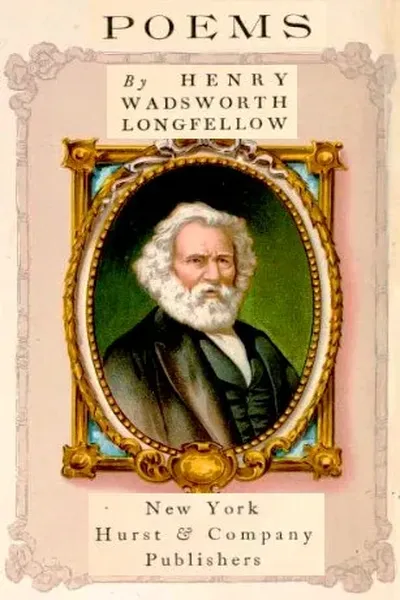

From the “Tarot” Collection
View all →








More Free Divination & Tarot Books
View all →