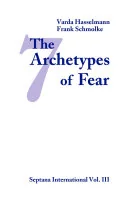
The Seven Archetypes of Fear
 72
72

The Seven Archetypes of Fear
The Seven Archetypes of Fear attempts a systematic demystification of a primal human emotion, moving away from abstract discussions to a structured archetypal model. Hasselmann and Schmolke’s 2014 publication presents a clear, almost cartographical, approach to understanding the roots of anxiety. Their assertion that fear is a functional component of existence, necessary for growth, is a compelling starting point. I found their breakdown into seven distinct archetypes to be the work’s greatest strength; it offers a concrete taxonomy that aids identification. However, while the structure is laudable, the practical application sometimes feels more theoretical than immediately actionable. The authors mention fear as a 'most useful tool provided by existence when skillfully employed,' and while this concept is intriguing, the book could benefit from more detailed guidance on precisely *how* to skillfully employ this tool. The core idea of archetypal fear is solid, but the execution sometimes falters in bridging the gap between recognition and active transformation. Ultimately, it’s a valuable reference for those seeking a structured understanding of their anxieties.
📝 Description
72
Published in 2014, The Seven Archetypes of Fear proposes fear is not arbitrary but a vital part of existence.
Varda Hasselmann and Frank Schmolke's 2014 book, The Seven Archetypes of Fear, presents a structured method for understanding universal human fears. The authors argue that fears are not random but are intrinsic to life, serving important functions. This work moves beyond general anxieties to classify fundamental archetypes that shape our responses to perceived threats. It frames fear not as an adversary to be overcome, but as a signal and a driver for personal growth. The book encourages readers to rethink their relationship with fear, seeing it as a necessary, though sometimes difficult, part of being alive.
The authors contend that fear, when understood and applied correctly, becomes a potent tool for development. It is an inseparable aspect of living and a prerequisite for advancement. Hasselmann and Schmolke suggest that while people often avoid examining their own fears, this introspection leads to significant benefits. By analyzing the underlying archetypes, readers can identify the patterns that fuel their anxieties, enabling a more deliberate and empowered reaction. The text aims to clarify these powerful emotions, showing their inherent value in addressing life's difficulties and opportunities.
This work situates itself within traditions that view human psychology not merely as a product of external conditioning but as deeply connected to underlying energetic or symbolic patterns. It aligns with approaches that seek to understand the human psyche through archetypal frameworks, similar to Jungian psychology but with specific applications to spiritual development and personal transformation. The focus on fear as a structured, functional element, rather than a purely negative experience to be eradicated, echoes certain mystical and depth psychology perspectives that see challenges as opportunities for spiritual unfolding.
💡 Why Read This Book?
• Gain a structured understanding of your personal anxieties by identifying specific archetypal patterns, as presented in the book's clear classification system. • Learn to reframe fear not as a destructive force but as a functional signal for growth, a concept explored throughout the text’s exploration of fear's necessity. • Develop practical self-inquiry techniques by applying the book's conceptual tools to dissect the origins of your fears, moving beyond vague unease to precise recognition.
⭐ Reader Reviews
Honest opinions from readers who have explored this book.
❓ Frequently Asked Questions
What is the core premise of The Seven Archetypes of Fear?
The book posits that fear is an intrinsic, functional aspect of human existence, not merely an affliction. It introduces seven distinct archetypes that categorize fundamental fears, offering a structured way to understand and work with them for personal growth.
Who are the authors, Varda Hasselmann and Frank Schmolke?
Varda Hasselmann and Frank Schmolke are known for their work in esoteric psychology and archetypal studies. Their collaboration, including The Seven Archetypes of Fear (2014), focuses on mapping the deeper structures of the human psyche.
How does this book differ from typical self-help books on anxiety?
Unlike many self-help books that focus on symptom management, this work provides a systematic, archetypal framework. It aims to address the root structures of fear rather than just surface-level anxieties, presenting fear as a necessary tool for evolution.
What is the historical context of this book's publication?
Published in 2014, The Seven Archetypes of Fear emerged during a period of renewed interest in Jungian psychology and archetypal studies, offering a modern, structured perspective on these enduring concepts.
Can understanding these archetypes help with personal growth?
Yes, the book suggests that by identifying and understanding the specific archetypal fears that influence you, you can move from reactive responses to conscious engagement, fostering personal development and resilience.
Is this book suitable for beginners in esoteric studies?
The book's clearly structured format makes it accessible. While it deals with esoteric concepts, the methodical presentation of archetypes can be a helpful entry point for those new to exploring deeper psychological and spiritual frameworks.
🔮 Key Themes & Symbolism
Fear as a Functional Construct
The work fundamentally reframes fear not as an undesirable malfunction but as an inherent, functional aspect of being alive. Hasselmann and Schmolke argue that fear is a vital signal, essential for survival and crucially, for personal growth and evolution. They propose that existence provides fear as a tool, one that becomes immensely powerful when understood and consciously employed. This perspective challenges common notions of eradicating fear, instead advocating for its integration and skillful application. The text explores how this functional aspect is woven into the human condition, appearing across cultures and epochs.
Archetypal Classification System
A central contribution of this book is its systematic categorization of fears into seven distinct archetypes. This structured approach offers a clear map of the often-chaotic range of human anxiety. By defining these archetypes, the authors provide readers with a vocabulary and a framework to identify the specific patterns driving their own fears. This method moves beyond generalized discussions of anxiety, allowing for precise self-analysis and targeted personal work. The clarity of this classification is intended to clarify fear, making it more approachable and manageable.
Fear as a Catalyst for Growth
The authors present a compelling argument that fear, despite its discomfort, is a powerful catalyst for personal development. They suggest that confronting and understanding our archetypal fears is not only rewarding but necessary for true evolution. The book guides readers to see fear not as an endpoint, but as a crucial juncture – a point from which significant transformation can occur. By skillfully employing the insights derived from this confrontation, individuals can unlock new potentials and navigate life with greater awareness and resilience, turning perceived weaknesses into strengths.
The Reward of Introspection
The Seven Archetypes of Fear directly addresses the human tendency to avoid confronting personal fears, acknowledging the inherent reasons for this avoidance. However, it strongly advocates for the immense rewards gained through such introspection. The book posits that actively looking at one's own fears, armed with the archetypal framework provided, is profoundly beneficial. This process leads to a deeper self-understanding, greater emotional mastery, and ultimately, a more authentic and liberated existence. The authors frame this courageous self-examination as a path to liberation and enhanced living.
💬 Memorable Quotes
Direct passages from the work, attributed to the author.
“Fear is a most useful tool provided by existence when skillfully employed.”
— This statement captures the book's core thesis: fear is not an enemy but a functional element of life. When understood archetypally, it can be directed to serve personal growth and awareness, rather than hinder it.
“People... often avoid looking at their own fears for very comprehensible reasons.”
— The authors acknowledge the natural human inclination to shy away from anxiety. This recognition lends credibility to their approach, understanding that the path they propose requires courage and a supportive framework.
“Yet it is extremely rewarding to do just that – [look at one's own fears].”
— This highlights the ultimate benefit of engaging with the book's content. The reward lies in the transformation that occurs when one moves from avoidance to active, informed confrontation of their fears.
“They present it [fear] in a completely new, clearly structured format.”
— This points to the book's methodological innovation. By offering a structured, archetypal classification, it provides a novel and organized lens through which to view and understand the complex phenomenon of fear.
“Fear is inseparable from being alive. It is necessary for growth.”
— This foundational assertion links the experience of fear directly to the fundamental state of existence and the process of personal development, positioning fear as a vital component of the human condition.
🌙 Esoteric Significance
Tradition
This work aligns with traditions of esoteric psychology and archetypal studies, particularly those influenced by Carl Jung's concept of the collective unconscious and archetypes. It departs from purely spiritualist or magical traditions by focusing on the psychological underpinnings of fear, yet it frames these psychological structures within a larger metaphysical context where fear is seen as an intrinsic tool of existence. It fits within a lineage that seeks to understand the human psyche through symbolic and universal patterns, common in Hermetic and Gnostic-inspired thought.
Symbolism
The core symbolism lies in the concept of the 'Seven Archetypes' themselves. Each archetype represents a fundamental pattern of primal fear, acting as a symbolic representation of deeply ingrained human responses to perceived threats. These archetypes function as symbolic keys, unlocking understanding of the hidden drivers behind various anxieties. The 'structure' or 'format' mentioned in the blurb is itself symbolic of order imposed upon chaos, suggesting that by mapping these archetypal fears, one can bring conscious awareness and control to otherwise overwhelming emotional states.
Modern Relevance
The Seven Archetypes of Fear remains relevant for contemporary esoteric practitioners, depth psychologists, and anyone interested in archetypal work. Thinkers exploring shadow work, the integration of primal energies, and the psychological dimensions of spiritual development can find value in its structured approach. Its concepts resonate with modern mindfulness practices that encourage observing difficult emotions without judgment. Schools of thought focusing on trauma integration and the symbolic language of the psyche often draw upon or echo the structured insights provided by works like this.
👥 Who Should Read This Book
• Individuals new to esoteric psychology seeking a structured framework to understand their anxieties. • Practitioners of Jungian analysis or archetypal psychology looking for a specific taxonomy of fear. • Anyone undertaking deep self-inquiry who wishes to move beyond generalized notions of fear to identify specific root patterns.
📜 Historical Context
Published in 2014, The Seven Archetypes of Fear arrived at a time when Jungian psychology and archetypal studies continued to exert influence, though often alongside more mainstream cognitive-behavioral approaches to anxiety. The work of James Hillman, a prominent figure in archetypal psychology, had already paved the way for viewing psychological phenomena through a more mythic and symbolic lens. Hasselmann and Schmolke's contribution lies in their specific, structured taxonomy of fear archetypes, presenting a clear system for understanding these patterns. This approach offered a distinct alternative to purely clinical or philosophical examinations of fear prevalent in the early 21st century. While not directly engaging with contemporary academic debates, the book tapped into a broader esoteric and self-inquiry current, providing a practical framework for individuals seeking deeper self-understanding beyond conventional psychological models.
📔 Journal Prompts
The seven archetypes of fear: Which pattern dominates your current anxieties?
Fear as a tool: How has a specific fear served your growth in the past?
Archetypal structures: Map the manifestation of a core archetype in your daily life.
The reward of introspection: Detail a moment where confronting fear brought clarity.
Fear's necessity: Reflect on how acknowledging fear has prevented a detrimental outcome.
🗂️ Glossary
Archetype
A universal, inherited pattern of thought or image derived from the collective unconscious, shaping human perception and behavior. In this context, specific archetypes represent fundamental categories of fear.
Intrinsic
Belonging naturally; essential. The book argues that fear is an intrinsic part of the human condition, not an external imposition or a mere malfunction.
Esoteric
Intended for or likely to be understood by only a small number of people with a specialized knowledge or interest. This book falls within this category due to its focus on deeper psychological and metaphysical structures.
Catalyst
A substance or agent that provokes or speeds up a significant change or action. The book presents fear as a catalyst for personal growth and transformation.
Introspection
The examination of one's own conscious thoughts and feelings. The book emphasizes introspection as a key method for understanding and working with archetypal fears.
Existential Fear
Fears related to the fundamental conditions of human existence, such as death, freedom, isolation, and meaninglessness. The archetypes often address these deep-seated concerns.
Framework
A basic structure underlying a system, concept, or text. The book provides a structured framework for understanding and categorizing fears.
This book appears in 1 collection
🔮 Readers Also Liked
Browse all →









From the “Archetypes” Collection
View all →







More Free Occult Philosophy Books
View all →