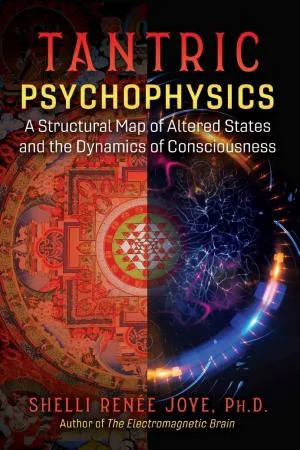
Tantric Psychophysics
 79
79

Tantric Psychophysics
Shelli Renée Joye’s "Tantric Psychophysics" attempts a sophisticated synthesis, viewing Indian and Tibetan Tantra through the lens of Western esotericists like Rudolf Steiner and Gurdjieff. The book's strength lies in its ambitious structural mapping of consciousness, aiming to provide a unified framework for diverse contemplative traditions. The inclusion of practical techniques alongside theoretical exploration is commendable, offering a hands-on dimension often missing in purely academic treatments. However, the integration of Steiner and Gurdjieff, while intellectually stimulating, sometimes feels more imposed than organically derived, creating a slight tension between the Eastern source material and the Western interpretive grid. A particularly insightful section discusses the energetic conduits described in Tantra, correlating them with physiological processes. While ambitious, the sheer scope means some areas are covered more briefly than dedicated scholars might wish. It stands as a serious, if occasionally dense, contribution to the comparative study of consciousness.
📝 Description
79
Shelli Renée Joye's 2021 book charts a course through Tantric traditions for consciousness refinement.
This volume examines methods for refining consciousness rooted in Indian and Tibetan Tantra. Joye posits that ancient contemplative practices offer structured pathways to elevated states of awareness, presenting these techniques as actionable systems for psychological and spiritual development rather than mere abstract philosophies. The book connects these Eastern methodologies with select Western esoteric thought, drawing parallels with the work of Rudolf Steiner and George Gurdjieff, and suggests a shared architecture for higher consciousness.
It is suited for readers interested in the mechanics of consciousness expansion, particularly those drawn to comparative mysticism and esoteric psychology. Individuals with a basic understanding of contemplative practices or a strong academic interest in psychospiritual development will find the text valuable. Those seeking systematic approaches to altered states, beyond anecdotal accounts, will discover practical guidance. The book also serves scholars exploring the cross-pollination of Eastern and Western esoteric thought and practitioners aiming to integrate diverse spiritual technologies.
Published in 2021, Tantric Psychophysics emerges during a period of increased interest in consciousness studies and the integration of ancient traditions into contemporary life. The work situates itself within a lineage of thinkers who sought to map the psyche's potential, echoing early efforts by the Theosophical Society to synthesize world religions and philosophies. It directly engages with concepts explored by Rudolf Steiner and his spiritual scientific methods, and George Gurdjieff's system of self-observation and spiritual exercises. The book places these Western figures in dialogue with classical Indian and Tibetan Tantric traditions.
💡 Why Read This Book?
• Learn specific methods for directing consciousness derived from Indian and Tibetan Tantra, as presented in the book's practical techniques sections, offering a structured approach to awareness beyond generic meditation. • Understand how the work of Rudolf Steiner and George Gurdjieff can be integrated with classical Tantric frameworks to create a unique "structural map of higher consciousness" detailed within the text. • Gain a psychophysical understanding of esoteric practices, moving beyond metaphor to explore how techniques like mantra and visualization directly influence consciousness as outlined in the book's core arguments.
⭐ Reader Reviews
Honest opinions from readers who have explored this book.
❓ Frequently Asked Questions
What is psychophysics in the context of "Tantric Psychophysics"?
In "Tantric Psychophysics," psychophysics refers to the exploration of how specific mental, energetic, and physical practices within Tantra directly influence and alter states of consciousness, akin to studying the relationship between physical stimuli and sensory perception.
Which Indian and Tibetan traditions are primarily explored in the book?
The book focuses on Indian and Tibetan Tantra, examining their esoteric teachings and practical methods for achieving higher stages of awareness and exploring altered states of consciousness.
How does the book connect Eastern and Western esoteric thought?
It integrates Indian and Tibetan Tantric concepts with the philosophical and practical frameworks developed by Western esoteric figures such as Rudolf Steiner and George Gurdjieff, aiming to build a unified map of consciousness.
What kind of practical techniques are presented?
The book offers a wide array of practical techniques, including visualizations, mantras, and yogic exercises, often accompanied by figures and diagrams to aid in understanding and application for navigating altered states.
Who is Shelli Renée Joye?
Shelli Renée Joye is the author of "Tantric Psychophysics," first published in 2021. Her work synthesizes Eastern esoteric traditions with Western philosophical and spiritual currents.
When was "Tantric Psychophysics" first published?
"Tantric Psychophysics" by Shelli Renée Joye was first published on November 23, 2021.
🔮 Key Themes & Symbolism
Consciousness Structuring
The book posits that consciousness is not formless but possesses a structure that can be mapped and navigated. It draws parallels between the subtle energy systems described in Tantric texts, such as chakras and nadis, and conceptual models of psycho-spiritual development proposed by figures like Rudolf Steiner. This theme explores how specific practices are designed to interact with and refine this underlying structure, leading to elevated states of awareness and mystical experiences, proposing an integrated framework for understanding these phenomena.
Psycho-Physical Techniques
Central to the work is the idea that esoteric practices are inherently psychophysical, meaning they directly affect both the mind and body. It details how Tantric methods—including mantra recitation, specific breathwork (pranayama), visualization, and yogic postures—function as precise operations to alter physiological states and, consequently, subjective experience. The book emphasizes the systematic and directed nature of these techniques, moving them from mere ritual to a form of applied consciousness science.
Comparative Esotericism
"Tantric Psychophysics" actively engages in comparative study, juxtaposing Indian and Tibetan Tantric traditions with Western esoteric thought, particularly the systems of Rudolf Steiner and George Gurdjieff. It seeks common ground and structural equivalencies, suggesting that diverse spiritual paths converge on similar maps of human potential and cosmic order. This approach aims to provide a more comprehensive understanding by bridging cultural and historical divides in esoteric philosophy and practice.
Navigating Altered States
The book serves as a guide for understanding and navigating altered states of consciousness, from heightened mystical experiences to ordinary shifts in awareness. It presents Tantric psychophysics not just as theory but as a practical toolkit, utilizing figures and diagrams to illustrate the pathways and landscapes of the inner world. The emphasis is on providing readers with methods and conceptual maps to explore these states with greater clarity, control, and purpose.
💬 Memorable Quotes
Direct passages from the work, attributed to the author.
“Esoteric teachings from India and Tibet offer specific methods for tuning and directing consciousness.”
— This highlights the book's core premise: that ancient Tantric traditions provide actionable, systematic techniques for intentional consciousness development, rather than abstract philosophical speculation.
“A wide-ranging collection of practical techniques, as well as numerous figures and diagrams, to facilitate navigation of altered states.”
— This points to the book's utility as a hands-on guide, emphasizing its visual aids and concrete exercises designed to help readers explore and understand non-ordinary states of consciousness.
“Viewing Tibetan and Indian Tantra through the work of Steiner, Gurdjieff, Teilhard de Chardin.”
— This indicates the book's unique comparative approach, integrating Eastern contemplative science with specific Western esoteric and philosophical systems to build a unified model of consciousness.
“Develops an integrated structural map of higher consciousness.”
— This suggests the book's ambition to create a coherent framework or blueprint for understanding the various levels and potentials of human consciousness, drawing from diverse traditions.
“Methods for tuning and directing consciousness to reach higher stages of awareness.”
— This captures the practical goal of the book: to equip readers with specific tools and understanding to intentionally cultivate higher states of consciousness through disciplined practice.
🌙 Esoteric Significance
Tradition
This work situates itself primarily within the broad lineage of Tantra, encompassing both Indian and Tibetan traditions. It departs from purely religious or devotional interpretations by focusing on the psychophysical mechanisms underlying Tantric practices. By framing these within a comparative structure that includes Western esoteric thought, particularly the spiritual science of Rudolf Steiner and the practical psychology of George Gurdjieff, it seeks to establish Tantra as a universal system for consciousness development applicable beyond its original cultural context.
Symbolism
The book likely explores symbols such as the mandala, representing the cosmos and the enlightened mind, and the subtle body diagrams (chakras, nadis) which map energetic pathways within the practitioner. These symbols are not merely decorative but are presented as functional tools within Tantric psychophysics, acting as focal points for visualization and energy direction. Their interpretation within the text aims to reveal their psychophysical correlates, aligning them with the structural models of consciousness proposed by Western esotericists.
Modern Relevance
Contemporary thinkers and practitioners in fields like transpersonal psychology, consciousness research, and integrated spiritual development draw on similar cross-cultural syntheses. Schools focusing on embodied cognition and the mind-body connection, as well as individuals exploring advanced meditation and energy work, can find resonance with the book's approach. The emphasis on a systematic, map-based understanding of consciousness aligns with modern desires for structured, evidence-informed spiritual exploration, making its approach relevant to current psychospiritual discourse.
👥 Who Should Read This Book
• Students of comparative religion and esoteric traditions seeking to understand the mechanics of consciousness expansion across cultures. • Practitioners of meditation, yoga, or other contemplative arts looking for advanced techniques grounded in psychophysical principles. • Researchers and scholars of consciousness studies interested in the integration of Eastern and Western esoteric frameworks for mapping higher awareness.
📜 Historical Context
Published in 2021, "Tantric Psychophysics" arrived during a period of significant resurgence in interest surrounding consciousness studies and the integration of non-Western spiritual traditions into Western discourse. It follows decades of scholarship and popular engagement with Eastern philosophies, building upon the work of figures who sought to bridge the gap between empirical science and esoteric knowledge. The book specifically engages with the intellectual currents set in motion by thinkers like Rudolf Steiner, whose spiritual science offered detailed cosmologies and anthropologies, and George Gurdjieff, whose system emphasized self-observation and energetic development. These Western frameworks are used as interpretive lenses for classical Indian and Tibetan Tantra. In the broader range of esoteric publishing, the early 2020s saw continued exploration of comparative mysticism and the application of ancient techniques to modern psychological challenges, a niche where Joye's work found its place.
📔 Journal Prompts
The structural map of higher consciousness proposed in the book: how does it align with your personal experiences?
Analyze the psychophysical function of a specific Tantric technique discussed, such as mantra or visualization.
Compare the concept of the subtle body in Tantra with analogous concepts from Steiner or Gurdjieff explored in the text.
Reflect on the practical application of directing consciousness as outlined in "Tantric Psychophysics".
How might the integration of Eastern and Western esoteric models enhance your understanding of awareness?
🗂️ Glossary
Tantra
A complex system of esoteric traditions originating in India, with branches in Tibetan Buddhism and Hinduism, emphasizing the use of rituals, meditation, visualization, and physical practices to achieve spiritual liberation and heightened states of consciousness.
Psychophysics
The study of the relationship between physical stimuli and the sensations and perceptions they affect. In this context, it refers to how specific physical and mental practices within esoteric traditions directly influence the state and structure of consciousness.
Subtle Body
In many esoteric traditions, particularly Tantra, this refers to a non-physical energetic body composed of channels (nadis), energy centers (chakras), and vital winds (prana), which mediates between the physical body and consciousness.
Rudolf Steiner
An Austrian philosopher, esotericist, and social reformer who founded anthroposophy, a spiritual philosophy and esoteric tradition that sought to synthesize scientific, artistic, and spiritual understanding of the human being and the cosmos.
George Gurdjieff
An Armenian mystic and spiritual teacher who developed a system of 'fourth way' teachings emphasizing self-observation, conscious effort, and the development of higher centers of consciousness to achieve spiritual transformation.
Altered States of Consciousness (ASC)
Any state of consciousness that deviates from the normal waking state, including those induced by meditation, hypnosis, psychedelic substances, or intense psychological experiences.
Mantra
A sacred utterance, sound, syllable, word, or group of words believed by practitioners to have psychological or spiritual power, often used in meditation and ritual within Indian traditions.
This book appears in 1 collection
🔮 Readers Also Liked
Browse all →









From the “Altered States of Consciousness” Collection
View all →






More Free Occult Philosophy Books
View all →