Crop Circles
 80
80

Crop Circles
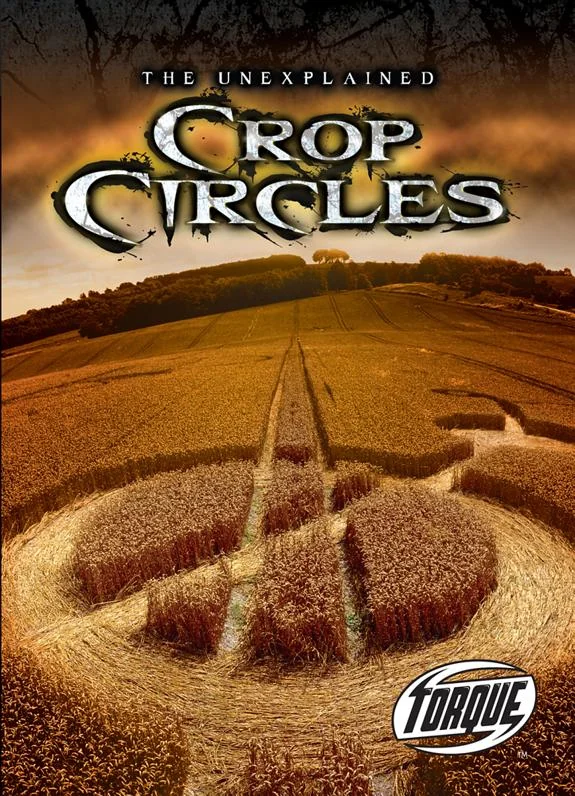
Kraig Helstrom's "Crop Circles" functions primarily as a visual primer, presenting a curated collection of images alongside factual descriptions of various formations. The book's strength lies in its straightforward presentation, which effectively showcases the aesthetic and geometric diversity of crop circles. However, its brevity and target audience (younger readers) mean it offers little in the way of critical analysis or historical depth, particularly concerning the more complex debates surrounding their origins.
A specific passage detailing the "Wellington Circle" from 1991, for instance, highlights the visual intricacy that often characterizes these events. While this serves to illustrate the phenomenon, the work shies away from discussing the famous confession by Doug Bower and Dave Chorley, which significantly impacted the public perception of crop circles starting in 1991. This omission, likely due to its target demographic, leaves a notable gap for adult readers seeking a comprehensive overview.
Read more ↓
Ultimately, "Crop Circles" provides a competent visual catalog but lacks the critical engagement necessary for a mature understanding of the subject.
📝 Description
80
Kraig Helstrom's 2007 book documents crop circle formations from simple shapes to fractal designs.
Kraig Helstrom's "Crop Circles" presents a visual and textual record of the formations that have appeared in agricultural fields globally. The book details various patterns, ranging from straightforward geometric figures to elaborate, fractal-like arrangements. Helstrom's aim was to offer an accessible overview of the phenomenon, describing specific instances and their visual traits without extensive speculation.
Originally intended for younger readers, specifically students in grades 3 through 7, the book functions as a visual compendium. The publisher sought to combine a subject of high interest with clear text, making it suitable for younger audiences or anyone seeking a basic introduction to crop circles. This approach prioritizes visual evidence over deep analytical study.
While this book focuses on documenting visual evidence, crop circles themselves are often discussed within esoteric traditions. They are frequently interpreted as messages, symbols, or indicators of non-human intelligence, aligning with interests in ufology, ancient mysteries, and consciousness studies. The complexity and scale of some formations lead to discussions about their origins, which can extend to discussions of earth energies or subtle communication methods, fitting within a broader interest in unexplained phenomena and alternative cosmologies.
💡 Why Read This Book?
• Gain an introduction to the visual diversity of crop circle patterns, understanding their geometric and scale variations as depicted in the book's imagery. • Explore the basic characteristics of crop formations, such as flattened yet unbroken stalks, a recurring motif documented in Helstrom's work. • Discover specific examples of crop circles, with the book referencing formations that illustrate the phenomenon's progression and complexity.
⭐ Reader Reviews
Honest opinions from readers who have explored this book.
❓ Frequently Asked Questions
What is the primary focus of Kraig Helstrom's "Crop Circles"?
The book primarily focuses on presenting images of various crop circle formations and providing descriptive information about their visual characteristics and patterns.
Who was the intended audience for the original publication of "Crop Circles"?
The original publication was intended for students in grades 3 through 7, aiming to engage them with high-interest subject matter through accessible text and visuals.
Does the book discuss theories about who or what creates crop circles?
While the book presents the phenomenon and its visual aspects, it does not extensively delve into speculative theories or debates about the origins of crop circles.
What kind of images can be expected in "Crop Circles"?
Readers can expect engaging photographs and illustrations showcasing a range of crop circle designs, from simple geometric shapes to more intricate patterns.
When was "Crop Circles" by Kraig Helstrom first published?
The book "Crop Circles" by Kraig Helstrom was first published on January 1, 2011.
Is "Crop Circles" suitable for academic research?
While useful as a visual reference for younger students, "Crop Circles" may not be sufficient for academic research due to its introductory nature and lack of in-depth analysis or citation of scholarly sources.
🔮 Key Themes & Symbolism
Geometric Patterns in Nature
The book highlights the striking geometric precision found in crop circles, presenting them as complex designs etched into agricultural landscapes. This theme explores the inherent mathematical and visual order that can manifest in such phenomena, prompting contemplation on the underlying principles that govern their creation. The formations often exhibit symmetries and recurring shapes, suggesting an intelligence or natural process capable of executing intricate designs on a large scale.
The Visual Evidence of Anomalies
Central to "Crop Circles" is the presentation of visual documentation of unexplained events. The book focuses on the tangible evidence – the patterns themselves – as a starting point for understanding the phenomenon. It emphasizes how these formations, appearing suddenly and often overnight, challenge conventional explanations and invite closer examination of the visual data. The sheer variety and complexity serve as a visual record of recurring anomalies.
Accessible Introduction to Mysteries
Designed for younger readers, this theme focuses on making complex or mysterious subjects approachable. "Crop Circles" uses clear visuals and simple language to introduce the phenomenon without overwhelming the audience. It serves as a foundational text, encouraging curiosity and a basic understanding of the subject matter, paving the way for potential further exploration of more complex esoteric topics.
Human Perception and Interpretation
By showcasing the formations, the book implicitly invites readers to consider how they perceive and interpret such events. The stark visual presence of crop circles prompts questions about their origin and meaning, touching on how humans attempt to rationalize or understand the unexplained. This theme underscores the role of visual information in shaping our understanding of anomalies.
💬 Memorable Quotes
Direct passages from the work, attributed to the author.
“Engaging images accompany information about crop circles.”
— This highlights the book's primary method of communication: visual evidence. It suggests that the photographs and illustrations are central to conveying the nature and scope of the crop circle phenomenon.
“The combination of high-interest subject matter and light text...”
— This points to the book's pedagogical approach, designed to capture and maintain the attention of its target audience through a blend of intriguing content and easily digestible prose.
“...intended for students in grades 3 through 7.”
— This clarifies the educational level and age group the book was specifically designed to serve, indicating a focus on foundational knowledge and accessibility.
“Information about crop circles.”
— This phrase underscores the factual and descriptive nature of the content, suggesting the book provides details about the phenomenon rather than engaging in deep speculative analysis.
“Appeared in agricultural fields worldwide.”
— This statement contextualizes the global reach and typical location of crop circle formations, indicating their widespread occurrence across different geographical regions.
🌙 Esoteric Significance
Tradition
While not explicitly aligning with a specific esoteric lineage like Hermeticism or Gnosticism, "Crop Circles" touches upon themes of pattern, geometry, and unexplained phenomena that resonate with broader esoteric interests in sacred geometry and the potential for non-human intelligence or communication. The book's focus on visual representation and the inherent order within the formations can be seen as a modern manifestation of humanity's age-old fascination with celestial or terrestrial signs and symbols.
Symbolism
The primary symbols explored are geometric shapes themselves – circles, spirals, triangles, and complex fractals. In many esoteric traditions, these shapes represent fundamental cosmic principles, divine order, or energetic patterns. A circle can symbolize unity and wholeness, while more complex geometric arrangements might be interpreted as maps of consciousness, energy fields, or even coded messages from unknown sources.
Modern Relevance
Contemporary thinkers and practitioners in fields like sacred geometry, consciousness studies, and even ufology continue to draw inspiration from crop circles. The formations serve as contemporary examples of unexplained terrestrial phenomena that challenge materialist paradigms. Groups exploring themes of extraterrestrial contact or alternative forms of communication often cite crop circles as potential evidence of advanced intelligence interacting with our planet.
👥 Who Should Read This Book
• Young students (grades 3-7) interested in visual mysteries and geometric patterns, providing an engaging entry point into the subject matter. • Casual readers seeking a straightforward visual catalog of crop circle formations without deep theoretical analysis or debate. • Educators looking for accessible material to introduce concepts of unexplained phenomena, geometry, and visual observation to elementary and middle school students.
📜 Historical Context
Kraig Helstrom's "Crop Circles," first published in 2011, arrived at a time when the phenomenon had already experienced decades of public fascination and academic scrutiny. The late 20th century, particularly the 1980s and 1990s, saw an explosion in crop circle appearances and media coverage. This era coincided with the rise of New Age spirituality and a general openness to exploring alternative explanations for unexplained phenomena. While many circles were later revealed to be hoaxes, notably by Doug Bower and Dave Chorley who claimed responsibility in 1991 for many earlier formations, the subject retained a persistent allure. Helstrom's work, aimed at younger audiences, presents the visual evidence without examining the complex history of debunking or the more esoteric interpretations that circulated among figures like Colin Andrews or the researchers associated with the Centre for Crop Circle Studies. The book's accessible format reflects a desire to introduce the visual aspect of this enduring mystery to a new generation.
📔 Journal Prompts
The geometric precision of crop circles, as depicted in the book.
The visual characteristics that distinguish crop formations.
The purpose of presenting crop circles to a younger audience.
The global appearance of crop formations.
Interpreting the visual complexity of the designs shown.
🗂️ Glossary
Crop Circle
A phenomenon where a large number of crops, such as wheat, barley, or corn, are flattened in intricate patterns, often appearing overnight in agricultural fields.
Formation
Refers to a specific instance or design of a crop circle, encompassing its shape, size, and complexity.
Geometric Patterns
Designs characterized by precise mathematical shapes and symmetries, commonly observed in crop circles, such as circles, rings, and more complex polygonal arrangements.
Flattened Crops
The state of the plants within a crop circle that have been pressed down, typically without breaking the stems at the node, forming the visible pattern.
Node
A joint on a plant stem where leaves or branches grow. In crop circles, the crops are often bent at the node, a characteristic frequently cited as unusual.
Phenomenon
An observable fact or event, especially one whose cause or explanation is in question. In this context, it refers to the appearance of crop circles.
Visual Evidence
Information presented in the form of images, photographs, or illustrations. The book relies heavily on this to document crop circles.
This book appears in 1 collection
🔮 Readers Also Liked
Browse all →








From the “Crop Circles” Collection
View all →








More Free Occult Philosophy Books
View all →