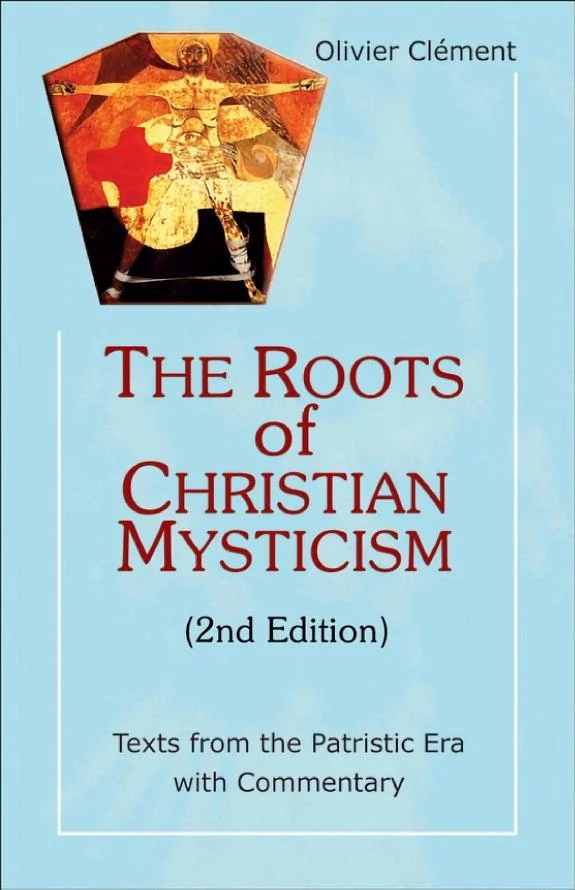
The Roots of Christian Mysticism
 76
76

The Roots of Christian Mysticism
Olivier Clément’s The Roots of Christian Mysticism offers a rigorous, almost archaeological, excavation of the spiritual bedrock beneath centuries of Christian tradition. He eschews easy answers, instead presenting Patristic texts with a scholarly precision that allows their inherent mystical weight to emerge. A particular strength lies in his careful selection of passages, revealing a consistent thread of ecstatic longing and divine union from figures like Gregory of Nyssa and Pseudo-Dionysius the Areopagite. However, the dense Patristic sourcing, while accurate, can render the text challenging for the uninitiated, demanding significant background knowledge. Clément’s handling of the concept of *theosis* in relation to early monastic practices is particularly illuminating, demonstrating a profound engagement with the lived experience of early Christians. This is not a book for casual reading; it is an academic contribution that rewards deep study. It serves as an indispensable resource for understanding the origins of Christian contemplative life.
📝 Description
76
Olivier Clément's 1970 "The Roots of Christian Mysticism" examines the spiritual practices of the Patristic Era.
This book analyzes the spiritual practices of early Christianity, drawing directly from Patristic writings. Olivier Clément selects texts from the early Church to show the continuing mystical currents in Christianity. It is an analytical study, not a collection of saints' lives, tracing the development of contemplative and ecstatic experiences that have informed Christian thought and worship over centuries.
The work is for students of comparative spirituality, Christian theology, and esoteric traditions. Readers interested in the historical growth of mystical experience, the connection between doctrine and faith, and the revival of old spiritual disciplines will find much here. It is especially useful for those wanting to grasp the origins of contemplative prayer and the philosophical basis of Christian asceticism, going beyond simple devotion.
Clément's research fits into the late 20th-century reassessment of early Christian texts, a time of renewed focus on the Desert Fathers and thinkers like Origen and the Cappadocian Fathers. This scholarship sought to recover the experiential aspects of early Christianity, which had been often hidden by later dogmatic arguments. The Patristic Era, from the 2nd to the 8th century CE, was crucial for defining Christian doctrine and practice, and Clément shows how mystical aims were a core part of this formative period, often interacting with Hellenistic philosophy.
Clément's study places Christian mysticism within a tradition that values direct experience of the divine, often outside mainstream institutional interpretation. It connects early Christian practices, such as contemplation and asceticism, to broader esoteric currents that seek inner transformation. The book highlights how figures and texts from the Patristic Era engaged with philosophical traditions, demonstrating an interest in spiritual disciplines that aimed for a deeper, experiential understanding of faith, aligning with a lineage of contemplative inquiry found across various spiritual traditions.
💡 Why Read This Book?
• You will uncover the origins of *theosis* (divinization) as a central aim of Christian spiritual life, as explored through texts from the Patristic Era, offering a distinct perspective on human-divine relationship. • You will gain a concrete understanding of *hesychia* (inner stillness) through Clément’s analysis of early monastic practices, providing practical methods for cultivating spiritual quietude absent in many contemporary guides. • You will see how early Church Fathers like Gregory of Nyssa integrated Hellenistic philosophy with Christian revelation to articulate mystical union, demonstrating a sophisticated intellectual tradition you can explore further.
⭐ Reader Reviews
Honest opinions from readers who have explored this book.
❓ Frequently Asked Questions
What is the Patristic Era and why is it important for Christian mysticism?
The Patristic Era spans from the 2nd to the 8th century CE, encompassing the writings of the early Church Fathers. These texts are crucial for understanding Christian mysticism as they lay the theological and experiential groundwork, defining concepts like *theosis* and the role of the Holy Spirit in divine union.
Who was Olivier Clément and what is his approach in this book?
Olivier Clément was a prominent 20th-century Orthodox theologian and philosopher known for his work on spirituality and existentialism. In 'The Roots of Christian Mysticism,' he adopts a scholarly approach, meticulously selecting and analyzing Patristic texts to reveal the historical depth of Christian mystical experience.
Does this book focus on specific Christian denominations?
While the texts are drawn from the early Christian Church, which predates many later denominational splits, Clément's analysis highlights themes common to the broader tradition of Christian mysticism. It offers insights relevant to Orthodox, Catholic, and even some Protestant contemplative traditions.
What is the concept of 'theosis' discussed in the book?
*Theosis*, or divinization, is a central concept in Eastern Orthodox theology and Christian mysticism. It refers to the process by which a believer, through grace and spiritual practice, becomes united with God, sharing in the divine life without losing their distinct identity.
Are the texts presented in their original languages?
The book presents translations of key texts from the Patristic Era, accompanied by Clément's commentary. While the original languages are not reproduced, the selection and analysis focus on conveying the essence and spiritual impact of these foundational writings.
How does this book differ from modern books on Christian spirituality?
Unlike many contemporary works, 'The Roots of Christian Mysticism' grounds its exploration in primary sources from the early Church. It offers a historical and theological depth, examining the foundational concepts and practices that shaped Christian contemplative traditions over centuries.
🔮 Key Themes & Symbolism
Theosis and Deification
This theme centers on *theosis*, the process of becoming divine through grace, a core concept in Eastern Christianity and mystical theology. Clément illustrates how early Church Fathers like Gregory of Nyssa understood this not as a mere metaphor but as a transformative participation in the divine nature. The book explores the spiritual disciplines and theological frameworks that facilitate this union, presenting it as the ultimate goal of the Christian spiritual path, a profound integration of the human and the divine.
Patristic Contemplative Practice
The work excavates the practical methods of contemplation employed by early Christians, often within monastic settings. It highlights practices such as *hesychia* (inner silence and stillness), prayerful reading of scripture (*lectio divina*), and the cultivation of a constant awareness of God's presence. Clément shows how these disciplines were not peripheral but integral to the spiritual formation and mystical ascent described by figures like Evagrius Ponticus and the Desert Fathers.
Scripture as Living Encounter
Clément emphasizes the early Christian understanding of scripture as a living source of divine encounter, rather than a mere historical or doctrinal text. The Patristic writers saw the Bible as a spiritual guide, its words imbued with the power of the Holy Spirit to illuminate the soul and lead the reader into direct communion with God. This section explores how biblical narratives and teachings were interpreted allegorically and spiritually to foster mystical experience.
The Holy Spirit's Role
A critical theme is the active, transformative role of the Holy Spirit in the mystical life. The book details how early theologians viewed the Spirit as the agent of *theosis*, the one who indwells the believer, purifies the soul, and enables direct experience of the divine. Clément draws on Patristic texts to illustrate the Spirit's work in prayer, asceticism, and the ultimate union with Christ, underscoring the Trinitarian dimension of mystical union.
💬 Memorable Quotes
Direct passages from the work, attributed to the author.
“The spiritual life is not a progress towards God, but a discovery of God already present.”
— This concept highlights a shift from a goal-oriented journey to an awareness of immanence. It suggests that mystical experience involves recognizing the divine presence that is already inherent in creation and within the individual, rather than striving for a distant attainment.
“Prayer is the soul's conversation with God.”
— This simple yet profound statement captures the relational essence of Christian prayer. It frames prayer not as a ritualistic performance but as a dynamic, personal dialogue, emphasizing intimacy and direct communication between the human soul and the divine.
“Stillness of the heart is the key to understanding.”
— This interpretation points to the practice of *hesychia*. It suggests that true spiritual insight and comprehension are not gained through intellectual exertion but through cultivating inner peace and quieting the mind, allowing for divine illumination.
“The liturgy is the cosmos made present.”
— This concept interprets the significance of Christian worship. It implies that the liturgical celebration is not merely a symbolic reenactment but a means by which the divine order and the cosmic reality of God's presence are made manifest and accessible in the present moment.
💡 Key Ideas
Editorial paraphrase of the work's core concepts — not direct quotes.
Through grace, the human is made divine.
This paraphrased concept directly addresses *theosis*. It signifies that the transformation into a divine likeness is not achieved by human effort alone but is a gift of divine grace, enabling a participation in God's very being.
🌙 Esoteric Significance
Tradition
This work is deeply rooted in the Eastern Orthodox Christian tradition, particularly its mystical and ascetical streams. It also engages with broader currents of Neoplatonism, which significantly influenced early Christian thought, especially through figures like Pseudo-Dionysius the Areopagite. Clément's exploration highlights how this tradition offers a path of *theosis* (divinization), a concept that appeals to esoteric aims of spiritual transformation and union with the divine, while maintaining a distinct Christian theological framework.
Symbolism
Key symbols explored include the desert, representing purification and solitude essential for spiritual encounter; light, symbolizing divine revelation and the uncreated energies of God, as discussed in Hesychasm; and the cross, not merely as an instrument of suffering but as the paradoxical gateway to resurrection and union with God, signifying transformation through surrender.
Modern Relevance
Contemporary thinkers and spiritual practitioners, particularly within Orthodox Christianity and contemplative circles, draw heavily on Clément's work. His emphasis on *theosis*, *hesychia*, and the lived experience of faith informs modern spiritual direction, meditative practices, and theological discussions on embodiment and consciousness. Movements focused on ecumenism and interfaith dialogue also find value in his bridge-building between Christian mysticism and broader philosophical and spiritual inquiries.
👥 Who Should Read This Book
• Students of comparative religion and theology seeking to understand the historical roots of Christian contemplative practices and their theological underpinnings. • Practitioners of Christian meditation and prayer who wish to deepen their understanding of ancient disciplines like *hesychia* and the concept of *theosis*. • Scholars of esoteric traditions interested in the foundational texts and concepts of Christian mysticism, particularly its Eastern Orthodox expressions and its engagement with Neoplatonism.
📜 Historical Context
Olivier Clément's The Roots of Christian Mysticism emerges from a mid-to-late 20th-century scholarly milieu deeply engaged with the Patristic tradition. This period saw a resurgence of interest in the experiential and mystical dimensions of early Christianity, often in contrast to what was perceived as overly scholastic or institutionalized theology. Clément's work engages with figures like Origen, the Cappadocian Fathers (Gregory of Nyssa, Basil the Great, Gregory of Nazianzus), and Evagrius Ponticus, whose writings were central to defining early Christian asceticism and contemplative theology. This era was also marked by dialogue with existentialist thought, influencing Clément's own approach to lived faith. The reception of Patristic scholarship during this time often involved re-evaluating texts that had been marginalized or interpreted narrowly, seeking to reclaim their original spiritual vitality. Clément's contribution aligns with a broader movement to understand Christianity as a path of transformation, rooted in the practices and theology of its formative centuries, providing a counterpoint to purely rationalistic interpretations of faith.
📔 Journal Prompts
The concept of *theosis* as presented by Gregory of Nyssa.
Evagrius Ponticus's teachings on the passions and the contemplative mind.
The symbolism of light in the writings of Pseudo-Dionysius the Areopagite.
The practice of *hesychia* and its role in Patristic prayer.
The integration of scripture into the mystical experience.
🗂️ Glossary
Patristic Era
The period in history, roughly from the 2nd to the 8th century CE, during which the early Christian Church Fathers wrote their influential theological and spiritual works, shaping doctrine and practice.
Theosis
A central concept in Eastern Orthodox theology and Christian mysticism, referring to the process of deification or becoming divine through grace, a union with God's energies and likeness.
Hesychia
A Greek term meaning stillness, quietness, or silence, referring to a state of inner peace and contemplative prayer cultivated in Eastern Christian monasticism.
Desert Fathers
Early Christian monks and ascetics, primarily in the 4th century in Egypt, who lived in the desert and developed foundational principles of Christian spirituality and asceticism.
Pseudo-Dionysius the Areopagite
A 5th or 6th-century writer whose works, attributed to Dionysius the Areopagite from the Book of Acts, were highly influential in Christian mysticism, Neoplatonism, and medieval theology.
Logos
A Greek term meaning 'word,' 'reason,' or 'divine order.' In Christian theology, it often refers to Jesus Christ as the divine Word of God, through whom all things were created and are sustained.
Asceticism
A practice of severe self-discipline and abstention from all forms of indulgence, typically for religious or spiritual reasons, aimed at purifying the body and mind.
This book appears in 1 collection
🔮 Readers Also Liked
Browse all →






From the “Christian Mysticism” Collection
View all →







More Free Mysticism & Contemplation Books
View all →