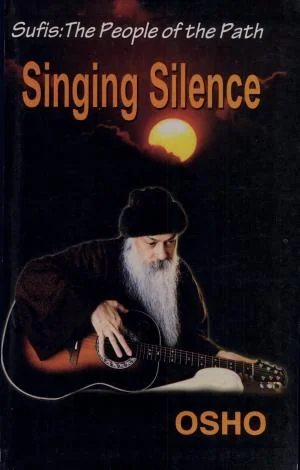
Singing Silence
 80
80

Singing Silence
Osho's *Singing Silence* offers a potent, if occasionally repetitive, examination of inner stillness. The strength lies in its persistent reframing of silence from a void into a vibrant space. For instance, the discourse on 'listening to the silence between two sounds' compels a re-evaluation of sensory input. However, the sheer volume of similar talks can sometimes dilute the impact, making the core message feel hammered home rather than organically unfolding. A limitation is the inherent difficulty in conveying such a subtle, experiential concept through the medium of recorded discourse, which often requires the reader to bridge the gap between Osho's delivery and their own practice. Despite this, the book serves as a valuable guide for anyone seeking to cultivate a deeper relationship with their own internal quietude.
📝 Description
80
Osho's *Singing Silence*, published in 2004, presents silence as a palpable presence, not an absence.
This book is a compilation of talks Osho delivered in the late 1970s and early 1980s, focusing on the nature of consciousness and meditation. It is not structured as a narrative but as a series of discourses that address the inner experience of awareness. Osho suggests that silence should be understood not as a void, but as an active state that can be directly perceived.
The volume is aimed at individuals interested in Eastern spirituality, particularly those drawn to meditation and the philosophies of Zen and Tantra. It appeals to those seeking direct experience over purely intellectual engagement. Readers familiar with Osho's prior commentaries on Zen will recognize recurring themes, while newcomers may find it a gateway to his approach to spiritual inquiry.
Published posthumously, *Singing Silence* originates from Osho's discourses during a period of heightened global interest in Eastern mysticism. His teachings, often diverging from institutionalized religion, emphasized individual awareness and direct experience. This work reflects a lineage influenced by figures who popularized Eastern thought in the West, offering a path focused on inner realization rather than dogma.
💡 Why Read This Book?
• You will learn to perceive silence not as an absence of sound, but as a foundational presence, a concept Osho elaborates on through his discourse on the 'space between thoughts.' • You will gain practical methods for cultivating inner stillness, moving beyond mere quietude to a state of active awareness, as demonstrated in the exercises exploring 'listening beyond the ear.' • You will develop a new appreciation for the non-verbal aspects of consciousness, understanding how to access deeper truths that lie beyond the limitations of language and conceptual thought, a central tenet in the Zen tradition Osho frequently references.
⭐ Reader Reviews
Honest opinions from readers who have explored this book.
❓ Frequently Asked Questions
When was Osho's *Singing Silence* first published?
Osho's *Singing Silence* was first published in 2004, though it compiles discourses given much earlier.
What is the primary focus of *Singing Silence*?
The book primarily focuses on the nature of silence as an active, conscious state rather than mere quietude, exploring its role in meditation and self-awareness.
Is *Singing Silence* a narrative book?
No, *Singing Silence* is not a narrative book. It consists of spiritual discourses given by Osho, offering insights and guidance on meditation and consciousness.
What spiritual traditions influence Osho's teachings in this book?
The teachings in *Singing Silence* are heavily influenced by Zen and Tantric traditions, emphasizing direct experience and awareness over dogma.
Can beginners benefit from *Singing Silence*?
Yes, beginners interested in meditation and Eastern spirituality can benefit, though the direct, experiential approach may be more challenging than purely instructional texts.
Where was Osho based when he gave these discourses?
Many of Osho's discourses from the period this book is drawn from were given at his ashram in Pune, India.
🔮 Key Themes & Symbolism
Silence as Presence
The work reframes silence not as an absence of sound, but as a palpable, living presence. Osho suggests that the gaps between thoughts, the pauses in speech, and the stillness between musical notes are not empty voids but rather the fertile ground where true awareness can emerge. This perspective challenges the common perception of silence as merely the cessation of noise, inviting readers to experience it as a fullness that can be observed and inhabited.
The Observer and the Observed
A core theme is the distinction and eventual merging of the observer and the observed. Osho guides readers to become aware of their own awareness, to witness their thoughts and emotions without identification. This process of 'watching the watcher' is presented as a direct path to understanding the nature of consciousness and transcending the ego's grip, a concept central to many meditative traditions.
Beyond the Mind's Noise
The book frequently contrasts the quietude of true silence with the incessant 'noise' of the human mind – the continuous stream of thoughts, worries, and mental chatter. Osho suggests that this mental noise obscures our perception of reality and prevents us from experiencing deeper states of being. Cultivating silence is thus presented as a means to quiet this internal cacophony and access a more authentic, present state.
The Paradox of Seeking
Osho often employs paradox to illustrate spiritual truths. In *Singing Silence*, he suggests that the effort to find silence can paradoxically create more noise. The true path involves a dropping of striving, a surrender to the present moment, and an acceptance of what is. This non-striving approach is a hallmark of Zen teachings, encouraging a spontaneous unfolding of awareness.
💬 Memorable Quotes
Direct passages from the work, attributed to the author.
“Silence is not the absence of noise; it is the presence of being.”
— This statement expresses Osho's central thesis, positing silence as an active, conscious state rather than a passive void. It invites contemplation on the qualitative difference between mere quiet and a deeply felt sense of presence.
“Listen to the silence between your thoughts.”
— This is a directive for a specific meditation practice, urging the listener to pay attention to the gaps, the 'non-thought' spaces that naturally occur. It's an invitation to find awareness in the interstices of mental activity.
“The mind is always noisy; only consciousness can be silent.”
— This highlights the fundamental distinction Osho draws between the restless, conceptualizing mind and the deeper, silent nature of pure consciousness. It suggests that true peace lies not in silencing the mind, but in realizing one's identity with consciousness.
“To seek silence is to create noise.”
— This paradox points to the futility of striving to achieve a state of silence through forceful effort. It suggests that true silence arises naturally when the 'seeker' and the striving are relinquished.
“In the empty space, everything is possible.”
— This interpretation of silence suggests it is not barren but pregnant with potential. This 'empty space' is the source from which all phenomena arise and to which they return, a foundational concept in many Eastern philosophies.
🌙 Esoteric Significance
Tradition
Osho's work, including *Singing Silence*, is deeply rooted in the Advaita Vedanta and Zen Buddhist traditions, though he synthesized elements from numerous spiritual lineages, including Tantra, Sufism, and Hassidism. He departs from strict adherence to any single tradition, prioritizing direct experience and individual realization over dogma or ritual. His emphasis on 'witness consciousness' aligns with Advaita's concept of the Atman, while his paradoxical language and focus on the here-and-now echo Zen's emphasis on sudden enlightenment.
Symbolism
The primary 'symbol' explored is silence itself, which is treated not as an absence but as a pregnant void, a source of creation and awareness. Osho also implicitly uses the symbol of 'listening' to represent a mode of perception that goes beyond the rational mind, engaging with deeper, intuitive levels of understanding. The contrast between the 'noise' of the mind and the 'soundless sound' of being serves as a powerful symbolic dichotomy guiding the reader toward inner stillness.
Modern Relevance
Contemporary mindfulness practices, secular meditation movements, and neo-advaita teachings draw heavily on the experiential core of Osho's philosophy. His emphasis on present-moment awareness and the deconstruction of egoic identity continues to influence therapists, coaches, and spiritual seekers looking for practical paths to inner peace. Thinkers and practitioners exploring consciousness studies and non-dual philosophies often find resonance with his direct, experiential approach, which bypasses intellectualization.
👥 Who Should Read This Book
• Practitioners of Zen and Vipassanā meditation seeking to deepen their understanding of stillness and awareness, drawing on Osho's unique interpretations of these ancient paths. • Individuals exploring non-dual philosophies who wish to move beyond intellectual concepts to direct experiential realization of consciousness, as guided by Osho's discourses. • Seekers of spiritual growth who are open to a direct, often paradoxical, approach to self-discovery, and who are interested in Osho's distinctive synthesis of Eastern wisdom traditions.
📜 Historical Context
Published in 2004, *Singing Silence* draws from Osho's discourses given during the late 1970s and early 1980s, a period of intense global interest in Eastern spirituality. This era saw a significant influx of Westerners seeking alternative paths to consciousness, often disillusioned with traditional religious structures. Osho’s teachings, delivered from his ashram in Pune, India, became a major draw. His approach often contrasted sharply with the more ascetic or dogmatic forms of spirituality prevalent at the time, emphasizing a joyful, experiential, and often controversial path. Figures like Marshall McLuhan had already begun exploring the impact of media on consciousness, a field Osho also engaged with, albeit from a spiritual rather than sociological perspective. The popularity of Zen Buddhism, particularly through translations and popularizations by authors like D.T. Suzuki and later Alan Watts, created fertile ground for Osho's unique interpretations of meditative states and awareness.
📔 Journal Prompts
The space between Osho's words: how can it be experienced as a teacher?
Observing the mind's noise: what patterns emerge when you simply witness without judgment?
The paradox of seeking silence: reflect on times your effort created the opposite effect.
Listening beyond the ear: what subtle 'sounds' or presences do you notice in moments of quiet?
Silence as presence: describe a time you felt a palpable 'fullness' in stillness.
🗂️ Glossary
Witness Consciousness
The state of being aware of one's own awareness, observing thoughts, emotions, and sensations without identification or judgment. It is the pure, detached observer.
Mind's Noise
Refers to the incessant stream of thoughts, worries, judgments, and mental chatter that characterizes ordinary human consciousness, obscuring deeper awareness.
Silence
In Osho's context, not merely the absence of sound, but a dynamic, alive presence; a state of deep awareness and being that underlies all phenomena.
Non-Seeking
An approach to spiritual realization that emphasizes surrender and acceptance rather than striving or forceful effort. The idea is that truth reveals itself when the seeker lets go.
Ego
The sense of self constructed by the mind, based on memories, beliefs, and identifications. Osho often describes it as an illusion that must be transcended.
Presence
A state of being fully aware and engaged in the present moment, free from the distractions of past regrets or future anxieties.
Awareness
The faculty of consciousness; the capacity to perceive, feel, or be conscious of events, objects, or conditions. Osho emphasizes pure, unattached awareness.
🔮 Readers Also Liked
Browse all →







More Free Mysticism & Contemplation Books
View all →