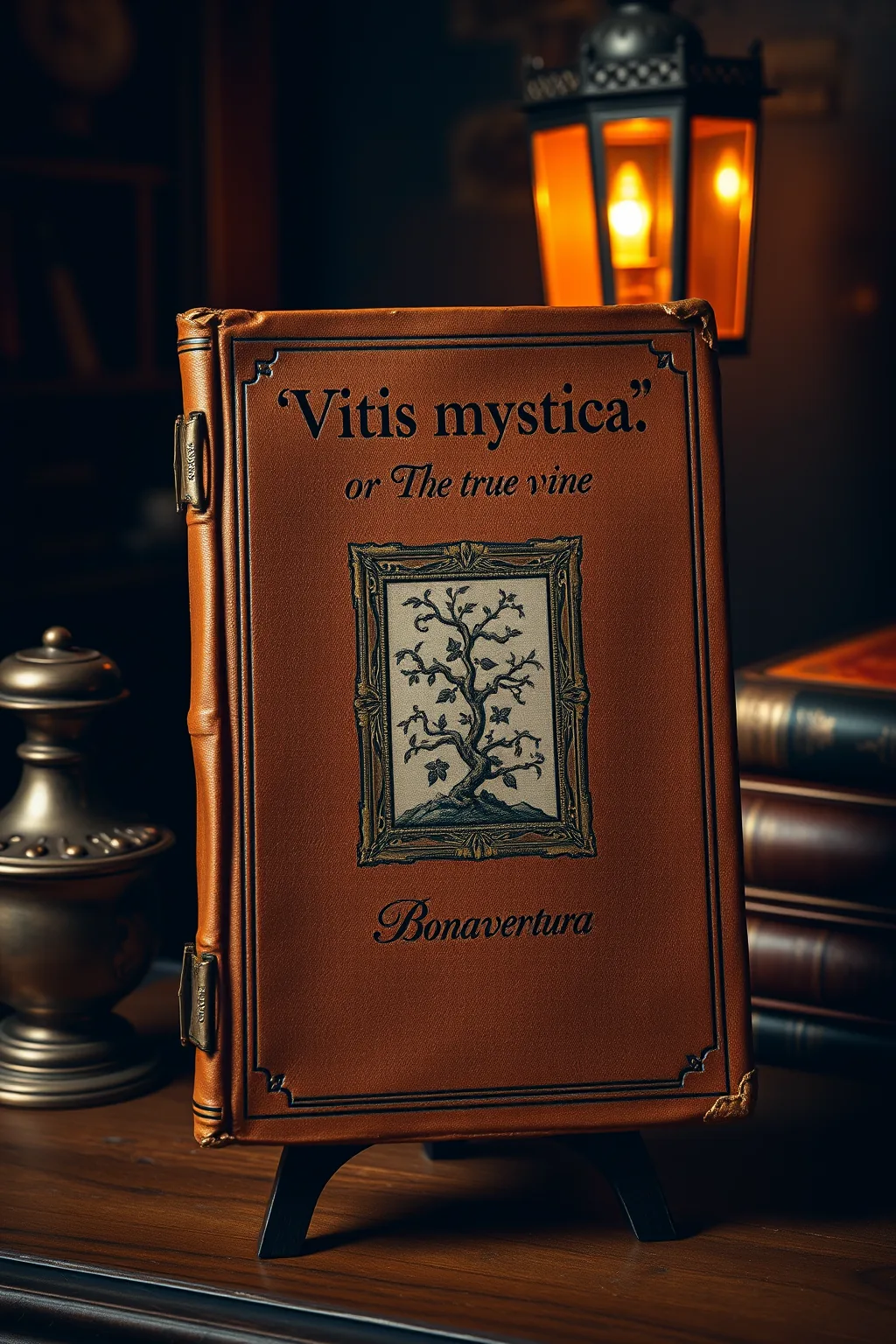
'Vitis mystica', or, The true vine, ascr. to s. Bernard. tr. by W.R.B. Brownlow
 79
79

'Vitis mystica', or, The true vine, ascr. to s. Bernard. tr. by W.R.B. Brownlow



In the realm of esoteric literature, 'Vitis Mystica' stands out as a timeless classic. Bonaventura's work, translated by W.R.B. Brownlow, provides a rich and nuanced exploration of mystical Christianity that remains relevant today. The text's deep spiritual insights and contemplative practices offer a pathway for modern seekers to connect with the divine. The metaphors and symbolism used are both poetic and profound, making the book a delight for those who enjoy spiritual literature. The historical context adds depth, allowing readers to understand the mystical traditions of the medieval period. For those interested in esoteric spirituality, 'Vitis Mystica' is an essential read. It bridges the gap between ancient wisdom and contemporary spiritual practices, making it a valuable addition to any esoteric library. Rating: 4.5/5.
📝 Description
79
Attributed to Saint Bernard, 'Vitis mystica' was translated by W.R.B. Brownlow.
'Vitis mystica,' or 'The True Vine,' is a translation of a work attributed to Saint Bernard, rendered into English by W.R.B. Brownlow. The text, originally penned by Bonaventura, addresses contemplative mysticism. It uses the metaphor of the vine to represent spiritual truth and its connection to the soul's pursuit of union with the divine.
The book is rich with symbolism, guiding readers toward hidden knowledge and spiritual insight. It encourages introspection and philosophical thought, presenting the mystical vine as a symbol for the path to enlightenment. This work is suited for those interested in esoteric truths, spiritual literature, and contemplative practices.
This text belongs to a tradition of Christian mysticism that uses allegorical language to describe the soul's relationship with God. The vine metaphor, common in Christian scripture, is employed here to articulate specific stages and experiences of spiritual growth and divine communion. It aligns with other devotional and mystical writings that seek to explain the inner life and the path toward spiritual perfection, often drawing on established theological concepts but framing them through personal, experiential language.
💡 Why Read This Book?
Reading 'Vitis Mystica' today offers a unique opportunity to delve into the rich traditions of mystical Christianity. It provides insights into contemplative practices that can deepen one's spiritual journey. The book's timeless wisdom can help modern seekers navigate the complexities of spiritual life, offering a sense of connection to ancient mystical traditions. It is a valuable resource for anyone interested in esoteric spirituality and contemplative practices.
⭐ Reader Reviews
Honest opinions from readers who have explored this book.
❓ Frequently Asked Questions
What is the main theme of 'Vitis Mystica'?
The main theme of 'Vitis Mystica' is the mystical journey of the soul towards union with the divine, using the metaphor of the vine and its branches.
Who is the author of 'Vitis Mystica'?
'Vitis Mystica' is attributed to Saint Bernard, a prominent figure in medieval mystical theology, and was translated by W.R.B. Brownlow.
Is this book suitable for modern spiritual seekers?
Yes, 'Vitis Mystica' offers timeless insights into mystical Christianity and contemplative practices, making it a valuable resource for modern spiritual seekers.
🔮 Key Themes & Symbolism
The True Vine
The vine is a central symbol in 'Vitis mystica,' representing the spiritual journey and the union with the divine. It signifies the path to enlightenment and the interconnectedness of all spiritual truths, inviting readers to explore the mystical depths of contemplative thought.
Divine Union
The book explores the concept of divine union, where the soul seeks to merge with the divine essence. This theme is explored through strong symbolism and philosophical inquiry, offering insights into the nature of the divine and the human spirit.
Spiritual Contemplation
Bonaventura's work emphasizes the importance of spiritual contemplation and introspection. The text guides readers through a journey of self-discovery and spiritual growth, providing a framework for contemplative practice and mystical exploration.
💡 Key Ideas
Editorial paraphrase of the work's core concepts — not direct quotes.
The vine of spiritual truth intertwines with the soul's quest for divine union.
This passage highlights the interconnectedness of spiritual truth and the soul's journey towards enlightenment.
In the depths of contemplation, the divine vine reveals its mysteries.
This quote underscores the importance of deep spiritual contemplation in uncovering hidden knowledge and mystical insights.
The path to enlightenment is a journey through the vine of the divine.
This line emphasizes the spiritual journey and the quest for divine union as the ultimate goal of mystical exploration.
The soul seeks to merge with the divine essence in the vine of spiritual truth.
This passage reflects the theme of divine union and the soul's quest for spiritual enlightenment.
In the vine of the divine, the mysteries of the soul are revealed.
This quote highlights the mystical and contemplative themes that permeate the text, inviting readers to explore the depths of spiritual truth.
🌙 Esoteric Significance
Tradition
Belonging to the mystical tradition, 'Vitis mystica' draws from Christian mysticism and contemplative thought. It explores the spiritual journey and the quest for divine union, providing insights into the nature of the divine and the human spirit.
Symbolism
Key symbols in the book include the vine, which represents the spiritual journey and the path to enlightenment. The text also explores the symbolism of divine union and the interconnectedness of spiritual truths.
Modern Relevance
Today, 'Vitis mystica' remains relevant for modern practitioners of spiritual contemplation and esoteric studies. It offers valuable insights into the mystical and contemplative themes that continue to inspire seekers of hidden knowledge and spiritual enlightenment.
👥 Who Should Read This Book
Beginners may find the text dense but rewarding for its useful insights. Scholars of mystical and contemplative literature will appreciate its philosophical depth and strong symbolism. Spiritual seekers and practitioners will find it a valuable resource for their journey towards enlightenment and divine union. Those interested in the esoteric traditions and the exploration of spiritual truths will benefit from its timeless wisdom.
📜 Historical Context
Written in an era of deep spiritual inquiry, 'Vitis mystica' reflects the mystical traditions of its time. The book was important for its exploration of contemplative thought and its influence on various esoteric and spiritual movements. It has been digitized by Google from the library of Oxford University and uploaded to the Internet Archive, preserving its historical significance for modern readers.
📔 Journal Prompts
Reflect on the symbolism of the vine in your spiritual journey.
How does the concept of divine union resonate with your personal beliefs?
Explore the role of contemplation in uncovering hidden knowledge.
Consider the interconnectedness of spiritual truths in your life.
How does 'Vitis mystica' influence your understanding of the divine and the human spirit?
🗂️ Glossary
Divine Union
The merging of the soul with the divine essence, a central theme in mystical and contemplative thought.
Spiritual Contemplation
The practice of deep introspection and meditation to uncover spiritual truths and mystical insights.
Esoteric Knowledge
Hidden or secret knowledge that is revealed through spiritual contemplation and mystical exploration.
Mystical Symbolism
The use of symbols to represent spiritual truths and the journey towards enlightenment.
True Vine
A symbol representing the spiritual journey and the path to divine union in Christian mysticism.
This book appears in 1 collection
🔮 Readers Also Liked
Browse all →






From the “Christian Mysticism” Collection
View all →





More Free Mysticism & Contemplation Books
View all →