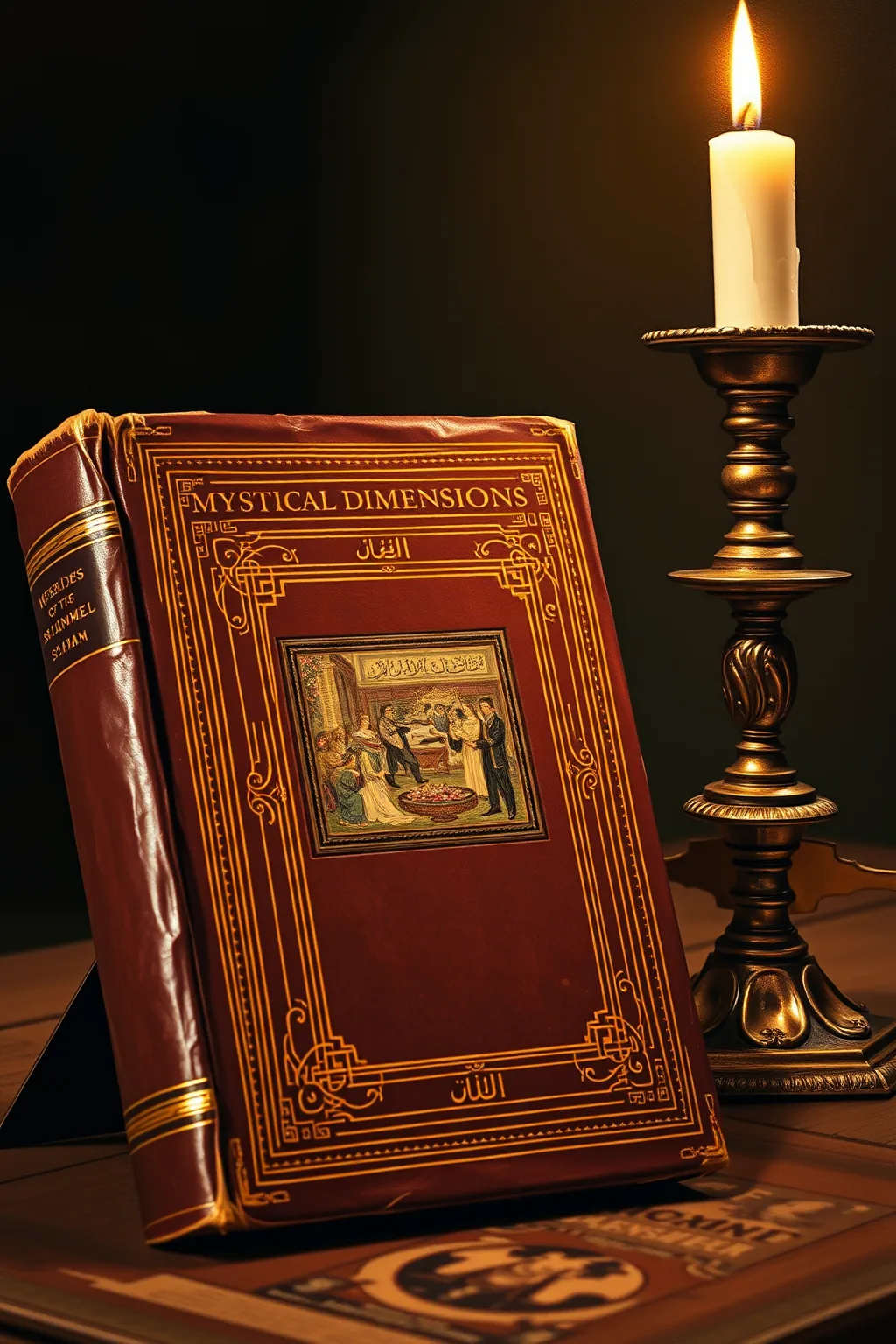
Mystical Dimensions of Islam
 74
74

Mystical Dimensions of Islam
Annemarie Schimmel's "Mystical Dimensions of Islam" is an indispensable reference, meticulously mapping the vast landscape of Sufism. Schimmel’s strength lies in her encyclopedic knowledge and her ability to present complex philosophical ideas with remarkable clarity. Her discussion of `fana'` and `baqa'` as twin poles of the Sufi experience offers a particularly insightful distillation of core mystical aims. However, the sheer density of information, while a strength for specialists, can present a formidable barrier for newcomers. The book sometimes feels more like a learned compendium than an engaging narrative, demanding significant prior knowledge or dedicated study. Despite this, the work remains a foundational text for anyone serious about understanding the esoteric heart of Islam.
📝 Description
74
Annemarie Schimmel's 2010 study examines the theory and practice of Islamic mysticism.
This book presents an in-depth look at Sufism, the mystical branch of Islam. It covers the core beliefs, practices, and philosophical ideas that define this spiritual path. Schimmel traces these elements through different historical eras and across various parts of the world.
The work also details important figures and key texts within Islamic mysticism. It aims to explain the diverse ways Islamic spirituality has appeared over time. Readers will find analyses of the intellectual and lived experiences of mystics within the Islamic tradition.
Schimmel's book enters a long academic conversation about Islamic mysticism, following scholars like R.A. Nicholson and Louis Massignon. It reflects a scholarly interest that grew after World War II, seeking detailed understandings of religious traditions beyond the West. The 2010 publication date places it within current research on Islamic spirituality, synthesizing decades of scholarly work on the development of Sufi orders and their thought from early times to the present.
💡 Why Read This Book?
• Gain a nuanced understanding of `ishq` (divine love) as a central force in Islamic mysticism, moving beyond simplistic notions of devotion. Schimmel details its philosophical and experiential dimensions as explored in classical Sufi texts. • Grasp the stages of the spiritual path (`suluk`) as meticulously outlined by Schimmel, providing a structured framework for comprehending the Sufi journey from ego-annihilation (`fana'`) to subsistence in God (`baqa'`). • Appreciate the role of the `shaykh` (spiritual guide) and the practice of `dhikr` (remembrance) as essential components of esoteric Islamic practice, as illuminated by Schimmel's extensive research into Sufi lineages and rituals.
⭐ Reader Reviews
Honest opinions from readers who have explored this book.
❓ Frequently Asked Questions
What is the original publication year of Annemarie Schimmel's "Mystical Dimensions of Islam"?
Annemarie Schimmel's "Mystical Dimensions of Islam" was first published in 2010, making it a relatively recent synthesis of her extensive lifelong scholarship on the subject.
Who was Annemarie Schimmel in relation to Islamic studies?
Annemarie Schimmel was a highly respected German scholar renowned for her extensive work on Islam, particularly its mystical and poetic traditions. Her contributions significantly advanced Western understanding of Sufism.
What is the significance of the term 'Sufism' as discussed in the book?
The book explores Sufism as the mystical dimension of Islam, focusing on practices and philosophies aimed at direct experience of the divine, distinguishing it from purely legalistic or theological interpretations.
Does the book cover specific Sufi orders?
Yes, "Mystical Dimensions of Islam" details various Sufi orders and their historical development, examining their unique contributions to Islamic mysticism across different regions and eras.
Are there discussions of Islamic mysticism outside of the Middle East?
Indeed, Schimmel's work addresses the spread and adaptation of Islamic mysticism in regions like South Asia and the Ottoman Empire, illustrating its diverse cultural expressions.
What core mystical concepts are central to the book?
Key concepts like divine love (`ishq`), annihilation of the self (`fana'`), subsistence in God (`baqa'`), and the spiritual path (`suluk`) are central to the book's exploration of Islamic mysticism.
🔮 Key Themes & Symbolism
The Path of Divine Love
Central to Schimmel's analysis is the concept of `ishq`, or passionate divine love, which fuels the Sufi's journey. This theme explores how the Sufi seeks union with God through an overwhelming love that transcends earthly concerns. The book examines poetic expressions and philosophical treatises dedicated to this fervent devotion, illustrating how `ishq` motivates the stages of `suluk` (the spiritual path) and the ultimate goal of `fana'` (annihilation in the divine presence).
Stages of the Spiritual Journey
Schimmel meticulously outlines the `suluk`, the arduous spiritual path undertaken by mystics. This includes detailed explanations of states (`ahwal`) and stations (`maqamat`), such as `tawakkul` (trust in God) and `wara'` (abstinence). The interplay between `fana'` (self-negation) and `baqa'` (divine subsistence) is presented as a critical dyad, representing the ultimate spiritual attainment where the individual ego dissolves yet finds enduring existence in God.
Symbolism and Sacred Texts
The book highlights the profound reliance of Islamic mystics on symbolic language, interpreting the Quran and Hadith through esoteric lenses. Schimmel discusses the mystical significance of concepts like `nur` (light) and the symbolism embedded in rituals such as `dhikr` (remembrance). This demonstrates how Sufis find divine truths not just in explicit doctrines but in the veiled meanings and allegorical dimensions of their sacred tradition.
The Role of the Spiritual Guide
Schimmel emphasizes the indispensable role of the `shaykh` or `pir` (spiritual master) in guiding disciples through the complexities of the mystical path. This figure is depicted as a vital link to divine knowledge and a facilitator of spiritual transformation. The book explores the nature of the `shaykh-disciple` relationship, the transmission of esoteric knowledge, and the importance of obedience and devotion to the guide.
💬 Memorable Quotes
Direct passages from the work, attributed to the author.
“The highest aim of the Sufi is to see God in everything.”
— This interpretation highlights the pantheistic or panentheistic tendency within Sufism, where the divine is perceived as immanent in all creation, reflecting a profound unity of existence.
“Sufism is the heart of Islam.”
— This concise statement positions Islamic mysticism not as a separate sect, but as the essential, inner core of the broader Islamic faith, emphasizing its spiritual vitality.
“Through `dhikr`, the remembrance of God, the heart becomes alive.”
— This interpretation points to the transformative power of `dhikr` (God's remembrance) as a devotional practice designed to awaken the spiritual heart and foster constant divine awareness.
“The `shaykh` is the mirror reflecting God's light.”
— This conceptualization emphasizes the function of the spiritual master (`shaykh`) as an intermediary, enabling disciples to perceive divine realities through their presence and guidance.
💡 Key Ideas
Editorial paraphrase of the work's core concepts — not direct quotes.
The path of love requires complete surrender.
This paraphrase underscores the central role of `ishq` (divine love) and the necessity of ego-dissolution (`fana'`) as prerequisites for spiritual progress on the Sufi path.
🌙 Esoteric Significance
Tradition
Schimmel's work firmly situates Islamic mysticism within the broader context of esoteric and contemplative traditions, aligning it with the Sufi lineage. While distinct, it shares common ground with other mystical paths like Christian mysticism and Vedantic traditions in its pursuit of direct divine experience. Her scholarship highlights how Sufism, though rooted in Islamic theology and law, develops unique internal methods and philosophical frameworks for achieving spiritual realization, often diverging from orthodox interpretations.
Symbolism
The book extensively explores key symbols within Islamic mysticism. The concept of `nur` (divine light) is paramount, representing God's presence and manifestation, often associated with the Prophet Muhammad. The `heart` (`qalb`) is depicted as the locus of divine knowledge and mystical experience, the organ capable of perceiving God's reality. Furthermore, the symbolism of wine and the tavern, frequently used in Sufi poetry, represents intoxication with divine love and the spiritual ecstasy achieved through `fana'`.
Modern Relevance
Contemporary thinkers and practitioners in fields ranging from comparative religion to psychology of religion draw on Schimmel's meticulous research. Her work informs discussions on interfaith dialogue, the role of spirituality in personal well-being, and the ongoing evolution of Islamic thought. Modern Sufi orders and scholars continue to reference her analyses of classical texts and figures, using her scholarship to contextualize contemporary practice and explore the enduring appeal of mystical Islam in a globalized world.
👥 Who Should Read This Book
• Students of comparative religion and Islamic theology seeking a scholarly yet accessible overview of Sufism's core tenets and historical development. • Practitioners of contemplative spirituality interested in understanding the methods and philosophies of Islamic mystics, such as the concept of `suluk` and the role of `dhikr`. • Academic researchers and librarians requiring a definitive reference work that synthesizes decades of scholarship on Islamic mysticism and its key figures.
📜 Historical Context
Annemarie Schimmel's "Mystical Dimensions of Islam," first published in 2010, emerged from decades of scholarship deeply engaged with the intellectual currents of the 20th century, particularly the post-WWII surge in Islamic studies. This era saw a move beyond Orientalist perspectives towards more nuanced, internal analyses of Islamic traditions. Schimmel built upon the foundational work of scholars like Louis Massignon, whose extensive research on figures like Al-Hallaj significantly shaped the field. The book’s comprehensive approach can be seen as a response to earlier, often fragmented, studies of Sufism. It sought to synthesize a vast body of literature and practice, presenting a holistic view of Islamic mysticism that countered simplistic or reductionist interpretations prevalent in some Western academic circles and popular discourse. Its reception contributed to the ongoing academic dialogue concerning the relationship between Islam's legal and mystical dimensions.
📔 Journal Prompts
The concept of `ishq` as a driving force in the Sufi path.
Reflecting on the stages of `suluk` and their potential application to personal growth.
The symbolic meaning of the `heart` (`qalb`) in Islamic mysticism.
The necessity of a spiritual guide (`shaykh`) in esoteric traditions.
Comparing the concept of `fana'` with personal experiences of ego-dissolution.
🗂️ Glossary
Sufism
The mystical or esoteric dimension of Islam, focused on direct experience of God through asceticism, self-purification, and contemplative practices.
`ishq`
Passionate, intense divine love, considered a primary motivator and goal in the Sufi path, driving the soul towards union with God.
`suluk`
The spiritual path or journey undertaken by a Sufi aspirant, involving a series of stages, states, and practices aimed at achieving spiritual perfection.
`fana'`
Annihilation or dissolution of the ego-self in God, a key mystical state in Sufism representing the transcendence of individual consciousness.
`baqa'`
Subsistence or enduring existence in God, the state achieved after `fana'`, where the individual self remains but is entirely sustained and oriented by the Divine.
`dhikr`
The remembrance of God, a central Sufi practice involving the repetition of divine names or phrases, often accompanied by rhythmic breathing or movement.
`shaykh`
A spiritual guide or master in Sufism, responsible for instructing disciples and leading them on the spiritual path.
🔮 Readers Also Liked
Browse all →








More by Annemarie Schimmel
All books →




More Free Mysticism & Contemplation Books
View all →