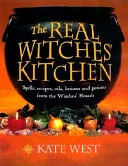
The Real Witches' Kitchen
 73
73

The Real Witches' Kitchen
Kate West’s "The Real Witches' Kitchen" offers a refreshing, grounded approach to magical practice by anchoring it to the domestic heart of the home. Its strength lies in the sheer volume and variety of practical recipes—100 in total—ranging from culinary delights to essential ritual components like oils and incenses. The book avoids arcane jargon, presenting witchcraft as accessible and integrated into daily life. However, the sheer number of recipes, while a strength, can occasionally lead to a feeling of being overwhelmed without a clear progression or emphasis on deeper magical theory. For instance, the section on "Soups for the Soul" is particularly evocative, demonstrating the author’s ability to imbue simple foods with potent intention. Despite its sometimes-dense presentation, the work serves as a robust, actionable resource for the kitchen witch. It is a functional grimoire for the home.
📝 Description
73
Kate West's 2002 book, The Real Witches' Kitchen, grounds magic in the everyday act of cooking.
Published in 2002, The Real Witches' Kitchen by Kate West views the kitchen as a central space for magical practice. The book combines elements of a grimoire with a cookbook, detailing 100 spells and recipes. These preparations range from everyday food items to specific ritual components, aiming to integrate magical intent into domestic life.
This work is for practitioners of contemporary witchcraft who see their homes, particularly the kitchen, as sites of power and ritual. It suits those looking for concrete, actionable ways to imbue daily routines and food with magical purpose. Readers interested in the practical application of witchcraft, moving beyond purely theoretical study, will find its guidance directly applicable. West's approach demystifies the creation of magical items and consumables, firmly locating witchcraft within the home environment.
Appearing in the early 2000s, The Real Witches' Kitchen emerged during a time when modern witchcraft saw increased interest in personalized and domestic practices. Following figures who popularized accessible forms of witchcraft, West's book contributes by showing how magical tools and consumables can be made at home. It shifts focus toward the home environment, contrasting with traditions that prioritize more formal ceremonial settings. The core idea is that the kitchen acts as a laboratory where ingredients are chosen for their energetic and symbolic qualities, not just their taste or nutritional value.
💡 Why Read This Book?
• Learn to transform everyday cooking into potent magical workings, understanding how specific ingredients like herbs and spices, as detailed in the "Brews and Soups" chapters, can be imbued with intentional energy. • Discover how to craft personal magical tools and supplies, such as the 100 distinct recipes for oils, soaps, and incenses, allowing for a more personalized and self-sufficient practice. • Gain practical knowledge of kitchen witchery, recognizing the hearth not just as a place for sustenance but as a central altar for magical creation, as explored throughout the book's numerous recipes.
⭐ Reader Reviews
Honest opinions from readers who have explored this book.
❓ Frequently Asked Questions
What is the primary focus of "The Real Witches' Kitchen"?
The book's primary focus is the kitchen as the central hub for magical practice. It provides 100 practical spells and recipes for items like oils, soaps, brews, and incenses, integrating witchcraft into daily domestic life.
Who is the author, Kate West, and when was this book first published?
Kate West is an author specializing in witchcraft and paganism. "The Real Witches' Kitchen" was first published in 2002, placing it within the early wave of modern, practical witchcraft literature.
Does the book require advanced knowledge of witchcraft?
No, the book is designed for witches and practitioners who want to integrate magic into their homes. It offers accessible recipes and spells, making it suitable for those with foundational knowledge or those looking to expand their practice.
What kind of magical preparations can I expect to find in the book?
You can expect a wide array of preparations, including recipes for oils, soaps, brews, soups, incenses, and other items. The book aims to cover various aspects of magical craft that can be performed in a kitchen setting.
Is "The Real Witches' Kitchen" suitable for beginners?
Yes, the book is well-suited for beginners interested in kitchen witchery. Its practical, step-by-step recipes and focus on the home environment make it an accessible entry point into magical practice.
What makes this book different from other witchcraft books?
Its unique angle is positioning the kitchen as the primary magical workspace, offering 100 specific, actionable recipes rather than purely theoretical or ceremonial content, making magic tangible and domestic.
🔮 Key Themes & Symbolism
Kitchen as Sacred Space
This theme posits the kitchen not merely as a place for preparing food, but as the central altar of the home. West elaborates on how ordinary domestic tasks like cooking, cleaning, and brewing can be transformed into potent magical workings. By imbuing ingredients and actions with intention, practitioners can infuse their living space with protective energies, manifest desires, and connect with the divine through the very act of sustenance. The book details numerous recipes that exemplify this transformation.
Practical Magical Craft
The emphasis here is on tangible, do-it-yourself magic. "The Real Witches' Kitchen" eschews abstract theory for concrete application, offering 100 distinct recipes for items such as enchanted oils, cleansing soaps, potent brews, and aromatic incenses. This approach empowers practitioners by providing them with the tools and knowledge to create their own magical supplies, fostering self-sufficiency and a direct, hands-on relationship with magical forces.
The Energetics of Ingredients
West explores the energetic and symbolic properties of common ingredients found in any kitchen. Herbs, spices, fruits, and even water are presented as vessels of power, each carrying its own vibrational frequency and magical association. The book guides readers on how to select and combine these elements to achieve specific magical outcomes, teaching an intuitive understanding of natural correspondences for spellcraft.
Intentional Living and Manifestation
The core philosophy is that magic is woven into the fabric of daily life. Through the intentional preparation of food, the creation of ritual tools, and the performance of simple spells, practitioners can actively shape their reality. The book demonstrates how consistent, focused intention applied to mundane activities can lead to the manifestation of desires, from personal well-being to the protection and prosperity of the home.
💬 Memorable Quotes
Direct passages from the work, attributed to the author.
“The modern witch's hearth is the kitchen, and for many witches it is their work-center.”
— This foundational statement captures the book's thesis: that the domestic kitchen is not secondary but primary in contemporary witchcraft practice. It reframes the mundane space into a potent site for magical operation and personal transformation.
“This book contains 100 spells and recipes for oils, soaps, brews, soups, incenses, and more.”
— This direct assertion highlights the book's practical, highly actionable content. It promises a comprehensive collection of tangible magical creations that readers can immediately implement in their own homes.
“Practitioners are encouraged to view cooking as a ritual.”
— This idea underscores the book's approach to transforming mundane activities into sacred acts. By focusing intention during food preparation, readers learn to elevate simple tasks into powerful magical expressions.
“Kate West presents the kitchen as a magical laboratory.”
— This interpretation points to the book's central metaphor, viewing the kitchen not just for sustenance but as a space for experimentation and creation within the craft, akin to an alchemist's or scientist's lab.
💡 Key Ideas
Editorial paraphrase of the work's core concepts — not direct quotes.
The work explores the integration of magic into everyday life.
This paraphrased concept emphasizes the book's core philosophy of making witchcraft accessible and relevant to daily routines. It suggests that magic is not confined to special occasions but can be a continuous aspect of living.
🌙 Esoteric Significance
Tradition
This work aligns most closely with contemporary, eclectic witchcraft traditions, often referred to as Wicca or Neo-Paganism, which prioritize personal gnosis and practical application. While not strictly adhering to a single ancient lineage like Hermeticism or Gnosticism, it draws implicitly from folk magic traditions that have always embedded magical practices within domestic life. It represents a modern evolution, making these practices accessible and relevant to individuals living in contemporary, often urban, environments.
Symbolism
The kitchen itself is a primary symbol, representing nourishment, transformation, and the sacred feminine principle of creation and sustenance. Ingredients like herbs (e.g., rosemary for remembrance, basil for prosperity) carry symbolic weight, acting as conduits for specific energies. Fire, inherent in cooking, symbolizes purification and transformation, while water represents emotion and intuition. The act of brewing and mixing symbolizes the blending of energies to manifest intent.
Modern Relevance
Kitchen witchery, as championed by West, continues to be a significant and growing practice within modern witchcraft. Contemporary authors and online communities frequently reference the principles outlined in her work. Thinkers and practitioners focusing on sustainable living, homesteading, and the intersection of food and spirituality often draw upon this foundational text for its practical, earth-centered approach to magic that requires minimal specialized equipment.
👥 Who Should Read This Book
• Aspiring kitchen witches seeking to establish their practice within the home, learning to consecrate everyday activities and food preparation. • Experienced practitioners looking to expand their repertoire with 100 distinct, practical recipes for magical oils, soaps, brews, and more. • Individuals interested in the intersection of folklore, domesticity, and practical spellcraft, seeking a tangible connection to magical traditions.
📜 Historical Context
Published in 2002, "The Real Witches' Kitchen" emerged during a burgeoning era for contemporary paganism and witchcraft. The preceding decades had seen influential figures like Doreen Valiente codify traditions and Scott Cunningham popularize a gentler, nature-based witchcraft accessible to a broad audience. West's work tapped into a growing desire among practitioners, particularly women, to integrate their spiritual practices into the domestic sphere, challenging the notion that magic required elaborate ritual spaces or tools. This period also saw increased academic interest in alternative spiritualities, though works like West's often operated outside formal scholarly circles, circulating primarily within pagan communities. While figures like Starhawk were exploring ecofeminist spirituality, West focused on the hyper-local magic of the kitchen, offering a distinctly practical and personal approach that resonated with many seeking to empower their everyday lives.
📔 Journal Prompts
The kitchen as a magical laboratory: document one mundane preparation you transformed into a ritual.
Reflect on the symbolic meaning of three common kitchen ingredients (e.g., salt, flour, water) in your magical practice.
Analyze the intention behind a specific recipe for magical oil or soap presented in the book.
Consider how the act of cooking can be a form of manifestation.
Explore the concept of the hearth as the center of one's magical work, drawing from the book's premise.
🗂️ Glossary
Kitchen Witchcraft
A branch of modern witchcraft that focuses on performing magical workings within the domestic environment, particularly the kitchen, utilizing everyday ingredients and activities.
Hearth
Symbolically represents the center of the home and family life; in witchcraft, it is often considered a sacred space and a primary altar for magical practice and connection.
Magical Oils
Oils infused with herbs, essential oils, or other ingredients, consecrated for specific magical purposes such as anointing tools, enhancing spells, or personal blessings.
Brews
Potions or concoctions, often herbal or spiced, prepared with magical intention for drinking or ritual use, intended to invoke specific energies or effects.
Incenses
Aromatic materials, typically herbs, resins, or woods, burned to purify spaces, raise spiritual vibrations, facilitate trance, or create a sacred atmosphere.
Work-center
Refers to the kitchen in this context, highlighting its function as a place where magical work, creation, and practice are actively performed.
Intent
The focused will and conscious direction of energy towards a specific goal or outcome, considered the crucial element in magical spellcasting.
This book appears in 1 collection
🔮 Readers Also Liked
Browse all →









From the “Incantations” Collection
View all →


More Free Occult Philosophy Books
View all →