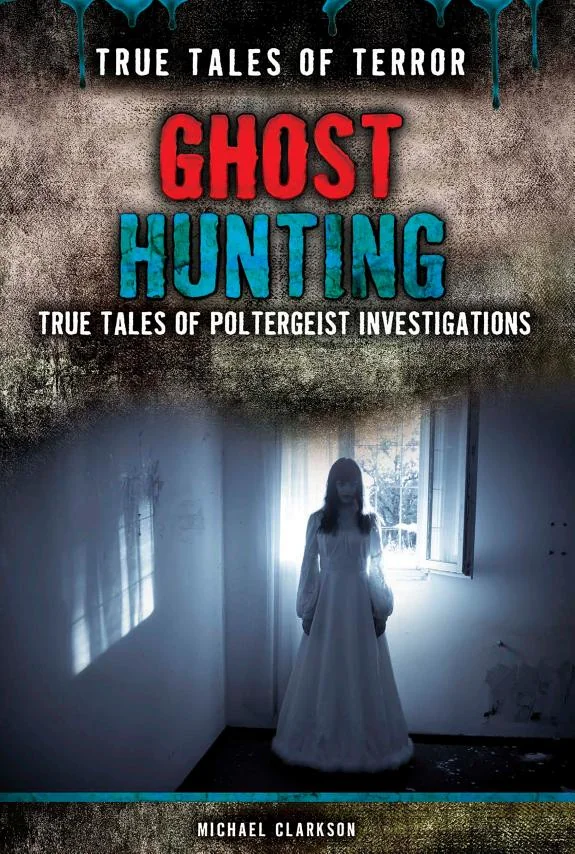
Ghost Hunting
 81
81

Ghost Hunting
Clarkson's "Ghost Hunting" offers a refreshingly analytical approach to a subject often mired in sensationalism. Rather than recounting lurid tales, the author dissects the mechanics of poltergeist reports, grounding them in the tangible (if baffling) evidence of disarranged objects and auditory anomalies. The work shines in its measured tone, which allows for serious consideration of phenomena without succumbing to credulity. A particular strength lies in its discussion of RSPK (Recurrent Spontaneous Psychokinesis), a concept that provides a more structured lens for analyzing these events than vague notions of 'hauntings.' However, the book's brevity means that some avenues of inquiry, particularly the psychological profiles of alleged 'agents' in RSPK cases, are only lightly touched upon. The passage detailing the alleged levitation of objects in the Borley Rectory case, while presented cautiously, highlights the enduring appeal of such extraordinary claims within the field. "Ghost Hunting" is a valuable primer for the skeptical investigator of the unexplained.
📝 Description
81
Michael Clarkson's 2011 book "Ghost Hunting" examines poltergeists as unusual energies, not traditional specters.
Michael Clarkson's "Ghost Hunting" reinterprets poltergeist phenomena. Instead of focusing on traditional ghost stories, Clarkson investigates these disturbances as manifestations of unusual energies or disruptive psychic forces. The book details how these events often appear as minor domestic incidents, such as objects moving on their own, unexplained sounds, or misplaced items. Clarkson's method acknowledges both belief and skepticism, treating reported events as data for analysis.
This work is suited for readers interested in the convergence of parapsychology, folklore, and unexplained events. It appeals to those who approach paranormal claims with an investigative spirit, looking for explanations beyond the purely supernatural or the strictly dismissive. Readers curious about the history of psychical research and the methods used to study anomalous phenomena will find this volume particularly engaging.
Published in 2011, "Ghost Hunting" emerges from a long-standing cultural interest in the paranormal. It connects to a lineage of inquiry that began with early psychical research societies, such as the Society for Psychical Research, founded in 1882. The book engages with the ongoing discussion between materialistic explanations for unusual events and those that consider non-conventional forces. Clarkson's work is part of a tradition that seeks to understand phenomena not easily explained by mainstream science.
💡 Why Read This Book?
• Understand the theoretical framework of Recurrent Spontaneous Psychokinesis (RSPK), a core concept discussed in the book, which offers a distinct model for investigating poltergeist activity beyond traditional ghost lore. • Gain insight into the historical development of psychical research, particularly how investigations in the late 20th century sought empirical methods to study phenomena like those described by Clarkson. • Develop a critical perspective on anomalous phenomena by examining Clarkson's methodology, which prioritizes observable evidence and analytical reasoning over anecdotal accounts, even when discussing cases from the early 20th century.
⭐ Reader Reviews
Honest opinions from readers who have explored this book.
❓ Frequently Asked Questions
What is the primary focus of Michael Clarkson's "Ghost Hunting"?
The book centers on poltergeist phenomena, examining them not necessarily as spirits of the dead, but as manifestations of unusual energies or psychic forces, focusing on observable effects like moving objects and strange noises.
Does "Ghost Hunting" present definitive proof of ghosts?
No, Clarkson's work adopts a balanced approach, exploring reported phenomena and analytical frameworks without claiming definitive proof. It leaves room for both believers and skeptics by focusing on investigation and interpretation.
What is RSPK and how does it relate to poltergeists in the book?
RSPK stands for Recurrent Spontaneous Psychokinesis. The book explores this concept as a theoretical explanation for some poltergeist activity, suggesting it involves localized, involuntary psychic energy.
Who would benefit most from reading "Ghost Hunting"?
Readers interested in parapsychology, the history of psychical research, and analytical approaches to the unexplained will find this book particularly valuable.
What kind of evidence does Clarkson discuss?
Clarkson analyzes reported evidence such as dislocated objects, unexplained sounds, and other minor disturbances, focusing on the patterns and challenges of investigating these claims.
When was "Ghost Hunting" by Michael Clarkson first published?
The book "Ghost Hunting" by Michael Clarkson was first published on July 15, 2015.
🔮 Key Themes & Symbolism
Investigating Anomalous Phenomena
Clarkson's work centers on the systematic investigation of unexplained occurrences, particularly those attributed to poltergeists. It moves beyond mere anecdote to consider the nature of evidence, the challenges of observation, and the potential for underlying forces. The book emphasizes a critical yet open-minded approach, treating each reported incident as a case study for analysis rather than accepting pre-conceived notions of spectral activity.
Psychokinesis and Psychic Energy
A core theme is the exploration of psychokinesis (PK) as a potential explanation for poltergeist effects. The book studies the concept of Recurrent Spontaneous Psychokinesis (RSPK), theorizing that certain individuals or environments might be focal points for the projection of psychic energy. This framework seeks to provide a more structured understanding of phenomena that defy conventional physics.
The Nature of Poltergeists
Clarkson re-examines the traditional understanding of poltergeists, suggesting they may not always be the spirits of deceased individuals. Instead, the work proposes alternative explanations rooted in natural but poorly understood energetic or psychological phenomena. This re-framing encourages readers to consider a broader spectrum of possibilities when encountering unexplainable disturbances.
Skepticism vs. Belief
The book navigates the complex terrain between outright skepticism and uncritical belief. It acknowledges the validity of questioning extraordinary claims while simultaneously entertaining the possibility that current scientific paradigms may not fully encompass all observed phenomena. This balanced perspective is crucial for serious engagement with the subject matter.
💬 Memorable Quotes
Direct passages from the work, attributed to the author.
“Poltergeists are said to be responsible for a good deal of unexplainable phenomena.”
— This statement sets the stage for the book's core inquiry, establishing poltergeists as a central subject and immediately framing them within the context of unexplained events that demand investigation.
“The only clues they leave are floating objects, broken or missing household items, strange noises, and other minor disturbances.”
— This highlights the specific, often mundane, nature of poltergeist activity, emphasizing the subtle and sometimes frustratingly inconclusive evidence that investigators often encounter.
“Leaving room for both believers and skeptics, the author examines a smattering of reported poltergeist acts.”
— This underscores Clarkson's balanced methodology, indicating that the book presents cases for consideration without forcing a particular conclusion, thereby respecting diverse viewpoints on paranormal claims.
“Such claims are always rendering the investigations of such claims inconclusive.”
— This observation points to a persistent challenge in studying poltergeist phenomena: the difficulty in obtaining repeatable, definitive results that satisfy all parties involved in the investigation.
“However, often the only clues they leave to their existence are floating objects...”
— This interpretation emphasizes the tangible, yet often bizarre, manifestations that are typically associated with poltergeist activity, serving as the primary focus for investigative efforts.
🌙 Esoteric Significance
Tradition
While not explicitly tied to a single esoteric lineage like Hermeticism or Kabbalah, "Ghost Hunting" engages with the broader field of parapsychology and psychical research, which has historically intersected with esoteric thought. Many early psychical researchers were influenced by Theosophy and Spiritualism, seeking empirical validation for concepts like psychic energy and non-physical consciousness. Clarkson's work, by focusing on observable manifestations of potentially psychic phenomena, taps into this undercurrent of investigating the 'unseen' through methods that attempt to bridge the empirical and the metaphysical.
Symbolism
The primary 'symbolism' in "Ghost Hunting" lies not in traditional esoteric icons but in the phenomena themselves. Floating objects, for instance, symbolize the disruption of physical laws and the potential for mind over matter. Strange noises represent unseen presences or forces intruding upon the mundane world. Missing or broken items can symbolize a loss of control or order, reflecting the unsettling nature of the experiences being investigated.
Modern Relevance
Clarkson's analytical approach to poltergeist phenomena remains relevant for contemporary paranormal investigators and researchers interested in the empirical study of consciousness. Thinkers and groups exploring subtle energy fields, consciousness studies, and fringe science continue to draw from the foundational questions raised by psychical research. The book's emphasis on methodology and critical evaluation offers a valuable framework for those seeking to understand anomalous events beyond sensationalized media portrayals.
👥 Who Should Read This Book
• Aspiring paranormal investigators who seek a methodical, evidence-based approach to understanding phenomena like poltergeists, moving beyond sensationalism. • Students of parapsychology and the history of psychical research interested in early 21st-century analyses of unexplained events and theoretical frameworks like RSPK. • Skeptics and open-minded inquirers who wish to explore the challenges and methodologies involved in investigating claims that lie outside conventional scientific understanding.
📜 Historical Context
Michael Clarkson's "Ghost Hunting," published in 2015, arrives in an era where paranormal investigation has become a significant cultural force, fueled by media and the internet. Its approach, however, echoes earlier traditions of psychical research that sought to apply more rigorous methods to phenomena often dismissed outright. The late 19th and early 20th centuries saw the rise of organizations like the Society for Psychical Research (SPR), which meticulously documented cases of alleged hauntings and telekinetic events, much like Clarkson's examination of poltergeist activity. While Clarkson doesn't explicitly engage with specific historical figures, his work implicitly dialogues with researchers like E.E. Fournier d'Albe, who investigated psychic phenomena. The book's focus on RSPK (Recurrent Spontaneous Psychokinesis) positions it within a scientific fringe that grappled with concepts of mind-matter interaction, contrasting with purely spiritualist explanations that dominated earlier periods. The reception of such work often polarized opinions, with scientific communities frequently skeptical, a tension that continues to inform discussions around paranormal research today.
📔 Journal Prompts
The concept of Recurrent Spontaneous Psychokinesis (RSPK) and its potential role in household disturbances.
Unexplained phenomena as clues to underlying energetic or psychic forces.
The balance between belief and skepticism when evaluating anomalous events.
Investigating minor disturbances: what constitutes meaningful evidence?
The limitations of current scientific paradigms in explaining poltergeist activity.
🗂️ Glossary
Poltergeist
A type of ghost or spirit believed to be responsible for physical disturbances such as loud noises, objects being moved or broken, and unexplained phenomena in a home.
Psychokinesis (PK)
The purported ability to influence a physical system by thought alone, without physical interaction. Often cited as a potential explanation for poltergeist activity.
Recurrent Spontaneous Psychokinesis (RSPK)
A theoretical framework suggesting that poltergeist phenomena are not necessarily caused by spirits but by localized, recurrent, and spontaneous displays of psychokinetic energy, often associated with a particular individual or environment.
Parapsychology
A field of study that investigates paranormal and psychic phenomena, including telepathy, clairvoyance, precognition, and psychokinesis.
Psychical Research
The interdisciplinary investigation of alleged psychic and paranormal phenomena, often employing methods from psychology, physics, and sociology.
Anomalous Phenomena
Events or observations that deviate from what is considered normal or expected according to current scientific understanding or established theories.
Empirical Evidence
Information acquired through observation and experimentation, forming the basis of scientific knowledge. In the context of "Ghost Hunting," it refers to tangible clues like moved objects or sounds.
This book appears in 1 collection
🔮 Readers Also Liked
Browse all →








From the “Poltergeist” Collection
View all →







More Free Occult Philosophy Books
View all →