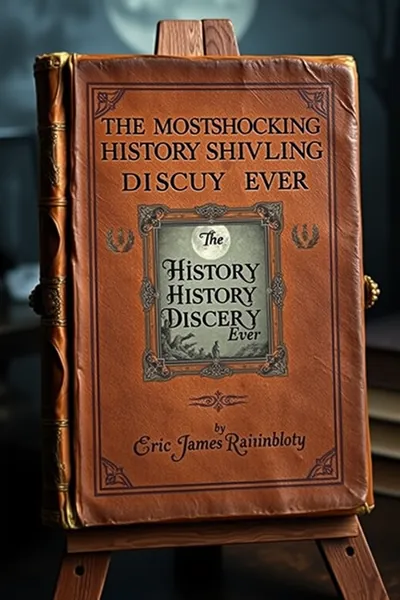
The Return of the Serpents of Wisdom - Special Edition

 78
78

The Return of the Serpents of Wisdom - Special Edition
Pinkham's "The Return of the Serpents of Wisdom" offers a bold thesis, positing a unified origin for dragon and serpent lore across continents. The strength lies in its ambitious scope, connecting disparate mythologies from Sumeria to Mesoamerica under a single, ancient lineage. However, the book sometimes struggles under the weight of its own grand narrative. While the tracing of specific cultural analogs like the Peruvian Amaru to their supposed "Motherland" origins is fascinating, the leap from comparative mythology to concrete historical assertion can feel speculative without more direct archaeological or textual evidence. A particularly compelling section examines the symbolic role of serpents in pre-Columbian societies, highlighting their integration with astronomical observations. The work provides a compelling, if sometimes unproven, alternative perspective on human origins and spiritual traditions.
📝 Description
78
Mark Amaru Pinkham's 2017 book traces serpent and dragon figures across global cultures.
Mark Amaru Pinkham's "The Return of the Serpents of Wisdom" examines the presence of serpentine and draconic figures throughout global mythology. The book traces their origins from hypothesized ancient continents to their specific manifestations, such as the Nagas of India, the Lung Dragons of China, the Ashipu of Sumeria, the Amarus of Peru, the Adders of Britain, and the Quetzlcoatls of Mexico. Pinkham investigates the spiritual and societal roles these beings, often seen as enlightened masters or ancient lineages, played in the formation of early civilizations. The work draws connections between seemingly disparate ancient cultures, focusing on their spiritual leaders and foundational myths. This special edition delves into these connections, offering a comparative look at dragon and serpent symbolism as it appears in various traditions. The book is suited for readers interested in comparative mythology, ancient history, and esoteric research who question conventional historical accounts.
This work aligns with esoteric traditions that posit pre-diluvian civilizations and hidden histories. It engages with themes of ancient wisdom keepers and their influence on human development, often found in occult philosophies and ancient mystery schools. The focus on serpent and dragon archetypes connects to symbolism present in Gnosticism, Hermeticism, and traditions that view these figures as symbols of primal creative energy or cosmic intelligence. Pinkham's research fits within a broader esoteric interest in uncovering suppressed knowledge and reinterpreting historical narratives through a spiritual lens.
💡 Why Read This Book?
• Understand the proposed origins and global migrations of ancient "Serpents of Wisdom" and "Dragons" from Pinkham's "Motherlands" concept, offering a unique genesis myth. • Explore the specific roles and symbolism of serpent deities like the Peruvian Amaru and Mexican Quetzlcoatl, enriching comparative mythology studies. • Gain a new framework for viewing connections between ancient civilizations in India, China, and Sumeria, potentially revealing overlooked cultural links.
⭐ Reader Reviews
Honest opinions from readers who have explored this book.
❓ Frequently Asked Questions
What are the "Motherlands" mentioned in "The Return of the Serpents of Wisdom"?
The "Motherlands" are hypothesized ancient continents, believed by the author to have existed in the Atlantic and Pacific Oceans, from which early serpentine or draconic lineages originated before migrating globally.
Who were the "Serpents of Wisdom" according to Mark Amaru Pinkham?
Pinkham interprets the "Serpents of Wisdom" as enlightened masters or an ancient lineage associated with dragons and serpents, who were instrumental in founding and guiding early civilizations across the world.
How does the book connect different ancient cultures?
It connects cultures by tracing their respective serpent or dragon figures (like the Naga, Lung Dragon, Quetzlcoatl) back to a common origin point on the "Motherlands," suggesting a shared ancient ancestry and knowledge transfer.
What is the significance of the serpent/dragon archetype in the book?
The archetype represents ancient wisdom, primordial power, and a foundational spiritual or civilizing force that influenced numerous disparate cultures before recorded history.
When was "The Return of the Serpents of Wisdom" first published?
The original publication date for Mark Amaru Pinkham's "The Return of the Serpents of Wisdom" was August 8, 2017.
Does the book offer evidence for the existence of these ancient "Motherlands"?
The book presents mythological and comparative symbolic evidence rather than geological or archaeological proof for the "Motherlands," framing it as an exploration of ancient esoteric traditions and forgotten histories.
🔮 Key Themes & Symbolism
The Serpent & Dragon Archetype
This theme explores the recurring presence of serpent and dragon figures across global mythologies. Pinkham posits these are not mere legends but representations of an ancient, enlightened lineage originating from lost continents. The work details how these entities influenced early human societies, imparting wisdom and shaping spiritual traditions, from the Nagas of India to the Quetzlcoatls of Mexico, suggesting a unified ancient source for this pervasive archetype.
Lost Continents & Ancient Migrations
Central to the book is the concept of "Motherlands" – hypothesized continents in the Atlantic and Pacific that predate known landmasses. Pinkham argues these were the origin points for the "Serpents of Wisdom," who then migrated across the globe, seeding civilization and spiritual knowledge. This theme challenges conventional historical geography, proposing a forgotten era of global connection and advanced ancient cultures before cataclysmic events erased them.
Comparative Mythology & Cultural Links
The work functions as a comparative study, drawing parallels between diverse ancient cultures. It highlights specific figures like the Sumerian Ashipu, the Peruvian Amarus, and the Chinese Lung Dragons, identifying common traits and symbolic representations. By linking these disparate groups through the proposed "Serpent" lineage, Pinkham aims to reveal an underlying unity in ancient human experience and spirituality, suggesting a common root for their foundational myths and social structures.
Esoteric Masters & Hidden Knowledge
Pinkham presents the "Serpents of Wisdom" not just as mythical beings, but as historical or spiritual adepts who possessed advanced knowledge. This knowledge, passed down through generations or directly imparted, formed the basis of early religious, philosophical, and societal structures. The book suggests that understanding these ancient masters is key to unlocking deeper truths about human potential and the hidden history of our world.
💬 Memorable Quotes
Direct passages from the work, attributed to the author.
“The enlightened masters of many ancient countries were known as Dragons and Serpents.”
— This statement frames the central thesis: that figures often mythologized as dragons or serpents were, in fact, historical or spiritual teachers who guided early civilizations with profound wisdom.
“These adepts originated on the Motherlands... before migrating and settling in many new lands.”
— This highlights the book's core hypothesis of a lost global origin point for ancient wisdom traditions, suggesting a unified source for diverse cultural mythologies before widespread geographical separation.
“They became the Nagas, Lung Dragons, Ashipu, Amarus, Adders, Quetzlcoatls...”
— This lists specific cultural manifestations of the 'Serpents of Wisdom,' demonstrating the book's method of tracing a singular ancient lineage through its varied appearances in different societies' lore.
“These continents once existed in the Atlantic and Pacific Oceans.”
— This directly references the author's theory of "Motherlands," positing the existence of ancient landmasses that served as cradles of civilization, challenging conventional geological and historical timelines.
“The work explores the origin, history, and rites of these enlightened masters.”
— This concisely states the book's investigative approach, indicating a focus on the genesis, historical trajectory, and ritualistic practices associated with the ancient serpent and dragon figures.
🌙 Esoteric Significance
Tradition
This work draws heavily from comparative mythology and ancient mystery traditions, aligning with esoteric lineages that explore global spiritual origins and forgotten histories. It echoes themes found in Theosophy and ancient astronaut theories, proposing a pre-diluvian global civilization guided by enlightened beings. While not strictly adhering to a single tradition like Hermeticism or Kabbalah, it synthesizes elements from various mythologies to construct a narrative of ancient wisdom keepers, departing from conventional historical accounts.
Symbolism
The primary symbols are the Serpent and the Dragon. In the context of Pinkham's work, these represent primordial wisdom, creative life force, and ancient spiritual lineages. The Serpent often symbolizes knowledge, healing, and cyclical rebirth, while the Dragon embodies power, sovereignty, and cosmic order. Their presence on hypothesized "Motherlands" suggests these symbols held universal significance for the earliest human civilizations, representing foundational spiritual and cosmic principles.
Modern Relevance
Contemporary esoteric researchers and students of comparative mythology find value in Pinkham's synthesis of global serpent and dragon lore. His theories contribute to discussions on ancient origins, lost civilizations, and the possibility of unified, ancient spiritual lineages. Thinkers exploring archetypal psychology and the persistence of certain myths across cultures may also find his work a provocative point of departure for their own investigations into the human psyche and its ancient roots.
👥 Who Should Read This Book
• Students of comparative mythology seeking to understand the global prevalence of serpent and dragon figures and their potential unified origins. • Researchers of ancient civilizations and alternative history who are interested in theories about lost continents and pre-historical global connections. • Esoteric practitioners and spiritual seekers fascinated by ancient wisdom traditions and the symbolic meanings of serpents and dragons in spiritual narratives.
📜 Historical Context
Mark Amaru Pinkham's "The Return of the Serpents of Wisdom," first published in 2017, emerged during a period of renewed interest in alternative histories and ancient mysteries, often fueled by online communities and independent scholarship. This era saw a proliferation of theories about lost civilizations like Atlantis and Lemuria, challenging mainstream archaeological and historical consensus. Pinkham's work taps into this current, drawing from comparative mythology and esoteric traditions rather than established academic discourse. While figures like Helena Blavatsky and her Theosophical Society explored similar themes of ancient root races and global spiritual lineages in the late 19th and early 20th centuries, Pinkham offers a specific focus on the serpent and dragon motif. The book's reception within academic circles has been limited, as its approach relies heavily on interpretation of myths and symbols rather than empirical evidence, placing it firmly in the area of esoteric literature.
📔 Journal Prompts
The concept of "Motherlands" as a source of ancient wisdom.
Connections between the Peruvian Amaru and the Chinese Lung Dragon.
The symbolic role of serpents in Sumerian Ashipu traditions.
Personal reflections on the dragon archetype in global myths.
The historical migration patterns of proposed "Serpents of Wisdom".
🗂️ Glossary
Motherlands
Hypothesized ancient continents, believed by the author to have existed in the Atlantic and Pacific Oceans, serving as the origin point for early civilizations and serpentine lineages.
Serpents of Wisdom
Enlightened masters or an ancient lineage associated with dragons and serpents, posited by the author as the progenitors of early global cultures and spiritual traditions.
Nagas
Mythological serpent beings prominent in Hindu, Buddhist, and Jain traditions, often depicted as powerful, divine, or semi-divine entities associated with water and hidden treasures.
Lung Dragons
Celestial dragons in Chinese mythology, revered as symbols of power, strength, good luck, and control over natural forces like rain and water.
Ashipu
A term potentially referring to ancient Mesopotamian priests or diviners, particularly in Sumerian or Babylonian contexts, associated with ritual and knowledge.
Amarus
Referring to the Amaru, a mythological serpent or dragon figure in Andean cultures, particularly associated with the Inca, often linked to the underworld and water sources.
Quetzlcoatl
A feathered serpent deity in Mesoamerican cultures, particularly associated with the Aztecs and Mayans, representing wind, wisdom, learning, and the morning star.
This book appears in 1 collection
🔮 Readers Also Liked
Browse all →









From the “Mystery Schools” Collection
View all →



More Free Occult Philosophy Books
View all →