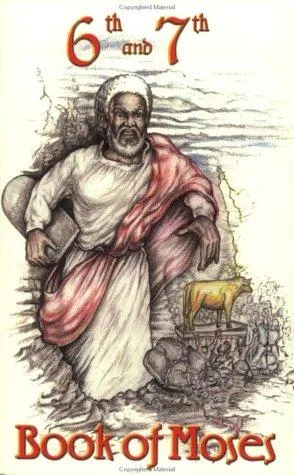
6th and 7th Book of Moses
 64
64

6th and 7th Book of Moses


Aurelia Blackwood (Occult Philosophy Critic) — The '6th and 7th Book of Moses' remains a cornerstone for serious practitioners of Kabbalistic magic and ceremonial occultism. Its enduring appeal lies in its comprehensive approach, meticulously detailing angelic hierarchies, potent incantations, and the practical application of spagiric principles. While often sensationalized, the true value of this anonymous text resides in its intricate system of correspondences and its philosophical underpinnings, rooted deeply in Jewish esoteric traditions. It demands rigorous study and spiritual discipline, rewarding the dedicated reader with profound insights into the mechanics of spiritual influence and the manipulation of subtle energies. Essential for scholars of grimoires and serious adherents to the occult arts.
📝 Description
64
The '6th and 7th Book of Moses' contains Hebrew magical traditions attributed to Moses himself.
This anonymous grimoire presents a collection of esoteric knowledge drawn from Kabbalistic sources. It claims to reveal secrets of both 'White and Black Art,' detailing practices from invoking angels to understanding necromancy. The text is filled with divine names, planetary correspondences, and sigils intended for those seeking to connect with spiritual forces beyond the ordinary. It suggests that mastering its contents can lead to magical ability, deeper understanding of reality, and insights into cosmic structure.
The book is not intended for casual readers but for serious students willing to interpret its complex instructions. It promises a path to transforming one's understanding through the study of Jewish magic and its broader connections. The work reflects a long human desire for hidden knowledge and spiritual connection, providing a look into a tradition that has influenced mystical thinking for centuries.
The '6th and 7th Book of Moses' belongs to the Western esoteric tradition, specifically within the lineage of grimoires that emerged in the late medieval and early modern periods. These texts often synthesize earlier magical and religious traditions, attributing their origins to significant historical or biblical figures to lend them authority. This book draws on Hebrew mysticism and Kabbalah, incorporating elements found in other magical texts of the era that dealt with divine names, planetary magic, and conjuration.
💡 Why Read This Book?
Unravel ancient secrets of Jewish mysticism and ceremonial magic. This book offers a comprehensive guide to angelic invocation, spagiric arts, and the synthesis of divine names for potent spiritual work. Ideal for seekers of hidden knowledge, occult scholars, and practitioners aiming to deepen their understanding of Kabbalistic principles and their practical application in the pursuit of wisdom and transformation.
⭐ Reader Reviews
Honest opinions from readers who have explored this book.
❓ Frequently Asked Questions
What is the historical origin of the 6th and 7th Book of Moses?
The exact origin is unknown, but it emerged from the European occult tradition, heavily influenced by Kabbalistic texts and Hebrew mystical practices, likely compiled in the 18th or 19th century.
Is this book considered genuine biblical scripture?
No, it is not part of the canonical Hebrew Bible or the Christian Old Testament. It is an apocryphal or pseudepigraphal text associated with ancient mystical traditions.
What kind of magic is discussed in this book?
It covers a wide range, including ceremonial magic, angelic invocation, talismans, divination, and spagiric (alchemical) medicine, often referred to as the 'White and Black Art'.
Who are the 'Ministering Angels' mentioned?
These are celestial beings believed to serve God and assist humanity, often described in Jewish mystical literature. The book provides methods for their invocation and communication.
Can this book be used by beginners?
While it contains foundational elements, its complex nature and demanding rituals make it more suited for intermediate to advanced practitioners or dedicated scholars of esotericism.
🔮 Key Themes & Symbolism
The Union of White and Black Arts
This theme explores the book's assertion of encompassing both benevolent ('White') and potentially more challenging ('Black') magical arts. It looks at the concept that true mastery lies in understanding and ethically reading through the full spectrum of spiritual forces, rather than adhering to a simplistic dichotomy. The text suggests that by comprehending the mechanics of both, practitioners can achieve a more holistic and powerful engagement with the spiritual realm, utilizing angelic assistance and understanding the forces that govern existence.
Angelic Hierarchies and Invocation
Central to the '6th and 7th Book of Moses' is the detailed exploration of angelic beings and their purported roles in the celestial order. The book provides intricate instructions for invoking these ministering spirits, often through the use of divine names, specific incantations, and symbolic talismans. This theme highlights the Kabbalistic belief in a structured spiritual cosmos and the potential for direct communication and collaboration with these higher intelligences to achieve various goals, from protection and healing to gaining divine knowledge.
Spagiric Arts and Divine Correspondences
The text deeply integrates spagiric principles, a form of ancient alchemy focused on preparing potent remedies and essences from natural substances, imbued with spiritual power. This theme emphasizes the interconnectedness of the material and spiritual worlds, where earthly elements hold divine signatures. The book details the use of herbs, minerals, and other natural materials, guided by planetary and angelic correspondences, to create powerful medicines and elixirs, reflecting a holistic approach to healing and spiritual refinement through the manipulation of cosmic energies.
💬 Memorable Quotes
Direct passages from the work, attributed to the author.
“That is, that which embraces the whole of the White and Black Art.”
— This signifies the book's intention to cover the complete spectrum of magical practices, suggesting a unified understanding of spiritual forces rather than a separation into good and evil.
“How to cite and desire the IX.”
— Refers to the invocation of specific divine or angelic names, likely related to the Tetragrammaton or other powerful sacred names, for the purpose of commanding or petitioning spiritual entities.
“The Necromancy of all Ministering Angels and Spirits.”
— This phrase suggests the book contains methods for communicating with and potentially directing both celestial (angels) and other (spirits) entities, including practices traditionally associated with communicating with the departed.
“The foundation of the True Art is laid open.”
— Implies that the text reveals the fundamental principles and authentic methods of a profound spiritual or magical discipline, previously hidden or obscure.
“With the divine names, all things are possible.”
— Highlights the Kabbalistic belief in the immense power inherent in the sacred names of God and angels, suggesting they are the keys to unlocking supernatural potential.
🌙 Esoteric Significance
Tradition
Rooted deeply in the Kabbalistic and Jewish mystical traditions, the '6th and 7th Book of Moses' represents a practical, operational branch of this ancient wisdom. It draws upon the concept of divine names, angelic hierarchies, and the intricate structure of the cosmos as understood within Jewish mysticism. The text aims to bridge the gap between theoretical Kabbalah and tangible spiritual work, offering a system for interacting with the divine forces believed to govern creation and influence human destiny.
Symbolism
Symbolism is paramount, with divine names acting as potent keys to unlock spiritual power. Angels, planetary influences, and geometric figures (like the Star of David) are imbued with specific meanings and energies. The book's structure itself, often divided into the '6th' and '7th' books, may symbolize a progression from earthly knowledge to divine secrets, or the union of opposing forces. Sigils and talismans serve as focal points for channeling intention and divine assistance.
Modern Relevance
In contemporary esotericism, the '6th and 7th Book of Moses' continues to be a vital source for practitioners interested in ceremonial magic, angelic work, and Kabbalistic systems. Its appeal lies in its direct, actionable instructions and its comprehensive approach to spiritual power. Modern occultists often adapt its principles, exploring its insights into the nature of consciousness, divine connection, and the energetic architecture of reality, finding enduring relevance in its ancient quest for gnosis and spiritual efficacy.
👥 Who Should Read This Book
This seminal text is essential for serious students of Kabbalah and Jewish mysticism seeking to understand the practical application of these traditions. Occult scholars and historians of magic will find invaluable material for comparative study. Practitioners of ceremonial magic and those interested in angelic invocation will discover a rich system of rituals and correspondences. Beginners in occultism should approach with caution, perhaps starting with introductory texts on Kabbalah, while more advanced seekers will find a challenging yet rewarding exploration of potent esoteric arts.
📜 Historical Context
The '6th and 7th Book of Moses' emerged within a rich European esoteric milieu, heavily influenced by the late Renaissance and Enlightenment fascination with Kabbalah, alchemy, and ceremonial magic. While attributed to Moses, its actual compilation likely occurred much later, possibly in the 18th or 19th century, drawing upon centuries of accumulated occult lore. This period saw a resurgence of interest in ancient texts and mystical traditions, often presented as rediscovered wisdom. The book reflects this trend by synthesizing elements from Hebrew mysticism, Gnosticism, and grimoire traditions, aiming to provide a comprehensive manual for spiritual and magical practice. Its circulation, often in chapbook or pamphlet form, contributed to its widespread, albeit sometimes controversial, impact on occult movements and individual practitioners seeking direct engagement with the divine and the unseen.
📔 Journal Prompts
Reflect on the concept of the 'White and Black Art' presented in the text. How does this duality resonate with your understanding of spiritual forces?
Choose one angelic hierarchy described and meditate on its potential function and your relationship to it.
Analyze the symbolism of a specific divine name or sigil presented. What energies or concepts does it evoke for you?
Consider the spagiric principles mentioned. How might the interconnectedness of matter and spirit inform your approach to healing or well-being?
How can the 'desire' for divine knowledge or power, as suggested by the text, be cultivated ethically and constructively in your life?
🗂️ Glossary
Spagiric
A branch of alchemy focused on extracting the spiritual essence or 'spirit' from plants and minerals to create potent medicinal remedies and spiritual aids.
Kabbalah
An esoteric tradition within Judaism that seeks to understand the nature of God and the universe through mystical interpretation of scripture and divine emanations.
Incantation
A series of words used as a magical charm or spell, often chanted or recited with specific intent to invoke spiritual power or influence events.
Grimoire
A textbook of magic, typically containing instructions on how to create magical tools, perform rituals, and invoke spirits.
Sigil
A symbol or emblem, often derived from divine names or concepts, used in magical rituals to represent and channel specific energies or intentions.
This book appears in 1 collection
🔮 Readers Also Liked
Browse all →







More by Anonymous
All books →
![The secrets of black arts!: A key note to witchcraft, devination [sic], omens, forwarnings, apparitions, sorcery, dæmonology, dreams, predictions, visions, and the Devil's legacy to earth mortals, compacts with the Devil! With the most authentic history of Salem witchcraft](/img/thumb/the-secrets-of-black-arts-b-a-key-note-to-witchcraft-devination-sic-omens-forwarnings-apparitions-sorcery-d-monology-dreams-predictions-visions-and-the-devil-s-legacy-to-earth-mortals-compacts-with-th.webp)
From the “Kabbalah” Collection
View all →

![[Zohar]](/img/thumb/zohar-jerry-winston.webp)






More Free Kabbalah & Jewish Mysticism Books
View all →