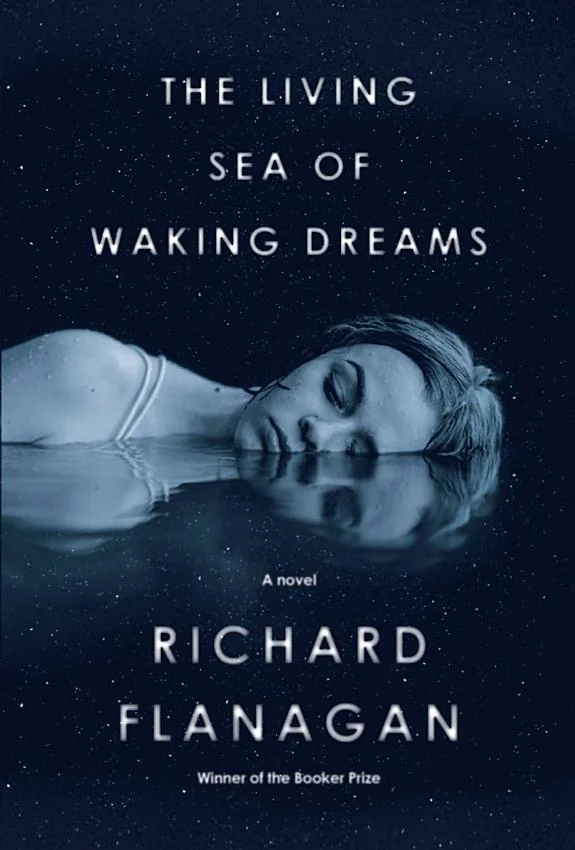
The Living Sea of Waking Dreams
 83
83

The Living Sea of Waking Dreams
Richard Flanagan's The Living Sea of Waking Dreams confronts the dying with a stark, unsentimental gaze. The premise—a mother kept alive against her unspoken wishes by her children's pity—is immediately arresting. Flanagan excels at portraying the suffocating intimacy of family and the profound alienation that can exist within it. The prose, particularly when describing the mother’s internal world as she watches the world outside her hospital window, is often luminous. A passage detailing the slow, almost geological drift of her consciousness offers a powerful counterpoint to the frantic medical efforts to prolong her physical existence. However, the novel occasionally strains under the weight of its thematic ambitions, with the ecological parallels sometimes feeling less organically integrated than the core family drama. Despite this, Flanagan delivers a potent, elegiac work that probes the boundaries of compassion and the nature of freedom at life's end.
📝 Description
83
Richard Flanagan's 2021 novel, The Living Sea of Waking Dreams, confronts the burdens of prolonged life.
Published in 2021, Richard Flanagan's novel centers on an elderly mother kept alive by her children's pity, a situation that becomes the narrative's core. This medical intervention highlights the conflict between the dying's wishes and the decisions made by the living, questioning individual agency and the nature of mortality.
The book appeals to those who read literary fiction dealing with urgent contemporary issues, including climate change and end-of-life medical ethics. It suits readers who value prose that is both poetic and direct, seeking stories that challenge standard views on life, death, and the connections between people and the environment. This is not a simple book; it requires careful thought about difficult subjects.
Flanagan's novel touches on themes of ecological decay and the erosion of will, resonating with traditions that examine the human relationship to the natural world and the limits of consciousness. The 'disappearing' of species and memory mirrors concerns found in philosophical inquiries into existence and the subjective experience of time. The hospital window acts as a symbol, a boundary between the artificiality of medical treatment and the vastness of internal and external realities.
💡 Why Read This Book?
• Understand the ethical quandaries of prolonging life beyond a patient's expressed or implied will, as depicted through Anna's mother's situation. • Explore the symbolic significance of the hospital window as a portal to consciousness and escape, a recurring motif in Flanagan's 2021 novel. • Gain a literary perspective on ecological anxieties, connecting the fragility of species extinction to the vulnerability of human life and memory.
⭐ Reader Reviews
Honest opinions from readers who have explored this book.
❓ Frequently Asked Questions
What is the central theme of The Living Sea of Waking Dreams?
The novel's central theme revolves around the complex interplay of family, mortality, and ecological crisis. It questions the ethics of prolonging life through medical intervention when it conflicts with a dying person's presumed wishes.
Who is the author of The Living Sea of Waking Dreams?
The author is Richard Flanagan, who also wrote the Booker Prize-winning novel The Narrow Road to the Deep North.
When was The Living Sea of Waking Dreams published?
The book was first published in 2021.
What is the significance of the hospital window in the novel?
The hospital window acts as a symbolic threshold for the dying mother. It represents her detachment from the medical procedures and her engagement with an inner world, a space for contemplation and escape.
Does the book focus heavily on climate change?
Yes, climate change and environmental degradation are significant thematic undercurrents, serving as a backdrop and metaphor for the broader themes of loss and extinction.
What kind of reader would appreciate this book?
Readers who appreciate literary fiction grappling with profound ethical questions, ecological concerns, and the human condition, presented with lyrical yet unflinching prose.
🔮 Key Themes & Symbolism
Pity as Cruelty
The work explores how well-intentioned pity, particularly in end-of-life care, can inadvertently become a form of cruelty. Anna's mother, subjected to medical interventions by her children, experiences this as a denial of her autonomy. The narrative questions the ethical boundaries of compassion when it overrides a person's perceived will, suggesting that the desire for life can be imposed, thereby negating the very essence of living.
Ecological Extinction
Flanagan combines the narrative of a dying woman with the broader theme of species extinction and environmental collapse. The sense of 'disappearing' pervades the novel, mirroring the fading of the mother’s life with the loss of biodiversity and the degradation of the planet. This parallel highlights a shared vulnerability between the individual and the collective, suggesting that human actions, like medical interventions, can have unintended, far-reaching consequences.
Consciousness and Liminality
The hospital window serves as a potent symbol of a liminal space, mediating between the physical reality of illness and the expansive area of consciousness. The dying mother’s focus shifts from her immediate circumstances to the world outside, and her internal experiences become a form of escape and agency. This theme explores the nature of awareness and the possibility of finding freedom and meaning within the confines of physical suffering.
The Nature of Memory
The novel probes how memory functions, both individually and collectively, in the face of mortality and environmental change. As life recedes, the persistence or fading of memories becomes crucial. The work suggests that the essence of a person might reside in these remnants of experience, and that the act of remembering, or being remembered, is a fundamental aspect of human existence against the backdrop of loss.
💬 Memorable Quotes
Direct passages from the work, attributed to the author.
“She looked out the window and saw a world that was forever disappearing.”
— This statement connects the personal experience of dying to the broader theme of ecological loss. The world outside the hospital window becomes a metaphor for the planet's vanishing species and habitats, highlighting the pervasive sense of extinction.
“The sea was the sea. It was not going to save them.”
— Interpretation: This reflects a stark realism within the novel, positing that natural elements, often romanticized, are indifferent to human plight. It underscores the idea that salvation, if it comes, must arise from within or through human action, not external forces.
“The world was a dream, and she was waking from it.”
— Interpretation: This poignant reflection suggests a detachment from worldly concerns as death approaches. It frames life itself as a dreamlike state from which the consciousness gradually withdraws, seeking a different form of reality or peace.
💡 Key Ideas
Editorial paraphrase of the work's core concepts — not direct quotes.
The living were doomed by their pity to go on living.
This line expresses the novel's critique of well-intentioned but misguided compassion. It suggests that prolonging life out of pity, rather than respecting a person's implied wishes, can become a burden, trapping both the dying and the living in a state of unresolved suffering.
They had not allowed her to die, and in their pity they had condemned her to go on living.
This paraphrased concept emphasizes the novel's exploration of end-of-life ethics. It critiques the notion that extending life at all costs, driven by familial pity, overrides an individual's right to peace and cessation.
🌙 Esoteric Significance
Tradition
While not strictly adhering to a single esoteric lineage, The Living Sea of Waking Dreams touches upon Gnostic themes of the material world as a source of suffering and the soul's yearning for liberation. The protagonist's detachment from her physical circumstances and her focus on an inner reality can be seen as a form of spiritual escape from the 'prison' of the physical body and the mundane world, a concept central to many mystical traditions.
Symbolism
The hospital window functions as a potent symbol of liminality, a threshold between the material world of suffering and the boundless area of consciousness. The 'disappearing' motif symbolizes not only ecological extinction but also the dissolution of the ego and the self as one approaches death, echoing Buddhist concepts of anatta (non-self) and the impermanence of all phenomena.
Modern Relevance
The novel's exploration of ecological grief and the intersection of personal mortality with planetary decline appeals to contemporary eco-spiritual movements and thinkers who advocate for a more integrated understanding of human existence within the natural world. It speaks to modern anxieties about the Anthropocene and the search for meaning amidst widespread environmental and existential crises.
👥 Who Should Read This Book
• Readers interested in literary fiction that confronts ecological collapse and the ethics of end-of-life care, seeking a narrative that links personal tragedy to global concerns. • Students of contemporary Australian literature, particularly those examining how authors like Richard Flanagan engage with themes of landscape, identity, and existential threat. • Individuals drawn to introspective narratives that explore consciousness and the subjective experience of mortality, offering a unique perspective on the transition from life to death.
📜 Historical Context
Published in 2021, The Living Sea of Waking Dreams emerged during a period of heightened global anxiety regarding the escalating climate crisis and ongoing debates surrounding medical ethics and end-of-life care. Richard Flanagan's novel participates in a literary tradition that uses intimate narratives to address pressing societal concerns, echoing the environmental themes explored by authors like Margaret Atwood in works such as The Year of the Flood (2009). The novel's focus on ecological decay and the sense of pervasive loss aligns with the growing field of ecocriticism, which gained significant academic and cultural traction throughout the late 20th and early 21st centuries. Flanagan's work also engages with contemporary philosophical discussions on autonomy and the ethics of prolonging life, a subject frequently debated in bioethics and medical humanities circles.
📔 Journal Prompts
The hospital window as a threshold between physical suffering and inner liberation.
Reflect on the concept of 'pity' as a potentially cruel force in prolonging life.
The interconnectedness of personal extinction (death) and ecological extinction.
The sea as an indifferent force, separate from human desires for salvation.
Memory's role in defining existence as life fades.
🗂️ Glossary
Disappearing
A pervasive concept in the novel referring to both the extinction of species due to environmental degradation and the fading of an individual's life and consciousness.
Hospital Window
A symbolic motif representing a liminal space between the sterile reality of medical intervention and the expansive interiority of consciousness, a site of escape and observation.
Pity
The emotion driving the characters to keep Anna's mother alive, presented as a potentially harmful force that overrides autonomy and prolongs suffering.
Ecological Collapse
The backdrop of the novel, reflecting widespread environmental destruction and species extinction, mirroring the personal themes of loss and finitude.
Liminality
The state of being in-between, as experienced by the dying mother at the hospital window, detached from her physical reality yet not fully departed.
Autonomy
The principle of self-governance, critically examined in the context of end-of-life decisions where external forces may override personal will.
Elegy
A literary work mourning a loss, in this case, the loss of life, the loss of species, and the potential loss of a habitable planet.
This book appears in 1 collection
🔮 Readers Also Liked
Browse all →








From the “Visions” Collection
View all →


More Free Occult Philosophy Books
View all →