Acupuncture

 76
76

Acupuncture
Royston H. Low's "Acupuncture" presents a commendably structured overview of a practice often shrouded in mystique. The author's strength lies in his methodical approach, dissecting complex theoretical constructs into digestible components. The section detailing the historical emergence of acupuncture in China, particularly its early theoretical underpinnings, provides a solid grounding. However, the work occasionally suffers from a certain dryness; while precise, the prose sometimes lacks the vitality needed to fully convey the energetic principles it describes. A notable passage is the explanation of the Five Elements theory, which, though factual, could benefit from more illustrative examples of its application in diagnosis. Ultimately, "Acupuncture" serves as a reliable, if somewhat academic, primer for those serious about understanding the system's foundations.
📝 Description
76
Royston H. Low's 1993 book examines the theory and practice of acupuncture.
This book details the historical development and core principles of acupuncture. Low explains it as a healing system, covering its diagnostic methods and therapeutic approaches. The text maps the body's meridians and acupoints as understood in traditional Chinese medicine.
It is intended for students and practitioners of East Asian medicine who want a deeper grasp of acupuncture's theoretical basis. Individuals interested in comparative medicine and the history of healing arts will also find value here. The work balances theory with practical application, appealing to those who study esoteric knowledge analytically.
Low traces acupuncture's history through centuries of Chinese medical thought. The book considers how concepts of the body's energetic systems have been interpreted across cultures. It shows how ideas like Qi and meridians were preserved and adapted, especially when introduced to Western thought.
This work engages with the esoteric tradition of vitalistic medicine, particularly as developed in traditional Chinese medicine. It addresses the concept of Qi, or life force, and its flow through defined pathways called meridians. The book details how understanding and manipulating these energetic systems through acupuncture is seen as a method for restoring health and balance. It fits within a lineage that views the body not just as a physical structure, but as an energetic field.
💡 Why Read This Book?
• Gain a structured understanding of Qi and meridian theory, concepts central to acupuncture since their codification in classical Chinese texts. • Learn about the historical development of acupuncture, tracing its evolution from ancient China and its integration into broader medical discourse. • Understand the diagnostic principles of Yin-Yang balance and the Five Elements, as presented by Low, to interpret bodily disharmonies.
⭐ Reader Reviews
Honest opinions from readers who have explored this book.
❓ Frequently Asked Questions
When was Royston H. Low's Acupuncture first published?
Royston H. Low's "Acupuncture" was first published in 2001, offering a contemporary scholarly perspective on this ancient practice.
What are the primary theoretical frameworks discussed in Acupuncture?
The book primarily discusses the theoretical frameworks of Traditional Chinese Medicine, including concepts like Qi, Yin-Yang, and the meridian system.
Does Acupuncture by Royston H. Low cover modern scientific research?
While rooted in traditional theory, Low's work implicitly engages with how these ancient concepts have been understood and potentially reconciled with modern perspectives.
Is Royston H. Low's Acupuncture suitable for absolute beginners?
The book provides a structured approach, making it suitable for beginners with an analytical mindset, though a foundational interest in East Asian medicine is beneficial.
What historical period does the book reference for acupuncture's origins?
The book traces acupuncture's origins back through centuries of Chinese medical thought, highlighting its deep historical roots.
What is the author's background related to Acupuncture?
Royston H. Low is presented as an author focused on the scholarly and theoretical aspects of practices like acupuncture, contributing to its understanding within a broader context.
🔮 Key Themes & Symbolism
Qi and Energetic Flow
The book explicates the concept of Qi, the vital energy that flows through the body. It details the meridian system, the intricate pathways through which Qi circulates, and how blockages or imbalances in this flow are understood to cause illness. Low's analysis connects this ancient concept to the practical application of acupuncture, emphasizing the importance of maintaining harmonious energetic circulation for health and well-being.
Yin-Yang Duality
Central to Low's exposition is the principle of Yin and Yang, the fundamental duality that governs all phenomena in the universe, including the human body. The work explores how the balance between these opposing yet complementary forces is crucial for health. It explains how imbalances, such as an excess of Yang or a deficiency of Yin, manifest as specific symptoms and how acupuncture seeks to restore this equilibrium.
The Five Elements
Acupuncture examines the theory of the Five Elements (Wood, Fire, Earth, Metal, Water), which provides a framework for understanding the relationships between different organs, emotions, and aspects of the natural world. Low details how these elements interact cyclically and how their interplay influences physiological and psychological states, offering a sophisticated model for diagnosis and treatment within Traditional Chinese Medicine.
Acupoints and Meridians
The book systematically maps out the network of meridians and specific acupoints that form the basis of acupuncture therapy. It discusses the precise locations of these points, their energetic properties, and their connections to different organ systems and functions. Understanding this intricate map is presented as essential for practitioners aiming to stimulate the body's self-healing capacities through needle insertion or other therapeutic techniques.
💬 Memorable Quotes
Direct passages from the work, attributed to the author.
“The body is understood as a microcosm reflecting universal energetic principles.”
— This concept highlights the holistic view within acupuncture, where the physical body is seen not in isolation but as an integral part of larger cosmic and energetic patterns.
“Harmony is achieved through the balanced interplay of Yin and Yang forces.”
— This emphasizes the core therapeutic goal of acupuncture: to correct imbalances and restore the dynamic equilibrium between opposing, yet complementary, energies within the individual.
“Qi flows through specific channels known as meridians.”
— This statement defines the fundamental anatomical and energetic concept of the meridian system, which serves as the map for acupuncture's therapeutic interventions.
“Diagnosis involves identifying patterns of disharmony within the energetic system.”
— This points to the diagnostic approach in Traditional Chinese Medicine, where symptoms are seen as indicators of underlying energetic disruptions rather than isolated ailments.
“The Five Elements provide a framework for understanding interrelationships.”
— This refers to the cyclical and generative relationships between Wood, Fire, Earth, Metal, and Water, offering a comprehensive model for analyzing complex bodily and environmental connections.
🌙 Esoteric Significance
Tradition
Acupuncture aligns with the Taoist tradition, which posits a universe governed by vital energy (Qi) and the dynamic interplay of Yin and Yang. Within this lineage, the body is viewed as a microcosm of the cosmos, with health dependent on the free flow of Qi through a network of meridians. Low's work explores these foundational Taoist principles, presenting them as the operating system for acupuncture's diagnostic and therapeutic methodologies.
Symbolism
The concept of Qi itself is a potent symbol of life force and vital energy, fundamental to many esoteric traditions. The Yin-Yang symbol, representing duality and balance, is another core motif, signifying the interconnectedness of opposites. The meridians can be seen as symbolic rivers of energy, mapping the unseen energetic geography of the body, crucial for understanding the flow and transformation of vital forces.
Modern Relevance
Contemporary holistic health practitioners, somatic therapists, and proponents of mind-body medicine frequently draw upon the principles outlined in works like Low's. Thinkers exploring integrated approaches to wellness, bridging ancient wisdom with modern scientific inquiry, find value in the structured understanding of Qi and energetic balance. Practices focusing on subtle energies and energetic field theory often reference these core concepts.
👥 Who Should Read This Book
• Students of Traditional Chinese Medicine (TCM) seeking a foundational text that clearly explains core theoretical concepts like Qi and the meridian system. • Comparative health researchers interested in understanding the historical and philosophical underpinnings of non-Western medical practices. • Individuals exploring holistic healing modalities who wish to gain a deeper appreciation for the theoretical framework behind acupuncture beyond its symptomatic treatment.
📜 Historical Context
Published in 2001, Royston H. Low's "Acupuncture" entered a landscape where Traditional Chinese Medicine (TCM) had gained significant traction in the West, often presented through the lens of popular health movements. Low's work, however, offers a more academic perspective, situating acupuncture within its deep historical context in China, tracing theoretical developments that stretch back millennia. This period saw continued engagement with classical texts like the *Huangdi Neijing* (Yellow Emperor's Inner Canon), a foundational work for TCM theory. While Western medicine continued its biomedical trajectory, scholars and practitioners in fields like anthropology and comparative medicine were increasingly examining non-Western healing systems. Low's contribution implicitly addresses this scholarly interest, providing a structured account of acupuncture's internal logic, distinct from purely physiological explanations.
📔 Journal Prompts
The concept of Qi as vital energy and its flow through meridians.
Reflect on the relationship between Yin and Yang in your own life.
How does the Five Elements theory explain interactions in nature?
Map the energetic pathways of a specific meridian discussed.
Consider the historical evolution of acupuncture's theoretical basis.
🗂️ Glossary
Qi (or Chi)
The fundamental concept of vital energy or life force that circulates throughout the body and the universe, central to Traditional Chinese Medicine.
Meridians
Specific pathways or channels within the body through which Qi flows, forming an intricate network connecting organs and tissues.
Yin and Yang
The Taoist principle of fundamental duality, representing opposing yet complementary forces (e.g., dark/light, passive/active) whose balance is essential for health.
Acupoints
Specific locations on the meridians where Qi can be accessed and influenced, typically stimulated with needles in acupuncture.
Five Elements
A traditional Chinese cosmological model (Wood, Fire, Earth, Metal, Water) used to explain the relationships and dynamics within the body and the natural world.
Disharmony
A state of imbalance in the body's energetic system, characterized by disruptions in the flow of Qi or the equilibrium of Yin and Yang, leading to illness.
Huangdi Neijing
The foundational text of Traditional Chinese Medicine, believed to have been compiled during the Han Dynasty, outlining theories of Yin-Yang, the Five Elements, and Qi.
🔮 Readers Also Liked
Browse all →









More by Royston H. Low
All books →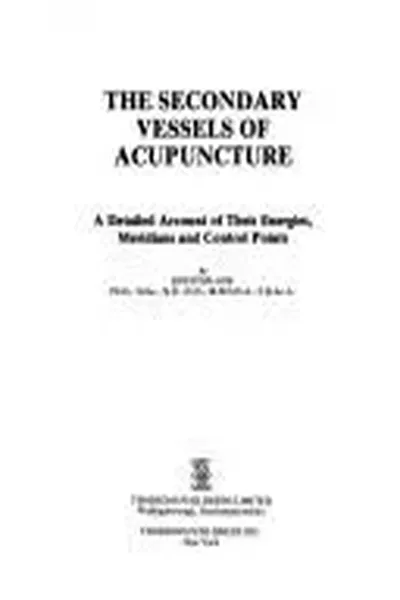
More Free Occult Philosophy Books
View all →