The practical qabalah

 63
63

The practical qabalah

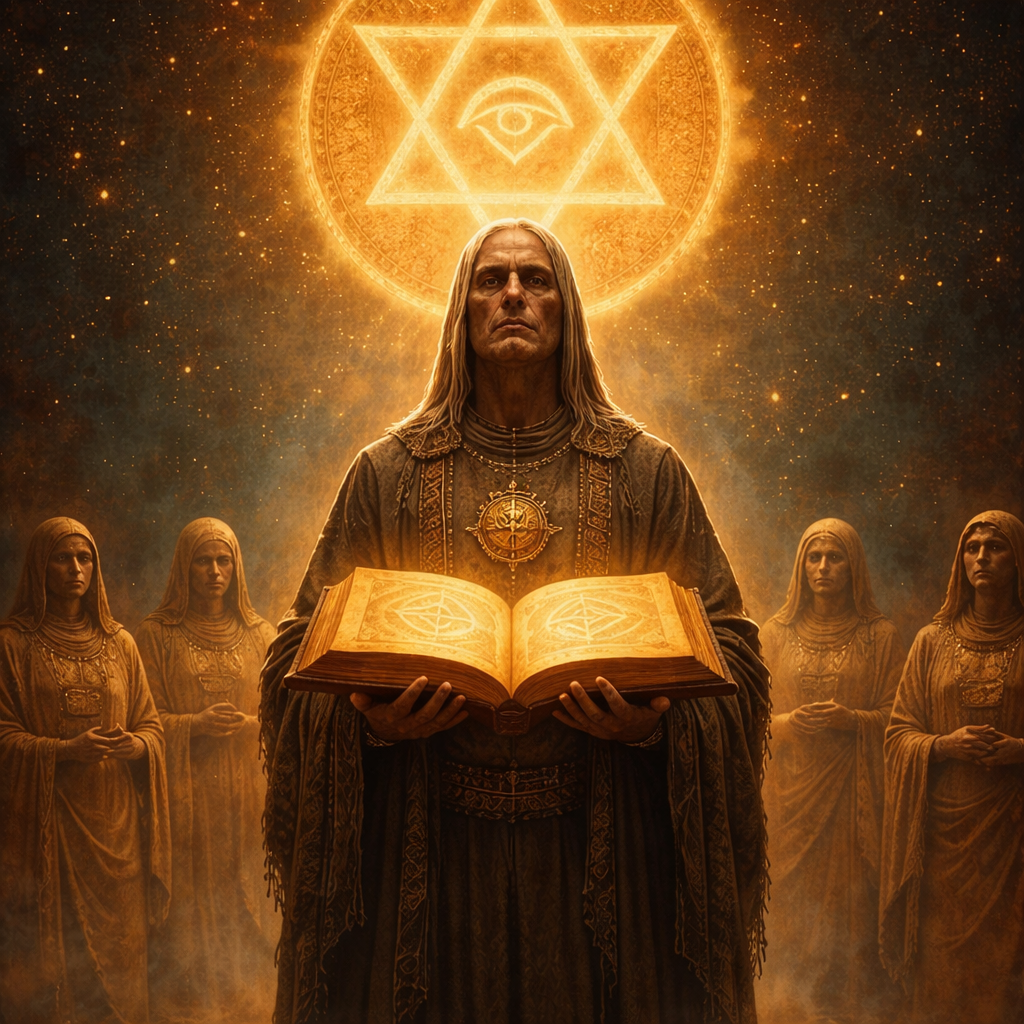

Isolde Whitaker (Sacred Texts Editor) — Charles Fielding's "The Practical Qabalah" is a distinguished addition to the esoteric canon, offering a lucid yet profound exploration of Kabbalistic principles. Whitaker skillfully bridges the gap between dense theoretical concepts and actionable practice, demystifying the Tree of Life for a new generation of seekers. The book’s strength lies in its clarity, providing essential insights into the Sephiroth, Paths, and their occult significance. It is an indispensable resource for those embarking on their Kabbalistic journey, as well as a valuable refresher for seasoned practitioners. The author’s authoritative yet accessible tone ensures that this sacred knowledge remains vibrant and relevant.
📝 Description
63
Charles Fielding's 1988 book, 'The Practical Qabalah,' presents a system for applying Kabbalistic principles.
Charles Fielding's 'The Practical Qabalah,' published in 1988, offers a method for working with Kabbalistic concepts. The book details the Tree of Life, explaining its various components and their relationships. Fielding discusses how to use these correspondences for personal development and spiritual practice. He addresses the divine emanations and how they relate to human consciousness. The text aims to help readers grasp the underlying structure of existence and their own inner spiritual nature.
This work is suited for individuals interested in mysticism, ceremonial magic, and the philosophical ideas within Western esotericism. It moves beyond simple intellectual study, aiming for a transformative understanding of the subject. The book suggests that Kabbalistic ideas can offer insight into life and guide individuals toward spiritual awareness.
This book engages with the Western Esoteric Tradition, specifically drawing from the Kabbalah. It focuses on the Lurianic and Hermetic interpretations of the Tree of Life, often associated with ceremonial magic and practical occultism. Fielding's approach aims to bridge theoretical Kabbalistic knowledge with actionable techniques for the practitioner, moving beyond purely philosophical or theological discussions. It is part of a lineage of texts that seek to make esoteric systems accessible for personal spiritual advancement.
💡 Why Read This Book?
Embark on an illuminating journey into the heart of Kabbalistic wisdom. This book offers a practical roadmap to understanding the Tree of Life, its symbolic language, and its profound influence on the cosmos and the human soul. Ideal for spiritual seekers, students of occultism, and those yearning to connect with deeper metaphysical truths, "The Practical Qabalah" provides the tools for personal transformation and esoteric mastery.
⭐ Reader Reviews
Honest opinions from readers who have explored this book.
❓ Frequently Asked Questions
What is the primary focus of "The Practical Qabalah"?
The book's primary focus is on the practical application of Kabbalistic principles, particularly through the understanding and utilization of the Tree of Life as a map for spiritual development and occult work.
Is this book suitable for beginners in Kabbalah?
Yes, Charles Fielding's accessible writing style makes it an excellent starting point for beginners, while still offering depth for those with prior knowledge.
What is the Tree of Life in Kabbalistic terms?
The Tree of Life is a central symbolic diagram in Kabbalah, representing the ten Sephiroth (divine emanations) and their interconnectedness, often depicted as a map of creation and consciousness.
Does the book cover occult practices related to Kabbalah?
Indeed, it delves into the practical applications and correspondences within occultism, providing insights into how Kabbalistic concepts can be integrated into magical and spiritual practices.
What makes this book 'practical'?
The 'practical' aspect refers to its emphasis on applying Kabbalistic knowledge to one's personal growth, spiritual development, and esoteric endeavors, rather than just theoretical study.
🔮 Key Themes & Symbolism
The Tree of Life as a Cosmic Blueprint
This theme explores the Kabbalistic Tree of Life not merely as a diagram, but as a profound representation of the divine architecture of the universe and the stages of creation. It details the ten Sephiroth, their unique energies, and the interconnected pathways that link them, serving as a fundamental map for understanding existence, consciousness, and the journey of the soul from the absolute divine to the material plane. The book illuminates how this intricate structure provides a framework for all esoteric disciplines.
Symbolism and Correspondences
A core part of the text is the meticulous exploration of the rich symbolic language inherent in Kabbalah. Fielding elucidates the correspondences between the Sephiroth, the Hebrew alphabet, astrological signs, Tarot cards, and various mystical traditions. Understanding these links is presented as crucial for unlocking the deeper meanings within sacred texts and for effectively applying Kabbalistic principles in ritual, meditation, and divination, transforming abstract concepts into tangible spiritual tools.
Practical Application and Spiritual Evolution
Beyond theoretical knowledge, this theme highlights the book's commitment to practical application. Fielding guides readers on how to integrate Kabbalistic wisdom into their daily lives and spiritual practices. This includes techniques for meditation, visualization, and understanding one's own energetic pathways. The ultimate goal is presented as personal transformation, spiritual growth, and the attainment of higher consciousness by consciously working with the forces and principles represented on the Tree of Life.
💬 Memorable Quotes
Direct passages from the work, attributed to the author.
“Each Sephiroth whispers a divine secret, waiting to be heard.”
— This highlights the idea that the spheres of the Tree of Life are conduits of divine knowledge, accessible through focused attention and spiritual receptivity.
“To know oneself is to know the divine within.”
— This captures the core Kabbalistic principle of micro/macrocosm, suggesting that self-understanding is intrinsically linked to understanding the divine essence that permeates all existence.
“The paths are the bridges between the worlds, trod by the seeker.”
— This poetic phrase emphasizes the role of the paths on the Tree of Life as crucial connectors, the very means by which consciousness traverses different levels of reality.
“Practical Kabbalah is the art of living in alignment with the divine order.”
— This defines practical Kabbalah not as mere ritual, but as a way of life, a conscious effort to harmonize one's existence with the underlying cosmic principles and divine will.
💡 Key Ideas
Editorial paraphrase of the work's core concepts — not direct quotes.
The Tree of Life is not a static diagram, but a living map of the soul's journey.
This quote emphasizes the dynamic and personal nature of the Kabbalistic Tree, portraying it as an active guide for individual spiritual evolution rather than a fixed, abstract symbol.
🌙 Esoteric Significance
Tradition
This work is firmly situated within the Western Esoteric Tradition, drawing its primary inspiration and methodology from Kabbalah, a mystical interpretation of Judaism. It also interfaces with Hermeticism, ceremonial magic, and occult philosophy, viewing Kabbalah as a foundational system that underpins many other esoteric disciplines. The book emphasizes the Kabbalistic Tree of Life as a universal symbolic language, a cosmic map, and a tool for spiritual attainment that transcends specific religious dogma.
Symbolism
The core symbolism revolves around the Kabbalistic Tree of Life, with its ten Sephiroth (divine emanations) and twenty-two Paths. Fielding meticulously details the symbolic meanings of each Sephirah, representing aspects of divine consciousness and creation, and the Paths, symbolizing the journey and connections between them. He explores correspondences with Hebrew letters, astrological elements, Tarot archetypes, and alchemical processes, presenting these as keys to unlocking deeper layers of meaning and facilitating practical occult work.
Modern Relevance
In an era often characterized by spiritual seeking and a desire for self-understanding, "The Practical Qabalah" offers timeless wisdom. Its emphasis on personal transformation, understanding one's inner landscape, and connecting with higher consciousness resonates deeply with contemporary seekers. The book provides a structured framework for navigating life's challenges, fostering personal growth, and developing a more profound connection to the universe, making Kabbalistic principles relevant and actionable for individuals today.
👥 Who Should Read This Book
This book is a treasure for a diverse range of readers. Beginners in Kabbalah and occultism will find Fielding's clear explanations and practical approach an invaluable starting point. Scholars of comparative religion and mysticism will appreciate its systematic exploration of Kabbalistic concepts and their historical context. Dedicated seekers of spiritual truth and personal growth will discover useful insights and tools for self-discovery. Practitioners of magic and meditation will find a rich source for enhancing their rituals, visualizations, and understanding of energetic correspondences within their work.
📜 Historical Context
Charles Fielding's "The Practical Qabalah" emerges from a rich lineage of Western esoteric thought, deeply rooted in the Jewish mystical tradition of Kabbalah. While Kabbalistic texts have existed for centuries, their integration into broader occult and philosophical circles gained momentum during the Renaissance and flourished through figures like Eliphas Lévi and the Hermetic Order of the Golden Dawn in the late 19th and early 20th centuries. Fielding's work stands within this tradition, aiming to distill the complex teachings of Kabbalah into a more accessible, practical format for the modern student. It reflects a desire to bridge the gap between ancient wisdom and contemporary spiritual seekers, emphasizing the Tree of Life as a universal symbol applicable to personal growth and occult practice, echoing the efforts of many esotericists to systematize and disseminate these profound teachings.
📔 Journal Prompts
Reflect on the Sephirah that most appeals to your current life situation. What lessons does it offer?
How can the concept of divine emanation (Sephiroth) help you understand your own creative processes?
Explore the symbolism of one of the Paths on the Tree of Life. How does it represent a journey or transformation in your life?
Consider the correspondences between a Kabbalistic concept and a personal experience. What new insights emerge?
How can the principles of Kabbalah guide you in harmonizing your inner world with the outer world?
🗂️ Glossary
Sephirah (plural: Sephiroth)
In Kabbalah, these are the ten divine emanations or attributes of God, often depicted as spheres on the Tree of Life, representing stages of creation and divine consciousness.
Tree of Life
A central diagram in Kabbalah, consisting of ten Sephiroth and twenty-two connecting Paths, symbolizing the structure of the cosmos, the divine, and the human soul.
Path
The connections or bridges between the Sephiroth on the Tree of Life, each representing a distinct spiritual journey, lesson, or correspondence, often linked to Hebrew letters or Tarot cards.
Keter
The first Sephirah on the Tree of Life, representing the crown, pure potentiality, the divine will, and the highest aspect of consciousness, often considered the 'Ein Sof' (the Infinite).
Malkuth
The tenth and final Sephirah, representing the Kingdom, the Earth, the manifest physical world, and the culmination of the divine emanations in tangible reality.
This book appears in 1 collection
🔮 Readers Also Liked
Browse all →







More by Charles Fielding
All books →
From the “Kabbalah” Collection
View all →







More Free Kabbalah & Jewish Mysticism Books
View all →