Haunted
 82
82

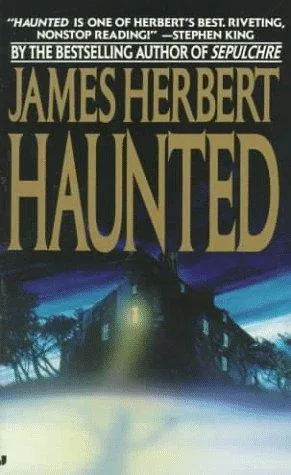
Haunted
James Herbert’s ‘Haunted’ is a masterclass in sustained dread, eschewing easy answers for a deep dive into the suffocating weight of spectral influence. The novel excels in depicting how environments can become saturated with residual trauma, a concept it explores with chilling effectiveness. Herbert’s strength lies in his ability to render the uncanny palpable; the oppressive atmosphere of the Black House and its inhabitants’ torment feels viscerally real. However, the narrative occasionally buckles under its own ambition, with some plot threads feeling less developed than others. The portrayal of Edouard’s investigation, particularly his descent into the history of the Black House and its most notorious inhabitant, the ‘Old Man,’ is where the novel truly excels, showcasing Herbert's particular brand of visceral horror. While the pacing can falter in its middle sections, the cumulative effect is a powerful, unsettling examination of fear’s enduring power.
📝 Description
82
James Herbert's 1988 novel 'Haunted' examines fear through the lens of psychic trauma.
In James Herbert's 1988 novel 'Haunted', writer Edouard is commissioned to document supernatural occurrences. His investigation pulls him into increasingly disturbing encounters with phenomena that suggest psychic trauma can manifest as real, malevolent forces. The book questions hauntings, viewing them not just as ghosts, but as imprints of intense human suffering and rage left on places and people. This narrative appeals to readers who prefer horror that emphasizes psychological depth over simple shock tactics. Those interested in how trauma, memory, and the uncanny interact will find much to consider. The story confronts the darker aspects of the human mind and its capacity to connect with unsettling, unseen powers.
Herbert's approach grounds the supernatural in the psychological, suggesting that the horrors we experience often originate from within or from deeply imprinted human anguish. The novel moves beyond conventional ghost stories, proposing that locations themselves can absorb and replay violent emotions, creating environments that actively harm those sensitive to them. Edouard's personal journey becomes a descent into understanding these deeply ingrained psychic scars.
Published in 1988, 'Haunted' emerged as the horror genre was evolving. While many popular authors focused on psychological thrillers, Herbert explored the visceral impact of the paranormal on the human psyche. The late 20th century saw a public fascination with the supernatural, but Herbert’s work differed from simple sensationalism. He approached hauntings as potent echoes of human anguish, suggesting a reality where intense emotion could permanently alter environments. This aligns with certain esoteric traditions that posit locations can retain psychic energy, becoming active participants in human experience.
💡 Why Read This Book?
• Gain a visceral understanding of psychic residue and how intense trauma might imprint itself upon locations, a concept explored through the history of the Black House and its malevolent occupant. • Experience Herbert's unique method of building atmospheric terror, particularly how he uses sensory details to create a palpable sense of dread and unease, a hallmark of his 1988 novel. • Examine the psychological toll of confronting persistent supernatural phenomena, as depicted through the protagonist Edouard's investigation and his increasing entanglement with the forces he studies.
⭐ Reader Reviews
Honest opinions from readers who have explored this book.
❓ Frequently Asked Questions
What is the main premise of James Herbert's 'Haunted'?
'Haunted' centers on Edouard, a writer investigating the phenomenon of hauntings. He is tasked with documenting cases of psychic distress and supernatural occurrences, which draws him into increasingly terrifying encounters and the dark history of the Black House.
When was James Herbert's 'Haunted' originally published?
James Herbert's 'Haunted' was first published in 1988, a period where the horror genre was exploring diverse thematic elements beyond simple supernatural tales.
What key concepts does 'Haunted' explore?
The novel delves into psychic residue, the idea that trauma can imprint on locations, and the blurring lines between psychological distress and external supernatural forces. It also touches on inherited trauma, personified by the entity known as the 'Old Man'.
Who is the protagonist in 'Haunted'?
The protagonist is Edouard, a writer who acts as an investigator of paranormal phenomena. His personal journey and increasing entanglement with the supernatural are central to the narrative.
Is 'Haunted' considered a typical ghost story?
While it features hauntings, 'Haunted' is more than a typical ghost story. It emphasizes the psychological underpinnings of fear and the idea that hauntings can be manifestations of deep-seated human suffering and rage, rather than just spectral apparitions.
What makes the 'Old Man' significant in 'Haunted'?
The 'Old Man' is a crucial antagonist, representing concentrated negative psychic energy and historical pain. This entity embodies the concept of inherited trauma and the persistent malevolence that can afflict a place and its inhabitants.
🔮 Key Themes & Symbolism
Psychic Residue and Imprinted Trauma
The core of 'Haunted' lies in its exploration of psychic residue, the concept that intense human emotions and traumatic events can leave a lasting, tangible imprint on physical environments. Herbert posits that locations, such as the notorious Black House, can become saturated with the elements of suffering, rage, and despair. This residue is not merely a passive memory but an active force that can influence and torment inhabitants. The narrative suggests that these imprints can manifest as what we perceive as hauntings, blurring the lines between psychological distress and an external, malevolent presence. The entity referred to as the 'Old Man' serves as a potent embodiment of this concentrated, historical pain, demonstrating how past atrocities can continue to exert a terrifying influence across generations.
The Interplay of Mind and Environment
Herbert masterfully depicts the symbiotic relationship between internal psychological states and the external environment, particularly within the context of fear and supernatural phenomena. 'Haunted' questions whether the horrors experienced are solely products of the mind or if they possess an independent, objective reality. The novel suggests that the human psyche, especially when subjected to intense trauma or fear, can interact with and even amplify the subtle energies present in a location. The protagonist, Edouard, finds his own mental state increasingly compromised as he investigates, demonstrating how the oppressive atmosphere of the Black House actively works upon his perceptions and sanity. This interplay creates a pervasive sense of unease, where the environment seems to conspire with internal anxieties to create a terrifying reality.
Manifestations of Rage and Suffering
Unlike many ghost stories that focus on sorrowful spirits, 'Haunted' examines the darker, more volatile manifestations of human experience: rage, terror, and profound suffering. The hauntings depicted are not mere whispers from the past but aggressive, often violent, expressions of pent-up anguish. Herbert uses these manifestations to explore how unresolved pain can fester and transform into a destructive force. The narrative suggests that the entities and phenomena encountered are not simply remnants of the deceased but potent energies born from extreme emotional states. This perspective adds a layer of primal horror, presenting the supernatural as a direct consequence of humanity’s capacity for both immense pain and destructive rage, a theme starkly embodied by the 'Old Man'.
The Psychological Architect of Fear
Herbert positions the human mind not just as a recipient of fear but as its architect, particularly in the context of 'Haunted.' The novel explores how our deepest anxieties, memories of trauma, and capacity for dread can shape our perception of reality, making us susceptible to what we fear most. The investigation into the Black House becomes a descent into a field of psychological horror, where the external manifestations of the haunting are inextricably linked to the internal fears and traumas of both the victims and the investigator. The book suggests that true horror often originates within, with the external world merely providing a stage or a catalyst for these internal terrors to take form, especially when confronted with concentrated psychic residue.
💬 Memorable Quotes
Direct passages from the work, attributed to the author.
“He was a writer who documented hauntings, and now the hauntings were documenting him.”
— This highlights the protagonist Edouard's dangerous immersion in his work. It signifies the point where the investigator becomes as much a subject of the phenomenon as the object of his study, indicating a loss of control and increasing personal peril.
“The Old Man was the rage of centuries.”
— This interpretation of the 'Old Man' entity points to its nature as a manifestation of accumulated historical suffering and fury. It is not an individual ghost but a composite embodiment of immense, long-standing negative energy and trauma.
“The walls had absorbed the screams.”
— This powerful image illustrates the concept of psychic residue. It conveys that the very structure of the Black House has become a repository for the intense anguish and terror experienced within its confines, making the environment itself a source of horror.
💡 Key Ideas
Editorial paraphrase of the work's core concepts — not direct quotes.
The house was saturated with death.
This line captures the novel's central theme of psychic residue. It suggests that the Black House is not merely a site of past deaths but a place where the essence of death, and the terror associated with it, has become a palpable, pervasive presence.
Fear was a tangible thing in that place.
This paraphrased concept emphasizes the novel's focus on the physical manifestation of abstract emotions. It suggests that fear in the Black House transcends mere psychological feeling, becoming an almost physical presence that can be sensed and experienced.
🌙 Esoteric Significance
Tradition
While not directly aligned with a specific esoteric lineage like Hermeticism or Kabbalah, 'Haunted' taps into a broader, more primal understanding of spiritual and psychic disturbance that speaks to animistic and shamanic traditions. It explores the idea of places holding memory and energy, a concept present in many folk beliefs and indigenous spiritual practices. The novel’s focus on the accumulation of negative emotional energy and its manifestation as a tangible force aligns with certain interpretations of psychic phenomena and elemental spirits found in occult folklore, suggesting a world where emotional states can directly impact the physical and energetic planes.
Symbolism
The Black House itself functions as a potent symbol, representing not just a haunted location but a physical manifestation of accumulated trauma and psychological decay. It is a corrupted space, imprinted with the suffering of its inhabitants. The 'Old Man' is another key symbol, embodying the concentrated rage and historical pain that festers when trauma is unaddressed. He is a specter of memory and fury, a personification of the negative psychic residue that permeates the environment. The act of writing and documentation, undertaken by Edouard, symbolizes the human attempt to rationalize, understand, and perhaps control the uncontrollable, even as it draws the investigator deeper into the horror.
Modern Relevance
Contemporary horror fiction and psychological thrillers continue to explore themes central to 'Haunted,' particularly the idea that trauma can leave indelible marks on individuals and locations. Thinkers and practitioners in fields like ecopsychology and trauma studies might find resonance in Herbert's depiction of environments saturated with negative energy. Furthermore, the novel's exploration of how intense emotional states can manifest in the physical world aligns with modern discussions around consciousness, quantum entanglement, and the energetic nature of reality, albeit approached through a horror lens. The concept of psychic residue remains a compelling trope for creators examining the lasting impact of suffering.
👥 Who Should Read This Book
• Readers interested in the psychological underpinnings of horror who seek narratives exploring how trauma can manifest as tangible supernatural forces. They will gain a visceral understanding of psychic residue. • Fans of atmospheric dread and visceral horror who appreciate authors who build terror through oppressive environments and the psychological unraveling of characters. They will experience Herbert's distinct approach to building unease. • Students of horror literature and contemporary Gothic who wish to examine works that push the boundaries of traditional ghost stories, focusing on the darker, more primal aspects of fear and suffering. They will analyze the concept of the 'Old Man' as a manifestation of historical pain.
📜 Historical Context
James Herbert's 'Haunted', released in 1988, emerged in a vibrant period for the horror genre, distinct from the more supernatural or gothic traditions that preceded it. While Stephen King was solidifying his position as the era's dominant horror voice with works like 'It' (1986), Herbert cultivated a reputation for visceral, often grotesque, explorations of the human body and psyche under extreme duress. 'Haunted' reflects a broader late-20th-century fascination with the paranormal, but Herbert’s approach was decidedly less interested in spiritualism’s gentler aspects and more focused on confronting the raw, terrifying potential of imprinted trauma and psychological breakdown. His work was often characterized by its unflinching depiction of physical and mental decay, setting it apart from, for instance, the more psychological ghost stories of Shirley Jackson or the atmospheric dread in Peter Straub’s 'Ghost Story' (1979). The reception of Herbert's novels, while popular, often oscillated between critical acclaim for their sheer impact and dismissal for their perceived sensationalism, a common dichotomy for authors pushing genre boundaries.
📔 Journal Prompts
The Black House's saturation with death: how might a location absorb and retain intense emotional energy?
Edouard's investigation: reflecting on the investigator's increasing entanglement with the phenomena studied.
The 'Old Man' as accumulated rage: consider how historical suffering can manifest in present-day anxieties.
Fear as a tangible entity: explore the power of atmosphere in creating psychological horror.
The writer's role in documenting horror: contemplate the ethical and personal costs of confronting and recording trauma.
🗂️ Glossary
Psychic Residue
The concept that intense emotional experiences, such as trauma or rage, can leave an energetic imprint on a physical location or object. This imprint can then influence or manifest as supernatural phenomena, affecting those who encounter it.
Black House
The central, notorious location in 'Haunted.' It is depicted as a place deeply imbued with a history of suffering and violence, acting as a focal point for the novel's exploration of psychic residue and malevolent hauntings.
The Old Man
A significant antagonistic entity in 'Haunted.' It represents the concentrated, accumulated rage and pain from generations of suffering within the Black House, acting as a powerful manifestation of historical trauma.
Manifestation
In the context of 'Haunted,' this refers to the outward appearance or expression of supernatural phenomena or psychic energy. It can range from subtle atmospheric changes to overt, terrifying encounters, often linked to the emotional state of the environment or its inhabitants.
Trauma Imprint
Similar to psychic residue, this term emphasizes how severe psychological or physical trauma can leave a lasting 'mark' or energetic signature on a person, place, or object, potentially influencing future events or perceptions.
Environmental Horror
A subgenre of horror where the setting or environment itself is a primary source of terror. In 'Haunted,' the Black House and its oppressive atmosphere are key elements that contribute to the protagonist's psychological distress and the overall sense of dread.
Investigator
Refers to the protagonist, Edouard, a writer whose role is to document and study paranormal phenomena. This role places him directly in the path of the horrors he is meant to observe, blurring the lines between observer and participant.
🔮 Readers Also Liked
Browse all →







More by James Herbert
All books →



More Free Occult Philosophy Books
View all →