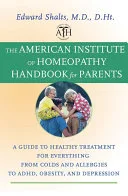
The American Institute of Homeopathy Handbook for Parents
 76
76

The American Institute of Homeopathy Handbook for Parents
Edward Shalts' handbook presents homeopathy as a viable alternative for parents wary of aggressive conventional pediatric treatments. The book’s strength lies in its clear, methodical explanation of homeopathic principles, making a complex system accessible. Shalts, an M.D. with a D.Ht., lends credibility by bridging conventional medical understanding with homeopathic practice. A notable passage details the selection of *Pulsatilla* for specific emotional and physical symptoms in children, illustrating the individualized nature of remedy selection. However, the work's primary limitation is its inherent reliance on the principles of homeopathy, which, while accepted by some, remains outside the purview of evidence-based medicine for many. The book is a valuable resource for those already inclined towards or open to homeopathic care, offering practical guidance rooted in its foundational tenets.
📝 Description
76
This 2003 handbook details homeopathic remedies for childhood ailments.
Edward Shalts, M.D., D.Ht., wrote this guide for parents seeking alternatives to conventional pediatric medicine. It explains homeopathic principles and offers a step-by-step method for applying remedies to common childhood health issues. The book emphasizes a gentle, individualized approach to treatment, contrasting with the frequent use of pharmaceuticals in mainstream care.
The American Institute of Homeopathy, the oldest medical organization in the United States, endorses this handbook. It addresses parental concerns about widespread prescriptions for stimulants, antidepressants, and antibiotics in children. The guide aims to equip parents with the knowledge to select and administer remedies, encouraging a more proactive role in their children's health through naturalistic methods.
Homeopathy, originating in late 18th century Germany with Samuel Hahnemann, is a system of alternative medicine. It operates on the principle of 'like cures like,' using highly diluted substances to stimulate the body's self-healing mechanisms. This approach contrasts with allopathic medicine's use of drugs to counteract symptoms. The handbook places homeopathy within a broader tradition of vitalist or energetic healing, focusing on restoring balance rather than solely suppressing disease manifestations.
💡 Why Read This Book?
• Learn how to identify and select appropriate homeopathic remedies for common childhood conditions, as outlined in Dr. Shalts' step-by-step method, providing a practical toolkit for home use. • Understand the historical context of the American Institute of Homeopathy (AIH), founded in 1844, and its enduring advocacy for alternative medical approaches distinct from conventional practices. • Gain insight into individualized treatment, a core homeopathic concept emphasizing symptom similarity and patient-specific care, moving beyond generalized pharmaceutical interventions.
⭐ Reader Reviews
Honest opinions from readers who have explored this book.
❓ Frequently Asked Questions
What is the historical significance of the American Institute of Homeopathy (AIH) mentioned in the book?
The American Institute of Homeopathy (AIH) is the oldest medical organization in the United States, established in 1844, three years before the American Medical Association, championing homeopathic principles.
Who is Edward Shalts, M.D., D.Ht. and what is his background?
Edward Shalts is a medical doctor and a Doctor of Homeopathic Therapy (D.Ht.), bringing a dual perspective to the practice and explanation of homeopathy in the handbook.
What kind of medical interventions does the handbook offer an alternative to?
The handbook presents homeopathy as an alternative to conventional medical measures such as stimulants, antidepressants, and the overuse of antibiotics for children.
Is this handbook suitable for complete beginners to homeopathy?
Yes, the book is designed for parents, offering a step-by-step approach, making it accessible for those new to homeopathic principles and practices.
When was 'The American Institute of Homeopathy Handbook for Parents' first published?
The book was first published on January 13, 2011, reflecting a modern compilation of homeopathic knowledge for families.
What is the core philosophy presented regarding children's health?
The core philosophy emphasizes offering parents another option, focusing on individualized and less extreme measures compared to widespread conventional treatments.
🔮 Key Themes & Symbolism
Homeopathic Philosophy for Children
The book introduces parents to the fundamental principles of homeopathy, emphasizing its individualized approach to treatment. Unlike conventional medicine's often one-size-fits-all approach, homeopathy focuses on the unique symptom picture of each child. This section explains how remedies are chosen based on a totality of symptoms—physical, mental, and emotional—to stimulate the body's inherent healing capacity. It highlights the gentle nature of homeopathic interventions, aiming to support rather than suppress symptoms, offering a distinct paradigm for pediatric health management.
Parental Empowerment and Choice
A central theme is the empowerment of parents seeking alternatives to standard medical protocols. The handbook addresses concerns about the side effects and overuse of pharmaceuticals in children's healthcare. By providing clear, actionable information, it equips parents with the knowledge to explore homeopathic options confidently. The work positions homeopathy as a viable, informed choice for parents who are hesitant about aggressive treatments like antibiotics or psychotropic medications, fostering a sense of agency in their child's well-being.
Historical Medical Context
The book situates homeopathy within its historical lineage, particularly through the lens of the American Institute of Homeopathy (AIH). Founded in 1844, the AIH represents one of the oldest medical organizations in the U.S., predating the AMA. This historical context underscores homeopathy's long-standing presence and its role as a persistent alternative medical system. The handbook draws on this legacy to present homeopathy not as a novel fad, but as a time-tested approach to health that has offered a different path for centuries.
Practical Application of Remedies
This theme focuses on the practical 'how-to' of homeopathic care for families. It moves beyond theory to offer concrete guidance on selecting and administering remedies for common childhood ailments. The step-by-step methodology aims to clarify the process, making it accessible even for those with no prior homeopathic experience. The goal is to provide parents with a functional understanding that allows them to utilize homeopathic first-aid effectively within the home environment.
💬 Memorable Quotes
Direct passages from the work, attributed to the author.
“The American Institute of Homeopathy offers another option for parents reluctant to participate in widespread extreme measures of conventional medicine.”
— This statement frames the handbook's purpose as providing an alternative, particularly for parents concerned about the intensity or side effects of conventional treatments for their children.
“Step-by-step Edward Shalts, a medical doctor who practices homeopathy, guides parents through the process.”
— This highlights the author's dual qualification and the book's structured, educational approach designed to make homeopathic practice understandable and actionable for a lay audience.
“AIH is the oldest medical organization in the United States, founded three years before the American Medical Association.”
— This fact establishes the historical legitimacy and longevity of the homeopathic movement within American medicine, contrasting its origins with the more widely recognized AMA.
“The handbook provides an option for parents hesitant about stimulants, antidepressants, and overuse of antibiotics.”
— This directly addresses parental anxieties regarding specific pharmaceutical interventions common in pediatrics, positioning homeopathy as a gentler alternative.
“Edward Shalts, M.D., D.Ht., offers a guide for parents.”
— This emphasizes the author's credentials and the book's specific target audience, indicating that it is written from a professional perspective for non-professionals.
🌙 Esoteric Significance
Tradition
Homeopathy, while often presented as a medical system, carries esoteric undertones related to vitalism and energetic principles, aligning with certain Hermetic and vitalist traditions. It posits a 'vital force' that animates living beings, a concept found in various mystical philosophies. The practice of using highly diluted substances, where the 'essence' or 'spirit' of the remedy is believed to be active, echoes alchemical ideas of potentization and the extraction of medicinal virtues. This focus on energetic signatures rather than gross material effects places it adjacent to, though distinct from, more overtly spiritual or magical practices.
Symbolism
A key symbolic concept in homeopathy is 'similia similibus curentur' (like cures like), which implies a sympathetic resonance or energetic correspondence between the remedy's provings and the patient's symptoms. The extreme dilution of remedies, often beyond the point of containing any original molecules (Avogadro's limit), symbolizes the idea of an energetic imprint or information transfer, akin to energetic signatures in magical or esoteric traditions. The 'vital force' itself acts as a symbolic representation of inherent life energy, a common motif in vitalistic and spiritual philosophies across cultures.
Modern Relevance
In contemporary wellness culture, homeopathy continues to be relevant for individuals seeking naturalistic and individualized health approaches, resonating with movements like the New Age and holistic health. Thinkers and practitioners in complementary and alternative medicine (CAM) often reference homeopathic principles when discussing energetic healing, mind-body connections, and the limitations of purely materialistic medical paradigms. Its emphasis on patient-centered care and non-suppressive treatment aligns with modern trends in integrative medicine, even as its scientific basis remains debated.
👥 Who Should Read This Book
• Parents seeking non-pharmaceutical options for their children's health issues, who are interested in understanding the principles and practical application of homeopathy. • Individuals curious about the history of alternative medicine in the United States and the enduring influence of organizations like the American Institute of Homeopathy (AIH). • Medical practitioners or students interested in comparative medical systems and exploring approaches that differ significantly from conventional allopathic treatment models.
📜 Historical Context
Published in 2011, Edward Shalts' handbook emerged during a period of increasing parental skepticism towards conventional medicine's aggressive interventions, particularly concerning antibiotics and psychotropic medications for children. The work draws upon the legacy of the American Institute of Homeopathy (AIH), an organization founded in 1844. This date places homeopathy's organized presence in America significantly before the establishment of the American Medical Association (AMA) in 1847. The AIH represented a distinct school of thought, advocating for 'like cures like' (similia similibus curentur) and individualized treatment, often in contrast to the increasingly interventionist and pharmacologically focused trajectory of allopathic medicine championed by figures like Samuel D. Gross, a prominent surgeon of the era. While homeopathy experienced periods of popularity in the 19th century, by the early 21st century, it was largely considered a fringe practice by the mainstream medical establishment, facing criticism for its lack of empirical validation according to conventional scientific standards.
📔 Journal Prompts
The AIH's historical position as an alternative medical organization.
Edward Shalts' dual role as M.D. and D.Ht. in presenting homeopathic care.
The concept of offering 'another option' beyond conventional pediatric medicine.
Step-by-step guidance for parents in selecting homeopathic remedies.
Parental reluctance towards specific conventional treatments like antibiotics.
🗂️ Glossary
Homeopathy
A system of alternative medicine based on the principle of 'like cures like' (similia similibus curentur), using highly diluted substances believed to stimulate the body's own healing mechanisms.
American Institute of Homeopathy (AIH)
The oldest national medical organization in the United States, founded in 1844, dedicated to the promotion and practice of homeopathic medicine.
M.D.
Abbreviation for Doctor of Medicine, a professional degree qualifying an individual to practice conventional medicine.
D.Ht.
Abbreviation for Doctor of Homeopathic Therapy, indicating specialized training and certification in homeopathic medicine.
Conventional Medicine
The mainstream system of medical practice, often referred to as allopathic medicine, based on scientifically validated treatments, pharmaceuticals, and surgical procedures.
Remedy
In homeopathy, a substance prepared according to homeopathic principles, used to treat a specific set of symptoms.
Similia Similibus Curentur
Latin for 'like cures like,' the fundamental principle of homeopathy, suggesting that a substance causing symptoms in a healthy person can cure similar symptoms in a sick person.