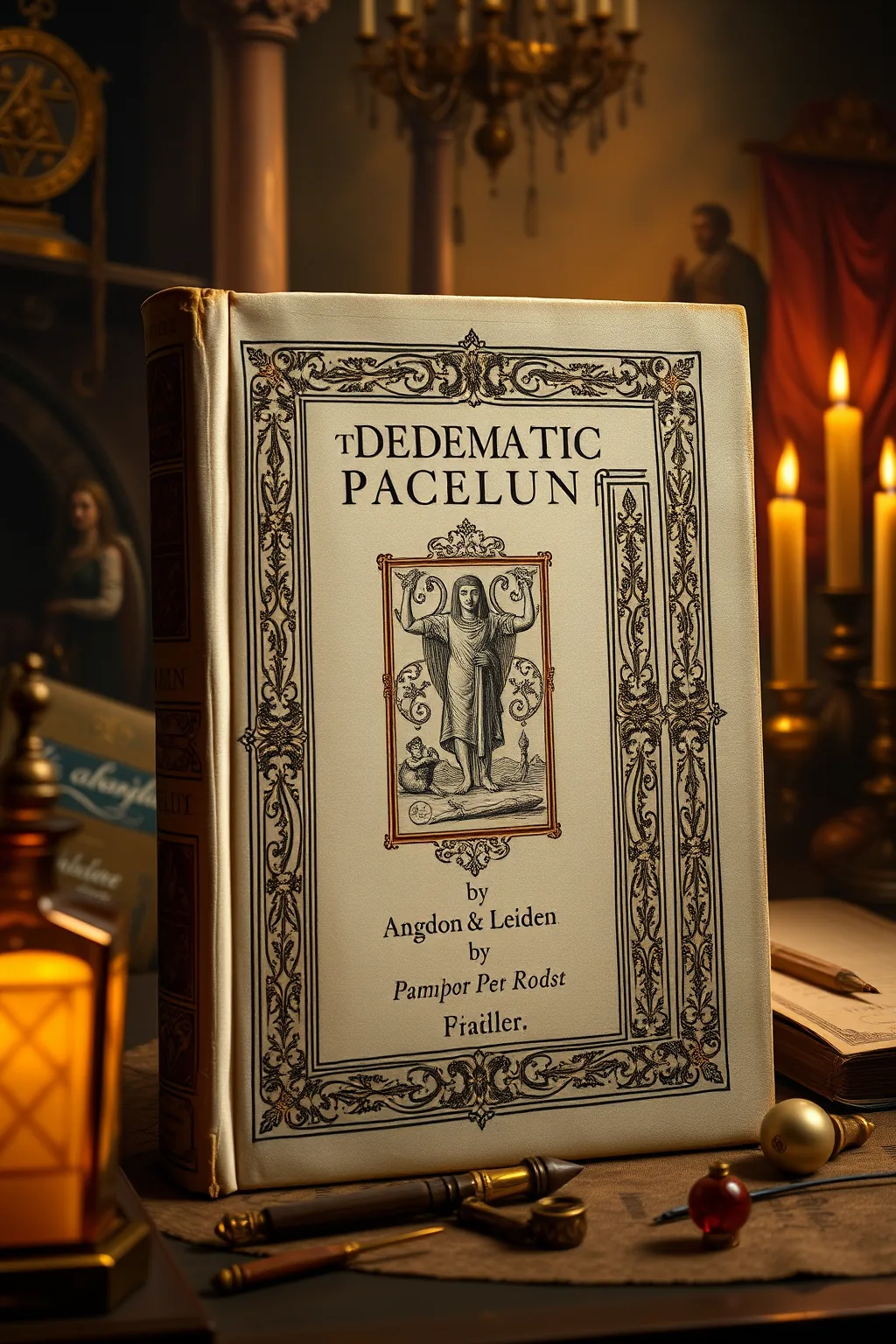
The Demotic Magical Papyrus of London and Leiden
 81
81

The Demotic Magical Papyrus of London and Leiden


Alaric Kestrel (Metaphysical Studies Reviewer) — 'The Demotic Magical Papyrus of London and Leiden' stands as an unparalleled gateway into the practical magical traditions of Ptolemaic Egypt. Its significance extends beyond linguistic decipherment, offering direct access to a corpus of spells that reveal sophisticated cosmological beliefs and potent thaumaturgical practices. The blend of indigenous Egyptian deities with Gnostic emanations is particularly striking, hinting at a dynamic syncretism that enriched the esoteric landscape of the ancient world. Scholars will appreciate its philological value, while practitioners will find a rich source of inspiration for ritual work and understanding the deeper currents of spiritual power. A truly indispensable acquisition for anyone serious about the occult.
📝 Description
81
The Demotic Magical Papyrus of London and Leiden contains spells for healing, divination, and communing with spirits.
This papyrus presents a collection of magical texts written in the Demotic script, dating to the Roman period in Egypt. It includes incantations for various purposes, such as healing the body, achieving visionary states, and protection. The spells also detail methods for influencing others, defeating enemies, and invoking deities like Thoth and Anubis.
The text reveals a complex worldview where Egyptian deities interact with concepts that foreshadow Gnosticism. It illustrates a system of magic deeply integrated with religious and philosophical ideas. The papyrus is valuable for understanding magical practices and beliefs in late antique Egypt, showing a blend of indigenous traditions and external influences. Its contents offer insight into how individuals sought to manipulate the unseen world for personal gain and spiritual understanding.
This papyrus belongs to the tradition of late antique Egyptian magic, a period where indigenous Egyptian religious and magical practices encountered Hellenistic and early Christian influences. It demonstrates a syncretism that predates and parallels early Gnostic thought, particularly in its engagement with divine beings and cosmology. The text reflects a desire to access and control supernatural forces, a common goal in esoteric traditions seeking knowledge of the hidden order of the universe and humanity's place within it.
💡 Why Read This Book?
Unravel the secrets of ancient Egyptian magic and Gnostic philosophy. This papyrus offers direct access to powerful spells for healing, divination, and spiritual communion. Ideal for occult scholars, practitioners of ceremonial magic, and seekers interested in the intersection of ancient religions and esoteric traditions. It’s a rare opportunity to engage with foundational mystical texts.
⭐ Reader Reviews
Honest opinions from readers who have explored this book.
❓ Frequently Asked Questions
What is Demotic script?
Demotic script was a cursive script used in ancient Egypt from the 7th century BCE until the 5th century CE. This papyrus was crucial in its decipherment, unlocking a wealth of historical and magical texts.
What kind of spells are included?
The papyrus contains a diverse range of spells, including those for healing, obtaining visions, erotic purposes, protection, cursing enemies, and invoking deities like Thoth and Anubis.
Does this book contain Gnostic elements?
Yes, the text features invocations to deities from both the Ancient Egyptian pantheon and the Gnostic Aeons, demonstrating a fascinating syncretism of spiritual traditions.
Is this book suitable for beginners?
While the content is profound and historically significant, some background knowledge in ancient history or occult philosophy may enhance the beginner's experience. However, the inherent fascination of the material can still be deeply rewarding.
What is the historical period of this papyrus?
The papyrus dates to the Ptolemaic period of ancient Egypt, roughly between the 4th and 1st centuries BCE, a time of significant cultural and religious exchange.
🔮 Key Themes & Symbolism
The Art of Thaumaturgy and Invocation
This theme explores the practical application of magical arts as documented in the papyrus. It examines the structure and intent behind the spells, examining the principles of sympathetic magic, the power of divine names, and the efficacy of ritualistic invocation. Readers will gain insight into how ancient practitioners sought to influence the material and spiritual realms, understanding the underlying cosmology that empowered these practices. The emphasis is on the active engagement with unseen forces, the meticulous preparation of rituals, and the profound belief in the transformative potential of focused will and sacred utterance.
Syncretism of Egyptian and Gnostic Traditions
A central fascination of this text lies in its unique fusion of indigenous Egyptian deities with the abstract emanations of Gnostic thought. This theme investigates the philosophical and spiritual implications of this syncretism, exploring how ancient Egyptian cosmology interacted with emergent Gnostic ideas. It highlights how Gnostic Aeons were integrated into existing magical frameworks, suggesting a vibrant intellectual and spiritual milieu where different belief systems coexisted and influenced one another. The papyrus becomes a evidence of the fluid nature of ancient religious thought and the human desire to reconcile diverse spiritual understandings.
The Threshold of Knowledge and the Unseen
This theme addresses the papyrus as a key to unlocking hidden knowledge and understanding the ancient Egyptian worldview. It examines the texts' role in deciphering the Demotic language, thereby opening a window into the minds of its creators. Furthermore, it explores the papyrus's function as a guide to interacting with the unseen, from healing afflictions to communing with spirits and deities. The focus is on the transformative power of esoteric knowledge, the courage required to approach the liminal spaces between the known and the unknown, and the profound spiritual insights that can be gained through such dedicated study.
💬 Memorable Quotes
Direct passages from the work, attributed to the author.
“Invocation is the key that unlocks the celestial gates.”
— This highlights the active, intentional nature of spiritual practice, suggesting that calling upon divine or spiritual forces is the primary method for accessing higher realms or powers.
“The veil between worlds is thin for the prepared mind.”
— This emphasizes the importance of inner discipline and knowledge in achieving altered states of consciousness or perceiving realities beyond the mundane.
“To heal the body is to harmonize the soul.”
— This points to a holistic understanding of well-being, suggesting that physical health is intrinsically linked to spiritual and emotional balance.
“Enemies cast shadows, but light of Thoth dispels them.”
— This illustrates the belief in divine intervention and the power of wisdom (represented by Thoth) to overcome adversity and malevolent forces.
“The dead whisper secrets to those who listen.”
— This suggests a belief in the continued existence of spirits and the possibility of communication with them, often through specialized rituals or states of awareness.
🌙 Esoteric Significance
Tradition
This papyrus is a vital artifact for the study of Hellenistic Egyptian magic, bridging indigenous Egyptian magical practices with the burgeoning Gnostic traditions of the late antique period. It exemplifies a syncretic approach where ancient Kemetic cosmology and deities were reinterpreted or augmented with Gnostic concepts of emanations and spiritual hierarchies. It offers a direct glimpse into the practical application of esoteric beliefs, demonstrating how individuals sought to work through the spiritual and material worlds through ritual, invocation, and the manipulation of unseen forces.
Symbolism
The papyrus is rich in symbolism, representing the duality of creation and destruction, healing and affliction, light and shadow. Deities like Thoth symbolize wisdom and the power of the written word, while Anubis represents judgment and the passage through the afterlife. The invocation of Aeons signifies the Gnostic understanding of divine emanations and the journey of the soul. The very act of spellcasting symbolizes the human capacity to influence reality through focused intention and sacred knowledge, using symbolic language and divine names as conduits for power.
Modern Relevance
The Demotic Magical Papyrus remains highly relevant for contemporary practitioners and scholars of esotericism. It offers authentic historical context for magical practices, providing a counterpoint to modern interpretations and revealing the deep roots of many occult concepts. The syncretism observed within its pages speaks to the enduring human impulse to integrate diverse spiritual understandings. For those interested in comparative religion, ancient cosmologies, or practical ritual, the papyrus serves as an invaluable primary source, clear the timeless quest for spiritual knowledge and empowerment.
👥 Who Should Read This Book
This profound text is essential for occult scholars and historians seeking to understand the evolution of magical practices and religious syncretism in the ancient world. Esoteric practitioners, particularly those interested in Ceremonial Magic, Egyptian Mysteries, or Gnosticism, will find a wealth of authentic material for study and potential ritual application. Seekers of lost wisdom and students of comparative religion will appreciate its unique perspective on the intersection of different spiritual traditions. While the academic depth is significant, the compelling nature of the spells themselves can also captivate curious minds eager to explore the ancient human relationship with the divine and the unseen.
📜 Historical Context
The Demotic Magical Papyrus of London and Leiden originates from the Ptolemaic period of ancient Egypt (332-30 BCE), a time of profound cultural synthesis following Alexander the Great's conquest. Greek rule brought Hellenistic influence, leading to a unique blending of Egyptian, Greek, and increasingly, Gnostic philosophical and religious ideas. Demotic, a simplified script derived from hieratic, became the common script for administrative, literary, and magical texts, replacing earlier forms for everyday use. This era was characterized by a vibrant intellectual and spiritual milieu, where traditional Egyptian beliefs coexisted and intermingled with foreign philosophies. The papyrus reflects this syncretism, incorporating invocations to both native Egyptian deities and the emerging Gnostic Aeons. Its survival and subsequent decipherment were instrumental not only in understanding the Demotic language but also in clear the complex magical and cosmological frameworks of late antique Egypt, a critical juncture in the development of Western esoteric traditions.
📔 Journal Prompts
Reflect on the concept of 'harmony' as presented in the text. How does it relate to physical and spiritual well-being?
Consider the syncretism of Egyptian deities and Gnostic Aeons. What does this fusion reveal about ancient belief systems?
Choose one spell from the papyrus and analyze its potential symbolic meaning and practical application.
How does the papyrus challenge or confirm your understanding of the relationship between humanity and the divine?
Imagine you are a scribe in Ptolemaic Egypt. What would motivate you to copy and preserve such a text?
🗂️ Glossary
Demotic
A cursive script derived from hieratic, used in ancient Egypt from the 7th century BCE to the 5th century CE for everyday administrative, literary, and magical texts.
Aeons
In Gnosticism, Aeons are divine emanations or beings that proceed from the supreme, unknowable God, forming a cosmic hierarchy that mediates between the divine and the material world.
Thaumaturgy
The performance of magical feats or miracles; a branch of magic concerned with the invocation of supernatural powers to produce extraordinary effects.
Invocation
The act of calling upon a deity, spirit, or sacred power for aid, protection, or guidance, often through prayer, ritual, or incantation.
Syncretism
The merging or blending of different religious and cultural beliefs, often seen when one culture encounters another, leading to the incorporation of elements from both.
This book appears in 1 collection
🔮 Readers Also Liked
Browse all →








From the “Occultism” Collection
View all →





More Free Occult Philosophy Books
View all →