Lucid dreaming
 82
82

Lucid dreaming
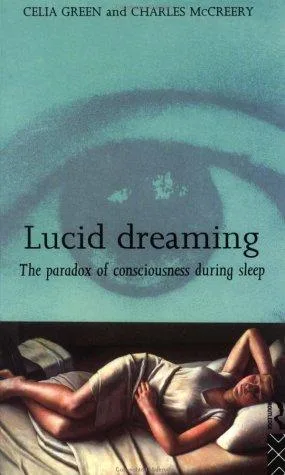
Celia Elizabeth Green’s "Lucid Dreaming" presents a highly structured, almost anthropological, cataloging of the lucid dream state. Her meticulous categorization of experiences, distinguishing between different degrees of awareness and control within the dream, is its primary strength. The book is less a guide to achieving lucidity and more an analytical study of its occurrence, which can be both a strength and a limitation. For readers expecting practical techniques, the lack of explicit instructions might be a drawback. However, Green's detailed observations, particularly her descriptions of the sensory qualities experienced during a lucid dream, offer a unique window into this specific subjective territory. The work’s value lies in its systematic approach, providing a foundational text for understanding the phenomenology of lucid dreaming before the advent of more widely disseminated popular guides.
📝 Description
82
Celia Elizabeth Green published 'Lucid Dreaming' in 1994, cataloging conscious awareness within sleep.
Celia Elizabeth Green's 1994 book, 'Lucid Dreaming,' examines conscious awareness during sleep. Green treats this phenomenon not as a mere curiosity but as a subject for systematic research. Her method is analytical and empirical, seeking to record and comprehend the conditions, characteristics, and possible effects of achieving lucidity while asleep.
This book is for readers who approach esoteric subjects with a critical and curious mind. It will interest researchers, psychologists, and anyone concerned with the scientific and philosophical aspects of consciousness, particularly in altered states like dreaming. Those who wonder about the limits of perception and the potential for self awareness outside waking life will find Green's careful study useful.
Published in 1994, 'Lucid Dreaming' follows a history of interest in consciousness studies and parapsychology. While figures like Marquis d'Hervey de Saint-Denys discussed lucid dreaming in the 19th century and researchers like Stephen LaBerge studied it later, Green offered a detached, observational stance. Her work fits within a wider intellectual field including Western Esotericism and early dream analysis, yet it stands apart with its empirical focus.
💡 Why Read This Book?
• Gain an understanding of the systematic categorization of lucid dream phenomena, as Green meticulously breaks down different levels of awareness and control observed since the work's 1994 publication. • Explore the subjective qualities of lucid dreams through detailed observational accounts, offering insights into the sensory landscape of these experiences that go beyond simple narrative. • Appreciate the intellectual context of consciousness research in the late 20th century, recognizing Green's contribution to the empirical study of altered states prior to widespread popularization.
⭐ Reader Reviews
Honest opinions from readers who have explored this book.
❓ Frequently Asked Questions
What is the primary focus of Celia Elizabeth Green's 'Lucid Dreaming'?
The book's primary focus is the systematic, analytical study and cataloging of the lucid dream state. It explores the conditions, characteristics, and subjective phenomenology of achieving awareness within dreams rather than providing direct instruction on how to induce it.
When was Celia Elizabeth Green's 'Lucid Dreaming' first published?
Celia Elizabeth Green's 'Lucid Dreaming' was first published in 1994.
Does 'Lucid Dreaming' offer practical techniques for inducing lucidity?
No, the book is primarily an analytical and observational study. While it describes the phenomenon in detail, it does not offer explicit step-by-step techniques for inducing lucid dreams, differentiating it from more instructional guides.
Who is Celia Elizabeth Green?
Celia Elizabeth Green is a researcher known for her work on unusual states of consciousness, including lucid dreaming, out-of-body experiences, and hallucinations. Her approach is typically empirical and analytical.
What is the historical significance of 'Lucid Dreaming'?
Published in 1994, the book contributes to the scientific and philosophical discourse on consciousness by offering a structured, empirical examination of lucid dreaming during a period of growing interest in such phenomena.
How does Green's work compare to other writings on lucid dreaming?
Green's work is distinguished by its rigorous, detached observational stance, focusing on cataloging and analyzing the phenomenon itself, often preceding more popular, instructional texts that emerged later.
🔮 Key Themes & Symbolism
Phenomenology of Lucidity
The work meticulously dissects the subjective experience of lucid dreaming. Green outlines various degrees of lucidity, from a fleeting recognition of dreaming to full conscious engagement within the dreamscape. She details the sensory perceptions, the cognitive shifts, and the emotional responses characteristic of these states. This focus on the 'what it feels like' provides a rich, empirical basis for understanding the internal field of the dreaming mind, moving beyond simple anecdotal accounts to a more structured analysis of conscious awareness during sleep.
Classification of Dream States
A significant aspect of Green's research involves creating a taxonomy for different dream experiences. She distinguishes between ordinary dreaming, precognitive dreams, and various forms of lucid dreaming, including those with potential volitional control. This classificatory approach aims to bring scientific rigor to the study of subjective phenomena, enabling clearer communication and comparison among researchers. By defining terms and delineating boundaries between states, the book provides a framework for further investigation into the nature of consciousness and perception.
Consciousness as a Research Subject
Green positions lucid dreaming as a unique laboratory for examining consciousness itself. The ability to achieve awareness and potentially exert influence within a dream challenges conventional notions of the self and its boundaries. The book implicitly argues that the study of altered states offers clear insights into the fundamental mechanisms of waking consciousness. It encourages a view of the mind as more fluid and many-sided than typically assumed, with the dream state serving as a critical domain for empirical exploration of subjective experience.
Empirical Approach to the Unseen
The book champions an empirical methodology for investigating phenomena that are inherently private and difficult to measure. Green's commitment to systematic observation and detailed reporting, even for subjective experiences, underscores a desire to bridge the gap between the esoteric and the scientific. This approach seeks to validate and understand unusual states of consciousness through careful documentation and analysis, laying groundwork for a more objective understanding of subjective realities and challenging the perception that such topics are beyond scientific inquiry.
💬 Memorable Quotes
Direct passages from the work, attributed to the author.
“The lucid dream is a state in which the dreamer is aware that he is dreaming.”
— This is the fundamental definition Green establishes, serving as the bedrock for all subsequent analysis. It highlights the core distinction between ordinary, passive dreaming and the active, conscious engagement characteristic of lucidity.
“There are varying degrees of lucidity.”
— This observation acknowledges the spectrum of awareness possible within a dream. It suggests that lucidity is not an all-or-nothing phenomenon but can manifest with different intensities and levels of clarity.
“The dream environment may sometimes be perceived with unusual vividness.”
— This points to the heightened sensory fidelity that can occur in lucid dreams, indicating that the subjective experience can be as rich, or even richer, than waking reality.
“The implications for understanding consciousness are considerable.”
— Green suggests that by studying the mechanics and subjective reality of lucid dreams, we can gain significant insights into the nature and capabilities of consciousness itself.
“Systematic cataloging is essential for progress.”
— This reflects Green's methodological commitment. She emphasizes the need for organized data collection and classification to advance the scientific understanding of dream states and consciousness.
🌙 Esoteric Significance
Tradition
While not strictly adhering to a single esoteric lineage, Green's work engages with themes common in Western Esotericism, particularly those concerning the nature of consciousness and the exploration of non-ordinary states of awareness. It shares an interest with traditions like Theosophy or certain branches of Hermeticism in investigating realities beyond the physically manifest. However, Green departs from many esoteric traditions by prioritizing empirical observation and systematic cataloging over mystical revelation or ritualistic practice, seeking to ground these experiences in verifiable human perception.
Symbolism
The primary 'symbol' explored is the dream state itself, which functions as a potent metaphor for the subconscious, the latent potential of the mind, and a space where conventional reality can be suspended or altered. The act of becoming lucid within a dream can be seen as a symbol of self-awareness and inner awakening, the attainment of conscious control over one's internal landscape. The dream environment, often fluid and surreal, represents the unconstrained nature of consciousness when detached from the rigid structures of waking perception.
Modern Relevance
Green's meticulous cataloging and analytical approach remain relevant for contemporary researchers in psychology, neuroscience, and consciousness studies. Her work provides a historical baseline for understanding the empirical study of lucid dreaming. Modern practices in lucid dreaming, often integrated into mindfulness and self-development, can draw from her foundational descriptions of dream phenomenology. Thinkers exploring the simulation hypothesis or the nature of virtual reality may also find resonance in her examinations of subjectively convincing, yet internally generated, realities.
👥 Who Should Read This Book
• Aspiring researchers of consciousness and altered states seeking a systematic, observational framework for understanding phenomena like lucid dreaming. • Individuals interested in the psychological and philosophical implications of dream states who appreciate an analytical, non-dogmatic approach. • Students of esoteric psychology looking to bridge empirical observation with explorations of the mind's deeper capacities beyond the waking self.
📜 Historical Context
Celia Elizabeth Green's "Lucid Dreaming," first published in 1994, arrived at a key moment for consciousness studies. While the late 20th century saw a resurgence of interest in altered states, often influenced by the counterculture movements of the 1960s and 70s, Green's work maintained a distinctively analytical and empirical stance. This contrasted with more mystical or purely experiential approaches to dreaming prevalent in some esoteric circles. Her research built upon earlier, often solitary, investigations into phenomena like out-of-body experiences and lucid dreaming, but she sought to frame them within a systematic, almost sociological, observational framework. Figures like Stephen LaBerge were concurrently making significant strides with scientific research into lucid dreaming using EEG monitoring, providing a parallel but distinct scientific validation. Green's contribution lies in her detailed cataloging and classification of subjective reports, offering a foundational text for understanding the phenomenology of lucidity prior to its widespread popularization.
📔 Journal Prompts
The subjective vividness of the dream environment experienced during lucidity.
The various degrees of awareness reported within the lucid dream state.
The potential for control within a lucid dream scenario.
The distinction between ordinary dreaming and lucid dreaming.
The implications of lucid dreaming for understanding consciousness.
🗂️ Glossary
Lucid Dreaming
A state of consciousness in which the dreamer is aware that they are dreaming, often accompanied by varying degrees of control over the dream's content or environment.
Phenomenology
The study of subjective experience and consciousness, focusing on the way things appear to individuals. In this context, it refers to the detailed description of what it is like to be lucid in a dream.
Volitional Control
The capacity to intentionally direct one's actions, thoughts, or the unfolding of events within a dream state. This is a key aspect distinguishing different levels of lucidity.
Dream Environment
The perceived setting, objects, and characters within a dream. In lucid dreaming, this environment can sometimes be experienced with heightened realism or manipulated by the dreamer.
Precognitive Dream
A dream that is believed to foretell future events. Green's work sometimes contrasts lucid dreaming with other types of unusual dream experiences.
Cataloging
The systematic process of recording and classifying observations. Green employs this method to organize data on lucid dream experiences.
Altered State of Consciousness
Any state of consciousness that differs significantly from the normal waking state, including dreams, hypnosis, or meditative states.
🔮 Readers Also Liked
Browse all →








More by Celia Elizabeth Green
All books →

More Free Occult Philosophy Books
View all →