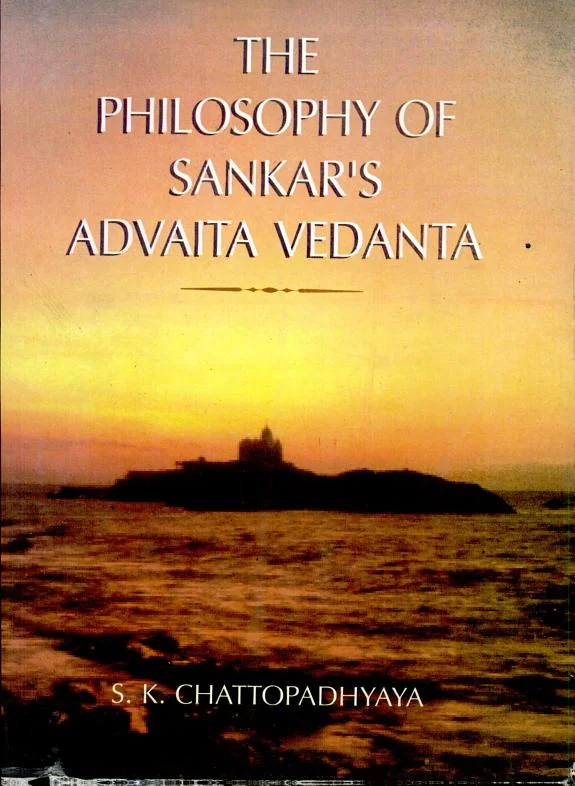
The Philosophy of Sankar's Advaita Vedanta
 72
72

The Philosophy of Sankar's Advaita Vedanta
Shyama Kumar Chattopadhyaya's study of Sankaracarya's Sarirakamimamsabhashya provides a valuable, if dense, exploration of Advaita Vedanta's philosophical underpinnings. The author's commitment to analyzing Sankaracarya's own exegetical work, rather than secondary interpretations, is a significant strength. The treatment of *avidya* (ignorance) as the root of suffering and the perceived duality of existence is particularly well-articulated, drawing directly from Sankaracarya's linguistic precision. However, the book’s scholarly rigor can sometimes render it less accessible to those not already steeped in Sanskrit philosophical terminology or the specific hermeneutics of Vedanta commentaries. While the book clearly explains Sankaracarya's refutation of other philosophical schools, the absence of comparative analysis with contemporary Buddhist schools, for instance, might leave a gap for readers seeking broader intellectual context. Ultimately, this is a serious academic work for dedicated students of Advaita, offering deep engagement with a crucial text.
📝 Description
72
Shyama Kumar Chattopadhyaya's 2000 book examines Sankaracarya's Sarirakamimamsabhashya.
This 2000 publication by Shyama Kumar Chattopadhyaya offers a close reading of Sankaracarya's Sarirakamimamsabhashya, the commentary on the Brahma Sutras that is central to Advaita Vedanta. The book works to clarify the philosophical structure of Advaita Vedanta, a school of Hindu thought that asserts the oneness of the individual self, Atman, and the supreme reality, Brahman.
Chattopadhyaya's work is directed toward students and academics of Indian philosophy, particularly those focused on the Vedanta lineage and the thought of Adi Shankaracharya. It suits readers who want a thorough scholarly analysis of Advaita metaphysics, its theories of knowledge, and its views on liberation. The treatment moves past basic introductions to engage directly with the primary interpretive texts.
The analysis considers Sankaracarya's arguments on the nature of existence, the limits of sensory perception, and the ultimate identity between Atman and Brahman, all as laid out in his commentary on the Brahma Sutras. It also addresses the concept of Maya, or illusion, which accounts for the appearance of a diverse world, and the process of achieving moksha, or freedom, by realizing this fundamental non-duality.
This book engages with the Advaita Vedanta tradition, a major school of Hindu philosophy established by Adi Shankaracharya in the 8th century. Shankaracharya's commentaries on foundational texts like the Upanishads, Bhagavad Gita, and Brahma Sutras profoundly shaped Indian intellectual history. Chattopadhyaya's focus on the Sarirakamimamsabhashya places the work within the classical Indian tradition of philosophical interpretation, which is known for its systematic dialectic and close textual analysis. This lineage emphasizes rigorous debate and the precise understanding of scripture to arrive at metaphysical truths.
💡 Why Read This Book?
• Gain a precise understanding of *Brahman* and *Atman* as presented in Sankaracarya's commentary on the Brahma Sutras, moving beyond popular notions of non-duality. • Grasp the concept of *Maya* as Sankaracarya elaborates it, learning how it functions to obscure the true nature of reality and the self. • Follow Sankaracarya's refutations of opposing philosophical viewpoints, understanding the dialectical method employed to establish Advaita's claims.
⭐ Reader Reviews
Honest opinions from readers who have explored this book.
❓ Frequently Asked Questions
What is the primary text analyzed in The Philosophy of Sankar's Advaita Vedanta?
The book's central focus is Sarirakamimamsabhashya, the influential commentary on the Brahma Sutras written by the 8th-century philosopher Sankaracarya.
Who was Sankaracarya and why is his philosophy important?
Sankaracarya, also known as Adi Shankaracharya, was a key figure in 8th-century India who systematized and popularized the Advaita Vedanta school of Hindu philosophy, emphasizing the oneness of the individual soul and the absolute.
What is Advaita Vedanta?
Advaita Vedanta is a non-dualistic school of Hindu philosophy that posits the ultimate reality (Brahman) is identical with the individual self (Atman), and that the perceived multiplicity of the world is an illusion (Maya).
What is the significance of the Brahma Sutras?
The Brahma Sutras, compiled by Badarayana, are a foundational text of Vedanta philosophy, systematically outlining Vedic teachings. Sankaracarya's commentary on them is considered authoritative for Advaita Vedanta.
Does this book discuss the practical aspects of Advaita Vedanta?
While the book is primarily a philosophical and exegetical study of Sankaracarya's commentary, it explores concepts like *moksha* (liberation) which are central to the practical realization within Advaita Vedanta.
When was The Philosophy of Sankar's Advaita Vedanta first published?
The book was first published in the year 2000, making it a relatively modern scholarly engagement with classical Advaita Vedanta texts.
🔮 Key Themes & Symbolism
Non-Duality (Advaita)
The central theme is the absolute non-duality of Brahman (the ultimate reality) and Atman (the individual self), as expounded by Sankaracarya. The work examines how Sankaracarya's commentary on the Brahma Sutras systematically argues against any perceived difference between the individual consciousness and the universal consciousness. It unpacks the philosophical implications of this monistic view, where all apparent distinctions are ultimately illusory, leading to a singular, undifferentiated reality beyond empirical perception.
Maya and Illusion
This study deeply engages with the concept of Maya, often translated as illusion or cosmic deception, as a key principle in Advaita Vedanta. It details Sankaracarya's explanation of how Maya accounts for the empirical world's appearance of multiplicity and diversity, despite the underlying non-dual reality of Brahman. The book explores how Maya veils the true nature of the self and the universe, creating the conditions for ignorance (avidya) and the cycle of rebirth.
Epistemology and Knowledge
The philosophy of Sankar's Advaita Vedanta scrutinizes the nature of knowledge and its limitations within the Advaita framework. It focuses on Sankaracarya's critique of empirical knowledge derived from the senses and intellect, which he considered ultimately incapable of revealing Brahman. The work highlights the Advaita emphasis on scriptural authority (shruti) and intuitive realization as the means to attain the direct knowledge of non-duality, transcending conceptual understanding.
Soteriology and Liberation (Moksha)
A significant theme is the Advaita path to liberation, or Moksha, which is understood as the cessation of suffering and the cycle of rebirth. The book elucidates Sankaracarya's perspective that Moksha is not an acquired state but the realization of one's already existing identity with Brahman. This realization is achieved by dispelling ignorance (avidya) through right knowledge, leading to the direct experience of the true Self, free from all limitations.
💬 Memorable Quotes
Direct passages from the work, attributed to the author.
“Brahman is without qualities; any attributed qualities are conceptual overlays.”
— This highlights the Advaita emphasis on Brahman as nirguna (without attributes), meaning it transcends all characteristics and descriptions we can apply through language or thought, which are products of Maya.
“The jiva, or individual soul, is not truly separate from Brahman.”
— This core assertion of Advaita Vedanta underscores that the perceived individuality of the 'jiva' is an illusion; in truth, it is identical to the universal consciousness, Brahman.
“Knowledge of non-duality is the sole means to attain liberation.”
— This reflects the Advaita belief that freedom from suffering and the cycle of rebirth (moksha) is achieved not through rituals or actions, but through the direct, intuitive understanding of the self's identity with Brahman.
“The authority of scripture is paramount in understanding Brahman.”
— This emphasizes the Advaita reliance on Vedic texts, particularly the Upanishads, as a primary source of valid knowledge about Brahman, especially when empirical experience proves insufficient.
💡 Key Ideas
Editorial paraphrase of the work's core concepts — not direct quotes.
The world appears as real due to ignorance, but its ultimate reality is Brahman alone.
This paraphrased concept captures the Advaita Vedanta stance that our everyday experience of a diverse, material world is a superimposition upon the singular, spiritual reality of Brahman, a veil created by our inherent lack of true knowledge.
🌙 Esoteric Significance
Tradition
Advaita Vedanta, as expounded by Sankaracarya, represents a pinnacle of Indian philosophical thought with profound esoteric implications. While not fitting neatly into Western categories like Hermeticism or Kabbalah, its emphasis on the direct realization of the divine within oneself, transcending all duality and conceptualization, aligns with the core aims of many esoteric traditions focused on inner transformation and ultimate truth.
Symbolism
Key symbolic concepts include *Brahman*, representing the undifferentiated, all-pervading Absolute, often symbolized by pure consciousness or emptiness. *Atman* symbolizes the individual spark of this divine consciousness, the true Self. *Maya* is symbolized by a veil or cosmic illusion that obscures the true nature of reality, leading to the appearance of a separate, material world and individual ego.
Modern Relevance
Contemporary thinkers and spiritual practitioners across various disciplines continue to draw from Advaita Vedanta. Its concepts of non-duality and the illusory nature of the ego resonate with modern psychology, particularly in therapeutic approaches focused on self-transcendence. Movements emphasizing mindfulness and consciousness studies often find conceptual parallels in Advaita's exploration of awareness, while Western esotericists frequently reference Sankaracarya's teachings on the unity of existence.
👥 Who Should Read This Book
• Students of comparative religion seeking to understand one of the most influential schools of Hindu philosophy and its metaphysical claims. • Scholars of Indian philosophy and Sanskrit who wish to engage directly with Sankaracarya's authoritative commentary on the Brahma Sutras. • Esoteric practitioners interested in non-dualistic philosophies that explore the nature of consciousness, reality, and liberation through self-realization.
📜 Historical Context
Shyama Kumar Chattopadhyaya's work engages with the intellectual range of 8th-century India, a period marked by vibrant philosophical discourse. Sankaracarya, the central figure, emerged during a time when various heterodox schools, including Buddhism and Jainism, presented significant challenges to Vedic traditions. His systematization of Advaita Vedanta provided a powerful orthodox response. His Sarirakamimamsabhashya, a commentary on Badarayana's Brahma Sutras, was a critical intervention, aiming to reconcile scriptural passages and establish the non-dualistic interpretation of the Vedanta. While specific reception events for Sankaracarya's original work are difficult to pinpoint precisely, its enduring influence across centuries of Indian philosophy is undeniable. His intellectual sparring with Buddhist philosophers, particularly the Madhyamaka and Yogacara schools, shaped the dialectical methods employed in his commentaries, seeking to demonstrate the logical coherence of his non-dualistic worldview against alternative metaphysical systems.
📔 Journal Prompts
The nature of *Maya* as described in Sankaracarya's commentary.
The ultimate identity of *Atman* and *Brahman*.
Sankaracarya's refutation of dualistic viewpoints.
The concept of *Moksha* as realization, not acquisition.
The role of scriptural authority in Advaita epistemology.
🗂️ Glossary
Advaita Vedanta
A school of Hindu philosophy emphasizing the non-duality of the individual self (Atman) and the ultimate reality (Brahman), meaning 'not two'.
Sankaracarya
Also known as Adi Shankaracharya, an 8th-century Indian philosopher and theologian who consolidated the Advaita Vedanta system and wrote seminal commentaries on key Hindu scriptures.
Brahma Sutras
A foundational text of Vedanta philosophy, compiled by Badarayana, that systematically presents philosophical teachings from the Upanishads. Sankaracarya's commentary is highly influential.
Sarirakamimamsabhashya
Sankaracarya's extensive commentary on the Brahma Sutras, considered a definitive exposition of Advaita Vedanta's philosophical arguments.
Atman
The individual self or soul, which in Advaita Vedanta is ultimately identical with Brahman.
Brahman
The ultimate, unchanging reality or supreme consciousness that is the source and substratum of all existence in Advaita Vedanta.
Maya
Cosmic illusion or the power that conceals the true nature of reality (Brahman) and projects the appearance of the manifold world.
This book appears in 1 collection
🔮 Readers Also Liked
Browse all →









From the “Vedanta” Collection
View all →






More Free Occult Philosophy Books
View all →