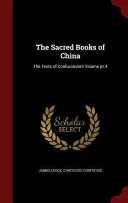
The Sacred Books of China
 74
74

The Sacred Books of China
Legge's translation of the Sacred Books of China is an imposing, if occasionally dated, edifice. The sheer scope, encompassing texts like the *I Ching* and the *Analects*, is its undeniable strength. One feels the weight of centuries in Legge's painstaking rendering, particularly in his annotations that attempt to situate the texts within their historical milieu. However, the language, while precise, can sometimes feel overly Victorian, a barrier to immediate connection with the material. The 1875 publication date is evident in the framing and occasional interpretative biases. A passage detailing the meticulous description of ritual in the *Book of Rites* (part of the Five Classics) highlights both the depth of the original material and the challenge of translating such culturally specific practices. Despite its limitations, this is an indispensable resource for understanding the bedrock of Chinese civilization.
📝 Description
74
James Legge's 1879 translation of Chinese sacred texts introduces Western readers to foundational Eastern thought.
This volume collects key Chinese philosophical and religious writings, translated by James Legge. It includes the Five Classics and the Four Books, texts central to East Asian cultural and spiritual history. Legge, a Scottish missionary, completed these translations in the late 19th century, aiming to make ancient Chinese wisdom accessible to a European audience. His work, published as part of Max Müller's 'Sacred Books of the East' series, bridged Western and Eastern intellectual traditions. The translations offer a direct look at the original writings that have influenced East Asian societies for centuries.
The book covers significant concepts like *Tian* (Heaven), a cosmic and moral order; *Li* (ritual propriety), essential for social harmony; and *Ren* (benevolence), the highest ethical virtue. It details the philosophies of Confucius, Mencius, Laozi, and Zhuangzi, touching on governance, ethics, cosmology, and personal development. This collection is intended for serious students of comparative religion, philosophy, and Sinology, as well as practitioners of Daoism and Confucianism.
These texts form the bedrock of East Asian philosophical and religious traditions, often studied through a lens of esoteric interpretation. Concepts such as the cosmic order of *Tian* and the cultivation of virtue (*Ren*) have been central to mystical and spiritual practices for millennia. The emphasis on ritual (*Li*) and personal cultivation points towards paths of inner transformation and societal harmony that resonate with gnostic and other esoteric schools seeking direct knowledge or union with the divine or ultimate reality.
💡 Why Read This Book?
• Gain direct access to the foundational texts of Confucianism and Daoism, such as the *Analects* and the *Dao De Jing*, to understand their original philosophical underpinnings. • Explore the concept of *Li* (ritual propriety) as presented in the *Book of Rites*, learning how ancient Chinese society sought order through structured social interactions. • Understand the role of *Tian* (Heaven) as depicted in these texts, moving beyond simplistic notions of divinity to grasp its significance as a cosmic and moral principle.
⭐ Reader Reviews
Honest opinions from readers who have explored this book.
❓ Frequently Asked Questions
What is the significance of James Legge's translation of the Sacred Books of China?
James Legge's translation, first published in the late 19th century, was a seminal work that introduced foundational Chinese philosophical and religious texts to the Western world. It remains a significant scholarly resource for understanding these ancient writings.
Which specific books are included in The Sacred Books of China by James Legge?
The collection typically includes the Confucian classics, often referred to as the Four Books (The Great Learning, The Doctrine of the Mean, Analects, Mencius) and the Five Classics (Book of Changes, Book of Documents, Book of Poetry, Book of Rites, Spring and Autumn Annals).
Is The Sacred Books of China in the public domain?
Yes, the original works translated by James Legge are in the public domain in the United States, as they were published well before 1928. Modern editions may have new copyright on introductions or annotations.
What is the concept of 'Ren' as discussed in these texts?
'Ren' (仁) is a central concept, often translated as benevolence, humaneness, or goodness. It represents the highest moral virtue in Confucianism, emphasizing empathy, compassion, and proper conduct towards others.
How does the 'I Ching' (Book of Changes) fit into this collection?
The *I Ching* is one of the Five Classics and is included as a foundational text. It is a complex work of divination, cosmology, and philosophy, featuring hexagrams and their interpretations, deeply influencing Chinese thought.
What was the historical context of Legge's translation efforts?
Legge translated these texts in the late 19th century, a period of increased Western engagement with Asian cultures. His work was part of Max Müller's larger 'Sacred Books of the East' series, aiming to provide scholarly access to non-Western religious traditions.
🔮 Key Themes & Symbolism
Confucian Ethics and Governance
The works attributed to Confucius and his followers, particularly the *Analects* and *Mencius*, lay out a comprehensive ethical system focused on cultivating virtue through *Ren* (benevolence) and *Li* (ritual). Governance is seen as an extension of personal morality, requiring rulers to lead by example and foster social harmony. The texts detail specific virtues like filial piety and loyalty, essential for maintaining societal order and personal cultivation, offering a blueprint for a just and ethical society.
Daoist Philosophy and Naturalism
Texts associated with Daoism, such as the *Dao De Jing* and *Zhuangzi*, present a contrasting yet complementary worldview. They emphasize living in accordance with the *Dao* (the Way), a natural, spontaneous cosmic principle. This involves embracing simplicity, non-action (*wu wei*), and a deep connection with nature, rejecting artificial social conventions and striving for inner peace. The symbolism of water and the uncarved block are central to understanding this philosophy of effortless action and profound understanding.
Cosmology and Divination
The *I Ching* (Book of Changes) stands as a prime example of ancient Chinese cosmology, intertwining philosophical inquiry with methods of divination. It explores the dynamic interplay of opposing forces (Yin and Yang) and their manifestation through 64 hexagrams, representing archetypal situations. This system reflects a view of the universe as constantly in flux, governed by predictable patterns that can be understood and navigated through careful observation and interpretation.
The Role of Ritual and Tradition
Across various texts, the importance of *Li* (ritual, propriety, etiquette) is consistently highlighted. This concept extends beyond mere ceremony to encompass the proper conduct in all social interactions, from family life to state affairs. Adherence to *Li* is presented as crucial for maintaining social order, cultivating individual character, and ensuring harmonious relationships with both humanity and the cosmos. The *Book of Rites* offers detailed expositions on these practices.
💬 Memorable Quotes
Direct passages from the work, attributed to the author.
“The Master said, 'Learning without thought is labor lost; thought without learning is perilous.'”
— This aphorism from the *Analects* emphasizes the indispensable balance between acquiring knowledge and critical reflection. It suggests that true understanding arises not just from memorization, but from actively processing and making sense of what is learned.
“The Dao that can be told is not the eternal Dao; the name that can be named is not the eternal name.”
— From the *Dao De Jing*, this opening statement points to the ineffable nature of the fundamental principle of the universe. It suggests that ultimate reality transcends language and conceptualization, accessible only through direct experience or intuitive understanding.
“When you meet a worthy man, try to equal him; when you meet an unworthy man, look within yourself.”
— This teaching from the *Analects* frames social encounters as opportunities for moral self-examination. It encourages learning from exemplary individuals while also using negative examples to identify and correct one's own shortcomings.
“The superior man is modest in his speech, but exceeds in his actions.”
— This maxim from the *Analects* contrasts true virtue with mere rhetoric. It suggests that genuine character is demonstrated through deeds rather than boastful words, prioritizing substantive contribution over superficial display.
💡 Key Ideas
Editorial paraphrase of the work's core concepts — not direct quotes.
To know that you know, and to know that you do not know, that is true knowledge.
Attributed to Confucius, this quote highlights intellectual humility as a central to wisdom. It values self-awareness regarding one's own understanding and limitations above the pretense of knowing everything.
🌙 Esoteric Significance
Tradition
While not strictly within a Western Hermetic lineage, these texts profoundly influenced later esoteric movements, particularly Theosophy and New Age thought, which sought universal spiritual truths across cultures. Legge's translations provided a primary source for Westerners to engage with concepts like *Qi* (vital energy), the cyclical nature of existence, and the unity of the cosmos, which resonated with existing esoteric interests in alchemy, astrology, and mysticism.
Symbolism
The *I Ching*'s hexagrams, formed by combinations of solid (Yang) and broken (Yin) lines, represent a fundamental symbolic language of cosmic duality and transformation. The concept of the *Dao* in Daoism, often symbolized by water or an uncarved block, signifies primordial, unmanifest potential and the beauty of natural, spontaneous existence, a potent symbol for those seeking alignment with underlying universal principles.
Modern Relevance
Contemporary thinkers and practitioners in fields ranging from mindfulness and transpersonal psychology to martial arts and alternative medicine frequently draw upon the wisdom contained within these texts. Figures in the transpersonal psychology movement, for instance, have explored concepts like *Ren* and *Wu Wei* as pathways to psychological integration and well-being, demonstrating the enduring appeal and adaptability of these ancient Chinese philosophies.
👥 Who Should Read This Book
• Students of comparative philosophy and religion seeking to understand the foundational texts that have shaped East Asian thought for millennia. • Scholars of sinology and Eastern traditions requiring accurate, scholarly translations for academic research and discourse. • Individuals interested in ethical systems and cosmological frameworks beyond the Western canon, looking for original source material on Confucianism and Daoism.
📜 Historical Context
James Legge's translation emerged in the latter half of the 19th century, a period marked by burgeoning Western academic interest in non-Christian religious and philosophical traditions, largely driven by figures like Max Müller who initiated the 'Sacred Books of the East' series in 1875. Legge, a Scottish scholar and missionary, dedicated decades to rendering these complex Chinese texts into English. His work provided an unprecedented scholarly bridge, making foundational texts like the *Analects* and the *I Ching* accessible to a European readership for the first time in a comprehensive manner. This era also saw significant debate and varied reception; while Legge aimed for scholarly accuracy, his work was sometimes viewed through the prism of missionary endeavors, a common dynamic for Western scholars engaging with Eastern religions at the time. His translations became standard references, though later scholarship would offer different perspectives and critiques.
📔 Journal Prompts
The concept of *Li* as presented in the *Book of Rites*.
Confucius's emphasis on *Ren* in the *Analects*.
The symbolic meaning of water in the *Dao De Jing*.
The relationship between *Tian* (Heaven) and human morality.
Reflections on the *I Ching*'s hexagrams as archetypes.
🗂️ Glossary
Dao (Tao)
The fundamental principle or Way of the universe in Daoism. It is the natural order, the source of all things, and is often described as ineffable and beyond human comprehension.
Ren
A central Confucian virtue, often translated as benevolence, humaneness, or goodness. It signifies the ideal ethical quality of a person, emphasizing empathy, compassion, and proper conduct towards others.
Li
A core concept in Confucianism, referring to ritual propriety, etiquette, rites, and ceremony. It encompasses the social norms and practices that maintain order and harmony in society and personal conduct.
I Ching
Also known as the Book of Changes, one of the oldest Chinese classics. It is a text used for divination and contains a system of 64 hexagrams representing various situations and their transformations.
Wu Wei
A Daoist principle meaning 'non-action' or 'effortless action'. It suggests acting in harmony with the natural flow of the Dao, without force or striving, achieving results through spontaneity.
Tian
Often translated as Heaven. In Chinese philosophy, it can refer to the physical sky or a celestial, cosmic force that governs the universe and dictates moral order.
Yin and Yang
Two complementary, opposing forces or principles that are believed to be the fundamental components of reality in Chinese philosophy. Yin is typically associated with darkness, passivity, and femininity; Yang with light, activity, and masculinity.







![BHAGAVAD GITA WIE SIE IST [GERMAN LANGUAGE].](/img/thumb/bhagavad-gita-wie-sie-ist-german-language-ac-bhaktivedanta-swami-prabhupada-691655.webp)