Sex and Enlightenment
 78
78

Sex and Enlightenment
Rita Goldberg's "Sex and Enlightenment" offers a bracingly direct examination of the sexual currents that animate Samuel Richardson's "Clarissa." Goldberg's central thesis—that the novel's power stems from a hitherto unperceived sexual mythology that frames female violation as a profound moral indictment—is compelling. She convincingly argues that this dynamic is what elevated "Clarissa" beyond mere popular fiction to a work capable of reshaping reader consciousness, even influencing continental thinkers like Diderot. The strength lies in Goldberg's unvarnished focus on the sexual engine of the narrative, a perspective that feels remarkably prescient. A limitation, however, is the book's somewhat narrow focus, which, while sharp, could have benefited from broader contextualization beyond Richardson's immediate literary sphere. The passage detailing how the depiction of Clarissa's suffering functions as a critique of an entire age's moral failings stands out as particularly potent. Goldberg's work is a vital re-evaluation for scholars and dedicated readers of 18th-century fiction.
📝 Description
78
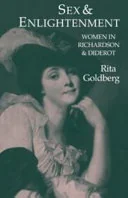
Rita Goldberg's 1984 book argues that sex is the engine of Richardson's 'Clarissa.'
Rita Goldberg's "Sex and Enlightenment" analyzes the sexual mythology within Samuel Richardson's 1748 novel, "Clarissa." Goldberg makes the case that this sexual dimension was not just a secondary element but the primary force behind "Clarissa's" immediate success and its lasting status.
She argues that "Clarissa" fundamentally changed how society viewed sexual violation, using it as a moral critique of its time. This analysis is particularly relevant for scholars of 18th-century British literature, especially those who study Samuel Richardson and his contemporaries. Readers interested in the connections between sexuality, morality, and social commentary in literature will also find it engaging. Students of gender studies and those examining the history of eroticism and power in narratives will benefit from Goldberg's insights. The book also offers a new perspective for those looking at the influence of English literature on European thought, referencing Denis Diderot's adaptation of Richardson's themes.
While the original description does not explicitly place "Sex and Enlightenment" within a specific esoteric tradition, its focus on hidden sexual currents and their societal impact suggests a connection to traditions that explore the symbolic and psychological dimensions of human experience beyond the surface level. Such traditions often seek to uncover deeper meanings in cultural artifacts, viewing sexuality not merely as a biological drive but as a potent force shaping consciousness and social structures. Goldberg's work, by treating sexual themes as central to literary meaning and social commentary, aligns with an approach that finds esoteric significance in the human condition.
💡 Why Read This Book?
• Understand how "Clarissa," a novel first published in 1748, used a groundbreaking portrayal of sexual violation as a moral indictment of its era, a concept Goldberg meticulously unpacks. • Discover the "sexual mythology" Goldberg identifies as the core engine of Richardson's masterpiece, revealing how this undercurrent contributes to its enduring literary status. • Explore how literary works, as demonstrated by "Clarissa" and its influence on Diderot's "La Religieuse," possess the power to "change minds" and shape societal understanding of complex ethical issues.
⭐ Reader Reviews
Honest opinions from readers who have explored this book.
❓ Frequently Asked Questions
What is the main argument of Rita Goldberg's "Sex and Enlightenment"?
Goldberg argues that Samuel Richardson's novel "Clarissa" derives its immense power and popularity from a sophisticated, previously unacknowledged sexual mythology, particularly in its depiction of rape as a moral indictment of its time.
When was Samuel Richardson's "Clarissa" first published?
Samuel Richardson's novel "Clarissa" was first published in installments between 1747 and 1748.
Which French philosopher was influenced by Samuel Richardson, according to the book?
Denis Diderot, a prominent French philosophe of the Enlightenment, drew inspiration from Richardson's novels, including "Clarissa," for his own literary works, notably "La Religieuse."
What does Goldberg mean by 'sexual mythology' in the context of 'Clarissa'?
Goldberg uses 'sexual mythology' to describe the underlying narrative structures and symbolic language related to sexuality that give "Clarissa" its potent moral and emotional force, shaping reader perception of transgression and virtue.
How did 'Clarissa' change minds, according to the book?
The book suggests "Clarissa" changed minds by presenting the violation of a woman not just as a personal tragedy but as a profound moral indictment of the society that allowed it, forcing readers to confront societal failings.
What is the significance of the publication date of Rita Goldberg's analysis?
Goldberg's analysis was published in 1984, a period when feminist literary criticism was gaining significant traction, allowing for new interpretations of canonical works focusing on gender and power dynamics.
🔮 Key Themes & Symbolism
Sexual Mythology in Literature
Goldberg posits that "Sex and Enlightenment" uncovers a potent "sexual mythology" within Samuel Richardson's "Clarissa." This isn't merely about erotic content but the symbolic and narrative structures through which sexuality informs moral and social commentary. The work argues that this hidden mythology is crucial to understanding the novel's wide impact and its ability to function as a moral indictment, challenging readers to see the erotic as intrinsically linked to power, virtue, and societal critique. It suggests that such mythologies are fundamental to how literature achieves its deepest effects.
Rape as Moral Indictment
A central concept explored is the portrayal of rape not just as a plot device or personal tragedy, but as a powerful "moral indictment of an age." Goldberg argues that "Clarissa" masterfully uses the violation of its protagonist to expose the hypocrisies and ethical failings of the surrounding society. This framing elevates the narrative beyond individual suffering to a broader societal critique, suggesting that literature can serve as a mirror reflecting collective moral decay and prompting introspection. The analysis highlights the novel's revolutionary approach to depicting transgression.
Literature's Power to Transform
The book emphasizes literature's capacity to "change minds." Goldberg suggests that by engaging readers with complex themes like sexual violation and its moral implications, "Clarissa" fundamentally altered perspectives. This transformative power is seen not just in individual readers but also in its influence on other artists, citing Denis Diderot's adoption of Richardsonian inspirations. The work underscores the esoteric idea that literature can act as a catalyst for intellectual and ethical evolution, pushing the boundaries of consciousness and societal norms.
Enlightenment and Sexuality
Goldberg reinterprets "Enlightenment" through the lens of sexuality. The title itself suggests a connection between sexual understanding and a broader form of awakening. The analysis implies that true enlightenment, or a deeper comprehension of the human condition, involves confronting and integrating the complexities of sexual drives and their societal manifestations. This challenges conventional notions of enlightenment as purely intellectual or spiritual, proposing a more embodied and psychologically nuanced path to understanding.
💬 Memorable Quotes
Direct passages from the work, attributed to the author.
“Samuel Richardson had expressed a powerful and hitherto unperceived sexual mythology in Clarissa.”
— This statement captures the core thesis: that "Clarissa" contains a hidden layer of meaning related to sexuality that significantly contributes to its impact, a layer Goldberg aims to reveal and analyze.
“There had never before been a work of literature in which the rape of a woman became the moral indictment of an age.”
— This highlights the revolutionary nature of Richardson's novel as analyzed by Goldberg, positioning the depiction of sexual violence as a profound societal critique rather than just a personal narrative.
“Clarissa was a book which changed minds.”
— Goldberg asserts the profound influence of Richardson's novel, suggesting its thematic content and narrative approach had a significant impact on readers' perceptions and potentially on broader societal attitudes.
“Diderot, the French philosophe, drew on Richardson as the inspiration for his own novel, La Religieuse.”
— This points to the cross-cultural and inter-literary influence of Richardson, demonstrating how "Clarissa" resonated beyond England and impacted continental European thought and literature during the Enlightenment.
“Richardson's novels had achieved Diderot...”
— This incomplete thought from the original blurb suggests Richardson's works held a significant place in the intellectual discourse that Diderot was part of, implying a deep engagement and admiration.
🌙 Esoteric Significance
Tradition
While not overtly tied to a specific lineage like Kabbalah or Theosophy, "Sex and Enlightenment" engages with an esoteric tradition that views literature as a vehicle for profound psychological and moral revelation. It aligns with Gnostic or Hermetic ideas that true enlightenment involves confronting the darker aspects of human nature and societal structures, particularly sexuality and power. The work suggests that hidden meanings, or 'sexual mythologies,' within texts can lead to a deeper understanding of the self and the world, akin to uncovering esoteric truths.
Symbolism
The primary symbolic motif is the act of sexual violation itself, which Goldberg reinterprets not just as a physical event but as a potent symbol of societal corruption and moral compromise. "Clarissa" becomes a symbolic representation of endangered virtue confronting predatory societal forces. The concept of "enlightenment" is also symbolic, suggesting a state of awareness achieved through confronting difficult truths, particularly those related to human desire and its consequences, rather than a purely intellectual or spiritual ascent.
Modern Relevance
Goldberg's work remains relevant for contemporary scholars and practitioners interested in psychoanalytic literary criticism, gender studies, and the power dynamics inherent in narrative. Thinkers exploring the intersection of trauma, sexuality, and societal critique continue to find value in her re-evaluation of "Clarissa." Practices focused on uncovering hidden meanings in texts, or understanding literature's role in shaping collective consciousness, can draw upon her methodology. The book's insights resonate with modern discussions on consent, power, and the psychological impact of violation in both literature and life.
👥 Who Should Read This Book
• Literary scholars focusing on 18th-century British fiction, especially those examining Samuel Richardson, who will gain a novel interpretive lens for "Clarissa." • Students of gender studies and critical theory interested in how literature constructs and critiques notions of morality, power, and sexual violence. • Readers of comparative literature, particularly those interested in the influence of English authors like Richardson on French Enlightenment figures such as Diderot.
📜 Historical Context
Published in 1984, Rita Goldberg's "Sex and Enlightenment" arrived during a vigorous period of feminist literary theory and a broader reassessment of 18th-century British novels. The work directly challenges earlier, perhaps more prudish, interpretations of Samuel Richardson's "Clarissa" (first published 1748). Goldberg positions "Clarissa" as a text of immense moral and psychological weight, fueled by a "sexual mythology" that was previously unacknowledged. This perspective aligns with a critical shift away from purely formalist readings towards analyses that considered social, psychological, and gender dynamics. The book's engagement with Denis Diderot, who explicitly drew inspiration from Richardson for his 1760 novel "La Religieuse," situates Goldberg's analysis within the ongoing dialogue between English and French Enlightenment thought. While not explicitly detailing reception events like bans or prizes, Goldberg's work implicitly addresses the novel's enduring significance and its capacity to provoke reinterpretation.
📔 Journal Prompts
The concept of "sexual mythology" as presented in Goldberg's analysis.
Clarissa's portrayal as a "moral indictment of an age."
The idea that literature possesses the power to "change minds."
Examining the link between sexual understanding and "enlightenment."
The influence of Richardson's work on Denis Diderot and "La Religieuse."
🗂️ Glossary
Sexual Mythology
In Goldberg's context, refers to the underlying narrative structures, symbols, and symbolic meanings related to sexuality that imbue a literary work with profound moral and psychological force, often shaping its societal critique.
Moral Indictment
The use of a narrative event, such as the violation of a character, to serve as a powerful accusation against the ethical standards, hypocrisies, or failings of the society depicted or surrounding the work.
Epistolary Novel
A novel written in the form of letters exchanged between characters. Samuel Richardson's "Clarissa" is a prominent example, using this format to convey intimate thoughts and advance the plot.
Philosophe
An 18th-century French public intellectual, writer, and philosopher of the Enlightenment. Denis Diderot is a key figure associated with this term.
Enlightenment (18th Century)
An intellectual and cultural movement emphasizing reason, individualism, skepticism, and science. Goldberg recontextualizes aspects of this era through the lens of sexuality.
Literary Masterpiece
A work of literature widely recognized for its exceptional artistic merit, enduring influence, and profound thematic depth, often setting a standard for its genre.
La Religieuse
A novel by Denis Diderot, first published posthumously in 1796, which explores themes of confinement, religious hypocrisy, and female desire, influenced by Richardson's narrative techniques.
This book appears in 1 collection
🔮 Readers Also Liked
Browse all →









From the “Enlightenment” Collection
View all →









More Free Occult Philosophy Books
View all →