Jesus and the Dead Sea Scrolls
 75
75

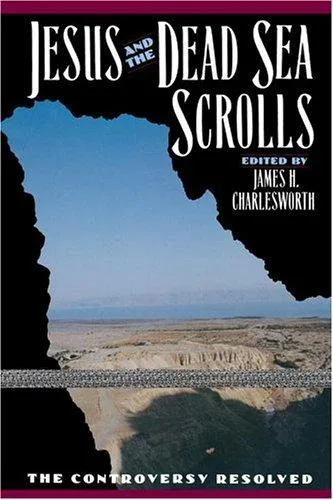
Jesus and the Dead Sea Scrolls
Charlesworth's "Jesus and the Dead Sea Scrolls" offers a sober and essential corrective to the more sensationalistic claims that often surrounded the Qumran finds. The author’s strength lies in his methodical dissection of the scholarly arguments, presenting a balanced overview of the evidence. He carefully distinguishes between what the scrolls explicitly state and what has been inferred or extrapolated by various researchers. A notable passage details the differing understandings of purity laws between the Qumran sect and early Jesus followers, illustrating the subtle yet significant theological divergences. However, the book can at times feel overly dense for the non-specialist, occasionally sacrificing narrative flow for exhaustive scholarly detail. Despite this, it remains a vital resource for anyone wishing to understand the academic landscape concerning the scrolls and their historical Jesus connections.
📝 Description
75
Published in 1992, James H. Charlesworth's "Jesus and the Dead Sea Scrolls" dissects the scholarly debate surrounding Qumran's findings and early Christianity.
Charlesworth's 1992 book offers a rigorous academic examination of the scholarly discussions sparked by the Dead Sea Scrolls discoveries. It is not a devotional text but a careful analysis of interpretations that arose after the scrolls' unearthing, especially in the mid-20th century. The author investigates the linguistic, historical, and theological connections, or lack thereof, between the Qumran texts and the New Testament.
This volume is best suited for academics, graduate students, and researchers focused on biblical studies, ancient Judaism, and the historical Jesus. It will appeal to those who work with original texts and value detailed textual analysis. Readers looking for simple conclusions about the scrolls' link to Jesus will find instead a thorough review of evidence and scholarly arguments. It serves those curious about the complexities of reconstructing ancient religious and historical settings.
The discovery of the scrolls from 1947 onward generated intense academic and public interest. The subsequent decades saw numerous attempts to connect the Qumran sect with early Christian figures and events. Scholars presented a range of views, from radical proposals to more reserved assessments. Charlesworth's work addresses this active academic climate, aiming to consolidate and critically assess the findings and their impact on understanding both Second Temple Judaism and Christianity's beginnings.
This book engages with a tradition of scholarly inquiry that seeks to uncover hidden connections between ancient religious texts and historical figures. While not strictly an esoteric text itself, it operates within the academic study of religious origins, a field where the Dead Sea Scrolls have been central to debates about the development of Judeo-Christian traditions. Charlesworth's work examines the scholarly attempts to interpret these texts and their implications for understanding the historical Jesus and the emergence of Christianity, a pursuit that often borders on the esoteric due to the nature of the fragmentary evidence and the speculative interpretations it invites.
💡 Why Read This Book?
• Gain a critical perspective on the historical Jesus by understanding the scholarly debates following the 1947 Dead Sea Scrolls discovery, moving beyond speculative theories. • Appreciate the nuanced differences in Messianic expectations between the Qumran sect and early Christian interpretations, as detailed in the text's comparative analysis. • Grasp the specific methodologies used in textual criticism by examining Charlesworth's approach to reconciling the sectarian texts with New Testament accounts, particularly regarding Wisdom traditions.
⭐ Reader Reviews
Honest opinions from readers who have explored this book.
❓ Frequently Asked Questions
What year was James H. Charlesworth's "Jesus and the Dead Sea Scrolls" first published?
James H. Charlesworth's "Jesus and the Dead Sea Scrolls" was first published in 1992, offering a comprehensive academic overview during a period of intense scholarly interest in the Qumran discoveries.
Did the Dead Sea Scrolls mention Jesus by name?
No, the Dead Sea Scrolls, discovered starting in 1947, do not explicitly mention Jesus by name. Charlesworth's work explores the indirect connections and thematic parallels debated by scholars.
What is the primary focus of Charlesworth's book regarding the scrolls?
The book focuses on the scholarly interpretation and comparison of the Dead Sea Scrolls with early Christian texts, particularly concerning messianic concepts and wisdom traditions, rather than presenting direct evidence of Jesus's life.
Who were the main scholarly figures debated in "Jesus and the Dead Sea Scrolls"?
Charlesworth engages with a range of scholars who interpreted the scrolls, including figures like John Allegro and Frank Cross, discussing their differing conclusions about the scrolls' relationship to Christianity.
Does this book support the theory that Jesus was an Essene?
Charlesworth's work critically examines such theories. While acknowledging possible shared influences or common backgrounds with groups like the Essenes, the book emphasizes the distinctiveness of the Qumran sect and early Christianity based on textual evidence.
What period of history does the book primarily cover?
The book primarily covers the Second Temple period of Judaism and the origins of Christianity, focusing on the scholarly discussions that emerged after the Dead Sea Scrolls' discovery, which began in 1947.
🔮 Key Themes & Symbolism
Messianic Expectations
Charlesworth meticulously dissects the varied messianic figures and expectations present within the Qumran scrolls, often contrasting them sharply with the Christology developed in the New Testament. He explores how the Qumran community envisioned a coming priestly and kingly messiah, and sometimes a prophetic figure, presenting these as distinct from, though potentially influencing, later Christian understandings of Jesus as the Messiah.
Wisdom and Sectarianism
The book highlights the significant "Wisdom" literature found among the scrolls, examining shared terminology and ethical teachings with early Christian writings. Charlesworth investigates how this wisdom tradition, alongside the highly organized and exclusive sectarian structure of the Qumran community (often identified with the Essenes), provides a crucial backdrop for understanding the social and theological environment from which Christianity emerged.
Textual Criticism and Interpretation
A core theme is the rigorous application of textual criticism to the Dead Sea Scrolls and their comparison with biblical and early Christian texts. Charlesworth demonstrates the challenges and methodologies involved in establishing the authenticity and meaning of these ancient documents, critically evaluating scholarly claims that sought to directly link Qumran figures or beliefs to Jesus and his immediate followers.
Judaism of the Second Temple Period
Charlesworth situates the Qumran sect firmly within the diverse religious range of Second Temple Judaism. The work underscores that the scrolls reveal a Judaism far more varied than previously understood, with distinct groups holding unique interpretations of law, prophecy, and eschatology, thereby providing essential context for the emergence of Christianity.
💬 Memorable Quotes
Direct passages from the work, attributed to the author.
“The scrolls reveal a Judaism far more diverse than previously imagined.”
— This statement expresses a central argument: the Qumran discoveries shattered the monolithic view of ancient Judaism, revealing vibrant, distinct sectarian movements like the Essenes, whose beliefs and practices differed significantly from both Temple Judaism and early Christianity.
“The scrolls present challenges to traditional biblical interpretations.”
— This interpretation reflects how the ancient texts from Qumran, dating to the Second Temple period, forced a re-evaluation of biblical scholarship and the historical understanding of both Judaism and the origins of Christianity, prompting new lines of inquiry.
💡 Key Ideas
Editorial paraphrase of the work's core concepts — not direct quotes.
Direct citation of Jesus in the scrolls is absent.
This paraphrase highlights a key finding in Charlesworth's work. Despite numerous theories, the Dead Sea Scrolls, discovered from 1947 onwards, do not contain direct mentions of Jesus, forcing scholars to rely on indirect comparisons and contextual analysis.
Messianic expectations varied significantly.
This paraphrased concept underscores the book's exploration of diverse messianic figures anticipated by the Qumran community, contrasting them with the singular figure of Jesus Christ central to Christian belief, and complicating simple equation between the two.
Purity laws offered a point of divergence.
This paraphrased concept points to specific theological and practical differences Charlesworth identifies between the Qumran sect and early Christians, particularly concerning ritual purity and communal life, demonstrating they were not identical movements.
🌙 Esoteric Significance
Tradition
While Charlesworth's work is primarily academic, its exploration of the Qumran community's unique interpretations of scripture, purity, and eschatology touches upon Gnostic and Essene traditions. These groups, with their emphasis on hidden knowledge, dualistic worldviews, and distinct paths to salvation, represent a significant undercurrent within esoteric thought. The book helps contextualize these elements within a historical Jewish framework, showing how esoteric ideas were not entirely separate from mainstream religious development.
Symbolism
The "Teacher of Righteousness" found in some Qumran texts can be interpreted esoterically as a spiritual guide or revealer of hidden truths, akin to figures in Gnosticism or Hermeticism. Furthermore, the concept of "light versus darkness" and the meticulous purity rituals described in the scrolls echo dualistic symbolism prevalent in many esoteric traditions, suggesting a worldview that saw a cosmic struggle and the need for ritual purification for spiritual advancement.
Modern Relevance
Contemporary esoteric scholars and practitioners interested in the historical roots of Western esotericism often draw upon the insights provided by the Dead Sea Scrolls, as analyzed by Charlesworth. Movements exploring early Christian mysticism, Gnosticism, and the historical Jesus continue to reference the Qumran findings. The book remains relevant for understanding the diverse Jewish landscape that informed early esoteric Christian ideas and for discerning authentic historical context from later mystical or speculative interpretations.
👥 Who Should Read This Book
• Students of comparative religion: To understand the complex religious milieu of Second Temple Judaism and how it informed both Rabbinic Judaism and early Christianity. • Researchers of the historical Jesus: To critically evaluate the scholarly discourse surrounding the Dead Sea Scrolls and their potential connections to Jesus's life and teachings. • Those interested in early Christian origins: To gain a nuanced perspective on the Jewish context from which Christianity emerged, moving beyond simplistic narratives.
📜 Historical Context
When "Jesus and the Dead Sea Scrolls" was first published in 1992, the academic world was still processing the lasting impact of the Qumran discoveries, which began in 1947. This era was marked by intense scholarly debate, often fueled by popular speculation, attempting to link the scrolls directly to Jesus and the nascent Christian movement. Competing schools of thought emerged: some scholars, like John Allegro, proposed radical connections, suggesting John the Baptist or even Jesus himself were figures within the Qumran community. Others, such as Joseph Fitzmyer, adopted a more cautious approach, emphasizing the distinctiveness of the Essenes from early Christians. Charlesworth’s work emerged within this milieu, seeking to provide a balanced, critical synthesis of the evidence. The reception was largely academic, with scholars appreciating its thoroughness but also engaging in ongoing dialogue about the precise nature of the relationship between the scrolls and early Christianity.
📔 Journal Prompts
The Qumran sect's Messianic expectations, as explored by Charlesworth.
Examining the 'Wisdom' traditions shared between Qumran and early Christianity.
Reflecting on the textual criticism methods used for the Dead Sea Scrolls.
Contrasting the sectarian community's purity laws with early Christian practices.
The significance of the Teacher of Righteousness as a spiritual archetype.
🗂️ Glossary
Dead Sea Scrolls
Ancient Jewish manuscripts discovered near the Dead Sea between 1947 and 1956, dating from the 3rd century BCE to the 1st century CE, containing biblical texts, sectarian documents, and other writings.
Qumran
An archaeological site on the northwest shore of the Dead Sea, believed to be the settlement of a Jewish sect (likely Essenes) that produced or preserved many of the Dead Sea Scrolls.
Second Temple Period
The era of Jewish history from the rebuilding of the Second Temple in Jerusalem (c. 516 BCE) until its destruction by the Romans in 70 CE.
Essenes
A Jewish ascetic sect that flourished in Judea during the Second Temple period, known for their communal living, strict adherence to purity laws, and eschatological beliefs. Many scholars associate them with the Qumran community.
Messianism
Belief in a coming savior or deliverer, often a divinely appointed leader. The Qumran scrolls exhibit diverse messianic expectations, differing from later Christian interpretations of Jesus as the Messiah.
Sectarian Texts
Documents originating from a specific religious sect, such as those found at Qumran, which often detail the group's unique beliefs, rules, and interpretations of scripture.
Textual Criticism
The academic study of ancient texts to determine their original wording and authenticity, involving comparison of different manuscript versions and historical analysis.
🔮 Readers Also Liked
Browse all →






![Is Ignorance Bliss? [microform] : the Interrelation of Consciousness-expansion and Empowerment in Nepalese Women's Literacy](/img/thumb/is-ignorance-bliss-microform-the-interrelation-of-consciousness-expansion-and-empowerment-in-nepales-961746.webp)


More by James H. Charlesworth
All books →





More Free Occult Philosophy Books
View all →