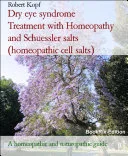
Dry eye syndrome Treatment with Homeopathy and Schuessler salts (homeopathic cell salts)
 75
75

Dry eye syndrome Treatment with Homeopathy and Schuessler salts (homeopathic cell salts)
Robert Kopf's exploration of homeopathic treatments for dry eye syndrome offers a focused look at cell salt therapy, specifically Schuessler salts. The strength of the work lies in its clear exposition of these mineral remedies and their proposed mechanisms at a cellular level, connecting them directly to the physiological causes of Keratoconjunctivitis sicca. Kopf presents the information in a manner accessible to lay readers, avoiding overly technical jargon. However, the book's primary limitation is its singular focus on homeopathy; it does not engage with or critically assess other complementary or conventional treatments, presenting a somewhat one-sided perspective. The detailed breakdown of specific cell salts, such as Natrum muriaticum for watery eyes or Kalium muriaticum for sticky discharge, provides concrete examples of the proposed applications. The text serves as a useful primer for those already inclined towards homeopathic remedies for eye conditions.
📝 Description
75
Robert Kopf's 1999 book details homeopathic treatments for dry eye syndrome.
This book addresses dry eye syndrome, a common condition affecting the ocular surface due to an imbalanced tear film. Insufficient tear production, a complex mix of water, oils, and mucus, can cause discomfort, inflammation, and potential corneal damage. The text is aimed at individuals experiencing dry eye who are looking for therapeutic approaches beyond conventional medicine. It will appeal to those interested in natural healing methods, particularly those that originated in 19th-century European medical reform.
The work focuses on Schuessler salts, also known as homeopathic cell salts, a system developed in the late 19th century by German physician Dr. Wilhelm Heinrich Schuessler. He proposed that twelve specific inorganic mineral salts were vital for cellular function and that their imbalance could cause illness. This biochemical therapy was presented as a milder option compared to some medical practices of the time. The book also touches on homeopathic principles, including the concept of 'like cures like' (similia similibus curentur), which suggests that a substance causing symptoms in a healthy person can be used in diluted form to treat similar symptoms.
This book sits within the broader esoteric tradition of vitalism and energetic medicine. Schuessler's concept of cell salts draws from 19th-century vitalistic ideas that health is maintained by a specific 'vital force' or essential substances within the body. Homeopathy, with its principle of 'like cures like' and reliance on highly diluted remedies, also reflects an esoteric belief in subtle energies and correspondences. These approaches diverge from purely materialistic or mechanistic views of disease, positing that imbalances in fundamental cellular constituents or vital essences can be corrected through specific, often diluted, interventions.
💡 Why Read This Book?
• Understand the specific application of Schuessler salts like Natrum muriaticum for watery discharge and Kalium muriaticum for thicker secretions, as detailed in Kopf's analysis, offering targeted relief strategies. • Learn about the biochemical theory behind cell salt therapy, first proposed by Dr. Wilhelm Heinrich Schuessler in the 19th century, to grasp the foundational principles of this natural healing approach. • Discover how homeopathic principles, particularly the "like cures like" concept, are applied to address the underlying cellular imbalances contributing to dry eye syndrome, providing a unique perspective on eye care.
⭐ Reader Reviews
Honest opinions from readers who have explored this book.
❓ Frequently Asked Questions
What are Schuessler salts and how do they relate to homeopathy?
Schuessler salts, or homeopathic cell salts, are 12 specific inorganic mineral compounds identified by Dr. Wilhelm Heinrich Schuessler. They are prepared using homeopathic dilutions and are believed to restore cellular balance, addressing health issues at a fundamental level.
Can homeopathic cell salts treat dry eye syndrome effectively?
The book suggests that specific cell salts can address various aspects of dry eye syndrome by targeting underlying cellular deficiencies. Effectiveness is often discussed within the context of individual symptom presentation and the principles of homeopathic treatment.
What is Keratoconjunctivitis sicca?
Keratoconjunctivitis sicca is the medical term for dry eye syndrome. It describes a condition where the eyes do not produce enough tears or the tears evaporate too quickly, leading to dryness, irritation, and potential vision problems.
When was the concept of Schuessler salts first introduced?
The concept of Schuessler salts was introduced by German physician Dr. Wilhelm Heinrich Schuessler in the latter half of the 19th century, specifically around the 1870s.
What are the primary components of natural tears?
Natural tears are a complex mixture crucial for eye health. They consist of water, fatty oils, and mucus, which together provide lubrication, maintain a smooth ocular surface, and protect the eyes from infection.
Does this book offer an alternative to conventional dry eye treatments?
Yes, this book presents homeopathic and cell salt therapies as alternative or complementary approaches to conventional medical treatments for dry eye syndrome, focusing on natural remedies.
🔮 Key Themes & Symbolism
Cellular Mineral Balance
The work posits that imbalances in specific inorganic mineral salts within the body's cells are a root cause of dry eye syndrome. It details how Schuessler salts, like Natrum muriaticum and Kalium sulphuricum, are believed to correct these deficiencies at a fundamental cellular level, restoring proper tear film function and alleviating symptoms of Keratoconjunctivitis sicca.
Homeopathic Dilution Principles
Central to the text is the application of homeopathic principles, particularly the "like cures like" (similia similibus curentur) doctrine. The book explains how these mineral salts, when prepared in highly diluted homeopathic potencies, can stimulate the body's own healing response to address the specific symptoms of dry eyes, distinguishing this approach from simple mineral supplementation.
Biochemical Basis of Health
Robert Kopf outlines the biochemical perspective championed by Dr. Wilhelm Heinrich Schuessler in the 19th century. This viewpoint holds that health is dependent on the correct functioning and presence of specific mineral compounds within tissues and cells. The book applies this theory to ocular health, arguing that specific cell salts are crucial for maintaining healthy tear production and eye surface integrity.
Holistic Ocular Care
The book advocates for a holistic approach to managing dry eye syndrome, moving beyond symptomatic relief. By focusing on restoring internal biochemical balance through Schuessler salts, it offers a method that aims to address the underlying causes of the condition, promoting overall eye wellness rather than just mitigating discomfort from Keratoconjunctivitis sicca.
💬 Memorable Quotes
Direct passages from the work, attributed to the author.
“Tears are a complex mixture of water, fatty oils, and mucus.”
— This factual statement underscores the intricate biological nature of tears, highlighting that their production and composition are crucial for maintaining ocular surface health and protection against infection.
“Dry eye syndrome... is characterized by a disturbance of the tear film and caused by a lack of adequate tears.”
— This defines the core pathology of dry eye, framing it as an issue of insufficient tear quantity or quality, which directly impacts the protective and lubricating functions of the eye's surface.
“Dr. Wilhelm Heinrich Schuessler proposed that mineral salts were essential for cellular function.”
— This highlights the foundational concept of cell salt therapy, attributing the idea of mineral salts' direct role in cellular health to its originator, Dr. Schuessler.
“Homeopathy operates on the principle of 'like cures like'.”
— This concisely states the fundamental law of similia similibus curentur, which is central to homeopathic practice and the preparation of Schuessler salts discussed in the text.
“Dry eyes may lead to eye inflammation, scarring on the surface of the corneas and vision problems.”
— This emphasizes the potentially serious consequences of untreated dry eye syndrome, illustrating the range of complications that can arise from inadequate tear film function.
🌙 Esoteric Significance
Tradition
The therapeutic system of Schuessler salts, while rooted in a biochemical interpretation of homeopathy, carries esoteric undertones through its focus on mineral essences and their vital force. It aligns with traditions that view the physical body as a manifestation of subtler energies and that seek healing through harmonizing these energetic principles, often drawing parallels to alchemical ideas of mineral transformation and vital essences.
Symbolism
Within this context, the twelve cell salts can be seen as symbolic representations of fundamental building blocks of both the physical body and its energetic matrix. Specific salts might symbolize processes of hydration (Natrum muriaticum), tissue repair (Silicea), or oxygenation (Ferrum phosphoricum), reflecting a symbolic language of health and disease rooted in elemental mineral properties and their perceived influence on vital functions.
Modern Relevance
Contemporary practitioners of holistic health, naturopathy, and integrative medicine continue to draw upon the principles of cell salt therapy. Thinkers and practitioners interested in bioenergetics, subtle energies, and mineral-based approaches to well-being often incorporate Schuessler salts into their protocols, viewing them as a foundational element for restoring cellular vitality and balance in modern wellness practices.
👥 Who Should Read This Book
• Individuals experiencing persistent dry eye symptoms and seeking natural, non-invasive therapeutic options beyond conventional pharmaceuticals. • Students and practitioners of homeopathy and naturopathy interested in the specific application of Schuessler's biochemical cell salts for ocular conditions. • Readers curious about the history of 19th-century medical reform and alternative healing modalities, particularly those focused on mineral-based therapies for health.
📜 Historical Context
Robert Kopf's work emerges from the legacy of 19th-century European medical reform, a period marked by fervent debate between established allopathic medicine and burgeoning alternative healing systems. Dr. Wilhelm Heinrich Schuessler's development of cell salt therapy in the 1870s offered a distinct biochemical approach within the broader range of homeopathy, which had been pioneered by Samuel Hahnemann decades earlier. Schuessler's system distinguished itself by focusing on twelve specific inorganic salts believed to be vital for cellular function, proposing a more tangible, mineral-based mechanism than some other homeopathic dilutions. While homeopathy faced significant criticism and periods of intense scrutiny, including from proponents of scientific medicine, Schuessler's biochemical method found a dedicated following among those seeking gentler, natural remedies. This work revisits and applies Schuessler's specific findings, placing it within the ongoing discourse on natural therapies for common ailments.
📔 Journal Prompts
The disturbance of the tear film and the role of specific mineral salts.
Schuessler's twelve cell salts and their perceived connection to cellular function.
The principle of 'like cures like' as applied to dry eye treatment.
Understanding the composition of natural tears: water, fatty oils, and mucus.
Corneal scarring and vision problems as potential consequences of dry eye.
🗂️ Glossary
Keratoconjunctivitis sicca
The medical term for dry eye syndrome, referring to inflammation of the cornea and conjunctiva due to insufficient tear production or lubrication.
Tear film
A complex, three-layered coating that covers the surface of the eye, essential for lubrication, nourishment, and protection of the cornea.
Schuessler salts
Also known as homeopathic cell salts, these are 12 inorganic mineral compounds identified by Dr. Wilhelm Heinrich Schuessler, prepared in homeopathic dilutions for therapeutic purposes.
Homeopathy
A system of alternative medicine based on the principle of 'like cures like' (similia similibus curentur), using highly diluted substances that are believed to stimulate the body's healing response.
Biochemical therapy
A therapeutic approach, as proposed by Schuessler, that focuses on restoring health by correcting imbalances of specific mineral salts within the body's cells.
Ocular surface
The external part of the eye, including the cornea and conjunctiva, which is directly affected by tear film quality and lubrication.
Allopathic medicine
A term used by alternative medicine practitioners to refer to conventional, mainstream Western medicine, often characterized by the use of drugs to counteract symptoms or diseases.