How NOT to Summon a Demon Lord
 76
76

How NOT to Summon a Demon Lord
Murasaki's "How NOT to Summon a Demon Lord" offers a refreshing twist on the isekai formula, primarily through its protagonist, Diablo. Instead of the usual power-fantasy fulfillment, Diablo's crippling social anxiety, masked by his overwhelming magical might, provides a consistent source of both humor and character depth. The scene where Diablo attempts to navigate a simple conversation with Shera and Rem, only for his intimidation factor to backfire spectacularly, encapsulates the novel's charm. However, the narrative occasionally leans too heavily on predictable harem tropes, which can detract from the more interesting social commentary. Despite this, the underlying exploration of persona versus self remains compelling.
Verdict: A humorous and character-driven isekai that mostly avoids genre pitfalls.
📝 Description
76
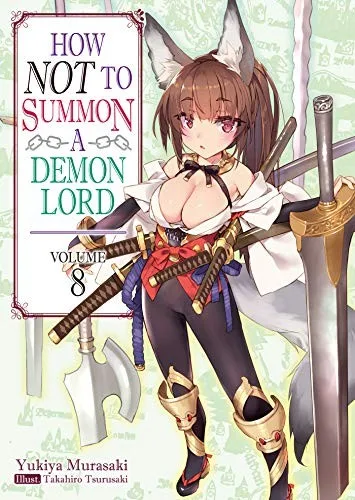
Yukiya Murasaki's 2019 novel, "How NOT to Summon a Demon Lord," subverts isekai tropes by centering on a gamer transported as his powerful summoner character.
The story follows a gamer who finds himself in a fantasy world, embodying the persona of his powerful summoner character, Diablo. Unlike typical power fantasies, the protagonist actively tries to avoid direct conflict, grappling with his immense abilities and the social anxieties that come with them. This narrative blends elements of isekai, where characters are transported to another world, with mechanics reminiscent of Massively Multiplayer Online Role-Playing Games (MMORPGs). The work also touches upon themes of social dynamics and the nature of artificial beings within its magical framework.
This novel appeals to readers of light novels who enjoy the isekai and gaming genres but seek narratives with more character depth. It is suitable for those who appreciate character growth and world-building, even within a story that features comedy and action. Readers will find familiar territory in characters who possess great power but struggle with personal relationships. The protagonist's commitment to maintaining his in-game persona in a real-world setting creates a unique tension between his capabilities and his social awkwardness.
Emerging in the late 2010s, "How NOT to Summon a Demon Lord" arrived during a surge in the popularity of the isekai genre. While many contemporary works focused on wish fulfillment, Murasaki's novel began to distinguish itself. It introduced a protagonist who actively sought to manage his overwhelming abilities and avoid direct confrontation. This approach reflected a growing interest within the genre for more complex character motivations and less straightforward power fantasies, offering a different angle on the summoned hero trope.
💡 Why Read This Book?
• Learn how an established gamer's persona, Diablo, can be both a shield and a prison, offering unique insights into identity and self-perception in high-stakes situations. • Understand the mechanics of summoning and magical contracts as presented in the novel, particularly the complex relationship between summoner and summoned beings like the panther-beastman. • Explore the subversion of typical isekai power fantasies through Diablo's extreme social awkwardness, providing a different perspective on wish-fulfillment narratives.
⭐ Reader Reviews
Honest opinions from readers who have explored this book.
❓ Frequently Asked Questions
What is the primary genre of 'How NOT to Summon a Demon Lord'?
The book is primarily an isekai light novel, blending fantasy, comedy, and elements reminiscent of MMORPGs. It features a protagonist transported to another world who must adapt to his new circumstances.
Who is the main character and what are his unique traits?
The main character is Takuma Sakamoto, who takes on the persona of his in-game character, the Demon Lord Diablo. His defining traits are immense magical power and crippling social anxiety, which he hides behind his persona.
When was 'How NOT to Summon a Demon Lord' first published?
The novel was first published in Japan in 2019. It is part of a popular light novel series.
What kind of world does Takuma get transported to?
He is transported to a fantasy world that strongly resembles the MMORPG he played, called "Cross Reverie." This world features magic, various races, and familiar game mechanics.
Does the book involve magic systems?
Yes, the book features a detailed magic system based on the "Cross Reverie" game. It includes various spells, summoning rituals, and different schools of magic.
What are the core themes explored in the narrative?
Key themes include the disconnect between online persona and real-life identity, the nature of leadership, social anxieties, and the ethical considerations of power and consent.
🔮 Key Themes & Symbolism
Persona vs. Reality
The narrative deeply explores the chasm between one's online or assumed identity and their true self. Protagonist Takuma Sakamoto, as the Demon Lord Diablo, crafts an intimidating persona to compensate for his severe social awkwardness. This creates a continuous internal conflict, as his actions, dictated by the need to maintain his fearsome image, often lead to unintended social consequences and romantic entanglements he's ill-equipped to handle. The work examines how a fabricated self can paradoxically become both a burden and a tool for navigating a new world.
Subverted Power Fantasy
Unlike typical isekai narratives where protagonists revel in newfound omnipotence, "How NOT to Summon a Demon Lord" presents a more nuanced take. Diablo possesses overwhelming magical capabilities, yet his primary struggles are not with external villains but with basic social interactions and maintaining his persona. This subversion highlights the psychological toll of power when divorced from social competence, offering a comedic yet insightful commentary on the wish-fulfillment aspect of the genre. The focus shifts from conquering the world to simply surviving its social complexities.
Summoning and Sentience
The concept of summoning is central, particularly concerning the panther-beastman Shera and the elf Rem. The book questions the nature of these summoned beings: are they mere tools, or do they possess independent will and deserve agency? Diablo's interactions with them, initially driven by his persona, gradually evolve into a more complex relationship. This theme touches upon consent, responsibility, and the ethical implications of magical pacts, adding a layer of depth beyond standard fantasy adventure.
Isekai Tropes and World-Building
Murasaki plays with and often inverts established isekai tropes. The world, "Cross Reverie," mirrors an MMORPG, complete with classes, spells, and monsters. However, the narrative uses this familiar framework to explore character-driven drama and comedic situations rather than just power progression. The world-building is detailed, grounding the fantastical elements in relatable mechanics, which allows the character dynamics and thematic explorations to take center stage.
💬 Memorable Quotes
Direct passages from the work, attributed to the author.
“I am Diablo, the Great Demon Lord!”
— This iconic line, repeated throughout the narrative, expresses the protagonist's adopted persona. It's a declaration meant to intimidate, but often delivered with underlying nervousness, highlighting the gap between his intended image and his true feelings.
“Summoning requires a contract... but I don't want to be a slave.”
— Spoken by Shera, this expresses a core desire for autonomy. It challenges the traditional master-servant dynamic inherent in summoning magic, pointing towards a more equitable relationship based on mutual respect.
“This is all just part of my plan!”
— A frequent, often unconvincing, excuse used by Diablo when things go awry. It serves as a comedic device, underscoring his attempts to maintain control and his persona even when clearly out of his depth.
“You were summoned by me, Diablo. You are my slave.”
— Diablo's initial assertion to Shera and Rem, reflecting the established rules of the world and his assumed role. This statement sets the stage for the subsequent exploration of their relationship and the questioning of this dynamic.
“My true strength lies not in magic, but in my ability to adapt.”
— An interpretation of Diablo's underlying philosophy. While magically powerful, his real success comes from his gamer's mindset – analyzing situations, adapting strategies, and improvising, even when his social skills falter.
🌙 Esoteric Significance
Tradition
While not overtly aligned with any specific esoteric tradition like Hermeticism or Kabbalah, "How NOT to Summon a Demon Lord" engages with themes relevant to modern interpretations of spiritual journeys and self-actualization, often found in New Age or contemporary occult thought. The protagonist's journey into a new world can be seen as an archetypal 'descent' or 'initiation,' where familiar societal constructs are stripped away, forcing a confrontation with the self. The concept of embodying a powerful alter ego also touches upon Jungian psychology and the exploration of the shadow self, which has become a common subject in modern esoteric circles.
Symbolism
The 'Demon Lord' persona itself functions as a powerful symbol, representing the projection of ultimate power and authority. This symbol is deliberately contrasted with the protagonist's inner insecurity, highlighting the symbolic weight of archetypes and the masks people wear. Furthermore, the 'summoning contract' symbolizes the pacts and agreements, both magical and mundane, that bind individuals. The panther-beastman, Shera, can symbolize primal instinct and untamed nature, requiring understanding and integration rather than mere control, a concept explored in various shamanic traditions.
Modern Relevance
Contemporary practitioners of digital spirituality and those exploring identity in online spaces find resonance in Diablo's struggles. The novel's commentary on maintaining a persona versus authentic living is highly relevant in an era dominated by social media and virtual avatars. Thinkers and groups focusing on Jungian psychology, the integration of the shadow, and the deconstruction of traditional power dynamics in fantasy narratives often cite examples like Diablo's character arc. It serves as a modern parable for reading through the complexities of selfhood in an increasingly mediated world.
👥 Who Should Read This Book
• Fans of isekai and light novels seeking a narrative that plays with genre conventions and offers substantial character development beyond simple power escalation. • Readers interested in exploring themes of identity, social anxiety, and the gap between perceived power and personal confidence within a fantasy setting. • Individuals who enjoy comedic storytelling blended with action, world-building, and character-driven plots that subvert expectations.
📜 Historical Context
Yukiya Murasaki's "How NOT to Summon a Demon Lord" emerged in 2019, a year when the isekai genre dominated the light novel landscape, fueled by hits like "Sword Art Online" and "Re:Zero." This period saw a saturation of narratives featuring overpowered protagonists achieving effortless success in fantasy worlds. Murasaki's work, however, began to distinguish itself by introducing a protagonist, Takuma Sakamoto (as Diablo), whose immense power was juxtaposed with profound social ineptitude. This was a counterpoint to the more straightforward power fantasies prevalent at the time. While not directly engaging with philosophical traditions like Hermeticism, the novel's exploration of identity and persona management subtly echoed themes found in existentialist thought, which saw a resurgence in popular media. The reception was largely positive among fans of the genre, appreciating its comedic timing and character-driven subversions, though some critics noted its adherence to certain harem anime conventions.
📔 Journal Prompts
Diablo's struggle to maintain his Demon Lord persona despite his social anxieties.
The ethical implications of Shera and Rem's summoning contract.
How the MMORPG 'Cross Reverie' mechanics influence the real world.
The contrast between Takuma's inner self and his Diablo persona.
The potential for unintended consequences when wielding immense power.
🗂️ Glossary
Isekai
A Japanese genre of light novels, manga, anime, and video games that typically features a protagonist who is transported to or reincarnated in another world, often a fantasy or game-like setting.
Demon Lord
In the context of the book, this refers to the powerful player character 'Diablo' created by Takuma Sakamoto. It embodies ultimate power and intimidation within the game world and the new reality.
Cross Reverie
The name of the MMORPG that Takuma Sakamoto plays. The fantasy world he is transported to closely resembles this game, incorporating its rules, classes, and creatures.
Summoning Contract
A magical agreement that binds a summoned being to a summoner. In the book, these contracts raise questions about consent, ownership, and the rights of the summoned.
Panther-Beastman
Refers to Shera L. Greenwood, one of the main female characters. She is a member of a race with panther-like features, summoned by Diablo.
Light Novel
A style of Japanese novel aimed at young adults, often featuring anime-inspired illustrations and serialized publication. 'How NOT to Summon a Demon Lord' belongs to this category.
MMORPG
Massively Multiplayer Online Role-Playing Game. A video game genre where a large number of players interact within a persistent virtual world.
🔮 Readers Also Liked
Browse all →








More by Yukiya Murasaki
All books →

More Free Occult Philosophy Books
View all →