African Divination Systems
 81
81

African Divination Systems
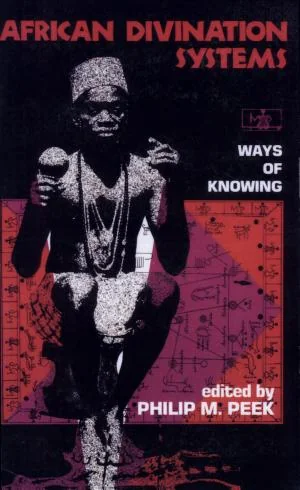
Philip M. Peek’s 1991 collection, African Divination Systems, offers a rigorous scholarly survey that avoids sensationalism, presenting a valuable overview of diverse practices. The strength of this volume lies in its meticulously researched case studies, which collectively build a compelling argument for a unified theoretical approach to divination. The essays demonstrate how these systems function as integral mechanisms for social cohesion and understanding, not merely as predictive tools. A notable passage, for instance, dissects the symbolic language of specific divination apparatuses, revealing layers of meaning tied to cosmology and daily life. However, the book’s academic density might present a barrier for casual readers; its focus is squarely on analytical exposition rather than accessible narrative. Despite this, the collection provides essential material for anyone seriously studying African spiritual traditions. It stands as a foundational text for understanding how knowledge of the unseen is structured and applied within specific cultural frameworks.
📝 Description
81
Published in 1991, African Divination Systems compiles scholarly essays on diverse methods of divine communication across Africa.
This 1991 scholarly compilation examines a variety of divination methods from across the African continent. It moves beyond simple descriptions, offering a theoretical structure for understanding these traditions through detailed case studies. The essays, written by international Africanists, investigate the function, form, and cultural importance of divination in different societies. The work is aimed at academics, researchers, and students of African religious systems, anthropology, and comparative mythology. It will appeal to those interested in the practical use of spiritual knowledge and the connection between belief, ritual, and social order. Readers seeking an analytical perspective on non-Western ways of knowing will find substantial material here.
The book emerged during a time of growing academic attention to African religions, shifting away from earlier, ethnocentric views. It contributes to discussions on indigenous knowledge systems and their part in maintaining community stability and cosmic understanding. This volume arrived as scholars like Jack Goody had already influenced the analysis of literacy and oral traditions, prompting new considerations of how divinatory knowledge was transmitted and confirmed.
African Divination Systems contributes to the study of how different cultures access knowledge beyond the immediately empirical. It situates divination not as mere fortune-telling but as a vital social and religious mechanism for understanding the world, diagnosing problems, and maintaining order. The book's focus on theoretical frameworks and cultural significance aligns with broader anthropological and religious studies that examine indigenous knowledge systems as complex, rational approaches to existence, rather than as superstition.
💡 Why Read This Book?
• Learn how divination systems in places like Togo and Nigeria are not just about predicting the future, but serve as sophisticated tools for diagnosing social disharmony, as explored in the case studies. • Understand the theoretical underpinnings of divination as a knowledge system, moving beyond superficial interpretations to grasp its role in maintaining cultural order, as presented in the general theory section. • Gain insight into the specific symbolic languages employed by diviners, such as the use of kola nuts or palm kernels, and their connection to broader cosmologies, detailed across multiple essays.
⭐ Reader Reviews
Honest opinions from readers who have explored this book.
❓ Frequently Asked Questions
What is the primary focus of 'African Divination Systems'?
The book's primary focus is a scholarly examination of diverse divination methods across Africa, presenting detailed case studies and developing a theoretical framework for understanding these practices as integral cultural systems.
Who authored the essays in 'African Divination Systems'?
The essays are written by an international group of Africanists, demonstrating a collaborative effort to explore the subject from various academic perspectives.
When was 'African Divination Systems' first published?
The book was first published in 1991, positioning it within a significant period of anthropological and religious studies concerning African cultures.
What kind of insights does the book offer beyond simple descriptions of divination?
It offers analytical insights into the function, form, and cultural significance of divination, exploring its role in social order, conflict resolution, and cosmological understanding.
Is this book suitable for someone new to the study of African religions?
While academically rigorous, it provides a foundational overview and theoretical structure that can be beneficial for serious students, though prior familiarity with anthropological concepts may enhance comprehension.
What is the general theoretical contribution of the book?
The volume aims to establish a general theory of divination, demonstrating how specific African practices can inform broader understandings of how humans engage with the divine and interpret reality.
🔮 Key Themes & Symbolism
Epistemology and Knowledge Transmission
This volume investigates how knowledge of the unseen is acquired, validated, and transmitted within African societies. It moves beyond the idea of simple prediction to explore divination as a complex epistemological system. The essays highlight the diviner's role as an interpreter of signs, a custodian of tradition, and a mediator between the human and spiritual realms. The work scrutinizes the methods through which divinatory knowledge is learned and passed down, often through apprenticeships and the careful study of symbolic correspondences, challenging Western notions of empirical knowledge acquisition.
Social Order and Conflict Resolution
A central theme is the function of divination in maintaining social equilibrium and resolving disputes. The book demonstrates how diviners are frequently consulted to identify the causes of misfortune, illness, or social discord, which are often attributed to spiritual or social transgressions. By revealing these causes, divination facilitates healing, reconciliation, and the restoration of community harmony. The essays illustrate that these systems are not detached from daily life but are deeply embedded in the social fabric, serving as a crucial mechanism for collective well-being and the enforcement of ethical norms.
Cosmology and Symbolic Language
The collection studies the intricate cosmologies that underpin African divination practices. It examines the symbolic languages employed, whether through thrown objects, patterns in sand, or animal entrails, as direct reflections of a society's worldview. Each element within a divination set often carries multiple layers of meaning, interconnected with deities, ancestors, natural forces, and societal structures. The work underscores how these symbolic systems provide a framework for understanding the universe and humanity's place within it, offering meaning to events that might otherwise appear chaotic.
Comparative Theory of Divination
Beyond regional specifics, African Divination Systems endeavors to construct a general theory applicable to divination worldwide. It seeks commonalities in the structure, function, and interpretation of divinatory acts across diverse cultures. By analyzing specific African examples, the book aims to identify universal principles that govern how humans seek knowledge beyond the ordinary senses. This theoretical ambition positions the work as a contribution to comparative religious studies and the anthropology of belief, offering a nuanced lens for examining spiritual inquiry.
💬 Memorable Quotes
Direct passages from the work, attributed to the author.
“This volume of finely crafted case studies is also the vehicle for an important general theory of divination.”
— From the Journal of Ritual Studies, this points to the book's success in integrating specific ethnographic research with broader theoretical aims, making the case studies serve a larger analytical purpose.
“This is a book overflowing with ideas that will powerfully stimulate further research.”
— This assessment suggests the book's academic impact, indicating that its content is rich and generative, likely to inspire new questions and avenues of inquiry among scholars in related fields.
“Essays by an exceptional international group of Africanists.”
— This highlights the caliber and diversity of the contributors, suggesting a well-rounded and authoritative perspective drawn from scholars with expertise across various regions and disciplines related to Africa.
💡 Key Ideas
Editorial paraphrase of the work's core concepts — not direct quotes.
The essays in this collection provide a very useful overview of both the diversity of African divination systems and of recent approaches to their study.
This quote from Choice highlights the book's dual strength: showcasing a wide range of divination methods across Africa while also presenting contemporary scholarly methods for analyzing them.
The work explores the function, form, and cultural significance of divination in different societies.
This paraphrased concept emphasizes the multi-faceted analysis presented, showing that the book examines not just *how* divination is done, but *why* it is done and what it means within its specific cultural context.
🌙 Esoteric Significance
Tradition
While not strictly within a Western esoteric lineage like Hermeticism or Kabbalah, this work is crucial for understanding indigenous African spiritual traditions that operate with sophisticated cosmologies and methods of accessing hidden knowledge. It offers an alternative to Western rationalism, presenting systems where the divine and the mundane are intimately connected. The book demonstrates how African divination practices function as a form of gnosis, providing direct experiential or revelatory knowledge of the spiritual and causal realms, thus aligning with the broader esoteric pursuit of understanding ultimate realities.
Symbolism
The book details numerous symbolic systems. For example, the interpretation of patterns formed by thrown objects like *ikin* (Yoruba divination boards) or cowrie shells represents a complex language where each piece and its placement carries meaning tied to ancestral wisdom and cosmic order. The arrangement of these objects is seen not as random chance but as a deliberate communication from the spiritual world, reflecting the esoteric principle that the microcosm mirrors the macrocosm.
Modern Relevance
Contemporary practitioners of Ifá divination, Yoruba religious traditions, and related diasporic faiths (like Santería or Candomblé) draw directly from the foundational research presented in this volume. Furthermore, scholars of comparative religion, anthropology of religion, and those exploring alternative epistemologies in fields like consciousness studies or transpersonal psychology utilize its findings to broaden their understanding of human spiritual inquiry and diverse ways of knowing.
👥 Who Should Read This Book
• Anthropologists and Religious Studies scholars: To deepen their understanding of indigenous knowledge systems, ritual practices, and the social functions of belief in African societies. • Students of Comparative Mythology and Folklore: To analyze diverse narrative structures and symbolic languages used in divination across cultures. • Esoteric practitioners and researchers: To explore non-Western pathways to divine knowledge and understand alternative frameworks for interacting with the unseen.
📜 Historical Context
When African Divination Systems was published in 1991, the study of African religions was moving beyond earlier colonial-era classifications and towards more nuanced, culturally sensitive ethnographies. Scholars were increasingly interested in indigenous knowledge systems and the complex ways belief and practice shaped social life. The book arrived as a significant contribution, offering both detailed ethnographic accounts and a theoretical framework for understanding divination not as superstition, but as a vital cognitive and social technology. It engaged with the work of anthropologists who had previously explored African ritual and cosmology, such as Victor Turner, and contributed to ongoing debates about the interpretation of symbolic systems. The reception, noted by reviews in journals like *Choice* and the *Journal of Ritual Studies*, indicated its immediate value to the academic community, validating its approach and scholarly rigor.
📔 Journal Prompts
The role of the diviner as mediator between worlds.
Symbolic language within a specific divination system (e.g., throwing sticks).
The function of divination in diagnosing social discord.
How divination reinforces cultural cosmology.
The construction of a general theory of divination.
🗂️ Glossary
Ifá
A complex divination system widely practiced among the Yoruba people of West Africa and their diaspora, involving intricate oral literature, symbolic objects, and the diviner's interpretation.
Ikin
A set of palm nuts, typically sixteen, used in the Yoruba Ifá divination system. Their arrangement after being thrown reveals the specific *Odu* (chapter or verse) that guides the diviner's response.
Odu
In the Ifá divination system, each Odu is a chapter or verse containing a vast body of myths, proverbs, and prescriptions. There are 256 principal Odu, each with numerous sub-sections.
Diviner
An individual who practices divination, acting as an intermediary to communicate with the spiritual or divine realm to gain insight, knowledge, or guidance.
Cosmology
A framework of beliefs concerning the origin, structure, and nature of the universe, often encompassing the relationship between the divine, humanity, and the natural world.
Case Study
An in-depth analysis of a specific instance or example, used in research to illustrate broader principles or theories. In this book, each case study examines a particular African divination system.
Epistemology
The theory of knowledge, especially with regard to its methods, validity, and scope. It is the investigation of what distinguishes justified belief from opinion.
This book appears in 1 collection
🔮 Readers Also Liked
Browse all →









From the “Divination” Collection
View all →








More Free Occult Philosophy Books
View all →