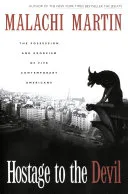
Hostage to the Devil
 82
82

Hostage to the Devil
Malachi Martin's "Hostage to the Devil" is a stark examination of alleged demonic possession, less interested in shock value than in the grim mechanics of spiritual conflict. Martin’s background as a former Jesuit priest lends an air of authority, particularly when he discusses the internal procedures and theological underpinnings of Catholic exorcism. The strength of the book lies in its detailed case studies, which, while harrowing, are presented with a dispassionate, almost anthropological lens. However, the narrative occasionally falters under the weight of its own conviction; Martin seems to assume the reality of the demonic with little room for alternative interpretations, which can feel dogmatic to a secular or skeptical reader. A particularly arresting section details the perceived loss of spiritual agency in the possessed individual, highlighting the terrifying concept of being a pawn in a cosmic struggle. While not an easy read, "Hostage to the Devil" offers a uniquely unflinching look at a controversial aspect of religious belief.
📝 Description
82
Malachi Martin's 1976 book presents detailed case studies of demonic possession and exorcism.
Originally published in 1976, "Hostage to the Devil" by Malachi Martin examines instances of demonic possession and exorcism. Martin, a former Jesuit and Vatican consultant, moves beyond sensationalism to analyze the psychological, spiritual, and theological aspects of these intense spiritual experiences. He bases his accounts on extensive research and interviews, intending to clarify a phenomenon often misunderstood.
The book is for readers interested in the connections between faith, psychology, and the paranormal. It suits those who investigate the nature of evil, the effectiveness of religious rituals against it, and the Catholic Church's historical approaches to alleged demonic influence. Students of comparative religion, demonology, and the history of exorcism will find it particularly relevant.
This work appeared during a time of significant public and academic attention to the occult, following popular films like "The Exorcist." Martin’s contribution offered a more academic, though still dramatic, viewpoint compared to many popular accounts. It addressed contemporary discussions on faith, mental health, and the role of religious bodies in handling perceived spiritual crises, presenting itself as a serious study.
Malachi Martin's work belongs to a tradition of Catholic engagement with the supernatural, particularly concerning demonology and exorcism. This tradition, while often hidden from public view, possesses a long history within the Church, involving specific rites, theological frameworks, and discernment protocols. "Hostage to the Devil" taps into this established, albeit often suppressed, knowledge, presenting case studies that align with a worldview where spiritual forces actively interact with the human realm.
💡 Why Read This Book?
• Gain a structured understanding of the Catholic Church's approach to exorcism, particularly the discernment process outlined by Martin, which differs significantly from popular depictions. • Explore the theological concept of "spiritual warfare" as presented through documented case studies, offering a concrete perspective on the perceived battle between good and evil. • Examine the historical context of demonic possession narratives in the mid-20th century, understanding how Martin's 1976 work engaged with contemporary anxieties and beliefs.
⭐ Reader Reviews
Honest opinions from readers who have explored this book.
❓ Frequently Asked Questions
What is Malachi Martin's background relevant to "Hostage to the Devil"?
Malachi Martin was a former Jesuit priest, theologian, and Vatican-appointed exorcist. His extensive knowledge of canon law and his experience with the Vatican's Sacred Congregation for the Doctrine of the Faith inform his detailed accounts of possession and exorcism.
When was "Hostage to the Devil" first published?
The book "Hostage to the Devil" was first published in 1976, during a period of heightened public interest in the occult and paranormal.
Does "Hostage to the Devil" offer practical advice for exorcism?
No, the book focuses on detailed case studies and theological explanations rather than providing practical "how-to" guidance for performing exorcisms. It aims to inform and document.
Are the cases in "Hostage to the Devil" real?
Malachi Martin presented the cases in "Hostage to the Devil" as factual accounts based on his research and alleged personal involvement. However, the veracity of specific details and interpretations remains a subject of discussion and debate among readers and critics.
What is the Catholic Church's current stance on exorcism?
The Catholic Church officially recognizes exorcism as a rite for "grave possessio"" and has updated its guidelines, most recently in 2017. While acknowledging the possibility of demonic influence, the Church emphasizes rigorous medical and psychological evaluation first.
How does "Hostage to the Devil" differ from fictional portrayals of possession?
Unlike fictional works, Martin's book grounds its narratives in what he claims are real-life cases and theological frameworks, aiming for a documentary-style account rather than pure entertainment.
🔮 Key Themes & Symbolism
Spiritual Warfare
The book frames possession and exorcism as direct confrontations in a cosmic "spiritual warfare." Martin details the perceived strategies of malevolent entities and the defensive and offensive measures employed by exorcists and the possessed. This theme explores the idea of the human soul as a battleground, influenced by both divine grace and demonic intrusion. The narrative emphasizes that these are not merely psychological events but real encounters with supernatural forces actively seeking to dominate human will.
Discernment and Ritual
A central focus is the rigorous process of discernment required to identify genuine possession versus mental illness. Martin outlines the theological and practical criteria used by the Church, highlighting the meticulous nature of these investigations. The book also details the solemnity and specific rites involved in Catholic exorcism, treating it as a sacred and powerful ritual designed to expel malevolent spiritual influences and restore the individual to spiritual health.
The Nature of Evil
Martin grapples with the theological and existential nature of evil, presenting it not as an abstract concept but as an active, intelligent force. The book explores how evil can manifest through possession, tempting individuals and attempting to corrupt their spiritual essence. It examines the Catholic understanding of Satan and demons as fallen angels who actively oppose God's will and seek to ensnare humanity.
Human Agency and Vulnerability
The work examines the interplay between human free will and vulnerability in the context of possession. Martin illustrates how individuals, through various spiritual or psychological weaknesses, can become susceptible to demonic influence. Conversely, he highlights the power of faith, prayer, and divine assistance in resisting and overcoming these forces, underscoring the importance of spiritual fortitude and reliance on God's protection.
💬 Memorable Quotes
Direct passages from the work, attributed to the author.
“The Devil is not a myth. He is real. He is the enemy of God and man.”
— This direct statement captures Martin's core thesis: that demonic entities are active, malevolent forces in the world, not symbolic representations of evil. It sets the stage for his examination of possession as a literal spiritual conflict.
“Possession is a state of total spiritual enslavement.”
— This interpretation emphasizes the extreme nature of demonic possession as described by Martin, portraying it as a complete subjugation of the individual's will and being to external, malevolent spiritual control.
“Exorcism is the Church's ultimate weapon against the Devil.”
— This highlights the sacred and combative role of exorcism within the Catholic tradition, presenting it as a divinely authorized means to confront and defeat demonic forces.
“The line between mental illness and demonic possession is often blurred.”
— This acknowledges the complexity of diagnosis in cases of perceived possession, reflecting the need for careful discernment by both medical professionals and religious authorities.
“Faith is the ultimate shield against spiritual attack.”
— This asserts the paramount importance of spiritual belief and trust in God as the primary defense mechanism against demonic influence and possession, as advocated within the book's theological framework.
🌙 Esoteric Significance
Tradition
While Martin writes from within a specifically Catholic theological framework, "Hostage to the Devil" engages with broader esoteric themes of spiritual warfare and the tangible reality of malevolent non-physical entities. It touches upon concepts of spiritual oppression that resonate with Gnostic ideas of archontic interference and Hermetic principles of unseen forces influencing the material world. The work departs from purely mystical contemplation by focusing on direct, ritualistic confrontation with perceived demonic agents.
Symbolism
The book frequently employs the symbolism of light versus darkness, representing the struggle between divine presence and demonic influence. The ritualistic tools of exorcism – holy water, crucifixes, specific prayers – function as potent symbols of divine power and protection, acting as barriers against the encroaching darkness. The possessed individual often becomes a symbol of humanity's vulnerability to spiritual attack and the potential for redemption through faith and divine intervention.
Modern Relevance
Contemporary discussions on spiritual abuse, psychological manipulation, and the efficacy of religious rites in addressing severe distress can find echoes in Martin's work. While academic and popular views on possession have evolved, his detailed case studies and theological arguments continue to inform discussions within certain religious communities and among those exploring the fringes of paranormal and theological studies, particularly regarding the persistence of belief in active malevolent spiritual forces.
👥 Who Should Read This Book
• Students of comparative religion and demonology seeking documented accounts of Catholic exorcism practices and theological interpretations of possession. • Readers interested in the history of the occult and paranormal, particularly the cultural impact of exorcism narratives in the late 20th century. • Individuals exploring the intersection of psychology, theology, and the supernatural, looking for detailed case studies presented from a specific religious perspective.
📜 Historical Context
Published in 1976, "Hostage to the Devil" arrived on the heels of a cultural fascination with the supernatural, significantly amplified by William Friedkin's film "The Exorcist" (1973). Malachi Martin, leveraging his background as a former Jesuit and a scholar of demonology, positioned his work as a serious, albeit dramatic, examination of actual cases, contrasting with more sensationalized or fictionalized accounts. The book engaged with a prevailing spiritual climate where interest in the occult and paranormal surged, alongside ongoing debates within religious and academic circles about the nature of evil, faith, and psychology. While Catholicism had long traditions of exorcism, Martin's work brought these practices to a wider, often bewildered, public audience. Its reception was polarized, with some praising its candor and theological depth, while others questioned its sensationalism and the certainty of its claims, especially given the rise of secular psychological explanations for phenomena previously attributed to the supernatural.
📔 Journal Prompts
The concept of spiritual warfare as depicted in the case studies.
The discernment process for identifying possession versus psychological distress.
The role of faith and ritual in confronting perceived malevolent forces.
Malachi Martin's portrayal of the Devil's influence on human agency.
The theological understanding of evil presented in the text.
🗂️ Glossary
Exorcism
A religious or supernatural ritual intended to expel a demon or evil spirit from a person or place. Within Catholicism, it is a solemn rite performed by a qualified priest with episcopal permission.
Demonic Possession
In theological terms, a state where a malevolent spiritual entity is believed to have taken control of a person's body and mind, overriding their will.
Spiritual Warfare
The belief that there is an ongoing conflict between spiritual forces of good (God and angels) and evil (Satan and demons), with human souls being a primary focus.
Discernment
The process of carefully distinguishing between spiritual phenomena, particularly differentiating between genuine demonic influence and natural causes like mental illness.
Malevolent Entity
A term used to describe a supernatural being or force that is inherently evil and seeks to cause harm or destruction.
Vatican
The independent city-state and spiritual center of the Roman Catholic Church, headed by the Pope. The Sacred Congregation for the Doctrine of the Faith, formerly the Holy Office, is a key department.
Jesuit
A member of the Society of Jesus, a male religious order within the Catholic Church known for its educational and missionary work, founded by Ignatius of Loyola.